Retinoblastoma is a disease in which malignant (cancer) cells form in
the tissues of the retina.
Children with a family history of retinoblastoma should have eye exams to check for retinoblastoma.
Retinoblastoma occurs in heritable and nonheritable forms.
A child who has heritable retinoblastoma has an increased risk of trilateral retinoblastoma and other cancers.
Genetic testing can determine whether a child has the heritable or nonheritable form of retinoblastoma.
Signs and symptoms of retinoblastoma include "white pupil" and eyes that appear to be looking in different directions (crossed eyes).
Tests that examine the retina are used to diagnose retinoblastoma.
Certain factors affect prognosis (chance of recovery) and treatment options.
Retinoblastoma is a disease in which malignant (cancer) cells form in
the tissues of the retina.
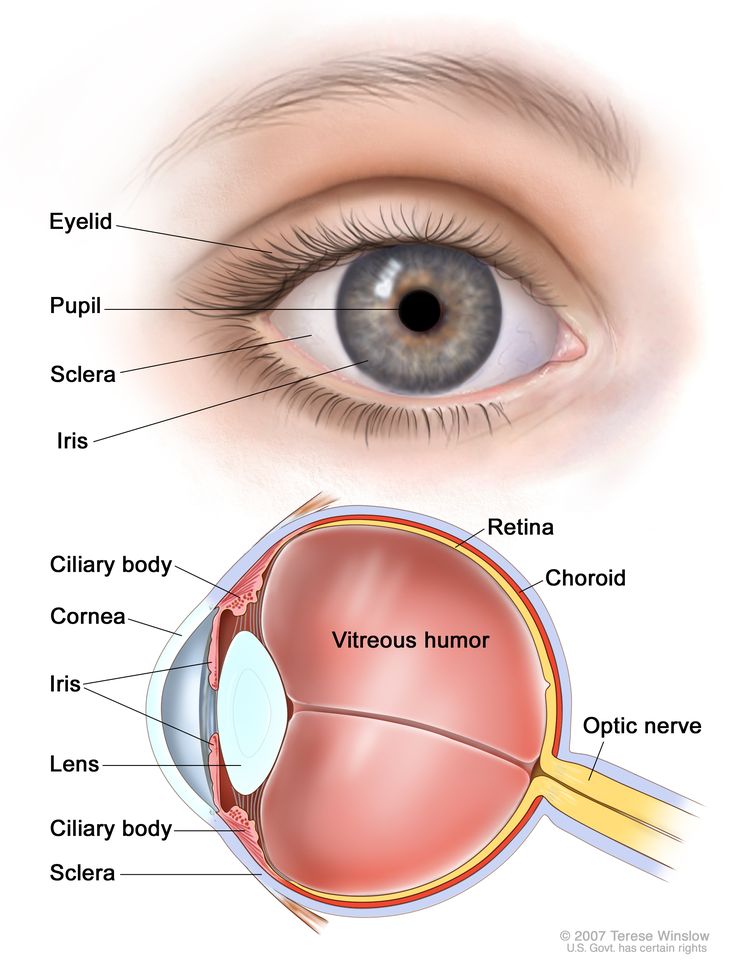
The retina is made of nervetissue that lines the inside wall of the back of the eye. It receives light and converts the light into signals that travel down the optic nerve to the brain. The brain decodes the signals so that you can see the image. EnlargeAnatomy of the eye, showing the outside and inside of the eye including the sclera, cornea, iris, ciliary body, choroid, retina, vitreous humor, and optic nerve. The vitreous humor is a gel that fills the center of the eye.
Retinoblastoma may be in one eye (unilateral) or in both eyes (bilateral). Cavitary retinoblastoma is a rare type of retinoblastoma in which cavities (hollow spaces) form within the tumor.
Although retinoblastoma may occur at any age, it occurs most often in children younger than 2 years.
Children with a family history of retinoblastoma should have eye exams to check for retinoblastoma.
A child with a family history of retinoblastoma should have regular eye exams beginning early in life to check for retinoblastoma, unless it is known that the child does not have the RB1gene change. Early diagnosis of retinoblastoma may mean the child will need less intense treatment.
Talk with your child’s doctor about the type of eye exam, how often eye exams are done, and at what age eye exams to check for retinoblastoma can stop.
Retinoblastoma occurs in heritable and nonheritable forms.
A child is thought to have the heritable (inherited) form of retinoblastoma when there is a certain mutation (change) in the RB1 gene. The mutation in the RB1 gene may be passed from the parent to the child, or it may occur in the egg or sperm before conception or soon after conception.
Other factors that suggest the child may have the heritable form of retinoblastoma include the following:
There is a family history of retinoblastoma.
There is more than one tumor in the eye.
There is a tumor in both eyes.
After heritable retinoblastoma has been diagnosed and treated, new tumors may continue to form for a few years. Regular eye exams to check for new tumors are usually done every 2 to 4 months for at least 28 months.
Most cases of retinoblastoma are the nonheritable form. Nonheritable retinoblastoma is not passed down from parents. This type of retinoblastoma is caused by mutations in the RB1 gene that occur by chance after a child is born. Nonheritable retinoblastoma usually occurs in one eye.
A child who has heritable retinoblastoma has an increased risk of trilateral retinoblastoma and other cancers.
A child with heritable retinoblastoma has an increased risk of a pineal tumor in the brain. When retinoblastoma and a brain tumor occur at the same time, it is called trilateral retinoblastoma. The brain tumor is usually diagnosed between 20 and 36 months of age. Regular screening using MRI (magnetic resonance imaging) may be done for a child thought to have heritable retinoblastoma or for a child with retinoblastoma in one eye and a family history of the disease. CT (computerized tomography) scans are usually not used for routine screening in order to avoid exposing the child to ionizing radiation.
Heritable retinoblastoma also increases the child's risk of other types of cancer such as lung cancer, bladder cancer, or melanoma in later years. Regular follow-up exams are important.
Genetic testing can determine whether a child has the heritable or nonheritable form of retinoblastoma.
The risk of retinoblastoma for the child and the child's brothers or sisters.
The risks and benefits of learning genetic information.
Genetic counselors can also help people cope with their genetic testing results, including how to discuss the results with family members.
Once it is known that the child has heritable retinoblastoma, other family members can be screened for the RB1 mutation. For one specific mutation, the risk of retinoblastoma in a sibling may depend partly on whether the mutation is inherited from the mother or from the father.
Signs and symptoms of retinoblastoma include "white pupil" and eyes that appear to be looking in different directions (crossed eyes).
These and other signs and symptoms may be caused by retinoblastoma or by other conditions. Check with a doctor if your child has any of the following:
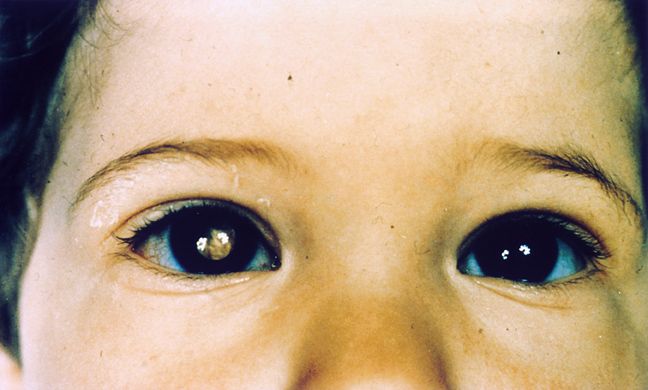
Pupil of the eye that appears white instead of red when light shines into it. This may be seen in flash photographs of the child.EnlargeClose-up photograph showing the eyes of a child with retinoblastoma. The pupil of the eye on the left side of the photo appears white compared to the pupil of the eye on the right side of the photo. A "white pupil" may be a sign of retinoblastoma.
Eyes that appear to be looking in different directions (crossed eyes).
Tests that examine the retina are used to diagnose retinoblastoma.
The following tests and procedures may be used:
Physical exam and health history: An exam of the body to check general signs of health, including checking for signs of disease, such as lumps or anything else that seems unusual. A history of the patient’s health habits and past illnesses and treatments will also be taken. The doctor will ask if there is a family history of retinoblastoma.
Eye exam with dilated pupil: An exam of the eye in which the pupil is dilated (opened wider) with medicated eye drops to allow the doctor to look through the lens and pupil to the retina. The inside of the eye, including the retina and the optic nerve, is examined with a light. In young children, this exam may be done under anesthesia.
There are several types of eye exams that are done with the pupil dilated:
Ophthalmoscopy: An exam of the inside of the back of the eye to check the retina and optic nerve using a small magnifying lens and a light.
Fluorescein angiography: A procedure to look at blood vessels and the flow of blood inside the eye. An orange fluorescent dye called fluorescein is injected into a blood vessel in the arm and goes into the bloodstream. As the dye travels through blood vessels of the eye, a special camera takes pictures of the retina and choroid to find any blood vessels that are blocked or leaking.
Electroretinography: An eye test that uses light and small electrodes to study the retina (the light-detecting part of the eye). This test measures and records the faint electrical signals given off by the cells in the retina when exposed to different types and amounts of light. It can be used to assess the function of the retina during and after treatment.
RB1 gene test: A laboratory test in which a sample of blood or tissue is tested for a change in the RB1 gene.
Ultrasound exam of the eye: A procedure in which high-energy sound waves (ultrasound) are bounced off the internal tissues of the eye to make echoes. Eye drops are used to numb the eye and a small probe that sends and receives sound waves is placed gently on the surface of the eye. The echoes make a picture of the inside of the eye and the distance from the cornea to the retina is measured. The picture, called a sonogram, shows on the screen of the ultrasound monitor. The picture can be printed to be looked at later.
MRI (magnetic resonance imaging): A procedure that uses a magnet, radio waves, and a computer to make a series of detailed pictures of areas inside the body, such as the eye. This procedure is also called nuclear magnetic resonance imaging (NMRI).
Retinoblastoma can usually be diagnosed without a biopsy.
When retinoblastoma is in one eye, it sometimes forms in the other eye. Exams of the unaffected eye are done until it is known that the retinoblastoma is the nonheritable form.
Certain factors affect prognosis (chance of recovery) and treatment options.
The prognosis and treatment options depend on the following:
Whether the cancer is in one or both eyes.
The size and number of tumors.
Whether the tumor has spread to the area around the eye, to the brain, or to other parts of the body.
The age of the child.
How likely it is that vision can be saved in one or both eyes.
Whether a second type of cancer has formed.
Whether the cancer is newly diagnosed or has recurred (come back).
Stages of Retinoblastoma
Key Points
After retinoblastoma has been diagnosed, tests are done to find out
if cancer cells have spread within the eye or to other parts of the body.
The International Retinoblastoma Staging System (IRSS) may be used for staging retinoblastoma.
Stage 0
Stage I
Stage II
Stage III
Stage IV
There are three ways that cancer spreads in the body.
Cancer may spread from where it began to other parts of the body.
Treatment for retinoblastoma depends on whether it is intraocular (within the eye) or extraocular (outside the eye).
Intraocular retinoblastoma
Extraocular retinoblastoma
(metastatic)
Treatment for retinoblastoma also depends on whether the cancer has progressed or recurred.
After retinoblastoma has been diagnosed, tests are done to find out
if cancer cells have spread within the eye or to other parts of the body.
The process used to find out if cancer has spread within the eye or
to other parts of the body is called staging. The information gathered from the staging
process determines whether retinoblastoma is only in the eye (intraocular) or has spread outside the eye (extraocular). It is important to know
the stage in order to plan treatment. The results of the tests and procedures used to diagnose cancer are often also used to stage the disease.
The following tests and procedures may be used in the staging process:
MRI (magnetic resonance imaging): A procedure that uses a magnet, radio waves, and a computer to make a series of detailed pictures of areas inside the body, such as the brain. This procedure is also called nuclear magnetic resonance imaging (NMRI).
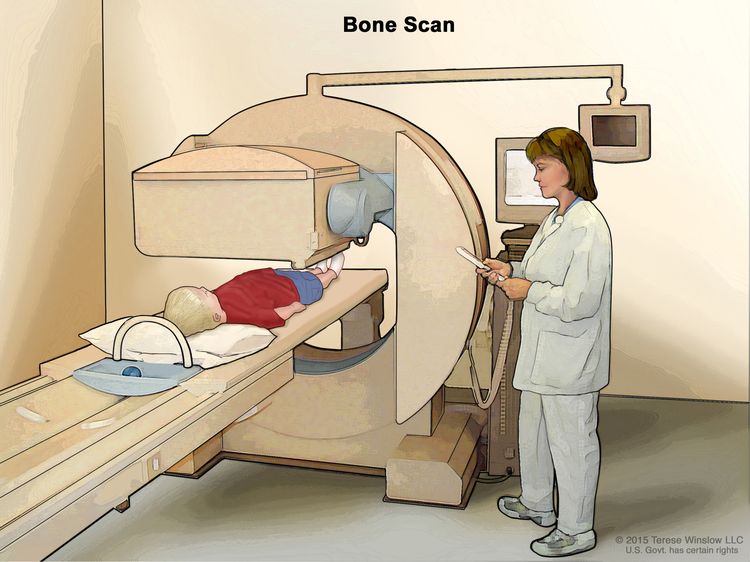
Bone scan: A procedure to check if there are rapidly dividing cells, such as cancer cells, in the bone. A very small amount of radioactive material is injected into a vein and travels through the bloodstream. The radioactive material collects in the bones with cancer and is detected by a scanner that also takes a picture of the body.
Areas of bone with cancer show up brighter in the picture because they take up more radioactive material than normal bone cells do.EnlargeBone scan. A small amount of radioactive material is injected into the child's vein and travels through the blood. The radioactive material collects in the bones. As the child lies on a table that slides under the scanner, the radioactive material is detected and images are made on a computer screen.
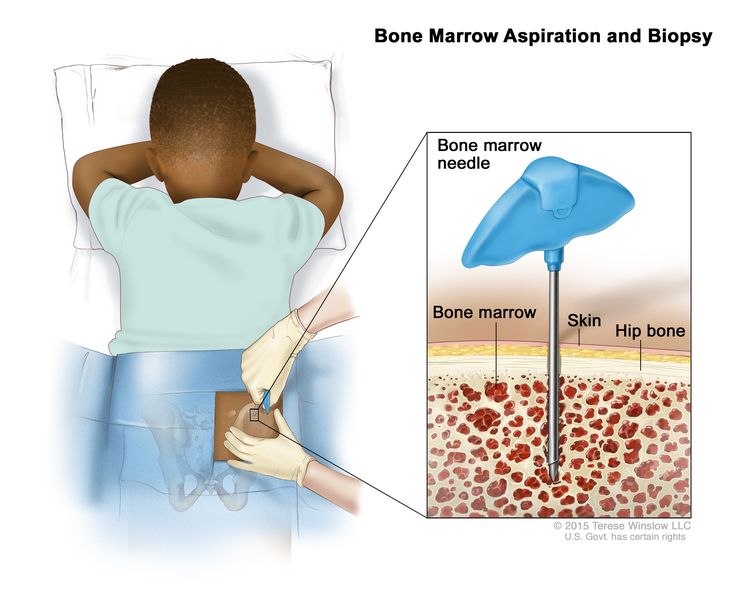
Bone marrow aspiration and biopsy: The removal of bone marrow and a small piece of bone by inserting a hollow needle into the hipbone or breastbone. A pathologist views the bone marrow under a microscope to look for signs of cancer. A bone marrow aspiration and biopsy is done if the doctor thinks the cancer has spread outside of the eye.EnlargeBone marrow aspiration and biopsy. After a small area of skin is numbed, a bone marrow needle is inserted into the child’s hip bone. Samples of blood, bone, and bone marrow are removed for examination under a microscope.
Lumbar puncture: A procedure used to collect cerebrospinal fluid (CSF) from the spinal column. This is done by placing a needle between two bones in the spine and into the CSF around the spinal cord and removing a sample of the fluid. The sample of CSF is checked under a microscope for signs that the cancer has spread to the brain and spinal cord and sometimes it is also checked for a tumor marker called ganglioside GD2. This procedure is also called an LP or spinal tap.
The International Retinoblastoma Staging System (IRSS) may be used for staging retinoblastoma.
There are several staging systems for retinoblastoma. The IRSS stages are based on how much cancer remains after surgery to remove the tumor and whether the cancer has spread.
Stage 0
The tumor is in the eye only. The eye has not been removed and the tumor was treated without surgery.
Stage I
The tumor is in the eye only. The eye has been removed and no cancer cells remain.
Stage II
The tumor is in the eye only. The eye has been removed and cancer cells remain that can be seen only with a microscope.
Stage III
Stage III is divided into stage IIIa and stage IIIb:
In stage IIIa, cancer has spread from the eye to tissues around the eye socket.
In stage IIIb, cancer has spread from the eye to lymph nodes near the ear or in the neck.
Tissue. The cancer spreads from where it began by growing into nearby areas.
Lymph system. The cancer spreads from where it began by getting into the lymph system. The cancer travels through the lymph vessels to other parts of the body.
Blood. The cancer spreads from where it began by getting into the blood. The cancer travels through the blood vessels to other parts of the body.
Cancer may spread from where it began to other parts of the body.
When cancer spreads to another part of the body, it is called metastasis. Cancer cells break away from where they began (the primary tumor) and travel through the lymph system or blood.
Lymph system. The cancer gets into the lymph system, travels through the lymph vessels, and forms a tumor (metastatic tumor) in another part of the body.
Blood. The cancer gets into the blood, travels through the blood vessels, and forms a tumor (metastatic tumor) in another part of the body.
The metastatic tumor is the same type of cancer as the primary tumor. For example, if retinoblastoma spreads to the bone, the cancer cells in the bone are actually retinoblastoma cells. The disease is metastatic retinoblastoma, not bone cancer.
Many cancer deaths are caused when cancer moves from the original tumor and spreads to other tissues and organs. This is called metastatic cancer. This animation shows how cancer cells travel from the place in the body where they first formed to other parts of the body.
Treatment for retinoblastoma depends on whether it is intraocular (within the eye) or extraocular (outside the eye).
Treatment for retinoblastoma also depends on whether the cancer has progressed or recurred.
Progressiveretinoblastoma is cancer that continues to grow, spread or get worse. Progressive disease may be a sign that the cancer has become refractory to treatment.
Recurrent retinoblastoma is cancer that has recurred (come back) after it has been treated. The cancer may recur in the eye, in tissues around the eye, or in other places in the body, such as the liver, bone, bone marrow, or lymph nodes.
Treatment Option Overview
Key Points
There are different types of treatment for patients with retinoblastoma.
Children with retinoblastoma should have their treatment
planned by a team of health care providers who are experts in treating cancer in children.
Six types of standard treatment are used:
Cryotherapy
Thermotherapy
Chemotherapy
Radiation therapy
High-dose chemotherapy with stem cell rescue
Surgery (enucleation)
New types of treatment are being tested in clinical trials.
Targeted therapy
Treatment for retinoblastoma may cause side effects.
Patients may want to think about taking part in a clinical trial.
Patients can enter clinical trials before, during, or after starting their cancer treatment.
Follow-up tests may be needed.
There are different types of treatment for patients with retinoblastoma.
Different types of treatment are available for patients with retinoblastoma. Some treatments are standard (the currently used treatment), and some
are being tested in clinical trials.
A treatment clinical trial is a research study meant to help
improve current treatments or obtain information on new treatments for patients
with cancer. When clinical trials show that a new treatment is better than the
standard treatment, the new
treatment may become the standard treatment.
Because cancer in children is rare, taking part in a clinical trial should be considered. Some clinical trials are open only to patients who have not started treatment.
Children with retinoblastoma should have their treatment
planned by a team of health care providers who are experts in treating cancer in children.
The goals of treatment are to save the child's life, to save vision and the eye, and to prevent serious side effects. Treatment will be overseen by a
pediatric oncologist, a doctor who specializes
in treating children with cancer. The pediatric oncologist works with
other health care providers who are experts in treating children
with eye cancer and who specialize
in certain areas of medicine. These may include a pediatricophthalmologist (children's eye doctor) who has a lot of experience in treating retinoblastoma and the following
specialists:
Cryotherapy is the use of extreme cold to destroy abnormaltissue. A small metal probe is cooled below freezing and placed on the surface of the eye near the tumor, which freezes and kills cancer cells. Cryotherapy is usually used to treat small retinoblastoma tumors that are located toward the front of the eye. This type of treatment is also called cryosurgery.
Thermotherapy
Thermotherapy is the use of heat to destroy cancer cells. Thermotherapy may be given using a laser beam aimed through the dilatedpupil or onto the outside of the eyeball. Thermotherapy may be used alone for small tumors or combined with chemotherapy for larger tumors. This treatment is a type of laser therapy.
Chemotherapy
Chemotherapy is a cancer treatment that uses drugs to stop the growth of cancer cells, either by killing the cells or by stopping them from dividing. The way the chemotherapy is given depends on the stage of the cancer and where the cancer is in the body.
Systemic chemotherapy may also be given to kill any cancer cells that are left after the initial treatment or to kill cancer cells that are outside the eye. Treatment given after the initial treatment, to lower the risk that the cancer will come back, is called adjuvant therapy.
Regional chemotherapy: When chemotherapy is placed directly into the cerebrospinal fluid (intrathecal chemotherapy), an organ (such as the eye), or a body cavity, the drugs mainly affect cancer cells in those areas. Several types of regional chemotherapy are used to treat retinoblastoma.
Ophthalmic artery infusion chemotherapy: Ophthalmic artery infusion chemotherapy carries anticancer drugs directly to the eye. A catheter is put into an artery that leads to the eye and the anticancer drug is given through the catheter. After the drug is given, a small balloon may be inserted into the artery to block it and keep most of the anticancer drug trapped near the tumor. This type of chemotherapy may be given as the initial treatment when the tumor is in the eye only or when the tumor has not responded to other types of treatment. Ophthalmic artery infusion chemotherapy is given at special retinoblastoma treatment centers.
Intravitreal chemotherapy: Intravitreal chemotherapy is the injection of anticancer drugs directly into the vitreous humor (jelly-like substance) inside of the eye. It is used to treat cancer that has spread to the vitreous humor and has not responded to treatment or has come back after treatment.
Radiation therapy is a cancer treatment that uses high-energy x-rays or other types of radiation to kill cancer cells or keep them from growing. There are two types of radiation therapy:
Certain ways of giving radiation therapy can help keep radiation from damaging nearby healthy tissue. These types of radiation therapy include the following:
Intensity-modulated radiation therapy (IMRT): IMRT is a type of 3-dimensional (3-D) external radiation therapy that uses a computer to make pictures of the size and shape of the tumor. Thin beams of radiation of different intensities (strengths) are aimed at the tumor from many angles.
Proton beam radiation therapy: Proton beam radiation therapy is a type of high-energy, external radiation therapy that uses streams of protons (tiny particles with a positive charge) to kill tumor cells. This type of treatment can lower the amount of radiation damage to healthy tissue near a tumor.
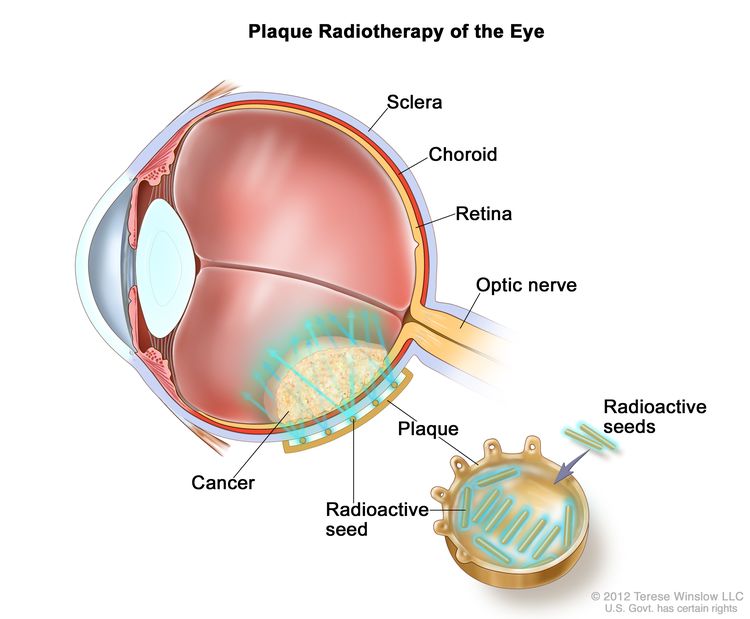
Internal radiation therapy uses a radioactive substance sealed in needles, seeds, wires, or catheters that are placed directly into or near the cancer. Certain ways of giving radiation therapy can help keep radiation from damaging nearby healthy tissue. This type of internal radiation therapy may include the following:
Plaque radiotherapy: Radioactive seeds are attached to one side of a disk, called a plaque, and placed directly on the outside wall of the
eye near the tumor. The
side of the plaque with the seeds on it faces the eyeball, aiming radiation at
the tumor. The plaque helps protect other nearby tissue from the radiation.EnlargePlaque radiotherapy is a type of radiation therapy used to treat eye cancer. Radioactive seeds are attached to one side of a thin piece of metal (usually gold) called a plaque. The plaque is sewn onto the outside wall of the eye near the tumor. The seeds give off radiation which kills the cancer. The plaque is removed at the end of treatment, which usually lasts for several days.
Whether internal or external radiation therapy is given depends on the stage of the cancer being treated, where it is found in the body, and how the cancer responded to other treatments.
High-dose chemotherapy with stem cell rescue
High doses of chemotherapy are given to kill cancer cells. Healthy cells, including blood-forming cells, are also destroyed by the cancer treatment. Stem cell rescue is a treatment to replace the blood-forming cells. Stem cells (immature blood cells) are removed from the blood or bone marrow of the patient and are frozen and stored. After the patient completes chemotherapy, the stored stem cells are thawed and given back to the patient through an infusion. These reinfused stem cells grow into (and restore) the body's blood cells. Extraorbital disease requires intensive chemotherapy and may include consolidation with high-dose chemotherapy and autologous stem cell transplantation with or without radiation therapy.
Enucleation is surgery to remove the eye and part of the optic nerve. A sample of the eye tissue that is removed will be checked under a microscope to see if there are any signs that the cancer is likely to spread to other parts of the body. This should be done by an experienced pathologist, who is familiar with retinoblastoma and other diseases of the eye. Enucleation is done if there is little or no chance that vision can be saved and when the tumor is large, did not respond to treatment, or comes back after treatment. The patient will be fitted for an artificial eye.
Close follow-up is needed for 2 years or more to check for signs of recurrence in the area around the affected eye and to check the other eye.
New types of treatment are being tested in clinical trials.
This summary section describes treatments that are being studied in clinical trials. It may not mention every new treatment being studied. Information about clinical trials is available from the NCI website.
Targeted therapy
Targeted therapy is a type of treatment that uses drugs or other substances to identify and attack specific cancer cells. Targeted therapies usually cause less harm to normal cells than chemotherapy or radiation therapy do.
Oncolytic virus therapy: This treatment uses a virus that infects and breaks down cancer cells but not normal cells. An oncolytic adenovirus targeting the RB1gene is injected into the tumor and may have anticancer effects in retinoblastoma. Targeted therapy is being studied for the treatment of retinoblastoma that has progressed or red.
Treatment for retinoblastoma may cause side effects.
Side effects from cancer treatment that begin after treatment and continue for months or years are called late effects. Late effects of treatment for retinoblastoma may include the following:
Physical problems such as seeing or hearing problems.
If the eye is removed, there may be changes in the shape and size of the bone around the eye until an artificial eye is fitted. This is most likely to occur in children aged younger than 3 years.
Changes in mood, feelings, thinking, learning, or memory.
Past treatment with radiation therapy, especially before age 1 year.
Having already had a previous second cancer.
It is important to talk with your child's doctors about the effects cancer treatment can have on your child. Regular follow-up by health professionals who are experts in diagnosing and treating late effects is important. See the PDQ summary on Late Effects of Treatment for Childhood Cancer for more information.
Patients may want to think about taking part in a clinical trial.
For some patients, taking part in a clinical trial may be the best treatment choice. Clinical trials are part of the cancer research process. Clinical trials are done to find out if new cancer treatments are safe and effective or better than the standard treatment.
Many of today's standard treatments for cancer are based on earlier clinical trials. Patients who take part in a clinical trial may receive the standard treatment or be among the first to receive a new treatment.
Patients who take part in clinical trials also help improve the way cancer will be treated in the future. Even when clinical trials do not lead to effective new treatments, they often answer important questions and help move research forward.
Patients can enter clinical trials before, during, or after starting their cancer treatment.
Some clinical trials only include patients who have not yet received treatment. Other trials test treatments for patients whose cancer has not gotten better. There are also clinical trials that test new ways to stop cancer from recurring (coming back) or reduce the side effects of cancer treatment.
Clinical trials are taking place in many parts of the country. Information about clinical trials supported by NCI can be found on NCI’s clinical trials search webpage. Clinical trials supported by other organizations can be found on the ClinicalTrials.gov website.
Follow-up tests may be needed.
As your child goes through treatment, they will have follow-up tests or check-ups. Some tests that were done to diagnose or stage the cancer may be repeated to see how well the treatment is working. Decisions about whether to continue, change, or stop treatment may be based on the results of these tests.
Some of the tests will continue to be done from time to time after treatment has ended. The results of these tests can show if your child's condition has changed or if the cancer has recurred (come back).
In retinoblastoma, new tumors may form for a few years after treatment. Regular eye exams are done to check for tumors in both eyes. Children with the heritable form of retinoblastoma will also have imaging tests to check whether cancer has spread to the brain.
Treatment of Unilateral, Bilateral, and Cavitary Retinoblastoma
If the tumor is large and it is not likely that the eye can be saved, treatment may include the following:
Surgery (enucleation). After surgery, systemic chemotherapy may be given to lower the risk that the cancer will spread to other parts of the body.
When retinoblastoma is in both eyes, the treatment for each eye may be different, depending on the size of the tumor and whether it is likely that the eye can be saved. The dose of systemic chemotherapy is usually based on the eye that has more cancer.
Patients with cavitary retinoblastoma respond well to treatment and have favorable long-term outcomes, similar to patients with noncavitary retinoblastoma.
It is not clear whether treatment with chemotherapy, radiation therapy, or high-dose chemotherapy with stem cell rescue helps patients with extraocular retinoblastoma live longer.
For trilateral retinoblastoma (retinoblastoma and a brain tumor that occur at the same time), treatment may include the following:
Systemic chemotherapy followed by surgery and high-dose chemotherapy with stem cell rescue.
Systemic chemotherapy followed by surgery and external-beam radiation therapy.
For retinoblastoma that has spread to other parts of the body, but not the brain, treatment may include the following:
Systemic chemotherapy followed by high-dose chemotherapy with stem cell rescue and external-beam radiation therapy.
Use our clinical trial search to find NCI-supported cancer clinical trials that are accepting patients. You can search for trials based on the type of cancer, the age of the patient, and where the trials are being done. General information about clinical trials is also available.
Treatment of Progressive or Recurrent Retinoblastoma
A clinical trial that checks a sample of the patient's tumor for certain gene changes. The type of targeted therapy that will be given to the patient depends on the type of gene change.
Treatment of progressive or recurrent extraocular retinoblastoma may include the following:
Systemic chemotherapy and external-beam radiation therapy for retinoblastoma that comes back after surgery to remove the eye.
A clinical trial that checks a sample of the patient's tumor for certain gene changes. The type of targeted therapy that will be given to the patient depends on the type of gene change.
Use our clinical trial search to find NCI-supported cancer clinical trials that are accepting patients. You can search for trials based on the type of cancer, the age of the patient, and where the trials are being done. General information about clinical trials is also available.
To Learn More About Childhood Cancer
For more information from the National Cancer Institute about the treatment of retinoblastoma, see the following:
Physician Data Query (PDQ) is the National Cancer Institute's (NCI's) comprehensive cancer information database. The PDQ database contains summaries of the latest published information on cancer prevention, detection, genetics, treatment, supportive care, and complementary and alternative medicine. Most summaries come in two versions. The health professional versions have detailed information written in technical language. The patient versions are written in easy-to-understand, nontechnical language. Both versions have cancer information that is accurate and up to date and most versions are also available in Spanish.
PDQ is a service of the NCI. The NCI is part of the National Institutes of Health (NIH). NIH is the federal government’s center of biomedical research. The PDQ summaries are based on an independent review of the medical literature. They are not policy statements of the NCI or the NIH.
Purpose of This Summary
This PDQ cancer information summary has current information about the treatment of retinoblastoma. It is meant to inform and help patients, families, and caregivers. It does not give formal guidelines or recommendations for making decisions about health care.
Reviewers and Updates
Editorial Boards write the PDQ cancer information summaries and keep them up to date. These Boards are made up of experts in cancer treatment and other specialties related to cancer. The summaries are reviewed regularly and changes are made when there is new information. The date on each summary ("Updated") is the date of the most recent change.
The information in this patient summary was taken from the health professional version, which is reviewed regularly and updated as needed, by the PDQ Pediatric Treatment Editorial Board.
Clinical Trial Information
A clinical trial is a study to answer a scientific question, such as whether one treatment is better than another. Trials are based on past studies and what has been learned in the laboratory. Each trial answers certain scientific questions in order to find new and better ways to help cancer patients. During treatment clinical trials, information is collected about the effects of a new treatment and how well it works. If a clinical trial shows that a new treatment is better than one currently being used, the new treatment may become "standard." Patients may want to think about taking part in a clinical trial. Some clinical trials are open only to patients who have not started treatment.
Clinical trials can be found online at NCI's website. For more information, call the Cancer Information Service (CIS), NCI's contact center, at 1-800-4-CANCER (1-800-422-6237).
Permission to Use This Summary
PDQ is a registered trademark. The content of PDQ documents can be used freely as text. It cannot be identified as an NCI PDQ cancer information summary unless the whole summary is shown and it is updated regularly. However, a user would be allowed to write a sentence such as “NCI’s PDQ cancer information summary about breast cancer prevention states the risks in the following way: [include excerpt from the summary].”
Images in this summary are used with permission of the author(s), artist, and/or publisher for use in the PDQ summaries only. If you want to use an image from a PDQ summary and you are not using the whole summary, you must get permission from the owner. It cannot be given by the National Cancer Institute. Information about using the images in this summary, along with many other images related to cancer can be found in Visuals Online. Visuals Online is a collection of more than 3,000 scientific images.
Disclaimer
The information in these summaries should not be used to make decisions about insurance reimbursement. More information on insurance coverage is available on Cancer.gov on the Managing Cancer Care page.
Contact Us
More information about contacting us or receiving help with the Cancer.gov website can be found on our Contact Us for Help page. Questions can also be submitted to Cancer.gov through the website’s E-mail Us.