General Information about Male Breast Cancer
Stages of Male Breast Cancer
Inflammatory Male Breast Cancer
Recurrent Male Breast Cancer
Treatment Option Overview
Treatment Options for Male Breast Cancer
Treatment Options for Locally Recurrent Male Breast Cancer
To Learn More About Male Breast Cancer
Changes to This Summary (05/24/2012)
Get More Information From NCI
About PDQ
General Information about Male Breast Cancer
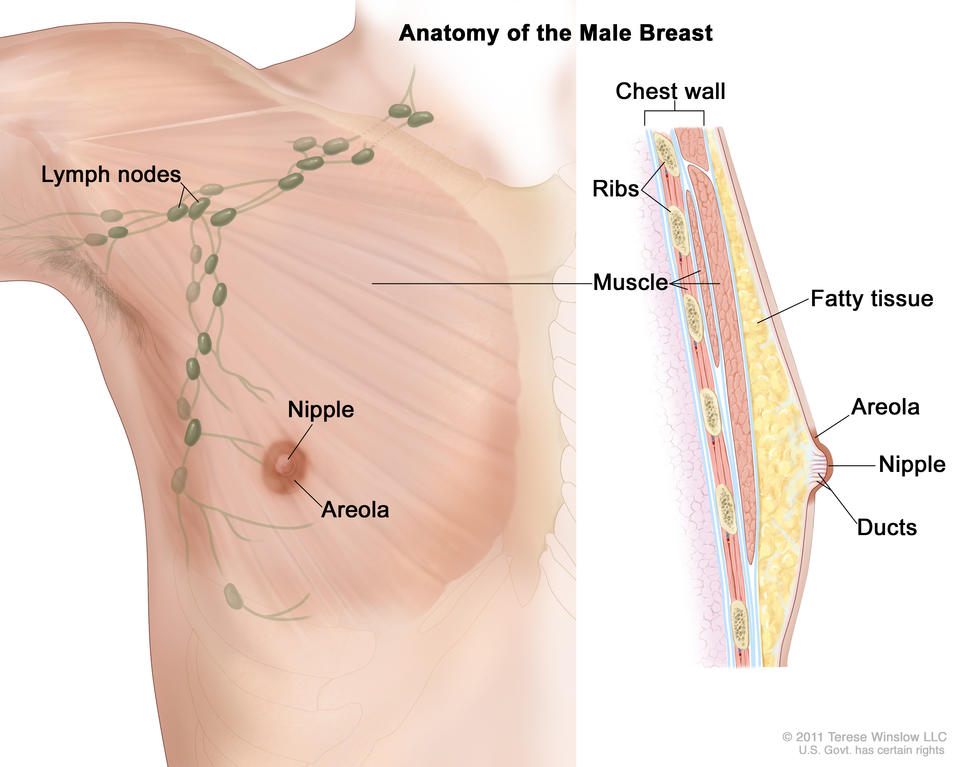
Male breast cancer is a disease in which malignant (cancer) cells form in the tissues of the breast.
Breast cancer may occur in men. Men at any age may develop breast cancer, but it is usually detected (found) in men between 60 and 70 years of age. Male breast cancer makes up less than 1% of all cases of breast cancer.
The following types of breast cancer are found in men:
- Infiltrating ductal carcinoma: Cancer that has spread beyond the cells lining ducts in the breast. Most men with breast cancer have this type of cancer.
- Ductal carcinoma in situ: Abnormal cells that are found in the lining of a duct; also called intraductal carcinoma.
- Inflammatory breast cancer: A type of cancer in which the breast looks red and swollen and feels warm.
- Paget disease of the nipple: A tumor that has grown from ducts beneath the nipple onto the surface of the nipple.
Lobular carcinoma in situ (abnormal cells found in one of the lobes or sections of the breast), which sometimes occurs in women, has not been seen in men.
1
Radiation exposure, high levels of estrogen, and a family history of breast cancer can increase a man’s risk of developing breast cancer.
Anything that increases your risk of getting a disease is called a risk factor. Having a risk factor does not mean that you will get cancer; not having risk factors doesn’t mean that you will not get cancer. People who think they may be at risk should discuss this with their doctor. Risk factors for breast cancer in men may include the following:
- Being exposed to radiation.
- Having a disease related to high levels of estrogen in the body, such as cirrhosis (liver disease) or Klinefelter syndrome (a genetic disorder.)
- Having several female relatives who have had breast cancer, especially relatives who have an alteration of the BRCA2 gene.
Male breast cancer is sometimes caused by inherited gene mutations (changes).
The genes in cells carry the hereditary information that is received from a person’s parents. Hereditary breast cancer makes up approximately 5% to 10% of all breast cancer. Some altered genes related to breast cancer are more common in certain ethnic groups. Men who have an altered gene related to breast cancer have an increased risk of developing this disease.
Tests have been developed that can detect altered genes. These genetic tests are sometimes done for members of families with a high risk of cancer. See the following PDQ summaries for more information:
Men with breast cancer usually have lumps that can be felt.
Lumps and other symptoms may be caused by male breast cancer. Other conditions may cause the same symptoms. A doctor should be seen if changes in the breasts are noticed.
Tests that examine the breasts are used to detect (find) and diagnose breast cancer in men.
The following tests and procedures may be used:
- Biopsy: The removal of cells or tissues so they can be viewed under a microscope by a pathologist to check for signs of cancer. The following are different types of biopsies:
- Fine-needle aspiration (FNA) biopsy: The removal of tissue or fluid using a thin needle.
- Core biopsy: The removal of tissue using a wide needle.
- Excisional biopsy: The removal of an entire lump of tissue.
- Estrogen and progesterone receptor test: A test to measure the amount of estrogen and progesterone (hormones) receptors in cancer tissue. If cancer is found in the breast, tissue from the tumor is checked in the laboratory to find out whether estrogen and progesterone could affect the way cancer grows. The test results show whether hormone therapy may stop the cancer from growing.
- HER2 test: A test to measure the amount of HER2 in cancer tissue. HER2 is a growth factor protein that sends growth signals to cells. When cancer forms, the cells may make too much of the protein, causing more cancer cells to grow. If cancer is found in the breast, tissue from the tumor is checked in the laboratory to find out if there is too much HER2 in the cells. The test results show whether monoclonal antibody therapy may stop the cancer from growing.
Survival for men with breast cancer is similar to survival for women with breast cancer.
Survival for men with breast cancer is similar to that for women with breast cancer when their stage at diagnosis is the same. Breast cancer in men, however, is often diagnosed at a later stage. Cancer found at a later stage may be less likely to be cured.
Certain factors affect prognosis (chance of recovery) and treatment options.
The prognosis (chance of recovery) and treatment options depend on the following:
- The stage of the cancer (whether it is in the breast only or has spread to other places in the body).
- The type of breast cancer.
- Estrogen-receptor and progesterone-receptor levels in the tumor tissue.
- Whether the cancer is also found in the other breast.
- The patient’s age and general health.
Stages of Male Breast Cancer
After breast cancer has been diagnosed, tests are done to find out if cancer cells have spread within the breast or to other parts of the body.
After breast cancer has been diagnosed, tests are done to find out if cancer cells have spread within the breast or to other parts of the body. This process is called staging. The information gathered from the staging process determines the stage of the disease. It is important to know the stage in order to plan treatment. Breast cancer in men is staged the same as it is in women. The spread of cancer from the breast to lymph nodes and other parts of the body appears to be similar in men and women.
The following tests and procedures may be used in the staging process:
- Chest x-ray: An x-ray of the organs and bones inside the chest. An x-ray is a type of energy beam that can go through the body and onto film, making a picture of areas inside the body.
- CT scan (CAT scan): A procedure that makes a series of detailed pictures of areas inside the body, taken from different angles. The pictures are made by a computer linked to an x-ray machine. A dye may be injected into a vein or swallowed to help the organs or tissues show up more clearly. This procedure is also called computed tomography, computerized tomography, or computerized axial tomography.
- Bone scan: A procedure to check if there are rapidly dividing cells, such as cancer cells, in the bone. A very small amount of radioactive material is injected into a vein and travels through the bloodstream. The radioactive material collects in the bones and is detected by a scanner.
- PET scan (positron emission tomography scan): A procedure to find malignant tumor cells in the body. A small amount of radioactive glucose (sugar) is injected into a vein. The PET scanner rotates around the body and makes a picture of where glucose is being used in the body. Malignant tumor cells show up brighter in the picture because they are more active and take up more glucose than normal cells do.
There are three ways that cancer spreads in the body.
The three ways that cancer spreads in the body are:
- Through tissue. Cancer invades the surrounding normal tissue.
- Through the lymph system. Cancer invades the lymph system and travels through the lymph vessels to other places in the body.
- Through the blood. Cancer invades the veins and capillaries and travels through the blood to other places in the body.
When cancer cells break away from the primary (original) tumor and travel through the lymph or blood to other places in the body, another (secondary) tumor may form. This process is called metastasis. The secondary (metastatic) tumor is the same type of cancer as the primary tumor. For example, if breast cancer spreads to the bones, the cancer cells in the bones are actually breast cancer cells. The disease is metastatic breast cancer, not bone cancer.
The following stages are used for male breast cancer:
There are 2 types of breast carcinoma in situ:
- Ductal carcinoma in situ (DCIS) is a noninvasive condition in which abnormal cells are found in the lining of a breast duct. The abnormal cells have not spread outside the duct to other tissues in the breast. In some cases, DCIS may become invasive cancer and spread to other tissues, although it is not known at this time how to predict which lesions will become invasive.
- Lobular carcinoma in situ (LCIS) is a condition in which abnormal cells are found in the lobules of the breast. This condition has not been seen in men.
In stage I, cancer has formed. Stage I is divided into stages IA and IB.
- In stage IA, the tumor is 2 centimeters or smaller and has not spread outside the breast.
- In stage IB, either:
- no tumor is found in the breast, but small clusters of cancer cells (larger than 0.2 millimeter but not larger than 2 millimeters) are found in the lymph nodes; or
- the tumor is 2 centimeters or smaller and small clusters of cancer cells (larger than 0.2 millimeter but not larger than 2 millimeters) are found in the lymph nodes.
Stage II is divided into stages IIA and IIB.
- In stage IIA
- no tumor is found in the breast, but cancer is found in the axillary lymph nodes (lymph nodes under the arm); or
- the tumor is 2 centimeters or smaller and has spread to the axillary lymph nodes; or
- the tumor is larger than 2 centimeters but not larger than 5 centimeters and has not spread to the axillary lymph nodes.
- In stage IIB, the tumor is either:
- larger than 2 centimeters but not larger than 5 centimeters and has spread to the axillary lymph nodes; or
- larger than 5 centimeters but has not spread to the axillary lymph nodes.
In stage IIIA:
- no tumor is found in the breast. Cancer is found in axillary lymph nodes that are attached to each other or to other structures, or cancer may be found in lymph nodes near the breastbone; or
- the tumor is 2 centimeters or smaller. Cancer has spread to axillary lymph nodes that are attached to each other or to other structures, or cancer may have spread to lymph nodes near the breastbone; or
- the tumor is larger than 2 centimeters but not larger than 5 centimeters. Cancer has spread to axillary lymph nodes that are attached to each other or to other structures, or cancer may have spread to lymph nodes near the breastbone; or
- the tumor is larger than 5 centimeters. Cancer has spread to axillary lymph nodes that may be attached to each other or to other structures, or cancer may have spread to lymph nodes near the breastbone.
In stage IIIB, the tumor may be any size and cancer:
- has spread to the chest wall and/or the skin of the breast; and
- may have spread to axillary lymph nodes that may be attached to each other or to other structures, or cancer may have spread to lymph nodes near the breastbone.
Cancer that has spread to the skin of the breast is inflammatory breast cancer. See the section on Inflammatory Male Breast Cancer 6 for more information.
In stage IIIC, there may be no sign of cancer in the breast or the tumor may be any size and may have spread to the chest wall and/or the skin of the breast. Also, cancer:
- has spread to lymph nodes above or below the collarbone; and
- may have spread to axillary lymph nodes or to lymph nodes near the breastbone.
Cancer that has spread to the skin of the breast is inflammatory breast cancer. See the section on Inflammatory Male Breast Cancer 6 for more information.
Stage IIIC breast cancer is divided into operable and inoperable stage IIIC.
In operable stage IIIC, the cancer:
- is found in ten or more axillary lymph nodes; or
- is found in lymph nodes below the collarbone; or
- is found in axillary lymph nodes and in lymph nodes near the breastbone.
In inoperable stage IIIC breast cancer, the cancer has spread to the lymph nodes above the collarbone.
In stage IV, the cancer has spread to other organs of the body, most often the bones, lungs, liver, or brain.
Inflammatory Male Breast Cancer
In inflammatory breast cancer, cancer has spread to the skin of the breast and the breast looks red and swollen and feels warm. The redness and warmth occur because the cancer cells block the lymph vessels in the skin. The skin of the breast may also show the dimpled appearance called peau d’orange (like the skin of an orange). There may not be any lumps in the breast that can be felt. Inflammatory breast cancer may be stage IIIB, stage IIIC, or stage IV.
Recurrent Male Breast Cancer
Recurrent breast cancer is cancer that has recurred (come back) after it has been treated. The cancer may come back in the breast, in the chest wall, or in other parts of the body.
Treatment Option Overview
There are different types of treatment for men with breast cancer.
Different types of treatment are available for men with breast cancer. Some treatments are standard (the currently used treatment), and some are being tested in clinical trials. A treatment clinical trial is a research study meant to help improve current treatments or obtain information on new treatments for patients with cancer. When clinical trials show that a new treatment is better than the standard treatment, the new treatment may become the standard treatment.
For some patients, taking part in a clinical trial may be the best treatment choice. Many of today's standard treatments for cancer are based on earlier clinical trials. Patients who take part in a clinical trial may receive the standard treatment or be among the first to receive a new treatment.
Patients who take part in clinical trials also help improve the way cancer will be treated in the future. Even when clinical trials do not lead to effective new treatments, they often answer important questions and help move research forward.
Some clinical trials only include patients who have not yet received treatment. Other trials test treatments for patients whose cancer has not gotten better. There are also clinical trials that test new ways to stop cancer from recurring (coming back) or reduce the side effects of cancer treatment.
Clinical trials are taking place in many parts of the country. Information about clinical trials is available from the NCI Web site 7. Choosing the most appropriate cancer treatment is a decision that ideally involves the patient, family, and health care team.
Four types of standard treatment are used to treat men with breast cancer:
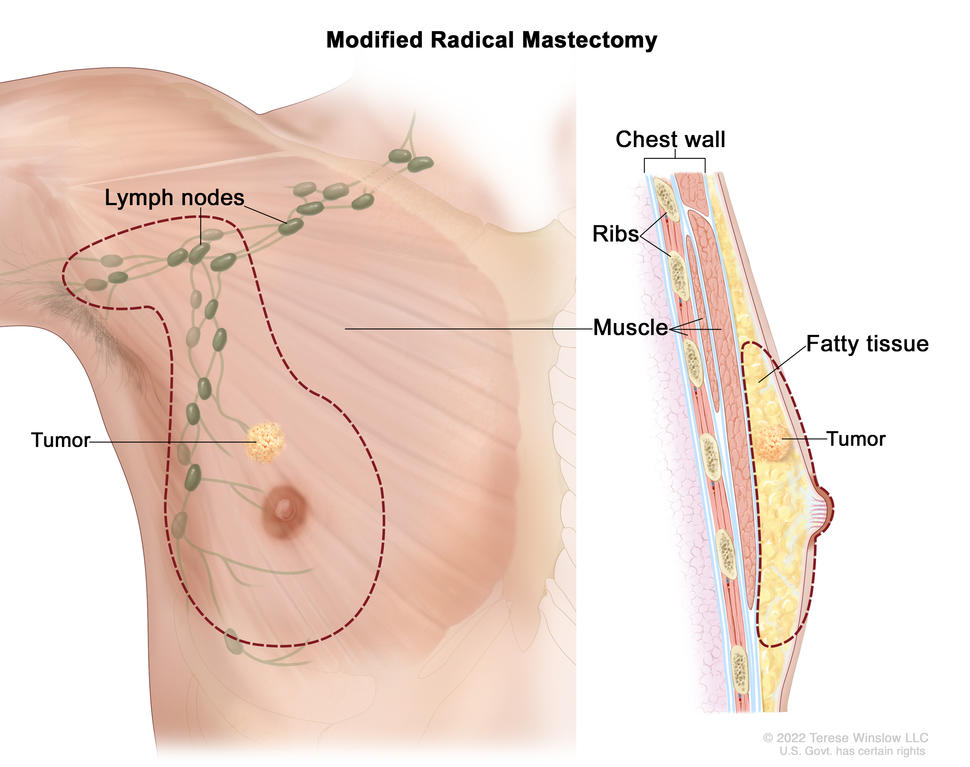
Surgery for men with breast cancer is usually a modified radical mastectomy (removal of the breast, many of the lymph nodes under the arm, the lining over the chest muscles, and sometimes part of the chest wall muscles).
8
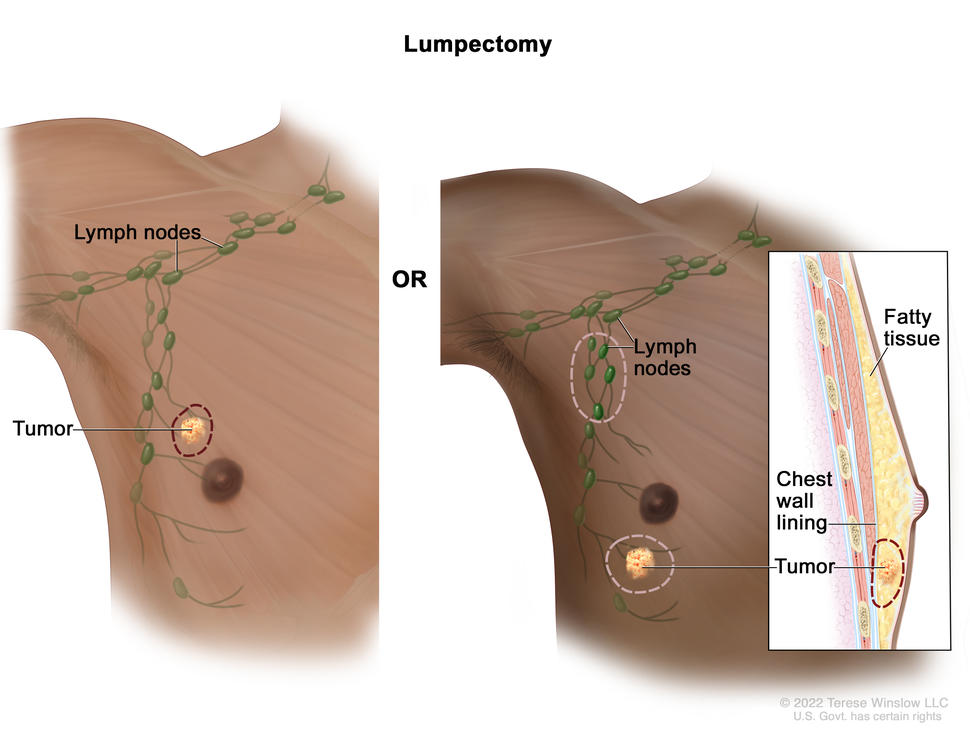
Breast-conserving surgery, an operation to remove the cancer but not the breast itself, is also used for some men with breast cancer. A lumpectomy is done to remove the tumor (lump) and a small amount of normal tissue around it. Radiation therapy is given after surgery to kill any cancer cells that are left.
9
Chemotherapy is a cancer treatment that uses drugs to stop the growth of cancer cells, either by killing the cells or by stopping them from dividing. When chemotherapy is taken by mouth or injected into a vein or muscle, the drugs enter the bloodstream and can reach cancer cells throughout the body (systemic chemotherapy). When chemotherapy is placed directly into the cerebrospinal fluid, an organ, or a body cavity such as the abdomen, the drugs mainly affect cancer cells in those areas (regional chemotherapy). The way the chemotherapy is given depends on the type and stage of the cancer being treated.
See Drugs Approved for Breast Cancer 10 for more information.
Hormone therapy is a cancer treatment that removes hormones or blocks their action and stops cancer cells from growing. Hormones are substances made by glands in the body and circulated in the bloodstream. Some hormones can cause certain cancers to grow. If tests show that the cancer cells have places where hormones can attach (receptors), drugs, surgery, or radiation therapy is used to reduce the production of hormones or block them from working.
See Drugs Approved for Breast Cancer 10 for more information.
Radiation therapy is a cancer treatment that uses high-energy x-rays or other types of radiation to kill cancer cells or keep them from growing. There are two types of radiation therapy. External radiation therapy uses a machine outside the body to send radiation toward the cancer. Internal radiation therapy uses a radioactive substance sealed in needles, seeds, wires, or catheters that are placed directly into or near the cancer. The way the radiation therapy is given depends on the type and stage of the cancer being treated.
New types of treatment are being tested in clinical trials.
This summary section describes treatments that are being studied in clinical trials. It may not mention every new treatment being studied. Information about clinical trials is available from the NCI Web site 7.
Targeted therapy is a type of treatment that uses drugs or other substances to identify and attack specific cancer cells without harming normal cells. Monoclonal antibody therapy is a type of targeted therapy being studied in the treatment of male breast cancer.
Monoclonal antibody therapy uses antibodies made in the laboratory from a single type of immune system cell. These antibodies can identify substances on cancer cells or normal substances that may help cancer cells grow. The antibodies attach to the substances and kill the cancer cells, block their growth, or keep them from spreading. Monoclonal antibodies are given by infusion. They may be used alone or to carry drugs, toxins, or radioactive material directly to cancer cells. Monoclonal antibodies are also used in combination with chemotherapy as adjuvant therapy (treatment given after surgery to lower the risk that the cancer will come back).
Trastuzumab (Herceptin) is a monoclonal antibody that blocks the effects of the growth factor protein HER2.
Treatment Options for Male Breast Cancer
Breast cancer in men is treated the same as breast cancer in women. (See the PDQ summary on Breast Cancer Treatment 11 for more information.)
Initial SurgeryTreatment for men diagnosed with breast cancer is usually modified radical mastectomy. Breast-conserving surgery with lumpectomy may be used for some men.
Adjuvant TherapyTherapy given after an operation when cancer cells can no longer be seen is called adjuvant therapy. Even if the doctor removes all the cancer that can be seen at the time of the operation, the patient may be given radiation therapy, chemotherapy, hormone therapy, and/or targeted therapy after surgery, to try to kill any cancer cells that may be left.
- Node-negative: For men whose cancer is node-negative (cancer has not spread to the lymph nodes), adjuvant therapy should be considered on the same basis as for a woman with breast cancer because there is no evidence that response to therapy is different for men and women.
- Node-positive: For men whose cancer is node-positive (cancer has spread to the lymph nodes), adjuvant therapy may include the following:
- Chemotherapy plus tamoxifen (to block the effect of estrogen).
- Other hormone therapy.
- A clinical trial of targeted therapy with a monoclonal antibody (trastuzumab).
These treatments appear to increase survival in men as they do in women. The patient’s response to hormone therapy depends on whether there are hormone receptors (proteins) in the tumor. Most breast cancers in men have these receptors. Hormone therapy is usually recommended for male breast cancer patients, but it can have many side effects, including hot flashes and impotence (the inability to have an erection adequate for sexual intercourse).
Distant MetastasesTreatment for men with distant metastases (cancer that has spread to other parts of the body) may be hormone therapy, chemotherapy, or both. Hormone therapy may include the following:
- Orchiectomy (the removal of the testicles to decrease hormone production).
- Luteinizing hormone-releasing hormone agonist with or without total androgen blockade (to decrease the production of sex hormones).
- Tamoxifen for cancer that is estrogen-receptor positive.
- Progesterone (a female hormone).
- Aromatase inhibitors (to lessen the amount of estrogen produced).
Hormone therapies may be used in sequence (one after the other). Standard chemotherapy regimens may be used if hormone therapy does not work. Men usually respond to therapy in the same way as women who have breast cancer.
Treatment Options for Locally Recurrent Male Breast Cancer
For men with locally recurrent disease (cancer that has come back in a limited area after treatment), treatment is usually either:
- Surgery combined with chemotherapy; or
- Radiation therapy combined with chemotherapy.
To Learn More About Male Breast Cancer
For more information from the National Cancer Institute about male breast cancer, see the following:
- Breast Cancer Home Page 12
- Drugs Approved for Breast Cancer 10
- Hormone Therapy for Breast Cancer 13
- Understanding Cancer Series: Targeted Therapies 14 (Advances in Targeted Therapies and Targeted Therapies for Breast Cancer)
- Targeted Cancer Therapies 15
- Understanding Cancer Series: Gene Testing 16
- Genetic Testing for Breast and Ovarian Cancer Risk: It's Your Choice 17
For general cancer information and other resources from the National Cancer Institute, see the following:
- What You Need to Know About™ Cancer 18
- Understanding Cancer Series: Cancer 19
- Cancer Staging 20
- Chemotherapy and You: Support for People With Cancer 21
- Radiation Therapy and You: Support for People With Cancer 22
- Coping with Cancer: Supportive and Palliative Care 23
- Questions to Ask Your Doctor About Cancer 24
- Cancer Library 25
- Information For Survivors/Caregivers/Advocates 26
Changes to This Summary (05/24/2012)
The PDQ cancer information summaries are reviewed regularly and updated as new information becomes available. This section describes the latest changes made to this summary as of the date above.
Editorial changes were made to this summary.
Get More Information From NCI
Call 1-800-4-CANCER
For more information, U.S. residents may call the National Cancer Institute's (NCI's) Cancer Information Service toll-free at 1-800-4-CANCER (1-800-422-6237) Monday through Friday from 8:00 a.m. to 8:00 p.m., Eastern Time. A trained Cancer Information Specialist is available to answer your questions.
Chat online
The NCI's LiveHelp® 27 online chat service provides Internet users with the ability to chat online with an Information Specialist. The service is available from 8:00 a.m. to 11:00 p.m. Eastern time, Monday through Friday. Information Specialists can help Internet users find information on NCI Web sites and answer questions about cancer.
Write to us
For more information from the NCI, please write to this address:
- NCI Public Inquiries Office
- Suite 3036A
- 6116 Executive Boulevard, MSC8322
- Bethesda, MD 20892-8322
Search the NCI Web site
The NCI Web site 28 provides online access to information on cancer, clinical trials, and other Web sites and organizations that offer support and resources for cancer patients and their families. For a quick search, use the search box in the upper right corner of each Web page. The results for a wide range of search terms will include a list of "Best Bets," editorially chosen Web pages that are most closely related to the search term entered.
There are also many other places to get materials and information about cancer treatment and services. Hospitals in your area may have information about local and regional agencies that have information on finances, getting to and from treatment, receiving care at home, and dealing with problems related to cancer treatment.
Find Publications
The NCI has booklets and other materials for patients, health professionals, and the public. These publications discuss types of cancer, methods of cancer treatment, coping with cancer, and clinical trials. Some publications provide information on tests for cancer, cancer causes and prevention, cancer statistics, and NCI research activities. NCI materials on these and other topics may be ordered online or printed directly from the NCI Publications Locator 29. These materials can also be ordered by telephone from the Cancer Information Service toll-free at 1-800-4-CANCER (1-800-422-6237).
About PDQ
PDQ is a comprehensive cancer database available on NCI's Web site.
PDQ is the National Cancer Institute's (NCI's) comprehensive cancer information database. Most of the information contained in PDQ is available online at NCI's Web site 28. PDQ is provided as a service of the NCI. The NCI is part of the National Institutes of Health, the federal government's focal point for biomedical research.
PDQ contains cancer information summaries.
The PDQ database contains summaries of the latest published information on cancer prevention, detection, genetics, treatment, supportive care, and complementary and alternative medicine. Most summaries are available in two versions. The health professional versions provide detailed information written in technical language. The patient versions are written in easy-to-understand, nontechnical language. Both versions provide current and accurate cancer information.
The PDQ cancer information summaries are developed by cancer experts and reviewed regularly.
Editorial Boards made up of experts in oncology and related specialties are responsible for writing and maintaining the cancer information summaries. The summaries are reviewed regularly and changes are made as new information becomes available. The date on each summary ("Date Last Modified") indicates the time of the most recent change.
PDQ also contains information on clinical trials.
A clinical trial is a study to answer a scientific question, such as whether one treatment is better than another. Trials are based on past studies and what has been learned in the laboratory. Each trial answers certain scientific questions in order to find new and better ways to help cancer patients. During treatment clinical trials, information is collected about the effects of a new treatment and how well it works. If a clinical trial shows that a new treatment is better than one currently being used, the new treatment may become "standard." Patients may want to think about taking part in a clinical trial. Some clinical trials are open only to patients who have not started treatment.
Listings of clinical trials are included in PDQ and are available online at NCI's Web site 30. Descriptions of the trials are available in health professional and patient versions. Many cancer doctors who take part in clinical trials are also listed in PDQ. For more information, call the Cancer Information Service 1-800-4-CANCER (1-800-422-6237).
Glossary Termsabnormal (ab-NOR-mul)Not normal. An abnormal lesion or growth may be cancer, premalignant (likely to become cancer), or benign (not cancer).alteration (all-teh-RAY-shun) A change resulting in something that is different from the original.biopsy (BY-op-see) The removal of cells or tissues for examination by a pathologist. The pathologist may study the tissue under a microscope or perform other tests on the cells or tissue. There are many different types of biopsy procedures. The most common types include: (1) incisional biopsy, in which only a sample of tissue is removed; (2) excisional biopsy, in which an entire lump or suspicious area is removed; and (3) needle biopsy, in which a sample of tissue or fluid is removed with a needle. When a wide needle is used, the procedure is called a core biopsy. When a thin needle is used, the procedure is called a fine-needle aspiration biopsy.BRCA2 A gene on chromosome 13 that normally helps to suppress cell growth. A person who inherits certain mutations (changes) in a BRCA2 gene has a higher risk of getting breast, ovarian, prostate, and other types of cancer.breast (brest) Glandular organ located on the chest. The breast is made up of connective tissue, fat, and breast tissue that contains the glands that can make milk. Also called mammary gland.breast cancer (brest KAN-ser) Cancer that forms in tissues of the breast, usually the ducts (tubes that carry milk to the nipple) and lobules (glands that make milk). It occurs in both men and women, although male breast cancer is rare.cancer (KAN-ser) A term for diseases in which abnormal cells divide without control and can invade nearby tissues. Cancer cells can also spread to other parts of the body through the blood and lymph systems. There are several main types of cancer. Carcinoma is a cancer that begins in the skin or in tissues that line or cover internal organs. Sarcoma is a cancer that begins in bone, cartilage, fat, muscle, blood vessels, or other connective or supportive tissue. Leukemia is a cancer that starts in blood-forming tissue such as the bone marrow, and causes large numbers of abnormal blood cells to be produced and enter the blood. Lymphoma and multiple myeloma are cancers that begin in the cells of the immune system. Central nervous system cancers are cancers that begin in the tissues of the brain and spinal cord. Also called malignancy.cell (sel) The individual unit that makes up the tissues of the body. All living things are made up of one or more cells.cirrhosis (seh-ROH-sis) A type of chronic, progressive liver disease in which liver cells are replaced by scar tissue.condition (kun-DIH-shun) In medicine, a health problem with certain characteristics or symptoms.core biopsy (... BY-op-see) The removal of a tissue sample with a wide needle for examination under a microscope. Also called core needle biopsy.cure (kyoor) To heal or restore health; a treatment to restore health.diagnosis (DY-ug-NOH-sis) The process of identifying a disease, such as cancer, from its signs and symptoms.disorder (dis-OR-der) In medicine, a disturbance of normal functioning of the mind or body. Disorders may be caused by genetic factors, disease, or trauma.duct (dukt) In medicine, a tube or vessel of the body through which fluids pass.ductal carcinoma in situ (DUK-tul KAR-sih-NOH-muh in SY-too) A noninvasive condition in which abnormal cells are found in the lining of a breast duct. The abnormal cells have not spread outside the duct to other tissues in the breast. In some cases, ductal carcinoma in situ may become invasive cancer and spread to other tissues, although it is not known at this time how to predict which lesions will become invasive. Also called DCIS and intraductal carcinoma.estrogen (ES-truh-jin) A type of hormone made by the body that helps develop and maintain female sex characteristics and the growth of long bones. Estrogens can also be made in the laboratory. They may be used as a type of birth control and to treat symptoms of menopause, menstrual disorders, osteoporosis, and other conditions.estrogen receptor test (ES-truh-jin reh-SEP-ter test) A lab test to find out if cancer cells have estrogen receptors (proteins to which estrogen will bind). If the cells have estrogen receptors, they may need estrogen to grow, and this may affect how the cancer is treated.excisional biopsy (ek-SIH-zhuh-nul BY-op-see) A surgical procedure in which an entire lump or suspicious area is removed for diagnosis. The tissue is then examined under a microscope.fine-needle aspiration biopsy (... NEE-dul AS-pih-RAY-shun BY-op-see) The removal of tissue or fluid with a thin needle for examination under a microscope. Also called FNA biopsy.fluid (FLOO-id) A substance that flows smoothly and takes the shape of its container. Liquids and gases are fluids.gene (jeen) The functional and physical unit of heredity passed from parent to offspring. Genes are pieces of DNA, and most genes contain the information for making a specific protein.genetic (jeh-NEH-tik) Inherited; having to do with information that is passed from parents to offspring through genes in sperm and egg cells.genetic testing (jeh-NEH-tik TES-ting) Analyzing DNA to look for a genetic alteration that may indicate an increased risk for developing a specific disease or disorder.growth factor (grothe FAK-ter) A substance made by the body that functions to regulate cell division and cell survival. Some growth factors are also produced in the laboratory and used in biological therapy.HER2/neu A protein involved in normal cell growth. It is found on some types of cancer cells, including breast and ovarian. Cancer cells removed from the body may be tested for the presence of HER2/neu to help decide the best type of treatment. HER2/neu is a type of receptor tyrosine kinase. Also called c-erbB-2, human EGF receptor 2, and human epidermal growth factor receptor 2.hereditary (huh-REH-dih-tayr-ee) Transmitted from parent to child by information contained in the genes.hormone (HOR-mone) One of many chemicals made by glands in the body. Hormones circulate in the bloodstream and control the actions of certain cells or organs. Some hormones can also be made in the laboratory.hormone therapy (HOR-mone THAYR-uh-pee) Treatment that adds, blocks, or removes hormones. For certain conditions (such as diabetes or menopause), hormones are given to adjust low hormone levels. To slow or stop the growth of certain cancers (such as prostate and breast cancer), synthetic hormones or other drugs may be given to block the body’s natural hormones. Sometimes surgery is needed to remove the gland that makes a certain hormone. Also called endocrine therapy, hormonal therapy, and hormone treatment.infiltrating ductal carcinoma (IN-fil-TRAY-ting DUK-tul KAR-sih-NOH-muh) The most common type of invasive breast cancer. It starts in the cells that line the milk ducts in the breast, grows outside the ducts, and often spreads to the lymph nodes.inflammatory breast cancer (in-FLA-muh-TOR-ee brest KAN-ser) A type of breast cancer in which the breast looks red and swollen and feels warm. The skin of the breast may also show the pitted appearance called peau d'orange (like the skin of an orange). The redness and warmth occur because the cancer cells block the lymph vessels in the skin.Klinefelter syndrome (KLINE-fel-ter SIN-drome) A genetic disorder in males caused by having one or more extra X chromosomes. Males with this disorder may have larger than normal breasts, a lack of facial and body hair, a rounded body type, and small testicles. They may learn to speak much later than other children and may have difficulty learning to read and write. Klinefelter syndrome increases the risk of developing extragonadal germ cell tumors and breast cancer.liver (LIH-ver) A large organ located in the upper abdomen. The liver cleanses the blood and aids in digestion by secreting bile.lobe (lobe) A portion of an organ, such as the liver, lung, breast, thyroid, or brain.lobular carcinoma in situ (LAH-byuh-ler KAR-sih-NOH-muh in SY-too) A condition in which abnormal cells are found in the lobules of the breast. Lobular carcinoma in situ seldom becomes invasive cancer; however, having it in one breast increases the risk of developing breast cancer in either breast. Also called LCIS.localized (LOH-kuh-lized) Restricted to the site of origin, without evidence of spread.male breast cancer (mayl brest KAN-ser) Cancer that forms in tissues of the breast in men. Most male breast cancer begins in cells lining the ducts. It is very rare and usually affects older men.microscope (MY-kroh-SKOPE) An instrument that is used to look at cells and other small objects that cannot be seen with the eye alone.monoclonal antibody (MAH-noh-KLOH-nul AN-tee-BAH-dee) A type of protein made in the laboratory that can bind to substances in the body, including tumor cells. There are many kinds of monoclonal antibodies. Each monoclonal antibody is made to find one substance. Monoclonal antibodies are being used to treat some types of cancer and are being studied in the treatment of other types. They can be used alone or to carry drugs, toxins, or radioactive materials directly to a tumor.nipple (NIH-pul) In anatomy, the small raised area in the center of the breast through which milk can flow to the outside.Paget disease of the nipple (PA-jet dih-ZEEZ ...) A form of breast cancer in which the tumor grows from ducts beneath the nipple onto the surface of the nipple. Symptoms commonly include itching and burning and an eczema-like condition around the nipple, sometimes accompanied by oozing or bleeding.pathologist (puh-THAH-loh-jist) A doctor who identifies diseases by studying cells and tissues under a microscope.PDQ PDQ is an online database developed and maintained by the National Cancer Institute. Designed to make the most current, credible, and accurate cancer information available to health professionals and the public, PDQ contains peer-reviewed summaries on cancer treatment, screening, prevention, genetics, complementary and alternative medicine, and supportive care; a registry of cancer clinical trials from around the world; and directories of physicians, professionals who provide genetics services, and organizations that provide cancer care. Most of this information, and more specific information about PDQ, can be found on the NCI's Web site at http://www.cancer.gov/cancertopics/pdq. Also called Physician Data Query.progesterone (proh-JES-teh-rone) A type of hormone made by the body that plays a role in the menstrual cycle and pregnancy. Progesterone can also be made in the laboratory. It may be used as a type of birth control and to treat menstrual disorders, infertility, symptoms of menopause, and other conditions.progesterone receptor test (proh-JES-teh-rone reh-SEP-ter test) A lab test to find out if cancer cells have progesterone receptors (proteins to which the hormone progesterone will bind). If the cells have progesterone receptors, they may need progesterone to grow, and this can affect how the cancer is treated.prognosis (prog-NO-sis) The likely outcome or course of a disease; the chance of recovery or recurrence.protein (PROH-teen) A molecule made up of amino acids that are needed for the body to function properly. Proteins are the basis of body structures such as skin and hair and of substances such as enzymes, cytokines, and antibodies.radiation (RAY-dee-AY-shun) Energy released in the form of particle or electromagnetic waves. Common sources of radiation include radon gas, cosmic rays from outer space, medical x-rays, and energy given off by a radioisotope (unstable form of a chemical element that releases radiation as it breaks down and becomes more stable).receptor (reh-SEP-ter) A molecule inside or on the surface of a cell that binds to a specific substance and causes a specific physiologic effect in the cell.recover (ree-KUH-ver) To become well and healthy again.recurrent cancer (ree-KER-ent KAN-ser) Cancer that has recurred (come back), usually after a period of time during which the cancer could not be detected. The cancer may come back to the same place as the original (primary) tumor or to another place in the body. Also called recurrence.risk factor (... FAK-ter) Something that increases the chance of developing a disease. Some examples of risk factors for cancer are age, a family history of certain cancers, use of tobacco products, being exposed to radiation or certain chemicals, infection with certain viruses or bacteria, and certain genetic changes.stage (stayj) The extent of a cancer in the body. Staging is usually based on the size of the tumor, whether lymph nodes contain cancer, and whether the cancer has spread from the original site to other parts of the body.survival rate (ser-VY-vul ...) The percentage of people in a study or treatment group who are alive for a certain period of time after they were diagnosed with or treated for a disease, such as cancer. The survival rate is often stated as a five-year survival rate, which is the percentage of people in a study or treatment group who are alive five years after diagnosis or treatment. Also called overall survival rate.symptom (SIMP-tum) An indication that a person has a condition or disease. Some examples of symptoms are headache, fever, fatigue, nausea, vomiting, and pain.therapy (THAYR-uh-pee) Treatment.tissue (TIH-shoo) A group or layer of cells that work together to perform a specific function.tumor (TOO-mer) An abnormal mass of tissue that results when cells divide more than they should or do not die when they should. Tumors may be benign (not cancer), or malignant (cancer). Also called neoplasm. |