
Treatment options for anal cancer
The following types of treatment are used:
Surgery
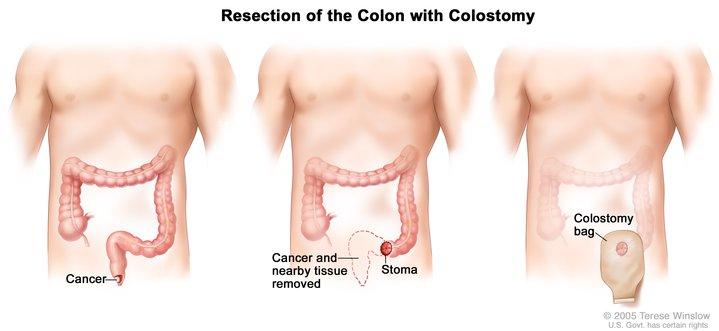
Resection of the colon with colostomy. Part of the colon containing the cancer and nearby healthy tissue are removed, a stoma is created, and a colostomy bag is attached to the stoma.
Credit: © Terese Winslow
- Local resection is a surgical procedure in which the tumor is cut from the anus along with some of the healthy tissue around it. Local resection may be used if the cancer is small and has not spread. This procedure may save the sphincter muscles so the person can still control bowel movements. Tumors that form in the lower part of the anus can often be removed with local resection.
- Abdominoperineal resection is a surgical procedure in which the anus, the rectum, and part of the sigmoid colon are removed through an incision made in the abdomen. The doctor sews the end of the intestine to an opening, called a stoma, made in the surface of the abdomen so body waste can be collected in a disposable bag outside of the body. This is called a colostomy. Lymph nodes that contain cancer may also be removed during this operation. This procedure is used only for cancer that remains or comes back after treatment with radiation therapy and chemotherapy.
Radiation therapy
Radiation therapy uses high-energy x-rays or other types of radiation to kill cancer cells or keep them from growing. There are two types of radiation therapy used to treat anal cancer:
- External radiation therapy uses a machine outside the body to send radiation toward the area of the body with cancer.
- Internal radiation therapy uses a radioactive substance sealed in needles, seeds, wires, or catheters that are placed directly into or near the cancer.
Learn more about Radiation Therapy to Treat Cancer and Radiation Therapy Side Effects.
Chemotherapy
Chemotherapy (also called chemo) uses drugs to stop the growth of cancer cells, either by killing the cells or by stopping the cells from dividing. When chemotherapy is taken by mouth or injected into a vein or muscle, the drugs enter the bloodstream and can reach cancer cells throughout the body (systemic chemotherapy).
Chemotherapy drugs used to treat anal cancer include:
Combinations of these drugs may be used. Other chemotherapy drugs not listed here may also be used.
Chemotherapy may be combined with other types of treatment, such as radiation therapy.
Learn more about how chemotherapy works, how it is given, common side effects, and more at Chemotherapy to Treat Cancer and Chemotherapy and You: Support for People With Cancer.
Treatment of stage 0 (carcinoma in situ)
Treatment of stages I, II, and III anal cancer
Treatment of stage I, stage II, and stage III anal cancer may include:
- local resection for tumors of the skin around the outside of the anus and tumors inside the anal opening that do not involve the anal sphincter
- external beam radiation therapy with chemotherapy
- radiation therapy alone
- abdominoperineal resection, if cancer remains or comes back after treatment with radiation therapy and chemotherapy, or other options that may include treatment with additional chemoradiation therapy, chemotherapy alone, or immunotherapy
Those who have had treatment that saves the sphincter muscles may receive follow-up exams every 3 months for the first 2 years, including rectal exams with endoscopy and biopsy, as needed to check for recurrence.
Treatment of stage IV anal cancer
Treatment of stage IV anal cancer may include:
- palliative surgery to relieve symptoms and improve quality of life
- palliative radiation therapy
- palliative chemotherapy with or without radiation therapy
Treatment of HIV and anal cancer
In general, treatment for people who have anal cancer and HIV is similar to treatment for other people, and these patients have similar outcomes. However, this treatment can further damage the weakened immune systems of people who have HIV. Treatment for people with a history of AIDS-related complications may require lower doses of anticancer drugs and radiation therapy than doses used for patients who do not have HIV.
Treatment of recurrent anal cancer
Treatment of recurrent anal cancer may include:
- radiation therapy and chemotherapy, for recurrence after surgery
- surgery, for recurrence after radiation therapy and/or chemotherapy
Clinical trials
For some people, joining a clinical trial may be an option. There are different types of clinical trials for people with cancer. For example, a treatment trial tests new treatments or new ways of using current treatments. Supportive care and palliative care trials look at ways to improve quality of life, especially for those who have side effects from cancer and its treatment.
Find clinical trials for anal cancer at Treatment Clinical Trials for Anal Cancer. Clinical trials supported by other organizations can be found on the ClinicalTrials.gov website.
Learn more about clinical trials, including how to find and join one, at Cancer Clinical Trial Information for Patients and Caregivers.
Side effects of treatment
Treatment for anal cancer may cause side effects. For information about side effects caused by treatment for cancer, visit our Side Effects page.
Follow-up care
As you go through treatment, you will have follow-up tests or check-ups. Some tests that were done to diagnose or stage the cancer may be repeated to see how well the treatment is working. Decisions about whether to continue, change, or stop treatment may be based on the results of these tests.
Some of the tests will continue to be done from time to time after treatment has ended. The results of these tests can show if your condition has changed or if the cancer has recurred (come back).