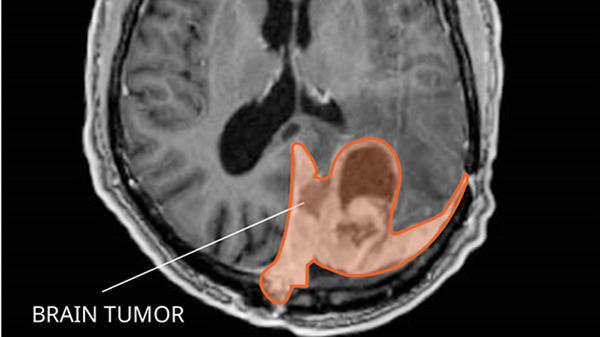
|
|
|
Stage Explanation
Types of childhood brain tumor
Infratentorial tumors
Medulloblastoma
Cerebellar astrocytoma
Infratentorial ependymoma
Brain stem glioma
Supratentorial tumors
Cerebral astrocytoma
Supratentorial ependymoma
Craniopharyngioma
Central nervous system germ cell tumor
Supratentorial primitive neuroectodermal tumors and pineoblastoma
Visual pathway and hypothalamic glioma
Spinal Cord Tumors
Recurrent brain tumor
Types of childhood brain tumor
Once childhood brain tumor is detected, additional tests will be performed to
determine the type of tumor. If a biopsy specimen is taken, the tumor cells will be examined carefully under a microscope to see how different they appear
from normal cells. This will determine the grade of the tumor. The grade of a
tumor is determined by microscopic examination of its cells to see how similar
the cells are to normal cells. Cells from higher-grade, more abnormal -looking
tumors usually grow faster and are more malignant than cells from lower-grade
tumors. Your child’s doctor needs to know the type and grade of tumor in order
to plan treatment.
There is no staging for childhood brain tumors. Brain tumors are grouped
according to their location within the brain and the appearance and behavior of
the tumor tissue. The following groupings are used for childhood brain tumors:
Infratentorial tumors
Infratentorial tumors are those that occur in the lower part of the brain.
Tumors found in this region include:
Medulloblastoma
(Refer to the PDQ summary on Childhood Medulloblastoma Treatment 1 for more
information.)
Cerebellar astrocytoma
(Refer to the PDQ summary on Childhood Cerebellar Astrocytoma Treatment 2 for
more information.)
Infratentorial ependymoma
Ependymal tumors are tumors that begin in the ependyma, the cells that line the
hollow cavities within the brain (called ventricles) which are filled with cerebrospinal fluid. The growth of ependymal tumors can obstruct the flow of
the cerebrospinal fluid through the brain and spinal cord. Infratentorial ependymomas begin in the lower part of the brain. These tumors may spread via
the cerebrospinal fluid to other areas of the brain and spinal cord.
Brain stem glioma
(Refer to the PDQ summary on Childhood Brain Stem Glioma Treatment 3 for more
information.)
Supratentorial tumors
Supratentorial tumors are those that occur in the upper part of the brain.
Common supratentorial tumors include:
Cerebral astrocytoma
(Refer to the PDQ summary on Childhood Cerebral Astrocytoma/Malignant Glioma Treatment 4 for more
information.)
Supratentorial ependymoma
Ependymal tumors are tumors that begin in the ependyma, the cells that line the
hollow cavities within the brain (called ventricles) which are filled with cerebrospinal fluid. The growth of ependymal tumors can obstruct the flow of
the cerebrospinal fluid through the brain. Supratentorial ependymomas begin in
the upper part of the brain. These tumors may spread to other areas of the
brain and spinal cord, depending on their grade.
Craniopharyngioma
Craniopharyngiomas are tumors that generally occur just above the pituitary
gland. Located at the bottom of the brain, the pituitary gland is about the
size of a pea and controls many vital functions. Craniopharyngiomas do not
spread, but may interfere with important structures near them, causing serious
problems.
Central nervous system germ cell tumor
Germ cell tumors arise from the sex cells found in the brain. There are
different types of germ cell tumors, including germinomas, embryonal cell carcinomas, choriocarcinomas, and teratomas. These tumors usually occur in the
center of the brain, and can spread to other parts of the brain and spinal
cord.
Supratentorial primitive neuroectodermal tumors and pineoblastoma
(Refer to the PDQ summary on Childhood Supratentorial Primitive Neuroectodermal
Tumors Treatment 5 for more information.)
Visual pathway and hypothalamic glioma
(Refer to the PDQ summary on Childhood Visual Pathway and Hypothalamic Glioma
Treatment 6 for more information.)
Spinal Cord Tumors
Spinal cord tumors are rare benign or cancerous tumors in the spinal cord (the bundles of nerves that carry messages between the brain and the body). The diagnosis of spinal cord tumors depends on how the tumor looks under a microscope and its location. Spinal cord tumors compress the spinal cord and the surrounding nerves causing symptoms such as pain or numbness in the back, arms, or legs, decreased muscle strength, and in some cases, loss of bowel or bladder control. X-rays of the brain and the entire spine are done at the time of diagnosis to determine extent of disease.
Recurrent brain tumor
Recurrent disease means that the cancer has come back (recurred) after it has
been treated. It may recur in its original location, in another part of the central nervous system, or systemically (throughout the body).
|
Glossary Terms
abnormal
Not normal. An abnormal lesion or growth may be cancerous, premalignant (likely to become cancer), or benign.
benign (beh-NINE)
Not cancerous. Benign tumors may grow larger but do not spread to other parts of the body.
biopsy specimen
Tissue removed from the body and examined under a microscope to determine whether disease is present.
bladder (BLA-der)
The organ that stores urine.
bowel (BOW-ul)
The long, tube-shaped organ in the abdomen that completes the process of digestion. The bowel has two parts, the small bowel and the large bowel. Also called the intestine.
brain tumor
The growth of abnormal cells in the tissues of the brain. Brain tumors can be benign (non-cancerous) or malignant (cancerous).
cancer (KAN-ser)
A term for diseases in which abnormal cells divide without control. Cancer cells can invade nearby tissues and can spread to other parts of the body through the blood and lymph systems. There are several main types of cancer. Carcinoma is cancer that begins in the skin or in tissues that line or cover internal organs. Sarcoma is cancer that begins in bone, cartilage, fat, muscle, blood vessels, or other connective or supportive tissue. Leukemia is cancer that starts in blood-forming tissue such as the bone marrow, and causes large numbers of abnormal blood cells to be produced and enter the blood. Lymphoma and multiple myeloma are cancers that begin in the cells of the immune system. Central nervous system cancers are cancers that begin in the tissues of the brain and spinal cord.
carcinoma (KAR-sih-NOH-muh)
Cancer that begins in the skin or in tissues that line or cover internal organs.
cell (sel)
The individual unit that makes up the tissues of the body. All living things are made up of one or more cells.
central nervous system (SEN-trul NER-vus SIS-tem)
CNS. The brain and spinal cord. Also called CNS.
cerebrospinal fluid (seh-REE-broh-SPY-nul...)
The fluid that flows in and around the hollow spaces of the brain and spinal cord, and between two of the meninges (the thin layers of tissue that cover and protect the brain and spinal cord). Cerebrospinal fluid is made by tissue called the choroid plexus in the ventricles (hollow spaces) in the brain. Also called CSF.
choriocarcinoma (KOR-ee-oh-KAR-sih-NOH-muh)
A malignant, fast-growing tumor that develops from trophoblastic cells (cells that help an embryo attach to the uterus and help form the placenta). Almost all choriocarcinomas form in the uterus after fertilization of an egg by a sperm, but a small number form in a testis or an ovary. Choriocarcinomas spread through the blood to other organs, especially the lungs. They are a type of gestational trophoblastic disease. Also called chorioblastoma, chorioepithelioma, and chorionic carcinoma.
craniopharyngioma (KRAY-nee-oh-fuh-RIN-jee-OH-muh)
A benign brain tumor that may be considered malignant because it can damage the hypothalamus, the area of the brain that controls body temperature, hunger, and thirst.
diagnosis
The process of identifying a disease by the signs and symptoms.
embryonal tumor
A mass of rapidly growing cells that begins in embryonic (fetal) tissue. Embryonal tumors may be benign or malignant, and include neuroblastomas and Wilms tumors. Also called embryoma.
ependymal tumor (eh-PEN-dih-mul TOO-mer)
A type of brain tumor that begins in cells lining the spinal cord central canal (fluid-filled space down the center) or the ventricles (fluid-filled spaces of the brain). Ependymal tumors may also form in the choroid plexus (tissue in the ventricles that makes cerebrospinal fluid). Also called ependymoma.
ependymoma (eh-PEN-dih-MOH-muh)
A type of brain tumor that begins in cells lining the spinal cord central canal (fluid-filled space down the center) or the ventricles (fluid-filled spaces of the brain). Ependymomas may also form in the choroid plexus (tissue in the ventricles that makes cerebrospinal fluid). Also called ependymal tumor.
fluid
Liquid.
germ cell tumor (jurm sel TOO-mer)
A type of tumor that begins in the cells that give rise to sperm or eggs. Germ cell tumors can occur almost anywhere in the body and can be either benign or malignant.
germinoma (jer-mih-NO-ma)
The most common type of germ cell tumor in the brain.
grade
The grade of a tumor depends on how abnormal the cancer cells look under a microscope and how quickly the tumor is likely to grow and spread. Grading systems are different for each type of cancer.
malignant (muh-LIG-nunt)
Cancerous. Malignant tumors can invade and destroy nearby tissue and spread to other parts of the body.
microscopic
Too small to be seen without a microscope.
nerve
A bundle of fibers that receives and sends messages between the body and the brain. The messages are sent by chemical and electrical changes in the cells that make up the nerves.
PDQ
PDQ is an online database developed and maintained by the National Cancer Institute. Designed to make the most current, credible, and accurate cancer information available to health professionals and the public, PDQ contains peer-reviewed summaries on cancer treatment, screening, prevention, genetics, complementary and alternative medicine, and supportive care; a registry of cancer clinical trials from around the world; and directories of physicians, professionals who provide genetics services, and organizations that provide cancer care. Most of this information, and more specific information about PDQ, can be found on the NCI's Web site at http://www.cancer.gov/cancertopics/pdq. Also called Physician Data Query.
pituitary gland (pih-TOO-ih-TAYR-ee...)
The main endocrine gland. It produces hormones that control other glands and many body functions, especially growth.
recurrent cancer (ree-KER-ent KAN-ser)
Cancer that has recurred (come back), usually after a period of time during which the cancer could not be detected. The cancer may come back to the same place as the original (primary) tumor or to another place in the body. Also called recurrence.
spinal cord
A column of nerve tissue that runs from the base of the skull down the back. It is surrounded by three protective membranes, and is enclosed within the vertebrae (back bones). The spinal cord and the brain make up the central nervous system, and spinal cord nerves carry most messages between the brain and the rest of the body.
spine
The bones, muscles, tendons, and other tissues that reach from the base of the skull to the tailbone. The spine encloses the spinal cord and the fluid surrounding the spinal cord. Also called backbone, spinal column, and vertebral column.
staging (STAY-jing)
Performing exams and tests to learn the extent of the cancer within the body, especially whether the disease has spread from the original site to other parts of the body. It is important to know the stage of the disease in order to plan the best treatment.
supratentorial (soo-pruh-ten-TOR-ee-ul)
Having to do with the upper part of the brain.
symptom
An indication that a person has a condition or disease. Some examples of symptoms are headache, fever, fatigue, nausea, vomiting, and pain.
systemic (sis-TEH-mik)
Affecting the entire body.
teratoma (tayr-uh-TOH-muh)
A type of germ cell tumor that may contain several different types of tissue, such as hair, muscle, and bone. Teratomas occur most often in the ovaries in women, the testicles in men, and the tailbone in children. Not all teratomas are malignant.
tissue (TISH-oo)
A group or layer of cells that work together to perform a specific function.
tumor (TOO-mer)
An abnormal mass of tissue that results when cells divide more than they should or do not die when they should. Tumors may be benign (not cancerous), or malignant (cancerous). Also called neoplasm.
ventricle (VEN-trih-kul)
A fluid-filled cavity in the heart or brain.
vital
Necessary to maintain life. Breathing is a vital function.
x-ray
A type of high-energy radiation. In low doses, x-rays are used to diagnose diseases by making pictures of the inside of the body. In high doses, x-rays are used to treat cancer.
|
Table of Links
| 1 | http://cancer.gov/cancertopics/pdq/treatment/childmedulloblastoma/Patient |
| 2 | http://cancer.gov/cancertopics/pdq/treatment/child-cerebellar-astrocytoma/Patie nt |
| 3 | http://cancer.gov/cancertopics/pdq/treatment/child-brain-stem-glioma/Patient |
| 4 | http://cancer.gov/cancertopics/pdq/treatment/child-cerebral-astrocytoma/Patient |
| 5 | http://cancer.gov/cancertopics/pdq/treatment/childSPNET/Patient |
| 6 | http://cancer.gov/cancertopics/pdq/treatment/child-visual-pathway/Patient |
|
 |