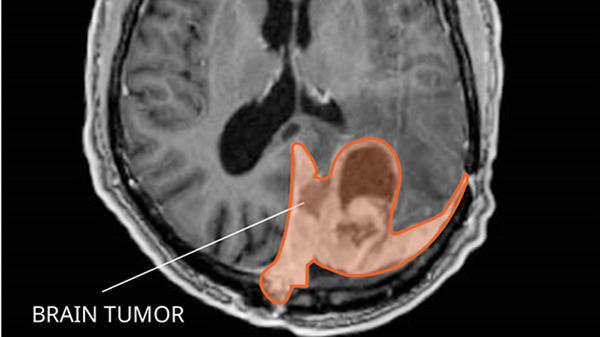
General Information About Childhood Brain and Spinal Cord Tumors
A childhood brain or spinal cord tumor is a disease in which abnormal cells form in the tissues of the brain or spinal cord.
There are many types of childhood brain and spinal cord tumors. The tumors are formed by the abnormal growth of cells and may begin in different areas of the brain or spinal cord.
The tumors may be benign (not cancer) or malignant (cancer). Benign brain tumors grow and press on nearby areas of the brain. They rarely spread into other tissues. Malignant brain tumors are likely to grow quickly and spread into other brain tissue. When a tumor grows into or presses on an area of the brain, it may stop that part of the brain from working the way it should. Both benign and malignant brain tumors can cause symptoms and need treatment.
Together, the brain and spinal cord make up the central nervous system (CNS).
The brain controls many important body functions.
The brain has three major parts:
- The cerebrum is the largest part of the brain. It is at the top of the head. The cerebrum controls thinking, learning, problem solving, emotions, speech, reading, writing, and voluntary movement.
- The cerebellum is in the lower back of the brain (near the middle of the back of the head). It controls movement, balance, and posture.
- The brain stem connects the brain to the spinal cord. It is in the lowest part of the brain (just above the back of the neck). The brain stem controls breathing, heart rate, and the nerves and muscles used in seeing, hearing, walking, talking, and eating.
|
| ||||||||||
| Anatomy of the brain, showing the cerebrum, cerebellum, brain stem, and other parts of the brain. | Anatomy of the inside of the brain, showing the pineal and pituitary glands, optic nerve, ventricles (with cerebrospinal fluid shown in blue), and other parts of the brain. |
The spinal cord connects the brain with nerves in most parts of the body.
The spinal cord is a column of nerve tissue that runs from the brain stem down the center of the back. It is covered by three thin layers of tissue called membranes. These membranes are surrounded by the vertebrae (back bones). Spinal cord nerves carry messages between the brain and the rest of the body. For example, a signal from the brain causes muscles to move or the skin sends a signal to the brain when touched.
Brain and spinal cord tumors are a common type of childhood cancer.
Although cancer is rare in children, brain and spinal cord tumors are the third most common type of childhood cancer, after leukemia and lymphoma. Brain tumors can occur in both children and adults. Treatment for children is usually different than treatment for adults. (See the PDQ summary on Adult Brain Tumors Treatment 2 for more information about the treatment of adults.)
This summary describes the treatment of primary brain and spinal cord tumors (tumors that begin in the brain and spinal cord). Treatment of metastatic brain and spinal cord tumors is not covered in this summary. Metastatic tumors are formed by cancer cells that begin in other parts of the body and spread to the brain or spinal cord.
The cause of most childhood brain and spinal cord tumors is unknown.
The symptoms of childhood brain and spinal cord tumors are not the same in every child.
Headaches and other symptoms may be caused by childhood brain and spinal cord tumors. Other conditions may cause the same symptoms. Check with your child's doctor if any of the following problems occur:
Brain Tumor Symptoms
- Morning headache or headache that goes away after vomiting.
- Frequent nausea and vomiting.
- Vision, hearing, and speech problems.
- Loss of balance and trouble walking.
- Unusual sleepiness or change in activity level.
- Unusual changes in personality or behavior.
- Seizures.
- Increase in the head size (in infants).
Spinal Cord Tumor Symptoms
- Back pain or pain that spreads from the back towards the arms or legs.
- A change in bowel habits or trouble urinating.
- Weakness in the legs.
- Trouble walking.
In addition to these symptoms of brain and spinal cord tumors, some children are unable to reach certain growth and development milestones such as sitting up, walking, and talking in sentences.
Tests that examine the brain and spinal cord are used to detect (find) childhood brain and spinal cord tumors.
The following tests and procedures may be used:
- Physical exam and history: An exam of the body to check general signs of health, including checking for signs of disease, such as lumps or anything else that seems unusual. A history of the patient’s health habits and past illnesses and treatments will also be taken.
- Neurological exam: A series of questions and tests to check the brain, spinal cord, and nerve function. The exam checks a person’s mental status, coordination, and ability to walk normally, and how well the muscles, senses, and reflexes work. This may also be called a neuro exam or a neurologic exam.
- Serum tumor marker test: A procedure in which a sample of blood is examined to measure the amounts of certain substances released into the blood by organs, tissues, or tumor cells in the body. Certain substances are linked to specific types of cancer when found in increased levels in the blood. These are called tumor markers.
- MRI (magnetic resonance imaging) with gadolinium: A procedure that uses a magnet, radio waves, and a computer to make a series of detailed pictures of the brain and spinal cord. A substance called gadolinium is injected into a vein. The gadolinium collects around the cancer cells so they show up brighter in the picture. This procedure is also called nuclear magnetic resonance imaging (NMRI).
- CT scan (CAT scan): A procedure that makes a series of detailed pictures of areas inside the body, taken from different angles. The pictures are made by a computer linked to an x-ray machine. A dye may be injected into a vein or swallowed to help the organs or tissues show up more clearly. This procedure is also called computed tomography, computerized tomography, or computerized axial tomography.
- Angiogram: A procedure to look at blood vessels and the flow of blood in the brain. A contrast dye is injected into the blood vessel. As the contrast dye moves through the blood vessel, x-rays are taken to see if there are any blockages.
- PET scan (positron emission tomography scan): A procedure to find malignant tumor cells in the body. A small amount of radioactive glucose (sugar) is injected into a vein. The PET scanner rotates around the body and makes a picture of where glucose is being used in the body. Malignant tumor cells show up brighter in the picture because they are more active and take up more glucose than normal cells do.
Most childhood brain tumors are diagnosed and removed in surgery.
If doctors think there might be a brain tumor, a biopsy may be done to remove a sample of tissue. For tumors in the brain, the biopsy is done by removing part of the skull and using a needle to remove a sample of tissue. A pathologist views the tissue under a microscope to look for cancer cells. If cancer cells are found, the doctor may remove as much tumor as safely possible during the same surgery. The pathologist checks the cancer cells to find out the type and grade of brain tumor. The grade of the tumor is based on how abnormal the cancer cells look under a microscope and how quickly the tumor is likely to grow and spread.
The following tests may be done on the sample of tissue that is removed:
- Immunohistochemistry study: A laboratory test in which a substance such as an antibody, dye, or radioisotope is added to a sample of cancer tissue to test for certain antigens. This type of study is used to tell the difference between different types of cancer.
- Light and electron microscopy: A laboratory test in which cells in a sample of tissue are viewed under regular and high-powered microscopes to look for certain changes in the cells.
- Cytogenetic analysis: A laboratory test in which cells in a sample of tissue are viewed under a microscope to look for certain changes in the chromosomes.
Some childhood brain and spinal cord tumors are diagnosed by imaging tests.
Sometimes a biopsy or surgery cannot be done safely because of where the tumor formed in the brain or spinal cord. These tumors are diagnosed based on the results of imaging tests and other procedures 3.
Certain factors affect prognosis (chance of recovery).
The prognosis (chance of recovery) depends on the following:
- Whether there are any cancer cells left after surgery.
- The type of tumor.
- Where the tumor is in the body.
- The child's age.
- Whether the tumor has just been diagnosed or has recurred (come back).
Glossary Termsabnormal (ab-NOR-mul)Not normal. An abnormal lesion or growth may be cancer, premalignant (likely to become cancer), or benign (not cancer).angiogram (AN-jee-oh-gram) An x-ray of blood vessels. The person receives an injection of dye to outline the vessels on the x-ray.antibody (AN-tee-BAH-dee) A protein made by plasma cells (a type of white blood cell) in response to an antigen (a substance that causes the body to make a specific immune response). Each antibody can bind to only one specific antigen. The purpose of this binding is to help destroy the antigen. Some antibodies destroy antigens directly. Others make it easier for white blood cells to destroy the antigen.antigen (AN-tih-jen) Any substance that causes the body to make a specific immune response.benign (beh-NINE) Not cancerous. Benign tumors may grow larger but do not spread to other parts of the body. Also called nonmalignant.biopsy (BY-op-see) The removal of cells or tissues for examination by a pathologist. The pathologist may study the tissue under a microscope or perform other tests on the cells or tissue. There are many different types of biopsy procedures. The most common types include: (1) incisional biopsy, in which only a sample of tissue is removed; (2) excisional biopsy, in which an entire lump or suspicious area is removed; and (3) needle biopsy, in which a sample of tissue or fluid is removed with a needle. When a wide needle is used, the procedure is called a core biopsy. When a thin needle is used, the procedure is called a fine-needle aspiration biopsy.blood (blud) A tissue with red blood cells, white blood cells, platelets, and other substances suspended in fluid called plasma. Blood takes oxygen and nutrients to the tissues, and carries away wastes.blood vessel (blud VEH-sel) A tube through which the blood circulates in the body. Blood vessels include a network of arteries, arterioles, capillaries, venules, and veins.bowel (BOW-ul) The long, tube-shaped organ in the abdomen that completes the process of digestion. The bowel has two parts, the small bowel and the large bowel. Also called intestine.brain stem (brayn stem) The part of the brain that is connected to the spinal cord.brain tumor (brayn TOO-mer) The growth of abnormal cells in the tissues of the brain. Brain tumors can be benign (not cancer) or malignant (cancer).cancer (KAN-ser) A term for diseases in which abnormal cells divide without control and can invade nearby tissues. Cancer cells can also spread to other parts of the body through the blood and lymph systems. There are several main types of cancer. Carcinoma is a cancer that begins in the skin or in tissues that line or cover internal organs. Sarcoma is a cancer that begins in bone, cartilage, fat, muscle, blood vessels, or other connective or supportive tissue. Leukemia is a cancer that starts in blood-forming tissue such as the bone marrow, and causes large numbers of abnormal blood cells to be produced and enter the blood. Lymphoma and multiple myeloma are cancers that begin in the cells of the immune system. Central nervous system cancers are cancers that begin in the tissues of the brain and spinal cord. Also called malignancy.cell (sel) The individual unit that makes up the tissues of the body. All living things are made up of one or more cells.central nervous system (SEN-trul NER-vus SIS-tem) The brain and spinal cord. Also called CNS.central nervous system tumor (SEN-trul NER-vus SIS-tem TOO-mer) A tumor of the central nervous system, including brain stem glioma, craniopharyngioma, medulloblastoma, and meningioma. Also called CNS tumor.cerebellum (SAYR-eh-BEH-lum) The portion of the brain in the back of the head between the cerebrum and the brain stem. The cerebellum controls balance for walking and standing, and other complex motor functions.cerebrum (seh-REE-brum) The largest part of the brain. It is divided into two hemispheres, or halves, called the cerebral hemispheres. Areas within the cerebrum control muscle functions and also control speech, thought, emotions, reading, writing, and learning.chromosome (KROH-muh-some) Part of a cell that contains genetic information. Except for sperm and eggs, all human cells contain 46 chromosomes.condition (kun-DIH-shun) In medicine, a health problem with certain characteristics or symptoms.contrast material (KON-trast muh-TEER-ee-ul) A dye or other substance that helps show abnormal areas inside the body. It is given by injection into a vein, by enema, or by mouth. Contrast material may be used with x-rays, CT scans, MRI, or other imaging tests.CT scan (… skan) A series of detailed pictures of areas inside the body taken from different angles. The pictures are created by a computer linked to an x-ray machine. Also called CAT scan, computed tomography scan, computerized axial tomography scan, and computerized tomography.cytogenetics (SY-toh-jeh-NEH-tix) The study of chromosomes and chromosomal abnormalities.diagnosis (DY-ug-NOH-sis) The process of identifying a disease, such as cancer, from its signs and symptoms.electron microscope (ee-LEK-tron MY-kroh-SKOPE) A microscope (device used to magnify small objects) that uses electrons (instead of light) to produce an enlarged image. An electron microscope shows tiny details better than any other type of microscope.gadolinium (GA-duh-LIH-nee-um) A metal element that is used in magnetic resonance imaging (MRI) and other imaging methods. It is a contrast agent, which helps show abnormal tissue in the body during imaging with a special machine.glucose (GLOO-kose) A type of sugar; the chief source of energy for living organisms.grade (grayd) A description of a tumor based on how abnormal the cancer cells look under a microscope and how quickly the tumor is likely to grow and spread. Grading systems are different for each type of cancer.growth and development milestones (grothe … dee-VEH-lup-MENT MILE-stones) Goals for the expected sizes of infants and children and activities they should be able to do at specific ages, such as sit, stand, play, speak, think, and interact with others.immunohistochemistry (IH-myoo-noh-HIS-toh-KEH-mih-stree) A technique used to identify specific molecules in different kinds of tissue. The tissue is treated with antibodies that bind the specific molecule. These are made visible under a microscope by using a color reaction, a radioisotope, colloidal gold, or a fluorescent dye. Immunohistochemistry is used to help diagnose diseases, such as cancer, and to detect the presence of microorganisms. It is also used in basic research to understand how cells grow and differentiate (become more specialized).injection (in-JEK-shun) Use of a syringe and needle to push fluids or drugs into the body; often called a "shot."laboratory test (LA-bruh-tor-ee...) A medical procedure that involves testing a sample of blood, urine, or other substance from the body. Tests can help determine a diagnosis, plan treatment, check to see if treatment is working, or monitor the disease over time.leukemia (loo-KEE-mee-uh) Cancer that starts in blood-forming tissue such as the bone marrow and causes large numbers of blood cells to be produced and enter the bloodstream.light microscope (lite MY-kroh-SKOPE) A microscope (device to magnify small objects) in which objects are lit directly by white light.lymphoma (lim-FOH-muh) Cancer that begins in cells of the immune system. There are two basic categories of lymphomas. One kind is Hodgkin lymphoma, which is marked by the presence of a type of cell called the Reed-Sternberg cell. The other category is non-Hodgkin lymphomas, which includes a large, diverse group of cancers of immune system cells. Non-Hodgkin lymphomas can be further divided into cancers that have an indolent (slow-growing) course and those that have an aggressive (fast-growing) course. These subtypes behave and respond to treatment differently. Both Hodgkin and non-Hodgkin lymphomas can occur in children and adults, and prognosis and treatment depend on the stage and the type of cancer.malignant (muh-LIG-nunt) Cancerous. Malignant cells can invade and destroy nearby tissue and spread to other parts of the body.medical history (MEH-dih-kul HIH-stuh-ree) A record of information about a person’s health. A personal medical history may include information about allergies, illnesses, surgeries, immunizations, and results of physical exams and tests. It may also include information about medicines taken and health habits, such as diet and exercise. A family medical history includes health information about a person’s close family members (parents, grandparents, children, brothers, and sisters). This includes their current and past illnesses. A family medical history may show a pattern of certain diseases in a family.membrane (MEM-brayn) A very thin layer of tissue that covers a surface.metastatic (meh-tuh-STA-tik) Having to do with metastasis, which is the spread of cancer from the primary site (place where it started) to other places in the body.microscope (MY-kroh-SKOPE) An instrument that is used to look at cells and other small objects that cannot be seen with the eye alone.MRI A procedure in which radio waves and a powerful magnet linked to a computer are used to create detailed pictures of areas inside the body. These pictures can show the difference between normal and diseased tissue. MRI makes better images of organs and soft tissue than other scanning techniques, such as computed tomography (CT) or x-ray. MRI is especially useful for imaging the brain, the spine, the soft tissue of joints, and the inside of bones. Also called magnetic resonance imaging, NMRI, and nuclear magnetic resonance imaging.nausea (NAW-zee-uh) A feeling of sickness or discomfort in the stomach that may come with an urge to vomit. Nausea is a side effect of some types of cancer therapy.nerve (nerv) A bundle of fibers that receives and sends messages between the body and the brain. The messages are sent by chemical and electrical changes in the cells that make up the nerves.neurological exam (NOOR-oh-LAH-jih-kul eg-ZAM) A series of questions and tests to check brain, spinal cord, and nerve function. The exam checks a person’s mental status, coordination, ability to walk, and how well the muscles, sensory systems, and deep tendon reflexes work.pathologist (puh-THAH-loh-jist) A doctor who identifies diseases by studying cells and tissues under a microscope.PDQ PDQ is an online database developed and maintained by the National Cancer Institute. Designed to make the most current, credible, and accurate cancer information available to health professionals and the public, PDQ contains peer-reviewed summaries on cancer treatment, screening, prevention, genetics, complementary and alternative medicine, and supportive care; a registry of cancer clinical trials from around the world; and directories of physicians, professionals who provide genetics services, and organizations that provide cancer care. Most of this information, and more specific information about PDQ, can be found on the NCI's Web site at http://www.cancer.gov/cancertopics/pdq. Also called Physician Data Query.PET scan (… skan) A procedure in which a small amount of radioactive glucose (sugar) is injected into a vein, and a scanner is used to make detailed, computerized pictures of areas inside the body where the glucose is used. Because cancer cells often use more glucose than normal cells, the pictures can be used to find cancer cells in the body. Also called positron emission tomography scan.physical examination (FIH-zih-kul eg-ZA-mih-NAY-shun) An exam of the body to check for general signs of disease.primary tumor (PRY-mayr-ee TOO-mer) The original tumor.prognosis (prog-NO-sis) The likely outcome or course of a disease; the chance of recovery or recurrence.radioactive (RAY-dee-oh-AK-tiv) Giving off radiation.radioisotope (RAY-dee-oh-I-suh-tope) An unstable form of a chemical element that releases radiation as it breaks down and becomes more stable. Radioisotopes may occur in nature or be made in a laboratory. In medicine, they are used in imaging tests and in treatment. Also called radionuclide.recover (ree-KUH-ver) To become well and healthy again.recur (ree-KER) To come back or to return.scanner (SKA-ner) In medicine, an instrument that takes pictures of the inside of the body.seizure (SEE-zher) Sudden, uncontrolled body movements and changes in behavior that occur because of abnormal electrical activity in the brain. Symptoms include loss of awareness, changes in emotion, loss of muscle control, and shaking. Seizures may be caused by drugs, high fevers, head injuries, and certain diseases, such as epilepsy.serum tumor marker test (SEER-um TOO-mer MAR-ker ...) A blood test that measures the amount of substances called tumor markers (or biomarkers). Tumor markers are released into the blood by tumor cells or by other cells in response to tumor cells. A high level of a tumor marker may be a sign of cancer.spinal cord (SPY-nul kord) A column of nerve tissue that runs from the base of the skull down the back. It is surrounded by three protective membranes, and is enclosed within the vertebrae (back bones). The spinal cord and the brain make up the central nervous system, and spinal cord nerves carry most messages between the brain and the rest of the body.surgery (SER-juh-ree) A procedure to remove or repair a part of the body or to find out whether disease is present. An operation.symptom (SIMP-tum) An indication that a person has a condition or disease. Some examples of symptoms are headache, fever, fatigue, nausea, vomiting, and pain.tissue (TIH-shoo) A group or layer of cells that work together to perform a specific function.tumor (TOO-mer) An abnormal mass of tissue that results when cells divide more than they should or do not die when they should. Tumors may be benign (not cancer), or malignant (cancer). Also called neoplasm.tumor marker (TOO-mer MAR-ker) A substance found in tissue, blood, or other body fluids that may be a sign of cancer or certain benign (noncancerous) conditions. Most tumor markers are made by both normal cells and cancer cells, but they are made in larger amounts by cancer cells. A tumor marker may help to diagnose cancer, plan treatment, or find out how well treatment is working or if cancer has come back. Examples of tumor markers include CA-125 (in ovarian cancer), CA 15-3 (in breast cancer), CEA (in colon cancer), and PSA (in prostate cancer).urine (YOOR-in) Fluid containing water and waste products. Urine is made by the kidneys, stored in the bladder, and leaves the body through the urethra.vein (vayn) A blood vessel that carries blood to the heart from tissues and organs in the body.vomit (VAH-mit) To eject some or all of the contents of the stomach through the mouth.x-ray (EX-ray) A type of radiation used in the diagnosis and treatment of cancer and other diseases. In low doses, x-rays are used to diagnose diseases by making pictures of the inside of the body. In high doses, x-rays are used to treat cancer. |