National Cancer Institute National Cancer Institute
U.S. National Institutes of Health National Cancer Institute
Send to Printer
Childhood Brain and Spinal Cord Tumors Treatment (PDQ®)     
Last Modified: 04/03/2008
Patient Version
Table of Contents

Description
What is childhood brain tumor?
Stage Explanation
Types of childhood brain tumor
Infratentorial tumors
        Medulloblastoma
        Cerebellar astrocytoma
        Infratentorial ependymoma
        Brain stem glioma
Supratentorial tumors
        Cerebral astrocytoma
        Supratentorial ependymoma
        Craniopharyngioma
        Central nervous system germ cell tumor
        Supratentorial primitive neuroectodermal tumors and pineoblastoma
        Visual pathway and hypothalamic glioma
Spinal Cord Tumors
Recurrent brain tumor
Treatment Option Overview
Treatment by type
Childhood Medulloblastoma
Childhood Cerebellar Astrocytoma
Childhood Infratentorial Ependymoma
Childhood Brain Stem Glioma
Childhood Cerebral Astrocytoma/Malignant Glioma
Childhood Supratentorial Ependymoma
Childhood Craniopharyngioma
Childhood Central Nervous System Germ Cell Tumor
Spinal Cord Tumors
Childhood Visual Pathway Glioma
Childhood Supratentorial Primitive Neuroectodermal Tumors and Pineoblastoma
Recurrent Childhood Brain Tumor
Recurrent low-grade glial tumors
Recurrent infratentorial ependymomas
Recurrent supratentorial ependymoma
Recurrent central nervous system germ cell tumors
Get More Information From NCI
Changes to This Summary (04/03/2008)
About PDQ

Description

Note: The health professional version 1 of this summary was extensively revised in April 2008. The patient version of this summary will reflect these changes soon.

What is childhood brain tumor?

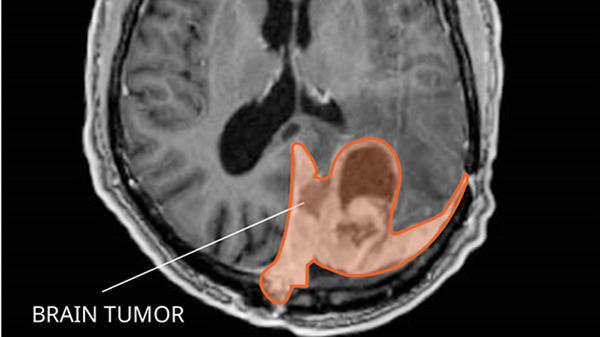
Childhood brain tumors are a diverse group of diseases characterized by the abnormal growth of tissue contained within the skull. Brain tumors can be benign (without cancer cells) or malignant (contains cancer cells). The brain controls vital functions such as memory and learning, the senses (hearing, sight, smell, taste, and touch), and emotion. It also controls other parts of the body, including muscles, organs, and blood vessels. Other than leukemia and lymphoma, brain tumors are the most common type of cancer that occurs in children.

This PDQ treatment information summary refers only to tumors that originate in the brain (primary brain tumors). Metastatic brain tumors, which are secondary tumors formed by cancer cells that begin in other parts of the body and spread to the brain, are not included. Brain tumors can occur in both children and adults; however, treatment may be different for adults than for children. (Refer to the PDQ summary on Adult Brain Tumor Treatment 2 for more information.)

If your child has symptoms that may be caused by a brain tumor, his or her doctor may order a computed tomographic (CT) scan, a diagnostic test that uses computers and x-rays to create pictures of the body. A magnetic resonance imaging (MRI) scan, a diagnostic test similar to a CT scan but which uses magnetic waves instead of x-rays, may also be performed.

Often, surgery is required to determine whether a brain tumor exists and what type of tumor it is. A small sample of tumor tissue may be surgically removed and examined under a microscope. This is called a biopsy. Sometimes a biopsy is done by making a small hole in the skull and using a needle to extract a sample of the tumor.

There are many types of brain tumors that occur in children. Treatment and chance of recovery (prognosis) depend on the type of tumor, its location within the brain, the extent to which it has spread, and your child’s age and general health.

Stage Explanation


Types of childhood brain tumor

Once childhood brain tumor is detected, additional tests will be performed to determine the type of tumor. If a biopsy specimen is taken, the tumor cells will be examined carefully under a microscope to see how different they appear from normal cells. This will determine the grade of the tumor. The grade of a tumor is determined by microscopic examination of its cells to see how similar the cells are to normal cells. Cells from higher-grade, more abnormal -looking tumors usually grow faster and are more malignant than cells from lower-grade tumors. Your child’s doctor needs to know the type and grade of tumor in order to plan treatment.

There is no staging for childhood brain tumors. Brain tumors are grouped according to their location within the brain and the appearance and behavior of the tumor tissue. The following groupings are used for childhood brain tumors:

Infratentorial tumors

Infratentorial tumors are those that occur in the lower part of the brain. Tumors found in this region include:

Medulloblastoma

(Refer to the PDQ summary on Childhood Medulloblastoma Treatment 3 for more information.)

Cerebellar astrocytoma

(Refer to the PDQ summary on Childhood Cerebellar Astrocytoma Treatment 4 for more information.)

Infratentorial ependymoma

Ependymal tumors are tumors that begin in the ependyma, the cells that line the hollow cavities within the brain (called ventricles) which are filled with cerebrospinal fluid. The growth of ependymal tumors can obstruct the flow of the cerebrospinal fluid through the brain and spinal cord. Infratentorial ependymomas begin in the lower part of the brain. These tumors may spread via the cerebrospinal fluid to other areas of the brain and spinal cord.

Brain stem glioma

(Refer to the PDQ summary on Childhood Brain Stem Glioma Treatment 5 for more information.)

Supratentorial tumors

Supratentorial tumors are those that occur in the upper part of the brain. Common supratentorial tumors include:

Cerebral astrocytoma

(Refer to the PDQ summary on Childhood Cerebral Astrocytoma/Malignant Glioma Treatment 6 for more information.)

Supratentorial ependymoma

Ependymal tumors are tumors that begin in the ependyma, the cells that line the hollow cavities within the brain (called ventricles) which are filled with cerebrospinal fluid. The growth of ependymal tumors can obstruct the flow of the cerebrospinal fluid through the brain. Supratentorial ependymomas begin in the upper part of the brain. These tumors may spread to other areas of the brain and spinal cord, depending on their grade.

Craniopharyngioma

Craniopharyngiomas are tumors that generally occur just above the pituitary gland. Located at the bottom of the brain, the pituitary gland is about the size of a pea and controls many vital functions. Craniopharyngiomas do not spread, but may interfere with important structures near them, causing serious problems.

Central nervous system germ cell tumor

Germ cell tumors arise from the sex cells found in the brain. There are different types of germ cell tumors, including germinomas, embryonal cell carcinomas, choriocarcinomas, and teratomas. These tumors usually occur in the center of the brain, and can spread to other parts of the brain and spinal cord.

Supratentorial primitive neuroectodermal tumors and pineoblastoma

(Refer to the PDQ summary on Childhood Supratentorial Primitive Neuroectodermal Tumors Treatment 7 for more information.)

Visual pathway and hypothalamic glioma

(Refer to the PDQ summary on Childhood Visual Pathway and Hypothalamic Glioma Treatment 8 for more information.)

Spinal Cord Tumors

Spinal cord tumors are rare benign or cancerous tumors in the spinal cord (the bundles of nerves that carry messages between the brain and the body). The diagnosis of spinal cord tumors depends on how the tumor looks under a microscope and its location. Spinal cord tumors compress the spinal cord and the surrounding nerves causing symptoms such as pain or numbness in the back, arms, or legs, decreased muscle strength, and in some cases, loss of bowel or bladder control. X-rays of the brain and the entire spine are done at the time of diagnosis to determine extent of disease.

Recurrent brain tumor

Recurrent disease means that the cancer has come back (recurred) after it has been treated. It may recur in its original location, in another part of the central nervous system, or systemically (throughout the body).

Treatment Option Overview

There are treatments for all children with brain tumors. Three kinds of treatment are used:

More than one method of treatment may be used, depending on the needs of the patient.

Experienced doctors working together may provide the best treatment for children with brain tumors. Your child’s treatment will often be coordinated by a pediatric oncologist, a doctor who specializes in cancer in children. The pediatric oncologist may refer your child to other specialists, such as a pediatric neurosurgeon (a specialist in childhood brain surgery), a pediatric neurologist, a psychologist, a radiation oncologist, and other doctors who specialize in the type of treatment your child requires.

Treatment options often depend on the type of tumor and its location within the brain. Complete or near complete removal of the tumor is often possible. If the tumor cannot be completely removed, radiation therapy and/or chemotherapy may also be given.

Radiation therapy uses high-energy radiation from x-rays and other sources to kill cancer cells and shrink tumors. Radiation therapy for childhood brain tumors usually comes from a machine outside the body (external radiation therapy). For some types of brain tumors, clinical trials are evaluating radiation therapy given in several small doses per day (hyperfractionated radiation therapy). Since radiation therapy can affect growth and brain development, other clinical trials are testing ways to decrease or delay radiation therapy, especially for younger children who have not yet achieved full growth.

Chemotherapy is the use of drugs to kill cancer cells. Chemotherapy drugs may be taken by mouth or injected into a vein (intravenous) or muscle. Chemotherapy is called a systemic treatment because the drug enters the bloodstream, travels through the body, and can kill cancer cells throughout the body. Chemotherapy is being studied in clinical trials as a means of delaying, modifying or eliminating the need for radiation therapy in younger patients, as well as for use prior to or during radiation therapy.

Treatment by type

Treatment for childhood brain tumor depends on the type and grade of the tumor, its location within the brain, and your child’s age and overall health.

Your child may receive treatment that is considered standard based on its effectiveness in a number of patients in past studies, or you may choose to have your child enter a clinical trial. Not all patients are cured with standard therapy and some standard treatments may have more side effects than are desired. For these reasons, clinical trials are designed to test new treatments and to find better ways to treat people with cancer. Clinical trials are ongoing in most parts of the country for childhood brain tumors. For more information, call the Cancer Information Service at 1-800-4-CANCER (1-800-422-6237); TTY at 1-800-332-8615.

Childhood Medulloblastoma

(Refer to the PDQ summary on Childhood Medulloblastoma Treatment 3 for more information.)

Childhood Cerebellar Astrocytoma

(Refer to the PDQ summary on Childhood Cerebellar Astrocytoma Treatment 4 for more information.)

Childhood Infratentorial Ependymoma

Treatment for childhood infratentorial ependymoma is usually surgery to remove as much of the tumor as possible, followed by radiation therapy. For children younger than 3 years of age, chemotherapy may be given to delay, modify, or eliminate the use of radiation therapy.

Check for clinical trials from NCI's PDQ Cancer Clinical Trials Registry that are now accepting patients with childhood infratentorial ependymoma 9.

Childhood Brain Stem Glioma

(Refer to the PDQ summary on Childhood Brain Stem Glioma Treatment 5 for more information.)

Childhood Cerebral Astrocytoma/Malignant Glioma

(Refer to the PDQ summary on Childhood Cerebral Astrocytoma/Malignant Glioma Treatment 6 for more information.)

Childhood Supratentorial Ependymoma

Treatment for childhood supratentorial ependymoma may be surgery followed by radiation therapy. Clinical trials are evaluating surgery followed by chemotherapy with or without radiation therapy. For children younger than 3 years of age, chemotherapy may be given to delay or modify the use of radiation therapy. Clinical trials evaluating radiation therapy with or without chemotherapy are ongoing.

Check for clinical trials from NCI's PDQ Cancer Clinical Trials Registry that are now accepting patients with childhood supratentorial ependymoma 10.

Childhood Craniopharyngioma

Treatment for childhood craniopharyngioma may be surgery, radiation therapy, or a combination of the two.

Check for clinical trials from NCI's PDQ Cancer Clinical Trials Registry that are now accepting patients with childhood craniopharyngioma 11.

Childhood Central Nervous System Germ Cell Tumor

Treatment for childhood central nervous system germ cell tumor may be radiation therapy. In some cases, chemotherapy may be given in addition to radiation therapy.

Check for clinical trials from NCI's PDQ Cancer Clinical Trials Registry that are now accepting patients with childhood central nervous system germ cell tumor 12.

Spinal Cord Tumors

Treatment for spinal cord tumors may be surgery with or without radiation therapy. In some cases, chemotherapy may be given in addition to radiation therapy.

Check for clinical trials from NCI's PDQ Cancer Clinical Trials Registry that are now accepting patients with childhood spinal cord neoplasm 13.

Childhood Visual Pathway Glioma

(Refer to the PDQ summary on Childhood Visual Pathway and Hypothalamic Glioma Treatment 8 for more information.)

Childhood Supratentorial Primitive Neuroectodermal Tumors and Pineoblastoma

(Refer to the PDQ summary on Childhood Supratentorial Primitive Neuroectodermal Tumors Treatment 7 for more information.)

Recurrent Childhood Brain Tumor

Treatment for recurrent disease depends on the type of tumor, whether the tumor recurs in the site in which it originated or elsewhere, the amount of time between initial treatment and the recurrence, and the type of treatment previously given.

Recurrent low-grade glial tumors

Treatment options consist of surgery, radiation therapy, and chemotherapy. Clinical trials are currently evaluating the role of chemotherapy for treatment of these tumors.

Recurrent infratentorial ependymomas

Treatment options include surgery and chemotherapy. Clinical trials are currently evaluating the role of chemotherapy for treatment of these tumors.

Recurrent supratentorial ependymoma

Treatment usually consists of chemotherapy. Clinical trials are currently evaluating the role of chemotherapy for treatment of these tumors.

Recurrent central nervous system germ cell tumors

Treatment usually consists of chemotherapy. Clinical trials are currently evaluating the role of chemotherapy for treatment of these tumors.

Check for clinical trials from NCI's PDQ Cancer Clinical Trials Registry that are now accepting patients with recurrent childhood brain tumor 14.

Get More Information From NCI

Call 1-800-4-CANCER

For more information, U.S. residents may call the National Cancer Institute's (NCI's) Cancer Information Service toll-free at 1-800-4-CANCER (1-800-422-6237) Monday through Friday from 9:00 a.m. to 4:30 p.m. Deaf and hard-of-hearing callers with TTY equipment may call 1-800-332-8615. The call is free and a trained Cancer Information Specialist is available to answer your questions.

Chat online

The NCI's LiveHelp® 15 online chat service provides Internet users with the ability to chat online with an Information Specialist. The service is available from 9:00 a.m. to 11:00 p.m. Eastern time, Monday through Friday. Information Specialists can help Internet users find information on NCI Web sites and answer questions about cancer.

Write to us

For more information from the NCI, please write to this address:

NCI Public Inquiries Office
Suite 3036A
6116 Executive Boulevard, MSC8322
Bethesda, MD 20892-8322

Search the NCI Web site

The NCI Web site 16 provides online access to information on cancer, clinical trials, and other Web sites and organizations that offer support and resources for cancer patients and their families. For a quick search, use our “Best Bets” search box in the upper right hand corner of each Web page. The results that are most closely related to your search term will be listed as Best Bets at the top of the list of search results.

There are also many other places to get materials and information about cancer treatment and services. Hospitals in your area may have information about local and regional agencies that have information on finances, getting to and from treatment, receiving care at home, and dealing with problems related to cancer treatment.

Find Publications

The NCI has booklets and other materials for patients, health professionals, and the public. These publications discuss types of cancer, methods of cancer treatment, coping with cancer, and clinical trials. Some publications provide information on tests for cancer, cancer causes and prevention, cancer statistics, and NCI research activities. NCI materials on these and other topics may be ordered online or printed directly from the NCI Publications Locator 17. These materials can also be ordered by telephone from the Cancer Information Service toll-free at 1-800-4-CANCER (1-800-422-6237), TTY at 1-800-332-8615.

Changes to This Summary (04/03/2008)

The PDQ cancer information summaries are reviewed regularly and updated as new information becomes available. This section describes the latest changes made to this summary as of the date above.

This summary was renamed from Childhood Brain Tumors Treatment.

About PDQ

PDQ is a comprehensive cancer database available on NCI's Web site.

PDQ is the National Cancer Institute's (NCI's) comprehensive cancer information database. Most of the information contained in PDQ is available online at NCI's Web site 16. PDQ is provided as a service of the NCI. The NCI is part of the National Institutes of Health, the federal government's focal point for biomedical research.

PDQ contains cancer information summaries.

The PDQ database contains summaries of the latest published information on cancer prevention, detection, genetics, treatment, supportive care, and complementary and alternative medicine. Most summaries are available in two versions. The health professional versions provide detailed information written in technical language. The patient versions are written in easy-to-understand, nontechnical language. Both versions provide current and accurate cancer information.

The PDQ cancer information summaries are developed by cancer experts and reviewed regularly.

Editorial Boards made up of experts in oncology and related specialties are responsible for writing and maintaining the cancer information summaries. The summaries are reviewed regularly and changes are made as new information becomes available. The date on each summary ("Date Last Modified") indicates the time of the most recent change.

PDQ also contains information on clinical trials.

A clinical trial is a study to answer a scientific question, such as whether one treatment is better than another. Trials are based on past studies and what has been learned in the laboratory. Each trial answers certain scientific questions in order to find new and better ways to help cancer patients. During treatment clinical trials, information is collected about the effects of a new treatment and how well it works. If a clinical trial shows that a new treatment is better than one currently being used, the new treatment may become "standard." In the United States, about two-thirds of children with cancer are treated in a clinical trial at some point in their illness.

Listings of clinical trials are included in PDQ and are available online at NCI's Web site 18. Descriptions of the trials are available in health professional and patient versions. For additional help in locating a childhood cancer clinical trial, call the Cancer Information Service at 1-800-4-CANCER (1-800-422-6237), TTY at 1-800-332-8615.

The PDQ database contains listings of groups specializing in clinical trials.

The Children's Oncology Group (COG) is the major group that organizes clinical trials for childhood cancers in the United States. Information about contacting COG is available on the NCI Web site 16 or from the Cancer Information Service at 1-800-4-CANCER (1-800-422-6237), TTY at 1-800-332-8615.

The PDQ database contains listings of cancer health professionals and hospitals with cancer programs.

Because cancer in children and adolescents is rare, the majority of children with cancer are treated by health professionals specializing in childhood cancers, at hospitals or cancer centers with special facilities to treat them. The PDQ database contains listings of health professionals who specialize in childhood cancer and listings of hospitals with cancer programs. For help locating childhood cancer health professionals or a hospital with cancer programs, call the Cancer Information Service at 1-800-4-CANCER (1-800-422-6237), TTY at 1-800-332-8615.


Glossary Terms

abnormal
Not normal. An abnormal lesion or growth may be cancerous, premalignant (likely to become cancer), or benign.
benign (beh-NINE)
Not cancerous. Benign tumors may grow larger but do not spread to other parts of the body.
biopsy (BY-op-see)
The removal of cells or tissues for examination by a pathologist. The pathologist may study the tissue under a microscope or perform other tests on the cells or tissue. There are many different types of biopsy procedures. The most common types include: (1) incisional biopsy, in which only a sample of tissue is removed; (2) excisional biopsy, in which an entire lump or suspicious area is removed; and (3) needle biopsy, in which a sample of tissue or fluid is removed with a needle. When a wide needle is used, the procedure is called a core biopsy. When a thin needle is used, the procedure is called a fine-needle aspiration biopsy.
biopsy specimen
Tissue removed from the body and examined under a microscope to determine whether disease is present.
bladder (BLA-der)
The organ that stores urine.
blood vessel
A tube through which the blood circulates in the body. Blood vessels include a network of arteries, arterioles, capillaries, venules, and veins.
bowel (BOW-ul)
The long, tube-shaped organ in the abdomen that completes the process of digestion. The bowel has two parts, the small bowel and the large bowel. Also called the intestine.
brain tumor
The growth of abnormal cells in the tissues of the brain. Brain tumors can be benign (non-cancerous) or malignant (cancerous).
cancer (KAN-ser)
A term for diseases in which abnormal cells divide without control. Cancer cells can invade nearby tissues and can spread to other parts of the body through the blood and lymph systems. There are several main types of cancer. Carcinoma is cancer that begins in the skin or in tissues that line or cover internal organs. Sarcoma is cancer that begins in bone, cartilage, fat, muscle, blood vessels, or other connective or supportive tissue. Leukemia is cancer that starts in blood-forming tissue such as the bone marrow, and causes large numbers of abnormal blood cells to be produced and enter the blood. Lymphoma and multiple myeloma are cancers that begin in the cells of the immune system. Central nervous system cancers are cancers that begin in the tissues of the brain and spinal cord.
Cancer Information Service
CIS. The Cancer Information Service is the National Cancer Institute's link to the public, interpreting and explaining research findings in a clear and understandable manner, and providing personalized responses to specific questions about cancer. Access the CIS by calling 1-800-4-CANCER (1-800-422-6237), or by using the LiveHelp instant-messaging service at https://cissecure.nci.nih.gov/livehelp/welcome.asp. Also called CIS.
carcinoma (KAR-sih-NOH-muh)
Cancer that begins in the skin or in tissues that line or cover internal organs.
cell (sel)
The individual unit that makes up the tissues of the body. All living things are made up of one or more cells.
central nervous system (SEN-trul NER-vus SIS-tem)
CNS. The brain and spinal cord. Also called CNS.
cerebrospinal fluid (seh-REE-broh-SPY-nul...)
The fluid that flows in and around the hollow spaces of the brain and spinal cord, and between two of the meninges (the thin layers of tissue that cover and protect the brain and spinal cord). Cerebrospinal fluid is made by tissue called the choroid plexus in the ventricles (hollow spaces) in the brain. Also called CSF.
chemotherapy (KEE-moh-THAYR-uh-pee)
Treatment with drugs that kill cancer cells.
choriocarcinoma (KOR-ee-oh-KAR-sih-NOH-muh)
A malignant, fast-growing tumor that develops from trophoblastic cells (cells that help an embryo attach to the uterus and help form the placenta). Almost all choriocarcinomas form in the uterus after fertilization of an egg by a sperm, but a small number form in a testis or an ovary. Choriocarcinomas spread through the blood to other organs, especially the lungs. They are a type of gestational trophoblastic disease. Also called chorioblastoma, chorioepithelioma, and chorionic carcinoma.
clinical trial
A type of research study that tests how well new medical approaches work in people. These studies test new methods of screening, prevention, diagnosis, or treatment of a disease. Also called a clinical study.
computed tomography scan (kum-PYOO-ted toh-MAH-gruh-fee skan)
CT scan. A series of detailed pictures of areas inside the body taken from different angles; the pictures are created by a computer linked to an x-ray machine. Also called CT scan, computerized tomography, computerized axial tomography scan, and CAT scan.
craniopharyngioma (KRAY-nee-oh-fuh-RIN-jee-OH-muh)
A benign brain tumor that may be considered malignant because it can damage the hypothalamus, the area of the brain that controls body temperature, hunger, and thirst.
cure
To heal or restore health; a treatment to restore health.
diagnosis
The process of identifying a disease by the signs and symptoms.
dose
The amount of medicine taken, or radiation given, at one time.
drug
Any substance, other than food, that is used to prevent, diagnose, treat or relieve symptoms of a disease or abnormal condition. Also refers to a substance that alters mood or body function, or that can be habit-forming or addictive, especially a narcotic.
embryonal tumor
A mass of rapidly growing cells that begins in embryonic (fetal) tissue. Embryonal tumors may be benign or malignant, and include neuroblastomas and Wilms tumors. Also called embryoma.
ependymal tumor (eh-PEN-dih-mul TOO-mer)
A type of brain tumor that begins in cells lining the spinal cord central canal (fluid-filled space down the center) or the ventricles (fluid-filled spaces of the brain). Ependymal tumors may also form in the choroid plexus (tissue in the ventricles that makes cerebrospinal fluid). Also called ependymoma.
ependymoma (eh-PEN-dih-MOH-muh)
A type of brain tumor that begins in cells lining the spinal cord central canal (fluid-filled space down the center) or the ventricles (fluid-filled spaces of the brain). Ependymomas may also form in the choroid plexus (tissue in the ventricles that makes cerebrospinal fluid). Also called ependymal tumor.
external radiation therapy (...RAY-dee-AY-shun THAYR-uh-pee)
A type of radiation therapy that uses a machine to aim high-energy rays at the cancer from outside of the body. Also called external-beam radiation therapy.
fluid
Liquid.
germ cell tumor (jurm sel TOO-mer)
A type of tumor that begins in the cells that give rise to sperm or eggs. Germ cell tumors can occur almost anywhere in the body and can be either benign or malignant.
germinoma (jer-mih-NO-ma)
The most common type of germ cell tumor in the brain.
grade
The grade of a tumor depends on how abnormal the cancer cells look under a microscope and how quickly the tumor is likely to grow and spread. Grading systems are different for each type of cancer.
hyperfractionation (hy-per-FRAK-shun-AY-shun)
Radiation therapy that gives smaller doses (fractions) of radiation more often than standard radiation therapy so that the full treatment course can be given with fewer side effects. In hyperfractionation, individual doses are given more often than the standard dose of once a day. Also called hyperfractionated radiation therapy and superfractionated radiation therapy.
injection
Use of a syringe and needle to push fluids or drugs into the body; often called a "shot."
intravenous (IN-truh-VEE-nus)
Into or within a vein. Intravenous usually refers to a way of giving a drug or other substance through a needle or tube inserted into a vein. Also called I.V.
leukemia (loo-KEE-mee-uh)
Cancer that starts in blood-forming tissue such as the bone marrow and causes large numbers of blood cells to be produced and enter the bloodstream.
lymphoma (lim-FOH-muh)
Cancer that begins in cells of the immune system. There are two basic categories of lymphomas. One kind is Hodgkin lymphoma, which is marked by the presence of a type of cell called the Reed-Sternberg cell. The other category is non-Hodgkin lymphomas, which includes a large, diverse group of cancers of immune system cells. Non-Hodgkin lymphomas can be further divided into cancers that have an indolent (slow-growing) course and those that have an aggressive (fast-growing) course. These subtypes behave and respond to treatment differently. Both Hodgkin and non-Hodgkin lymphomas can occur in children and adults, and prognosis and treatment depend on the stage and the type of cancer.
magnetic resonance imaging (mag-NEH-tik REH-zuh-nunts IH-muh-jing)
A procedure in which radio waves and a powerful magnet linked to a computer are used to create detailed pictures of areas inside the body. These pictures can show the difference between normal and diseased tissue. Magnetic resonance imaging makes better images of organs and soft tissue than other scanning techniques, such as computed tomography (CT) or x-ray. Magnetic resonance imaging is especially useful for imaging the brain, the spine, the soft tissue of joints, and the inside of bones. Also called MRI, nuclear magnetic resonance imaging, and NMRI.
malignant (muh-LIG-nunt)
Cancerous. Malignant tumors can invade and destroy nearby tissue and spread to other parts of the body.
metastatic (meh-tuh-STA-tik)
Having to do with metastasis, which is the spread of cancer from one part of the body to another.
microscopic
Too small to be seen without a microscope.
nerve
A bundle of fibers that receives and sends messages between the body and the brain. The messages are sent by chemical and electrical changes in the cells that make up the nerves.
neurologist (noo-RAH-loh-jist)
A doctor who specializes in the diagnosis and treatment of disorders of the nervous system.
neurosurgeon (NOO-ro-SER-jun)
A doctor who specializes in surgery on the brain, spine, and other parts of the nervous system.
oncologist (on-KAH-loh-jist)
A doctor who specializes in treating cancer. Some oncologists specialize in a particular type of cancer treatment. For example, a radiation oncologist specializes in treating cancer with radiation.
organ
A part of the body that performs a specific function. For example, the heart is an organ.
PDQ
PDQ is an online database developed and maintained by the National Cancer Institute. Designed to make the most current, credible, and accurate cancer information available to health professionals and the public, PDQ contains peer-reviewed summaries on cancer treatment, screening, prevention, genetics, complementary and alternative medicine, and supportive care; a registry of cancer clinical trials from around the world; and directories of physicians, professionals who provide genetics services, and organizations that provide cancer care. Most of this information, and more specific information about PDQ, can be found on the NCI's Web site at http://www.cancer.gov/cancertopics/pdq. Also called Physician Data Query.
pediatric (pee-dee-A-trik)
Having to do with children.
pituitary gland (pih-TOO-ih-TAYR-ee...)
The main endocrine gland. It produces hormones that control other glands and many body functions, especially growth.
primary tumor
The original tumor.
prognosis (prog-NO-sis)
The likely outcome or course of a disease; the chance of recovery or recurrence.
psychologist (sy-KAH-loh-jist)
A specialist who can talk with patients and their families about emotional and personal matters, and can help them make decisions.
radiation (RAY-dee-AY-shun)
Energy released in the form of particles or electromagnetic waves. Common sources of radiation include radon gas, cosmic rays from outer space, and medical x-rays.
radiation oncologist (RAY-dee-AY-shun on-KAH-loh-jist)
A doctor who specializes in using radiation to treat cancer.
radiation therapy (RAY-dee-AY-shun THAYR-uh-pee)
The use of high-energy radiation from x-rays, gamma rays, neutrons, protons, and other sources to kill cancer cells and shrink tumors. Radiation may come from a machine outside the body (external-beam radiation therapy), or it may come from radioactive material placed in the body near cancer cells (internal radiation therapy). Systemic radiation therapy uses a radioactive substance, such as a radiolabeled monoclonal antibody, that travels in the blood to tissues throughout the body. Also called radiotherapy and irradiation.
recur
To come back or to return.
recurrent cancer (ree-KER-ent KAN-ser)
Cancer that has recurred (come back), usually after a period of time during which the cancer could not be detected. The cancer may come back to the same place as the original (primary) tumor or to another place in the body. Also called recurrence.
secondary cancer
A term that is used to describe either a new primary cancer or cancer that has spread from the place in which it started to other parts of the body.
side effect
A problem that occurs when treatment affects healthy tissues or organs. Some common side effects of cancer treatment are fatigue, pain, nausea, vomiting, decreased blood cell counts, hair loss, and mouth sores.
spinal cord
A column of nerve tissue that runs from the base of the skull down the back. It is surrounded by three protective membranes, and is enclosed within the vertebrae (back bones). The spinal cord and the brain make up the central nervous system, and spinal cord nerves carry most messages between the brain and the rest of the body.
spine
The bones, muscles, tendons, and other tissues that reach from the base of the skull to the tailbone. The spine encloses the spinal cord and the fluid surrounding the spinal cord. Also called backbone, spinal column, and vertebral column.
staging (STAY-jing)
Performing exams and tests to learn the extent of the cancer within the body, especially whether the disease has spread from the original site to other parts of the body. It is important to know the stage of the disease in order to plan the best treatment.
standard therapy (...THAYR-uh-pee)
In medicine, treatment that experts agree is appropriate, accepted, and widely used. Health care providers are obligated to provide patients with standard therapy. Also called standard of care or best practice.
supratentorial (soo-pruh-ten-TOR-ee-ul)
Having to do with the upper part of the brain.
surgery (SER-juh-ree)
A procedure to remove or repair a part of the body or to find out whether disease is present. An operation.
symptom
An indication that a person has a condition or disease. Some examples of symptoms are headache, fever, fatigue, nausea, vomiting, and pain.
systemic (sis-TEH-mik)
Affecting the entire body.
systemic therapy (sis-TEH-mik THAYR-uh-pee)
Treatment using substances that travel through the bloodstream, reaching and affecting cells all over the body.
teratoma (tayr-uh-TOH-muh)
A type of germ cell tumor that may contain several different types of tissue, such as hair, muscle, and bone. Teratomas occur most often in the ovaries in women, the testicles in men, and the tailbone in children. Not all teratomas are malignant.
tissue (TISH-oo)
A group or layer of cells that work together to perform a specific function.
tumor (TOO-mer)
An abnormal mass of tissue that results when cells divide more than they should or do not die when they should. Tumors may be benign (not cancerous), or malignant (cancerous). Also called neoplasm.
ventricle (VEN-trih-kul)
A fluid-filled cavity in the heart or brain.
vital
Necessary to maintain life. Breathing is a vital function.
x-ray
A type of high-energy radiation. In low doses, x-rays are used to diagnose diseases by making pictures of the inside of the body. In high doses, x-rays are used to treat cancer.


Table of Links

1http://cancer.gov/cancertopics/pdq/treatment/childbrain/healthprofessional
2http://cancer.gov/cancertopics/pdq/treatment/adultbrain/Patient
3http://cancer.gov/cancertopics/pdq/treatment/childmedulloblastoma/Patient
4http://cancer.gov/cancertopics/pdq/treatment/child-cerebellar-astrocytoma/Patie
nt
5http://cancer.gov/cancertopics/pdq/treatment/child-brain-stem-glioma/Patient
6http://cancer.gov/cancertopics/pdq/treatment/child-cerebral-astrocytoma/Patient
7http://cancer.gov/cancertopics/pdq/treatment/childSPNET/Patient
8http://cancer.gov/cancertopics/pdq/treatment/child-visual-pathway/Patient
9http://www.cancer.gov/Search/ClinicalTrialsLink.aspx?diagnosis=40571&tt=1&a
mp;format=1
10http://www.cancer.gov/Search/ClinicalTrialsLink.aspx?diagnosis=43426&tt=1&a
mp;format=1
11http://www.cancer.gov/Search/ClinicalTrialsLink.aspx?diagnosis=43428&tt=1&a
mp;format=1
12http://www.cancer.gov/Search/ClinicalTrialsLink.aspx?diagnosis=38199&tt=1&a
mp;format=1
13http://www.cancer.gov/Search/ClinicalTrialsLink.aspx?diagnosis=38474&tt=1&a
mp;format=1
14http://www.cancer.gov/Search/ClinicalTrialsLink.aspx?diagnosis=43707&tt=1&a
mp;format=1
15https://cissecure.nci.nih.gov/livehelp/welcome.asp
16http://cancer.gov
17https://cissecure.nci.nih.gov/ncipubs
18http://cancer.gov/clinical_trials