

Recommended cancer screening tests
Several cancer screening tests are considered effective and recommended by expert groups.
Breast cancer screening
Screening mammography has been shown to reduce deaths from breast cancer among women ages 40 to 74, especially those ages 50 to 69.
Expert groups generally recommend that women begin breast cancer screening at age 40.
For more information, see the Mammograms fact sheet and the Breast Cancer Screening summary.
Cervical cancer screening
Human papillomavirus (HPV) tests and Pap tests are recommended cervical cancer screening tests that can be used alone or in combination. These tests prevent the disease because they allow abnormal cells to be found and treated before they become cancer.
Expert groups generally recommend that testing begin at age 21 and end at age 65 (for women who have had adequate prior screening and are not otherwise at high risk for cervical cancer).
For more information, see Cervical Cancer Screening.
Colorectal cancer screening
Several screening tests, including colonoscopy, sigmoidoscopy, and stool tests (such as high-sensitivity fecal occult blood tests and fecal immunochemical tests) have been shown to reduce the risk of dying from colorectal cancer. In addition to detecting colorectal cancer early, some tests can find abnormal colon growths (certain types of polyps), allowing them to be removed before they become cancer.
Expert groups generally recommend that people who are at average risk for colorectal cancer have regular colorectal cancer screening at ages 45 through 75.
For more information, see the Screening Tests to Detect Colorectal Cancer and Polyps fact sheet and the PDQ Colorectal Cancer Screening summary.
Lung cancer screening
Low-dose helical computed tomography, a type of CT scan, has been shown to reduce lung cancer deaths among heavy smokers.
Expert groups generally recommend screening of some current or former heavy smokers at ages 50 to 80.
For more information, see the National Lung Screening Trial page, the PDQ Lung Cancer Screening summary, and the Computed Tomography (CT) Scans and Cancer fact sheet.
Other screening tests
Screening tests that have not been shown to be effective may still be offered, especially to people who are at increased risk of particular cancers. Examples include:
Alpha-fetoprotein blood test
The alpha-fetoprotein blood test is sometimes used, along with ultrasound of the liver, to try to detect liver cancer early in people at high risk of the disease.
For more information, see Liver Cancer Screening.
Breast MRI
A breast MRI imaging test may be used along with mammography for people who have a high risk of breast cancer, such as those who carry a harmful mutation in the BRCA1 gene or the BRCA2 gene. Breast MRI is sometimes used as supplemental screening for women with dense breasts, although it is not known if it improves their health outcomes.
For more information, see the BRCA Gene Changes: Cancer Risk and Genetic Testing fact sheet, the PDQ Breast Cancer Screening summary, and Dense Breasts: Answers to Commonly Asked Questions.
CA-125 test
The CA-125 blood test, which is often done together with a transvaginal ultrasound, may be used to try to detect ovarian cancer early, especially in women with an increased risk of the disease. Although this test can help diagnose ovarian cancer in women who have symptoms and can be used to evaluate the recurrence of cancer in women previously diagnosed with the disease, it has not been shown to be an effective ovarian cancer screening test.
For more information, see the PDQ Ovarian Cancer Screening summary.
Clinical breast exams and regular breast self-exams
Routine examination of the breasts by health care providers (clinical breast exam) or by women themselves (breast self-exam) has not been shown to reduce deaths from breast cancer. However, if a woman or her health care provider notices a lump or other unusual change in the breast, it is important to get it checked out.
For more information, see the PDQ Breast Cancer Screening summary.
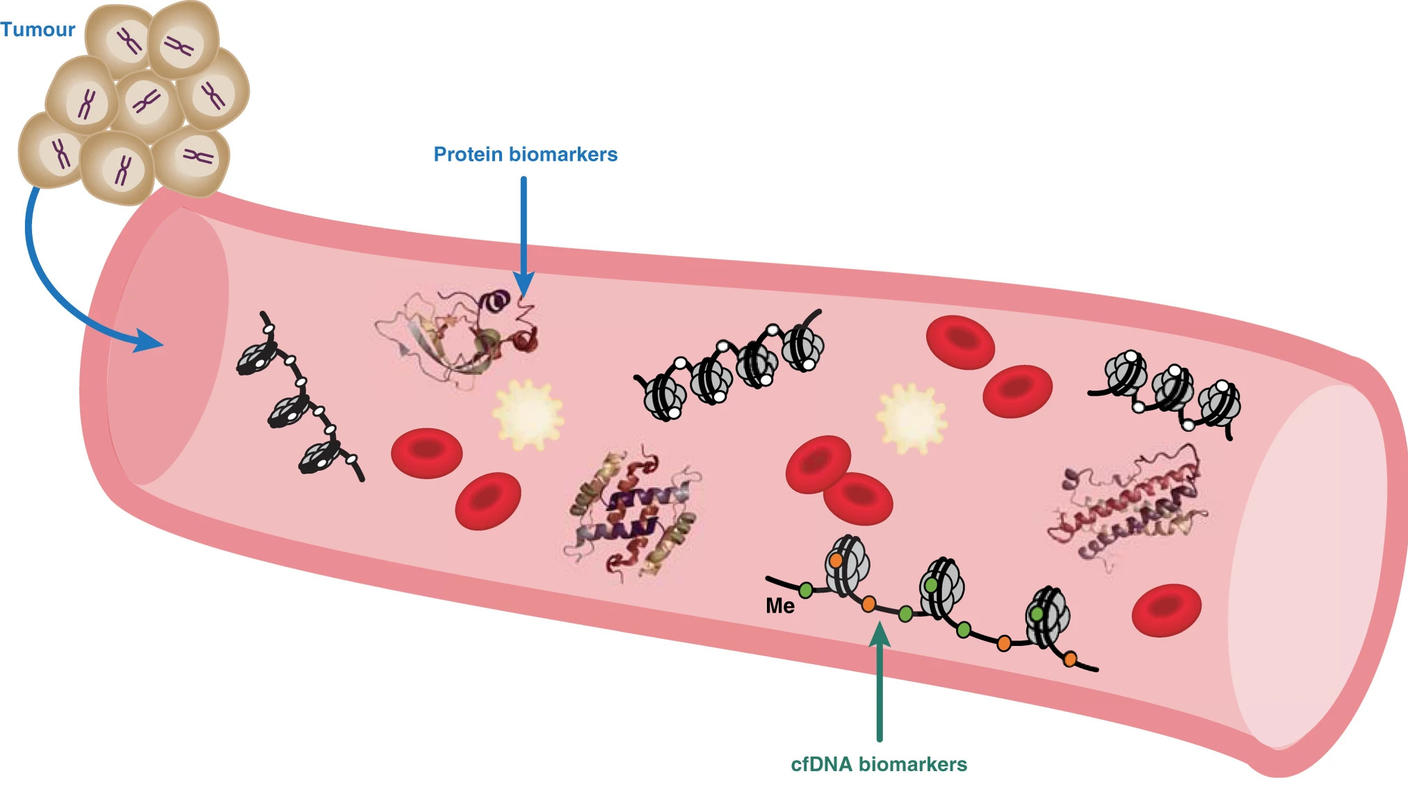
Multi-cancer detection tests
Multi-cancer detection (MCD) tests are tests that measure biological signals in body fluids that may be shed by cancer cells. These signals are also known as biomarkers or tumor markers. Depending on which signals the MCD test measures, it may detect several different types of cancer. Whether MCD tests are effective for cancer screening in people without symptoms is unknown and needs to be assessed through randomized clinical trials.
No MCD tests have been approved by the US Food and Drug Administration. However, a health care provider may be able to order an MCD test for a patient.
For more information, see Tumor Markers.
PSA test
The prostate-specific antigen (PSA) blood test has been used, often along with a digital rectal exam, for prostate cancer screening. Prostate cancer screening may slightly reduce the chance of dying from the disease. However, expert groups generally advise against routine PSA testing for men at average risk because of its potential harms, including the risk of overdiagnosis and false-positive results. Some doctors may recommend it for people at higher risk, such as African Americans and those with a family history of the disease. People considering PSA testing should discuss the potential benefits and harms with their doctors, given their personal risk of the disease and their own values and preferences.
For more information, see the Prostate-Specific Antigen (PSA) Test fact sheet and the PDQ Prostate Cancer Screening summary.
Skin exams
Doctors often recommend that people who are at risk for skin cancer examine their skin regularly or have a health care provider do so. Such exams have not been shown to decrease the risk of dying from skin cancer, and they may lead to overtreatment. However, people should be aware of changes in their skin, such as a new mole or a change to an existing mole, and report these to their doctor promptly.
For more information, see the Common Moles, Dysplastic Nevi, and Risk of Melanoma fact sheet and the PDQ Skin Cancer Screening summary.
Transvaginal ultrasound
The transvaginal ultrasound imaging test, which can create pictures of a woman’s ovaries and uterus, is sometimes used in women who are at increased risk of ovarian cancer (because they carry a harmful BRCA1 or BRCA2 gene mutation) or of endometrial cancer (because they have a condition called Lynch syndrome). But it has not been shown to reduce deaths from either cancer.
For more information, see the PDQ Ovarian Cancer Screening summary and the PDQ Endometrial Cancer Screening summary.
Virtual colonoscopy
A virtual colonoscopy allows the colon and rectum to be examined from outside the body. Although it has not been shown to reduce deaths from colorectal cancer and may reveal possible problems outside the colon that then need to be investigated further, this test may be recommended if it is the only colorectal cancer screening test a person finds acceptable.
For more information, see the Screening Tests to Detect Colorectal Cancer and Polyps fact sheet and the PDQ Colorectal Cancer Screening summary.
Questions to ask your doctor about cancer screening
Knowing if you should have a cancer screening test, when and how often you should have it, and at what age to stop having it can be confusing. Talking over the following questions with your doctor can help you understand the best cancer screening plan for you.
- Are any cancer screening tests recommended for me? Which ones?
- How often should I have the test? At what age should I stop having it?
- What is the purpose of the test?
- Does the test require preparation and how do I do that?
- What happens during the test?
- Are there risks to having the test?
- How long does it take to get test results?
- How will you tell me about the test results? For example, email, online health portal, phone?
- If I do not get my test results, who should I contact? Is there a phone number can I call?
- What happens if the results are not normal?