
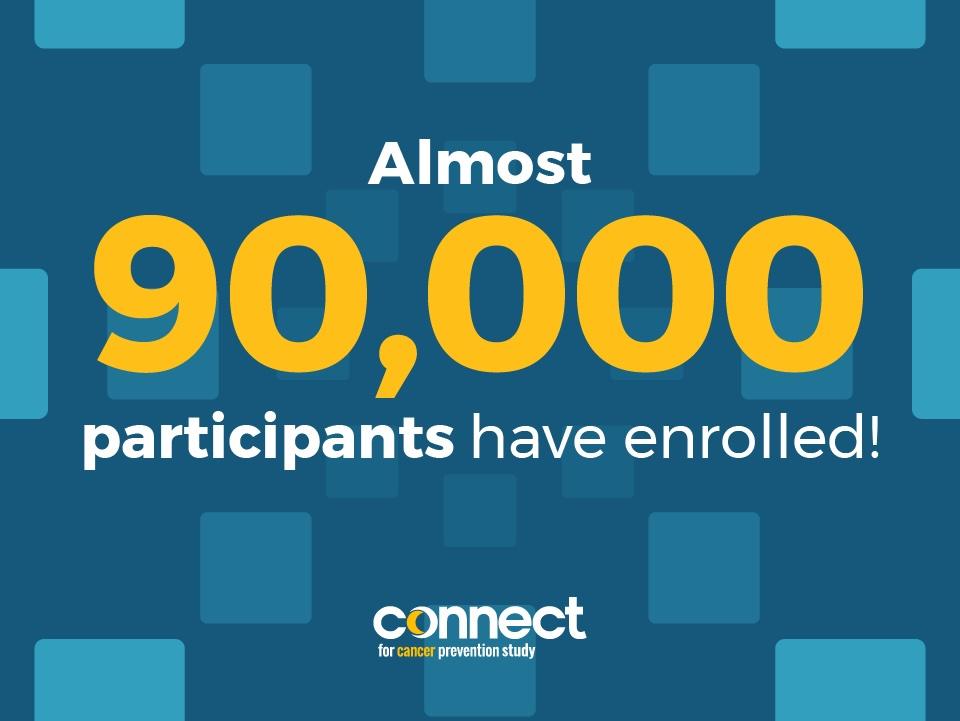
Connect’s Year in Review: Learning Together, Growing Together
Your impact matters. Every survey you answer, sample you donate, and moment you spend spreading the work about Connect push the study forward. The contributions you’ve made so far have already influenced our progress as a study. We’re continuing to learn from participants and grow as a community together, to build the future of cancer prevention research.
We’ve hit some major milestones this year and are excited to share the highlights with you. We know that participants may not experience this progress directly, which is why it’s important to share what we’re working on to build a strong research resource in Connect! This work wouldn’t be possible without incredible participants.
Rapid Case Ascertainment: Learning About Cancer Diagnoses Sooner
One of the biggest milestones we reached this year was the launch of our Rapid Case Ascertainment (RCA) process. Rapid Case Ascertainment is a quick and reliable way to identify a cancer diagnosis in someone’s medical records.
Here’s how it works:
- Each Connect partner health care system routinely runs a special computer algorithm on participants’ medical records to see if someone has received a new cancer diagnosis.
- Partner health care systems securely send this information electronically to the Connect team every month. The first health care systems started sending data as early as January 2025, and all were sharing data by July 2025.
Why does this matter?
Cancer is a notifiable disease, meaning that hospitals and clinics are required by law to notify the state health department when a patient is diagnosed. Every state keeps its own registry of cancer diagnoses. A challenge for researchers is that state cancer registries can take one to two years to compile all the clinical information into a report of new cancer cases. RCA helps us learn about participants’ diagnoses much sooner, so we can tailor their future surveys and other study activities. The information they share, along with other data we collect, may help us uncover new insights into early detection that could help others in the future. That’s especially important when considering cancers for which there are no current screening tests. Privacy protections are built into the RCA process, such that we are only collecting necessary information in a way that prioritizes the security of participants’ personal health information.
We’ve received questions about whether a Connect participant who is diagnosed with cancer can remain in the study. The answer is absolutely! As a Connect community, we hope participants who are diagnosed with cancer remain in the study. By remaining in Connect, their participation and contributions will help us learn more about the causes of cancer and learn new ways to prevent and detect it earlier. These participants will receive special surveys that ask questions about their symptoms, diagnosis, and treatment journey, as well as repeat surveys about quality of life.
A cancer diagnosis is a challenging life event, and we understand that participants need to prioritize their health care. That said, we will honor their decision to limit their participation or leave the study entirely if they choose to do so. We gently encourage participants to continue to take part in Connect to the extent that works for them. The longer they take part, the more we may learn. Our team appreciates the engagement of these participants and recognizes the impact of their contributions– they may hold the key to unlocking discoveries that will change the future of cancer prevention science.
Electronic Health Records: Building a More Complete Picture
Another exciting area of progress has been collecting Electronic Health Record (EHR) data from Connect’s partner health care systems.
This is what we’ve done so far:
- Each health care system is sharing medical record data for Connect participants with us (so long as the participants agreed to and signed the HIPAA Authorization when they joined the study). Health care systems are securely sharing data with Connect in a standard format, dating as far back as possible. The standardized format lets us combine data across systems and compare information with other studies.
- As a reminder, only dedentified data (data that do not have any personally identifiable information tied to them, like name or address) are shared with researchers who request the information for valid scientific reasons. The researchers must agree to follow strict privacy and data protection rules before they are allowed to access the data. We do all that we can to protect your privacy.
- So far, Connect partner health care systems have sent large batches of data (from late 2024 through 2025). Once the process is in full swing and running smoothly, we plan to get health record data updates every few months.
Electronic Health Record data help researchers see a more complete picture of participants’ health over time. The data are rich and complex, making them valuable for future research discoveries related to cancer prevention. Electronic Health Records include data that we don’t collect in surveys, which can help add context to your survey answers and samples. This may lead to insights in cancer prevention science.
Surveys: Your Voice Shapes Connect
Your survey answers and feedback will unlock research possibilities. This year, we launched several surveys to learn more from Connect participants:
- Connect Experience Survey: Released in the fall of 2024 to a group of participants who joined Connect that same year, this one-time survey asked about their experience using MyConnect, any technical challenges they faced, how they felt about study communications, and what it was like completing the first Connect survey and donating their first samples.
- Cancer Screening History Survey: Launched this past winter, this survey asks participants for information about any tests they’ve received that screen for many types of cancer, including colon, breast, lung, and others. It's important for all participants to answer this survey, even if they've never been screened for cancer. Everyone's answers are helpful for our research.
- Diet History Questionnaire III (DHQ III): Released in May 2025 to new participants, this survey asks about typical diet over the past year, including the types of foods and beverages participants consume and how often they consume them. This survey will soon be offered to participants who joined Connect before May 2025.
Your input helps us improve MyConnect, refine our surveys, and make the study better for everyone. Further, your responses add to the cache of data that will help advance research. Thank you for dedicating time to completing study activities and sharing your feedback with us.
Looking Ahead
This year, we made big strides in developing new ways to capture data. With these methods in place, we’ve continued our efforts to ensure data systems operate securely and effectively. With more information flowing in, new tools in place, and continued feedback from participants, we’re well on our way to making Connect the most meaningful research resource it can be.
Participants are the wheels that keep this research turning. As always, thank you for being part of Connect and helping us advance cancer prevention science. In the new year, we look forward to continuing our journey of growth and discovery together. The Connect Support Center remains the best place to go to share any suggestions, concerns, questions, or comments you have for us. We are always open to your feedback!
Wishing you all a happy, healthy holiday season and new year!

Mia Gaudet, Ph.D.
Connect Senior Scientist
Division of Cancer Epidemiology and Genetics
National Cancer Institute