Dramatic improvements in survival have been achieved for children and adolescents with cancer. Between 1975 and 2020, childhood cancer mortality decreased by more than 50%.[1-3] For children younger than 20 years with Wilms tumor (also known as nephroblastoma), the 5-year relative survival rate is 93%.[2] Childhood and adolescent cancer survivors require close monitoring because cancer therapy side effects may persist or develop months or years after treatment. For information about the incidence, type, and monitoring of late effects in childhood and adolescent cancer survivors, see Late Effects of Treatment for Childhood Cancer.
Smith MA, Altekruse SF, Adamson PC, et al.: Declining childhood and adolescent cancer mortality. Cancer 120 (16): 2497-506, 2014. [PUBMED Abstract]
National Cancer Institute: NCCR*Explorer: An interactive website for NCCR cancer statistics. Bethesda, MD: National Cancer Institute. Available online. Last accessed February 25, 2025.
Surveillance Research Program, National Cancer Institute: SEER*Explorer: An interactive website for SEER cancer statistics. Bethesda, MD: National Cancer Institute. Available online. Last accessed December 30, 2024.
Ahmed HU, Arya M, Levitt G, et al.: Part I: Primary malignant non-Wilms' renal tumours in children. Lancet Oncol 8 (8): 730-7, 2007. [PUBMED Abstract]
Ahmed HU, Arya M, Levitt G, et al.: Part II: Treatment of primary malignant non-Wilms' renal tumours in children. Lancet Oncol 8 (9): 842-8, 2007. [PUBMED Abstract]
Wilms Tumor
Incidence of Wilms Tumor
Wilms tumor is the most frequent tumor of the kidney in infants and children. The incidence of Wilms tumor is 9.7 cases for every 1 million children younger than 15 years and 13.5 cases per 1 million infants.[1] Approximately 650 cases of Wilms tumor are diagnosed in the United States each year. The incidence is substantially lower in Asian people.[2,3]
The male-to-female ratio in unilateral cases of Wilms tumor is 0.92 to 1.00, but in bilateral cases, there is a female excess (0.60). The mean age at diagnosis is 44 months in unilateral cases and 31 months in bilateral cases of Wilms tumor.[4,5] About 10% of children with Wilms tumor have an associated congenital malformation syndrome.[6]
Syndromes and Other Conditions Associated With Wilms Tumor
Wilms tumor typically develops in otherwise healthy children without any predisposition to developing cancer. However, approximately 10% of children with Wilms tumor have been reported to have a congenital anomaly.[6,7] In patients with congenital anomalies and Wilms tumor, nephrogenic rests have been reported in 60% of cases.[8] Of 295 consecutive patients with Wilms tumor seen at the Institut Curie in Paris, 52 (17.6%) had anomalies or syndromes, 43 of which were considered major, and 14 of which were genetically proven tumor predisposition syndromes.[9]
Children with Wilms tumor may have associated hemihypertrophy and urinary tract anomalies, including cryptorchidism and hypospadias. Children may have recognizable phenotypic syndromes such as overgrowth, aniridia, genetic malformations, and others. These syndromes have provided clues to the genetic basis of the disease. The phenotypic syndromes and other conditions have been grouped into overgrowth and non-overgrowth categories (see Table 1). Overgrowth syndromes and conditions are the result of excessive prenatal and postnatal somatic
growth.[10,11]
It is important to recognize that the absolute risk of developing Wilms tumor varies with the underlying condition or anomaly. For example, most patients with hemihypertrophy will not develop Wilms tumor.
Table 1. Syndromes and Conditions Associated With Wilms Tumora
Syndrome/Condition
Gene
Overgrowth Phenotype
Non-Overgrowth Phenotype
CLOVES = congenital lipomatous overgrowth, vascular malformations, epidermal nevi, and skeletal/spinal abnormalities; MULIBREY = distinctive abnormalities of the (MU)scles, (LI)ver, (BR)ain, and (EY)es; WAGR = Wilms tumor, aniridia, genitourinary abnormalities, and range of developmental delays.
PIK3CA-related segmental overgrowth including CLOVES syndrome
PIK3CA variant
X
9q22.3 microdeletion syndrome
9q22.3
X
Sotos syndrome
NSD1
X
Familial Wilms tumor
FWT1
X
FWT2
Genitourinary anomalies
WT1
X
Sporadic aniridia
WT1
X
Trisomy 18
X
For information about the genes associated with Wilms tumor, including WT1 and WT2, see the Genomics of Wilms Tumor section.
Syndromic causes of Wilms tumor
WT1-related syndromes
WT1-related syndromes include the following:
WAGR syndrome (WAGR spectrum).[13] WAGR syndrome is characterized by the following:
Wilms tumor.
Aniridia.
Genitourinary abnormalities.
Range of developmental delays.
The constellation of WAGR syndrome occurs in association with an interstitial deletion on chromosome 11 (del(11p13)). The prevalence of this deletion is about 0.4% of children with Wilms tumor.[14,15] The risk of Wilms tumor development in children with WAGR syndrome is approximately 50%. These children will present earlier (median age, 22 months) and have a higher incidence of bilateral Wilms tumors (37%) than children with nonsyndromic Wilms tumors.[16,17] A study that used the International WAGR Syndrome Association survey found that 64 of 145 children (44%) developed Wilms tumor. Most children had unilateral stage I or stage II Wilms tumors and favorable histology (59 of 64, 92%). One child developed bilateral Wilms tumors. Two children presented with stage IV disease, both with favorable histology.[18] In the International Society of Paediatric Oncology (SIOP) Renal Tumor Study Group experience, 3 of 43 patients developed contralateral tumors, one of which occurred 7 years after initial diagnosis.[17] For more information, see the Genomics of Wilms Tumor section.
Denys-Drash syndrome and Frasier syndrome. Genitourinary anomalies such as hypospadias, undescended testis, and others are associated with WT1 variants (prevalence is about 8%–10% of children with Wilms tumor). Children with XY genome with pseudo-hermaphroditism and/or renal disease (glomerulonephritis or nephrotic syndrome) who develop Wilms tumor may have Denys-Drash or Frasier syndrome (characterized by male hermaphroditism, primary amenorrhea, chronic renal failure, and other abnormalities),[19] both of which are associated with variants in the WT1 gene.[20] Specifically, germline missense pathogenic variants in the WT1 gene are responsible for most cases of Wilms tumor that occur as part of Denys-Drash syndrome.[21,22] The risk of Wilms tumor is about 90% for children with Denys-Drash syndrome, and bilateral disease develops in 20% of patients.[22,23] In Frasier syndrome, splice-site WT1 variants result in an imbalance of WT1 isoforms and a much lower incidence of Wilms tumor.[24]
WT2-related syndromes
WT2-related syndromes include the following:
Beckwith-Wiedemann syndrome. Beckwith-Wiedemann syndrome is an overgrowth syndrome characterized by asymmetric growth of one or more parts of the body, large tongue, omphalocele or umbilical hernia at birth, creases or pits in the skin near the ears, kidney abnormalities, and hypoglycemia (in neonates). In a population-based registry linkage study of all live births in Texas from 1999 to 2017, children with Beckwith-Wiedemann syndrome were 42 times more likely to develop pediatric cancer. Hepatoblastoma was the most common cancer, followed by Wilms tumor. The percentage of children with Beckwith-Wiedemann syndrome diagnosed with cancer was 1.24% by age 5 years, 5.58% by age 10 years, and 10.81% by age 15 years. The presence of any isolated overgrowth feature was associated with the risk of developing cancer (hazard ratio [HR], 4.70). Hepatosplenomegaly (HR, 23.04) and macroglossia (HR, 11.18) had the strongest associations with cancer risk.[25] Approximately 15% of children with Beckwith-Wiedemann syndrome will have bilateral tumors.[26]
Beckwith-Wiedemann syndrome is caused by altered expression of two gene clusters involved in growth control and cell-cycle progression regulated by two independent imprinting control regions (ICR1 [telomeric ICR] and ICR2 [centromeric ICR]) at chromosome 11p15.5. The two ICRs are characterized by differential methylation of maternal and paternal alleles. A variety of molecular mechanisms are implicated in Beckwith-Wiedemann syndrome pathogenesis, leading to unbalanced expression of imprinted genes within these two domains. Tumor predisposition results primarily from dysregulation at the telomeric domain of 11p15 (ICR1 gain of methylation [ICR1-GoM] and paternal uniparental disomy [UPD]) rather than at the centromeric domain of 11p15 (ICR2 loss of methylation [ICR2-LoM] and CDKN1C variant).[27] Approximately 15% of cases with clear-cut phenotypes have no molecular defects established so far.[28,29]
The molecular subtypes of the syndrome predispose patients to the development of different tumor histotypes.[30-32]
The prevalence of Beckwith-Wiedemann syndrome has previously been reported as 1% of children with Wilms tumor.[26,33-35] However, a 5-year national Dutch cohort study demonstrated that 16% of patients with Wilms tumor (20 of 126) have Beckwith-Wiedemann syndrome. This study included both patients with clinical diagnoses and patients in which the Beckwith-Wiedemann syndrome phenotype was not apparent, such as 11p15 ICR1 gain of methylation in normal renal parenchymal and peripheral blood. Mosaicism likely accounts for the phenotypically occult cases.[36] In aggregate, approximately 10% of patients with Beckwith-Wiedemann syndrome will develop Wilms tumor. However, this incidence varies based on epigenotype. Children with ICR1-GoM have the highest risk of developing Wilms tumor (22%–29%). Children with paternal UPD have a lower risk (7%–17%), and patients with ICR2-LoM and CDKN1C variants have minimal risk.[27,31,32] Beckwith-Wiedemann syndrome patients with hemihypertrophy have a fourfold increased tumor risk over Beckwith-Wiedemann syndrome patients without hemihypertrophy.[37] For more information, see the Genomics of Wilms Tumor section.
Other syndromic causes of Wilms tumor
Other syndromic causes of Wilms tumor include the following:
Perlman syndrome. This is a rare, autosomal recessively inherited, congenital overgrowth syndrome. It is characterized by fetal gigantism, renal dysplasia and nephroblastomatosis, islet cell hypertrophy, multiple congenital anomalies, and intellectual disability. Survivors have a high risk of developing Wilms tumor (75%).[38]
Germline inactivating pathogenic variants in DIS3L2 on chromosome 2q37 are associated with Perlman syndrome. Preliminary data suggest that DIS3L2 plays a role in normal kidney development and in a subset of sporadic Wilms tumor cases.[39]
Heterozygous DIS3L2 constitutional variants appear to have an association with Wilms tumor predisposition. In a 5-year national Dutch cohort study, 4% of patients with Wilms tumors (5 of 126) had DIS3L2 variants. However, penetrance is likely much lower than in homozygous cases (Perlman syndrome).[36]
Simpson-Golabi-Behmel syndrome. This syndrome is characterized by macroglossia, macrosomia, renal and skeletal abnormalities, and increased risk of embryonal cancers.
The syndrome is caused by variants or deletions in the GPC3 and GPC4 genes, and these genetic aberrations are believed to enhance the risk of Wilms tumor (8%).[40]
CLOVES syndrome. This syndrome is characterized by the following:
Congenital Lipomatous Overgrowth.
Vascular malformations.
Epidermal nevi.
Skeletal/spinal abnormalities.
This syndrome results from postzygotic, somatic variants in PIK3CA, which may involve large or small regions of the child.[41]
Sotos syndrome. This syndrome is characterized by cerebral gigantism and learning disability, ranging from mild to severe. Sotos syndrome is associated with behavioral problems, congenital cardiac anomalies, neonatal jaundice, and renal anomalies such as Wilms tumor, scoliosis, and seizures.
Variants in the NSD1 gene are the only known cause of Sotos syndrome.[42]
9q22.3 microdeletion syndrome. This syndrome is characterized by craniofacial abnormalities, metopic craniosynostosis, hydrocephalus, macrosomia, and learning disabilities.
Of 44 described patients with 9q22.3 deletions, 7 developed Wilms tumor, and there was an association with overgrowth in 4 of those 7 patients. Although the size of the deletions was variable, all of them encompassed the PTCH1 gene.[43]; [44][Level of evidence C1] According to the authors of this study, surveillance for Wilms tumor should be considered in any patient with 9q22.3 microdeletion syndrome, especially in the presence of overgrowth.[44][Level of evidence C1]
Bloom syndrome. This syndrome is characterized by short stature and being thinner than other family members, sun-sensitive skin changes, and an increased risk of Wilms tumor.
Variants in the BLM gene are the only known cause of Bloom syndrome.[45]
Li-Fraumeni syndrome. This syndrome is a rare disorder that greatly increases the risk of developing several types of cancer, particularly in children and young adults.
The cancers most often associated with Li-Fraumeni syndrome include breast cancer, osteosarcoma, soft tissue sarcoma, brain tumor, leukemia, adrenocortical carcinoma, and Wilms tumor.
The TP53 gene variant is present in most families with Li-Fraumeni syndrome. The CHEK2 gene variant is also known to cause Li-Fraumeni syndrome.[46]
Alagille syndrome. This syndrome includes congenital cardiopathy; facial dysmorphology; and vertebral, ocular, and renal abnormalities. It has been reported along with Wilms tumor in two patients who had identified variants.[47]
Bohring-Opitz syndrome. This syndrome is a rare genetic condition characterized by distinctive facial features, variable microcephaly, hypertrichosis, nevus flammeus, severe myopia, unusual posture, severe intellectual disability, and feeding issues.
The syndrome is associated with ASXL1 variants and an estimated incidence of Wilms tumor of 7%.[48]
Nonsyndromic causes of Wilms tumor
Nonsyndromic causes of Wilms tumor include the following:
Familial Wilms tumor. Despite the number of genes that appear to be involved in the development of
Wilms tumor, familial Wilms tumor is uncommon, with approximately 2% of patients
having a positive family history of Wilms tumor. Siblings of children with Wilms tumor have a less-than-1% chance of developing Wilms tumor.[49-51] The risk of Wilms
tumor among offspring of persons who have had unilateral (sporadic)
tumors is less than 2%.[52]
Two distribution loci at 17q12-q21 (FWT1) and 19q13.4 (FWT2) have been identified by genetic linkage studies of families affected by Wilms tumor. Although the genes have yet to be characterized, in siblings with Wilms tumor, loss of function of the transcriptional corepressor TRIM28 was detected, which is located at FWT2.[53-55] Occasionally, Wilms tumor families have germline pathogenic variants in WT1. In these families, most, but not all, of the family members have genitourinary tract malformations.[56,57]
Inactivating variants in CTR9 have been identified in 3 of 35 Wilms tumor families. CTR9 is located at 11p15.3 and is a key component of the polymerase-associated factor 1 (PAF1) complex, which has multiple roles in RNA polymerase II regulation and transcriptional elongation and is implicated in embryonic organogenesis.[58] A few families with familial Wilms tumor have germline microdeletion or microinsertion pathogenic variants in the H19 region of 11p15.3 that result in hypermethylation of the site.[59]
Constitutional 11p15 abnormalities. Constitutional 11p15 abnormalities have been identified in lymphocyte DNA of 13 of 437 individuals (3%) with sporadic Wilms tumor without features of growth disorders, including 12% of bilateral cases. All were de novo abnormalities and appeared to be postzygotic, except for one novel microdeletion in a child whose mother had the variant and was not affected; however, a younger brother with the microdeletion had Beckwith-Wiedemann syndrome. This suggests that constitutional 11p15 analysis should be considered in all individuals with Wilms tumor.[59]
Sporadic aniridia. Sporadic aniridia may result from small germline pathogenic deletions of one copy of the PAX6 gene that includes part or all of the adjacent WT1 gene but does not result in genitourinary abnormalities or intellectual disability (i.e., not obviously WAGR syndrome). Therefore, many patients with sporadic aniridia develop Wilms tumor and are candidates for genetic testing. The relative risk of Wilms tumor in sporadic aniridia is 67-fold.[60] About one-half of individuals with sporadic aniridia and PAX6 and WT1 deletions develop Wilms tumor.[61]
Isolated hemihypertrophy (also known as lateralized overgrowth or hemihyperplasia). Hemihypertrophy is an asymmetric overgrowth of one or more body parts in the absence of a recognized pattern of malformations, dysplasia, or morphological variants and has been associated with Wilms tumor.[62] It can also be associated with other predisposition syndromes such as Beckwith-Wiedemann syndrome. Clinical signs may not be very evident, and hemihypertrophy may be noted after tumor diagnosis.
In patients with isolated hemihypertrophy and paternal uniparental isodisomy of 11p15.5, the risk of Wilms tumor is estimated to be about 8%.[63]
Fanconi anemia with biallelic variants in BRCA2 (FANCD1) or PALB2 (FANCN).BRCA2 and PALB2 play central roles in homologous recombination DNA repair. Biallelic variants in either BRCA2 or PALB2 lead to Fanconi anemia and to increased risks of selected childhood cancers, including Wilms tumor.[65-67]
Maternal pesticide exposure. In a French population study, the maternal use of any household pesticide during pregnancy was associated with a risk of Wilms tumor in children (odds ratio [OR], 1.6). Insecticides were the most commonly reported type of pesticide, and the association with Wilms tumor was stronger when insecticides were used more than once per month.[68][Level of evidence C1]
Genomics of Wilms Tumor
Molecular Features of Wilms Tumor
A Wilms tumor may arise during embryogenesis on the background of an otherwise genomically normal kidney, or it may arise from nongermline somatic genetic precursor lesions residing in histologically and functionally normal kidney tissue. Hypermethylation of H19, a known component of a subset of Wilms tumors, is a very common genetic abnormality found in these normal-appearing areas of precursor lesions.[69]
One study performed genome-wide sequencing, mRNA and miRNA expression, DNA copy number, and methylation analysis on 117 Wilms tumors, followed by targeted sequencing of 651 Wilms tumors.[70] The tumors were selected for either favorable histology (FH) Wilms that had relapsed or those with diffuse anaplasia. The study showed the following:[70]
Wilms tumors commonly arise through more than one genetic event.
Wilms tumors show differences in gene expression and methylation patterns with different genetic aberrations.
Wilms tumors have a large number of candidate driver genes, most of which are altered in less than 5% of Wilms tumors.
Wilms tumors have recurrent variants in genes with common functions, with most involved in either early renal development or epigenetic regulation (e.g., chromatin modifications, transcription elongation, and miRNA).
Approximately one-third of Wilms tumor cases involve variants in WT1, CTNNB1, or AMER1 (WTX).[71,72] Another subset of Wilms tumor cases results from variants in miRNA processing genes (miRNAPG), including DROSHA, DGCR8, DICER1, and XPO5.[73-76] Other genes critical for early renal development that are recurrently altered in Wilms tumor include SIX1 and SIX2 (transcription factors that play key roles in early renal development),[73,74] EP300, CREBBP, and MYCN.[70] Of the variants in Wilms tumors, 30% to 50% appear to converge on the process of transcriptional elongation in renal development and include the genes MLLT1, BCOR, MAP3K4, BRD7, and HDAC4.[70] Anaplastic Wilms tumor is characterized by the presence of TP53 variants.
Elevated rates of Wilms tumor are observed in patients with a number of genetic disorders, including WAGR (Wilms tumor, aniridia, genitourinary abnormalities, and range of developmental delays) syndrome (WAGR spectrum), Beckwith-Wiedemann syndrome, hemihypertrophy, Denys-Drash syndrome, and Perlman syndrome.[77] Other genetic causes that have been observed in familial Wilms tumor cases include germline pathogenic variants in REST and CTR9.[58,78]
The genomic and genetic characteristics of Wilms tumor are summarized below.
WT1 gene
The
WT1 gene is located on the short arm of chromosome 11 (11p13). WT1 is a transcription factor that is required for normal genitourinary development and is important for differentiation of the renal blastema.[79] WT1 variants are observed in 10% to 20% of cases of sporadic Wilms tumor.[71,79,80]
Wilms tumor with a WT1 variant is characterized by the following:
Evidence of WNT pathway activation by activating variants in the CTNNB1 gene is common.[80-82]
Loss of heterozygosity (LOH) at 11p15 is commonly observed, as paternal uniparental disomy for chromosome 11 represents a common mechanism for losing the remaining normal WT1 allele.[80,83]
Nephrogenic rests are benign foci of embryonal kidney cells that abnormally persist into postnatal life. Intralobar nephrogenic rests occur in approximately 20% of Wilms tumor cases. They are observed at high rates in cases with genetic syndromes that have WT1 variants such as WAGR and Denys-Drash syndromes.[84] Intralobar nephrogenic rests are also observed in cases with sporadic WT1 and MLLT1 variants.[85,86]
WT1 germline pathogenic variants are uncommon (2%–4%) in nonsyndromic Wilms tumor.[57,87]
WT1 variants and 11p15 LOH were associated with relapse in patients with very low-risk Wilms tumor in one study of 56 patients who did not receive chemotherapy.[88] These findings need validation but may provide biomarkers for stratifying patients in the future.
Germline WT1 pathogenic variants are more common in children with Wilms tumor and one of the following:
WAGR syndrome, Denys-Drash syndrome,[22] or Frasier syndrome.[19]
Genitourinary anomalies, including hypospadias and cryptorchidism.
Bilateral Wilms tumor.
Unilateral Wilms tumor with nephrogenic rests in the contralateral kidney.
Stromal and rhabdomyomatous differentiation.
Germline WT1 pathogenic single nucleotide variants produce genetic syndromes that are characterized by nephropathy, 46XY disorder of sex development, and varying risks of Wilms tumor.[89,90] Syndromic conditions with germline WT1 pathogenic variants include WAGR syndrome, Denys-Drash syndrome,[22] and Frasier syndrome.[19]
WAGR syndrome. Children with WAGR syndrome are at high risk (approximately 50%) of developing Wilms tumor.[6] WAGR syndrome results from deletions at chromosome 11p13 that involve a set of contiguous genes that include the WT1 and PAX6 genes.
Inactivating variants or deletions in the PAX6 gene lead to aniridia, while deletion of WT1 confers the increased risk of Wilms tumor. Loss of the LMO2 gene has been associated with a more frequent development of Wilms tumor in patients with congenital aniridia and WAGR-region deletions.[91][Level of evidence C1] Sporadic aniridia in which WT1 is not deleted is not associated with increased risk of Wilms tumor. Accordingly, children with familial aniridia, generally occurring for many generations, and without renal abnormalities, have a normal WT1 gene and are not at an increased risk of Wilms tumor.[33,92]
Wilms tumor in children with WAGR syndrome is characterized by an excess of bilateral disease, intralobar nephrogenic rests, early age at diagnosis, and stromal-predominant histology in FH tumors.[16] The intellectual disability in WAGR syndrome may be secondary to deletion of other genes, including SLC1A2 or BDNF.[59]
Denys-Drash syndrome. This syndrome is characterized by nephrotic syndrome caused by diffuse mesangial sclerosis, XY pseudohermaphroditism, and increased risk of Wilms tumor (>90%).
WT1 variants in Denys-Drash syndrome are most often missense variants in exons 8 and 9, which code for the DNA binding region of WT1.[22]
Frasier syndrome. This syndrome is characterized by progressive nephropathy caused by focal segmental glomerulosclerosis, gonadoblastoma, and XY pseudohermaphroditism.
WT1 variants in Frasier syndrome typically occur in intron 9 at the KT site, and create an alternative splicing variant, thereby preventing production of the usually more abundant WT1 +KTS isoform.[24]
Studies evaluating genotype/phenotype correlations of WT1 variants have shown that the risk of Wilms tumor is highest for truncating variants (14 of 17 cases, 82%) and lower for missense variants (27 of 67 cases, 42%). The risk is lowest for KTS splice site variants (1 of 27 cases, 4%).[89,90] Bilateral Wilms tumor was more common in cases with WT1-truncating variants (9 of 14 cases) than in cases with WT1 missense variants (3 of 27 cases).[89,90] These genomic studies confirm previous estimates of elevated risk of Wilms tumor for children with Denys-Drash syndrome and low risk of Wilms tumor for children with Frasier syndrome.
CTNNB1 gene
CTNNB1 is one of the most commonly altered genes in Wilms tumor, reported to occur in 15% of patients with Wilms tumor.[70,72,80,82,93] These CTNNB1 variants result in activation of the WNT pathway, which plays a prominent role in the developing kidney.[94] CTNNB1 variants commonly occur with WT1 variants, and most cases of Wilms tumor with WT1 variants have a concurrent CTNNB1 variant.[80,82,93] Activation of beta-catenin in the presence of intact WT1 protein appears to be inadequate to promote tumor development because CTNNB1 variants are rarely found in the absence of a WT1 or AMER1 variant, except when associated with a MLLT1 variant.[72,95] CTNNB1 variants appear to be late events in Wilms tumor development because they are found in tumors but not in nephrogenic rests.[85]
AMER1 (WTX) gene on the X chromosome
AMER1 is located on the X chromosome at Xq11.1. It is altered in 15% to 20% of Wilms tumor cases.[71,72,80,96,97] Germline pathogenic variants in AMER1 cause an X-linked sclerosing bone dysplasia, osteopathia striata congenita with cranial sclerosis (MIM300373).[98] Despite having germline AMER1 pathogenic variants, individuals with osteopathia striata congenita are not predisposed to tumor development.[98] The AMER1 protein appears to be involved in both the degradation of beta-catenin and in the intracellular distribution of APC protein.[95,99] AMER1 is most commonly altered by deletions involving part or all of the AMER1 gene, with deleterious single nucleotide variants occurring less commonly.[71,80,96] Most Wilms tumor cases with AMER1 alterations have epigenetic 11p15 abnormalities.[80]
AMER1 alterations are equally distributed between males and females, and AMER1 inactivation has no apparent effect on clinical presentation or prognosis.[71]
Imprinting cluster regions (ICRs) on chromosome 11p15 (WT2) and Beckwith-Wiedemann syndrome
A second Wilms tumor locus, WT2, maps to an imprinted region of chromosome 11p15.5. When it is a germline pathogenic variant, it causes Beckwith-Wiedemann syndrome. About 3% of children with Wilms tumor have germline epigenetic or genetic changes at the 11p15.5 growth regulatory locus without any clinical manifestations of overgrowth. Like children with Beckwith-Wiedemann syndrome, these children have an increased incidence of bilateral Wilms tumor or familial Wilms tumor.[59]
Approximately one-fifth of patients with Beckwith-Wiedemann syndrome who develop Wilms tumor present with bilateral disease, and metachronous bilateral disease is also observed.[33-35] The prevalence of Beckwith-Wiedemann syndrome is about 1% among children with Wilms tumor reported to the National Wilms Tumor Study (NWTS).[4,35]
Approximately 80% of patients with Beckwith-Wiedemann syndrome have a molecular defect of the 11p15 domain.[100] Various molecular mechanisms underlying Beckwith-Wiedemann syndrome have been identified. Some of these abnormalities are genetic (germline pathogenic variants of the maternal allele of CDKN1C, paternal uniparental isodisomy of 11p15, or duplication of part of the 11p15 domain) but are more frequently epigenetic (loss of methylation of the maternal ICR2 [CDKN1C and KCNQ1OT1 genes] or gain of methylation of the maternal ICR1 [IGF2 and H19 genes]).[59,101]
Several candidate genes at the WT2 locus comprise the two independent imprinted domains: IGF2 and H19; and CDKN1C and KCNQ1OT1.[101] LOH, which exclusively affects the maternal chromosome, has the effect of upregulating paternally active genes and silencing maternally active ones. A loss or switch of the imprint for genes (change in methylation status) in this region has also been frequently observed and results in the same functional aberrations.[59,100,101]
A relationship between epigenotype and phenotype has been shown in Beckwith-Wiedemann syndrome, with a different rate of cancer in Beckwith-Wiedemann syndrome according to the type of alteration of the 11p15 region.[102]
The following four main molecular subtypes of Beckwith-Wiedemann syndrome are characterized by specific genotype-phenotype correlations:
ICR1 gain of methylation (ICR1-GoM). Five percent to 10% of cases are caused by telomeric ICR1-GoM, which causes both biallelic expression of the IGF2 gene (normally expressed by the paternal allele only) and reduced expression of the oncosuppressor H19 gene. The incidence of Wilms tumor is 22.8%.[103]
ICR2 loss of methylation (ICR2-LoM). Fifty percent of cases with Beckwith-Wiedemann syndrome are caused by ICR2-LoM, resulting in reduced expression of the CDKN1C gene, normally expressed by the maternal chromosome only. Tumor incidence is very low (2.5%).[103]
Uniparental disomy (UPD). Altered expression at both imprinted gene clusters is observed in mosaic UPD of chromosome 11p15.5, accounting for 20% to 25% of the cases. The incidence of Wilms tumor is 6.2%, followed by hepatoblastoma (4.7%) and adrenal carcinoma (1.5%).[103] Fewer than 1% of cases with Beckwith-Wiedemann syndrome are caused by chromosomal rearrangements involving the 11p15 region.
CDKN1C variants. Maternally inheritable CDKN1C loss-of-function variants account for approximately 5% of the cases. This type is associated with a 4.3% incidence of neuroblastoma.[103]
Other tumors such as neuroblastoma or hepatoblastoma were reported in patients with paternal 11p15 isodisomy.[27,31,104] For patients with Beckwith-Wiedemann syndrome, the relative risk of developing hepatoblastoma is 2,280 times that of the general population.[35]
Loss of imprinting or gene methylation is rarely found at other loci, supporting the specificity of loss of imprinting at 11p15.5.[105] Interestingly, Wilms tumor in Japanese and East Asian children, which occurs at a lower incidence than in White children, is not associated with either nephrogenic rests or IGF2 loss of imprinting.[106]
Other genes and chromosomal alterations
Additional genes and chromosomal alterations that have been implicated in the pathogenesis and biology of Wilms tumor include the following:
1q. Gain of chromosome 1q is associated with an inferior outcome and is the single most powerful predictor of outcome.[107,108] Gain of chromosome 1q is one of the most common cytogenetic abnormalities in Wilms tumor and is observed in approximately 30% of tumors.
The 8-year event-free survival (EFS) rate was 77% for patients with 1q gain and 90% for those lacking 1q gain (P < .001). Within each disease stage, 1q gain was associated with inferior EFS.
The 8-year overall survival (OS) rate was 88% for those with 1q gain and 96% for those lacking 1q gain (P < .001). OS was significantly inferior in cases with stage I disease (P < .0015) and stage IV disease (P = .011).
Similar results were reported in the International Society of Paediatric Oncology (SIOP) WT 2001 study of 586 children with Wilms tumor.[108]
One study included a cohort of FH Wilms tumor that was enriched for patients who relapsed. The study found that the prevalence of 1q gain was higher in the relapsed Wilms tumor specimens (75%) than in the matched primary samples (47%).[109] The increased prevalence of 1q gain at relapse supports its association with poor prognosis and disease progression.
16q and 1p. Additional tumor-suppressor or tumor-progression genes may lie on chromosomes 16q and 1p, as evidenced by LOH for these regions in 17% and 11% of Wilms tumor cases, respectively.[110]
In large NWTS studies, patients with tumor-specific loss of these loci had significantly worse relapse-free survival and OS rates. Combined loss of 1p and 16q are criteria used to select FH Wilms tumor patients for more aggressive therapy in the current Children's Oncology Group (COG) study. However, a U.K. study of more than 400 patients found no significant association between 1p deletion and poor prognosis, but a poor prognosis was associated with 16q LOH.[111]
An Italian study of 125 patients, using treatment quite similar to that in the COG study, found significantly worse prognosis in those with 1p deletions but not 16q deletions.[112]
These conflicting results may arise from the greater prognostic significance of 1q gain described above. LOH of 16q and 1p loses significance as independent prognostic markers in the presence of 1q gain. However, in the absence of 1q gain, LOH of 16q and 1p retains their adverse prognostic impact.[107] The LOH of 16q and 1p appears to arise from complex chromosomal events that result in 1q LOH or 1q gain. The change in 1q appears to be the critical tumorigenic genetic event.[113]
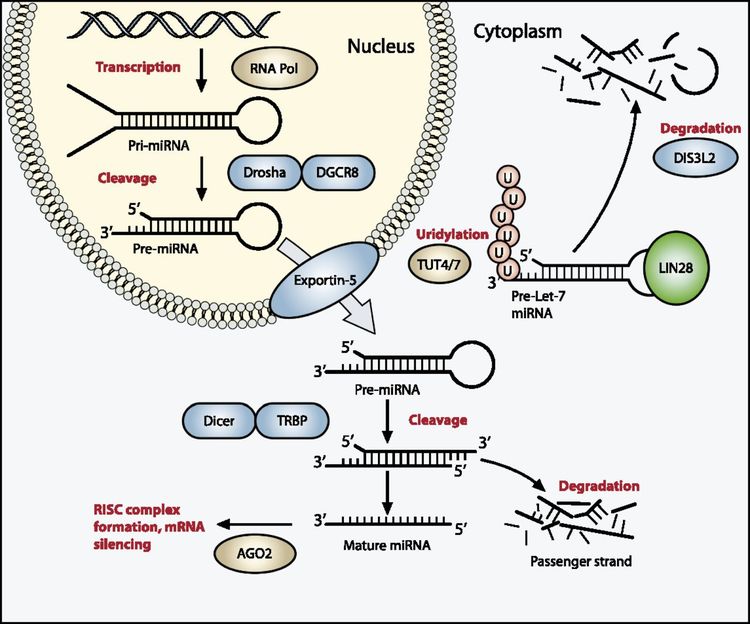
miRNAPG. Variants in selected miRNAPG are observed in approximately 20% of Wilms tumor cases and appear to perpetuate the progenitor state.[70,73-76] The products of these genes direct the maturation of miRNAs from the initial pre-miRNA transcripts to functional cytoplasmic miRNAs (see Figure 1).[114] The most commonly altered miRNAPG is DROSHA, with a recurrent variant (E1147K) affecting a metal-binding residue of the RNase IIIb domain, representing about 80% of DROSHA-altered tumors. Other miRNAPG that are altered in Wilms tumor include DGCR8, DICER1, TARBP2, DIS3L2, and XPO5. These variants are generally mutually exclusive, and they appear to be deleterious and result in impaired expression of tumor-suppressing miRNAs. A striking sex bias was noted for patients with variants in DGCR8 (located on chromosome 22q11), with 38 of 43 cases (88%) arising in girls.[73,74]
Germline pathogenic variants in miRNAPG are observed for DICER1 and DIS3L2, with variants in the former causing DICER1 syndrome and variants in the latter causing Perlman syndrome.
DICER1 syndrome is typically caused by inherited truncating variants in DICER1, with tumor formation following acquisition of a missense variant in a domain of the remaining allele of DICER1 (the RNase IIIb domain) responsible for processing miRNAs derived from the 5p arms of pre-miRNAs.[115] Tumors associated with DICER1 syndrome include pleuropulmonary blastoma, cystic nephroma, ovarian sex cord–stromal tumors, multinodular goiter, and embryonal rhabdomyosarcoma.[115] Wilms tumor is an uncommon presentation of the DICER1 syndrome. In one study, three families with DICER1 syndrome included children with Wilms tumor, with two of the Wilms tumor cases showing the typical second DICER1 variant in the RNase IIIb domain.[116] Another study identified DICER1 variants in 2 of 48 familial Wilms tumor families.[117] Large sequencing studies of Wilms tumor cohorts have also observed occasional cases with DICER1 variants.[74,75]
Perlman syndrome is a rare autosomal recessive overgrowth disorder caused by variants in DIS3L2, which encodes a ribonuclease that is responsible for degrading pre-let-7 miRNA.[39,118] Heterozygous germline DIS3L2 pathogenic inactivations are also associated with Wilms tumor development.[36] Patients with Perlman syndrome have a poor prognosis, with a high neonatal mortality rate. In a survey of published cases of Perlman syndrome (N = 28), in infants who survived beyond the neonatal period, approximately two-thirds developed Wilms tumor, and all patients showed developmental delay. Fetal macrosomia, ascites, and polyhydramnios are frequent manifestations.[119]
SIX1 and SIX2.SIX1 and SIX2 are highly homologous transcription factors that play key roles in early renal development and are expressed in the metanephric mesenchyme, where they maintain the mesenchymal progenitor population. In patients with Wilms tumors, the frequency of SIX1 variants is 3% to 4%, and the frequency of SIX2 variants is 1% to 3%.[73,74]
Virtually all SIX1 and SIX2 variants are in exon 1 and result in a glutamine-to-arginine variant at position 177 (Q177R).
Variants in WT1, AMER1, and CTNNB1 are infrequent in cases with SIX1, SIX2, or miRNAPG variants. Conversely, SIX1 or SIX2 variants and miRNAPG variants tend to occur together.
In Wilms tumor, SIX1 and SIX2 variants are associated with the high-risk blastemal subtype and the presence of undifferentiated blastema in chemotherapy-naïve samples.
In a study of 82 cases of FH Wilms tumor, SIX1 Q177R hotspot variants were identified at a higher rate in tumor specimens at relapse (11 cases; 13.4%) than in those at diagnosis (4%). For 45 cases that had both diagnostic and relapse specimens, there were 6 cases with SIX1 Q177R at relapse, 3 of which did not have SIX1 Q177R at diagnosis. This finding suggests that this variant is not required for tumor development in some individuals with Wilms tumor.[109]
MLLT1. Approximately 4% of Wilms tumor cases have variants in the highly conserved YEATS domain of MLLT1 (ENL), a gene known to be involved in transcriptional elongation by RNA polymerase II during early development.[86] The altered MLLT1 protein shows altered binding to acetylated histone tails. Patients with MLLT1-altered tumors present at a younger age and have a high prevalence of precursor intralobar nephrogenic rests, supporting a model whereby activating MLLT1 variants early in renal development result in the development of Wilms tumor.
TP53 (tumor suppressor gene). Most anaplastic Wilms tumor cases show variants in the TP53 tumor suppressor gene.[120-122] TP53 may be useful as an unfavorable prognostic marker.[120,121]
In a study of 118 prospectively identified patients with diffuse anaplastic Wilms tumor registered on the NWTS-5 trial, 57 patients (48%) demonstrated TP53 variants, 13 patients (11%) demonstrated TP53 segmental copy number loss without variants, and 48 patients (41%) lacked both (wild-type TP53 [wtTP53]). All TP53 variants were detected by sequencing alone. Patients with stage III or stage IV disease with wtTP53 had a significantly lower relapse rate and mortality rate than did patients with TP53 abnormalities (P = .00006 and P = .00007, respectively). The TP53 status had no effect on patients with stage I or stage II tumors.[123]
In-depth analysis of a subset of 39 patients with diffuse anaplastic Wilms tumor showed that 7 patients (18%) were wtTP53. These wtTP53 tumors demonstrated gene expression evidence of p53 pathway activation. Retrospective pathology review of wtTP53 tumors revealed no or very low volume of anaplasia in six of seven tumors. These data support the key role of TP53 loss in the development of anaplasia in Wilms tumor and support its significant clinical influence in patients who have residual anaplastic disease after surgery.[123]
FBXW7.FBXW7, a ubiquitin ligase component, is an established tumor suppressor gene that has been identified as recurrently altered at low rates in Wilms tumor and other malignancies. Variants of this gene have been associated with epithelial-type tumor histology.[124]; [125][Level of evidence C1]
TRIM28.TRIM28 encodes a multidomain protein involved in the regulation of many cellular processes and is an autosomal dominant Wilms tumor predisposition gene. TRIM28 accounts for about 8% of familial Wilms tumor and 2% of unselected Wilms tumor.[55,126-128]; [125][Level of evidence C1]
A strong association between TRIM28 variants and epithelial Wilms tumor has been observed, and most individuals with a TRIM28 variant have a Wilms tumor of predominantly epithelial histology.[55,126,127]; [125][Level of evidence C1]
In a cohort of 91 affected individuals from 49 families with Wilms tumor pedigrees, 33 individuals were identified as having constitutional cancer-predisposing variants, 21 of whom had a variant in TRIM28. There was a strong parent-of-origin effect, with all ten evaluable cases having inherited variants that were maternally transmitted.[125][Level of evidence C1]
Most TRIM28-altered cases have either frameshift, nonsense, or splice-site variants in one allele combined with LOH in the second allele, leading to loss of TRIM28 protein expression in the tumor. Immunohistochemistry staining for loss of TRIM28 protein expression can be used to identify most patients whose tumors have TRIM28 variants.[128]
9q22.3 microdeletion syndrome. Patients with 9q22.3 microdeletion syndrome have an increased risk of Wilms tumor.[43] The chromosomal region with germline pathogenic deletion includes PTCH1, the gene that is altered in Gorlin syndrome (nevoid basal cell carcinoma syndrome associated with osteosarcoma). 9q22.3 microdeletion syndrome is characterized by the clinical findings of Gorlin syndrome, as well as developmental delay and/or intellectual disability, metopic craniosynostosis, obstructive hydrocephalus, prenatal and postnatal macrosomia, and seizures. Five patients who presented with Wilms tumor in the context of a constitutional 9q22.3 microdeletion have been reported.[43,129,130]
MYCN. Genomic alterations involving the MYCN network (e.g., MYCN, MAX, MGA, NONO) have been reported to occur in 25% to 30% of Wilms tumor cases.[109] Specific genomic alterations associated with the MYCN network include the following:
MYCN copy number gain was observed in approximately 13% of Wilms tumor cases. MYCN gain was more common in anaplastic cases (7 of 23 cases, 30%) than in nonanaplastic cases (11.2%), and it was associated with poorer relapse-free survival (RFS) and overall survival, independent of histology.[131] MYCN tandem duplication was reported in 11 of 82 (13%) FH Wilms tumor specimens from relapse.[109]
Germline pathogenic copy number gain at MYCN has been reported in a bilateral Wilms tumor case,[131] and germline MYCN pathogenic duplication was also reported for a child with prenatal bilateral nephroblastomatosis and a family history of nephroblastoma.[132]
Variants at codon 44 (p.P44L) of MYCN are observed in approximately 3% to 4% of Wilms tumor cases at diagnosis [131,133] and in 8.5% of cases at relapse.[109] In a study of 810 Wilms tumor cases, 24 (3%) had MYCN P44L hotspot variants. RFS was significantly lower (68.6%) in patients with P44L variants than in patients with wild-type MYCN status (87.1%).[133]
The MYCN interacting protein MAX was altered at codon 60 (R60Q) in 7 of 782 Wilms tumor cases (0.9%).[133] RFS was significantly lower in patients with the MAX R60Q hotspot variant than in patients with wild-type MAX status.
CTR9. Inactivating CTR9 germline pathogenic variants were identified in 4 of 36 familial Wilms tumor pedigrees.[58,134] CTR9, which is located at chromosome 11p15.3, is a key component of the polymerase-associated factor 1 complex (PAF1c), which has multiple roles in RNA polymerase II regulation and is implicated in embryonic organogenesis and maintenance of embryonic stem cell pluripotency.
REST. Inactivating germline pathogenic variants in REST (encoding RE1-silencing transcription factor) were identified in four familial Wilms tumor pedigrees.[78] REST is a transcriptional repressor that functions in cellular differentiation and embryonic development. Most REST variants clustered within the portion of REST encoding the DNA-binding domain, and functional analyses showed that these variants compromise REST transcriptional repression. When screened for REST variants, 9 of 519 individuals with Wilms tumor who had no history of relatives with the disease tested positive for the variant; some had parents who also tested positive.[78] These observations indicate that REST is a Wilms tumor predisposition gene associated with approximately 2% of Wilms tumor.
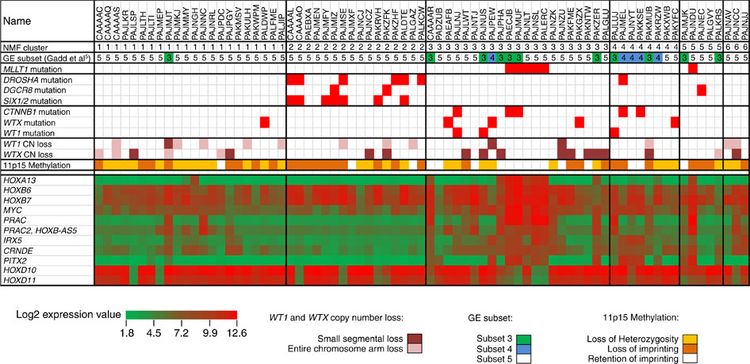
Figure 2 summarizes the genomic landscape of a selected cohort of Wilms tumor patients selected because they experienced relapse despite showing FH.[86] The 75 FH Wilms tumor cases were clustered by unsupervised analysis of gene expression data, resulting in six clusters. Five of six MLLT1-altered tumors with available gene expression data were in cluster 3, and two were accompanied by CTNNB1 variants. This cluster also contained four tumors with a variant or small segment deletion of WT1, all of which also had either a variant of CTNNB1 or small segment deletion or variant of AMER1. It also contained a substantial number of tumors with retention of imprinting of 11p15 (including all MLLT1-altered tumors). The miRNAPG-altered cases clustered together and were mutually exclusive with both MLLT1 and with WT1-, AMER1-, or CTNNB1-altered cases.
Wilms tumor at relapse appears to maintain most of the genomic alterations present at diagnosis, although there may be changes in the prevalence of alterations in specific genes between diagnosis and relapse.[109] A study from the Children’s Oncology Group presented whole-genome sequencing (WGS) data on relapse tumor specimens from 51 patients and corresponding diagnostic specimens from 45 of these patients. For an additional 31 patients who had relapse specimens available, a targeted sequencing panel was applied. Key findings included the following:
The prevalence of 1q gain in relapsed Wilms tumor specimens (75%) was higher than that observed for tumors at diagnosis (47%).[109] The increased prevalence of 1q gain at relapse is consistent with its association with poor prognosis and disease progression.
SIX1 Q177R hotspot variants were identified at a higher rate in tumor specimens at relapse (11 of 82 cases; 13.4%) than in those at diagnosis (4%).[109] For 45 cases with both diagnostic and relapse specimens, there were 6 cases with SIX1 Q177R at relapse, 3 of which did not have SIX1 Q177R at diagnosis. This is consistent with SIX1 Q177R not being an early tumorigenesis event in some cases.[109]
Genomic alterations in genes associated with the MYCN network were present in approximately 30% of Wilms tumor cases at relapse.[109] The most common MYCN network alterations were MYCN tandem duplication (13%) and MYCN P44L hotspot variants (11%).
Recurrent and refractory Wilms tumors from 56 pediatric patients underwent tumor sequencing in the National Cancer Institute–Children's Oncology Group (NCI-COG) Pediatric MATCH trial. This process revealed genomic alterations that were considered actionable for treatment in MATCH study arms in 6 of 56 tumors (10.7%). BRCA2 variants were found in 2 of 56 tumors (3.6%).[135]
Genomic alterations in adults with Wilms tumor
Wilms tumor in patients older than 16 years is rare, with an incidence rate of less than 0.2 cases per 1 million people per year.[1] As a result, there are limited data available describing the genomic alterations that are observed in adults with Wilms tumor.
A study of 14 patients with a Wilms tumor diagnosis who were older than 16 years (range, 17–46 years; median age, 31 years) evaluated exonic variants for 1,425 cancer-related genes.[136]
Five patients (36%) harbored BRAF V600E variants.[136] While BRAF V600E variants are extremely uncommon in pediatric Wilms tumor, they are present in 90% of metanephric adenomas of the kidney, a typically benign condition arising almost exclusively in adults.[137]
All five adult cases of Wilms tumor with BRAF V600E had better-differentiated areas identical to metanephric adenoma adjacent to areas consistent in appearance with epithelial Wilms tumor.
Two of the five cases with BRAF V600E variants had TERT promoter variants in addition to BRAF variants.
ASXL1 variants were observed in 4 of 14 cases, including 1 of 5 cases with BRAF V600E variants and 3 of 9 cases without BRAF V600E variants. ASXL1 variants are not common in pediatric Wilms tumor (approximately 2% of cases).[70]
For the nine tumors that did not have BRAF variants, some had genomic alterations associated with Wilms tumor in children (e.g., 1q gain and variants in WT1 [n = 2]).
Another report described renal tumors that had histological overlap between metanephric adenoma and epithelial Wilms tumor.[138] While most epithelial Wilms tumors (five of nine) with areas resembling metanephric adenoma were negative for BRAF V600E variants, four cases were positive for the BRAF V600E variant. Two of the cases with BRAF V600E variants occurred in children (aged 3 years and 6 years), and the other two cases occurred in adults.
Bilateral Wilms Tumor
Approximately 5% to 10% of individuals with Wilms tumor have bilateral or multicentric tumors. The prevalence of bilateral involvement is higher in individuals with genetic predisposition syndromes than in those without predisposition syndromes. For example, in 545 cases of bilateral Wilms tumors, bona fide germline pathogenic variants were found in 22% of patients.[139] The most common predisposition variants are variants of WT1 and 11p15 loss of imprinting.[26,79]
Bilateral disease can be synchronous (both kidneys affected at the same time) or metachronous (one affected after the other) and occurs in 6.3% and 0.85% of patients with Wilms tumor, respectively.[4] In general, perilobar nephrogenic rests are associated with synchronous bilateral Wilms tumor, whereas intralobar nephrogenic rests are more strongly associated with metachronous Wilms tumors.[140]
Bilateral Wilms tumors with WT1 variants are associated with early presentation in pediatric patients (age 10 months vs. age 39 months for those without a variant) and a high frequency of WT1 nonsense variant in exon 8. Three percent of patients with bilateral Wilms tumor have affected family members.[141]
Genomic analysis of kidney tissue in bilateral Wilms tumor indicates that a clonal expansion early in the nephrogenesis of normal-appearing but genetically aberrant precursor lesions occurred before the divergence of left and right kidney primordia.[69]
Screening Children Predisposed to Wilms Tumor
The primary purpose of screening is to enable earlier detection of a small and localized tumor (stage I or II), improve prognosis, and use less intensive treatment (such as to facilitate nephron-sparing surgery).[142] Children with a significant increased predisposition to develop Wilms tumor (e.g.,
most children with Beckwith-Wiedemann syndrome or other overgrowth syndromes, WAGR syndrome, Denys-Drash syndrome, sporadic aniridia, or isolated hemihypertrophy) are usually screened with ultrasonography every 3
months until they reach at least age 8 years.[92,142]
Tumor screening programs for each overgrowth syndrome have been suggested. These programs were based on published age, incidence of tumor type, and recommendations from the 2016 American Association for Cancer Research (AACR) Childhood Cancer Predisposition Workshop. Although data about different cancer risks based on genetic or epigenetic subgroups for certain syndromes are emerging, and subgroup-specific recommendations have been developed in Europe, these practices have not been adopted in the United States. The AACR workshop committee proposed a uniform screening approach for all syndromes associated with a greater-than-1% risk of Wilms tumor. Additional screening for hepatoblastoma by serum alpha-fetoprotein (AFP) measurement and ultrasonography is also recommended for patients with Beckwith-Wiedemann syndrome, trisomy 18, and Simpson-Golabi-Behmel syndrome.[143]
Based on a literature search of patients with Beckwith-Wiedemann spectrum and Wilms tumor where the age at diagnosis was compared against data collected through the Surveillance, Epidemiology, and End Results (SEER) Program, screening patients with Beckwith-Wiedemann spectrum seems to significantly decrease the age and stage at the time of diagnosis in this population. Screening until age 7 years is effective in detecting close to 95% of all Wilms tumors in the Beckwith-Wiedemann spectrum. Screening until age 30 months may also prove useful for patients with ICR2-LoM, consistent with the recommendations for hepatoblastoma screening in this population.[144]
Beckwith-Wiedemann syndrome. Approximately 8% of patients with Beckwith-Wiedemann syndrome will develop a malignancy, with the most common being either Wilms tumor or hepatoblastoma, although adrenal tumors can also occur.[103]
Screening for hepatoblastoma or adrenal tumors with abdominal ultrasonography and serum AFP usually begins at birth or when the syndrome is diagnosed and continues until age 4 years. After age 4 years, most hepatoblastomas will have occurred, and imaging may be limited to renal ultrasonography, which is quicker and does not require fasting before the exam.[145]
Screening for Wilms tumor usually continues until age 8 years. Physical examination by a specialist (geneticist or pediatric oncologist) is recommended twice per year, and ongoing education regarding tumor manifestations, reinforcing the rationale for screening and compliance with the screening regimen, is discussed.[143]
Proposed screening guidelines for Wilms tumor are available for patients with Beckwith-Wiedemann syndrome who have undergone molecular subtyping.[103] The four main molecular subtypes of Beckwith-Wiedemann syndrome (ICR1-GoM, ICR2-LoM, UPD, and CDKN1C variant) are characterized by specific genotype-phenotype correlations, including tumor risk. For more information about the molecular subtypes, see the Genomics of Wilms Tumor section.
Proposed screening for specific molecular subtypes of Beckwith-Wiedemann syndrome is as follows:
Patients with a defect of the ICR1 region (ICR1-GoM) and UPD should undergo abdominal ultrasonography every 3 months until age 8 to 10 years. A clinical examination of the abdomen and muscle mass occurs monthly for the first year and then at 3-month intervals, between ultrasonography scans, until age 6 years.
For patients with loss of imprinting at ICR2 (ICR2-LoM), an abdominal ultrasonography is performed at the time of clinical or molecular diagnosis. Only patients with organomegaly or severe hemihypertrophy require surveillance by ultrasonography scans. Monthly clinical examinations are performed for the first 2 years, followed by clinical examinations every 3 to 6 months until age 6 years.
Patients with a CDKN1C variant are not at high risk of developing Wilms tumor. There are no data to support routine screening.
WAGR Syndrome (or WAGR Spectrum). Patients with WAGR spectrum tend to experience an earlier age of initial Wilms tumor development compared with patients with nonsyndromic Wilms tumor. Using data from the WAGR Syndrome Patient Registry (n = 91), the reported median age at initial development of Wilms tumor or isolated nephrogenic rests was 19 months (range, 11–28 months). All patients with reported Wilms tumor developed their initial Wilms tumor by age 8 years, and 95% of patients developed their tumor by age 5 years.[13] Other investigators have reported that approximately 20% of patients developed their Wilms tumor after age 4 years.[15,16]
Multiple patients have been diagnosed with the development of Wilms tumor past the age of 7 to 8 years and/or relapse occurring years after initial diagnosis. Some cases labeled as relapses have been de novo disease in the contralateral kidney.[16] In the WAGR Syndrome Patient Registry, late presentation of relapse occurred in one participant at age 19 years, 7 months, which was more than 17 years from their first Wilms tumor diagnosis and represented the third occurrence.[13]
Investigators from SIOP have reported about the benefit of surveillance in a cohort of 43 patients with WAGR Syndrome and Wilms tumor/nephroblastomatosis enrolled in SIOP treatment studies. Of 39 patients, 27 (69%) were asymptomatic and the tumors were detected by surveillance, whereas 12 patients (31%) presented with a palpable/visible abdominal mass and/or other symptoms. Of these 12 patients, 2 had not been diagnosed with WAGR syndrome. Tumors detected by surveillance had a significantly decreased volume compared with tumors that were symptomatic (18 mL vs. 375 mL; P = .001), which enabled a high rate of nephron-sparing surgery (85%).[146] The authors recommend the use of preoperative chemotherapy as treatment for patients with WAGR syndrome in order to facilitate nephron-sparing surgery. This surgery can improve outcomes for patients with chronic kidney disease associated with WAGR syndrome.[147] Preoperative chemotherapy has been reported to decrease tumor size in 50% of WAGR patients.[146]
Surveillance options for the WAGR population at age 8 years and older should be discussed with the patient’s family and multidisciplinary health care team to determine the appropriate follow-up schedule for Wilms tumor monitoring. Factors such as the patient's previous medical history and presence of nephrogenic rests and nephroblastomatosis should be considered.[13]
Hemihypertrophy (also known as lateralized overgrowth or hemihyperplasia). Children with isolated hemihypertrophy are also at risk of developing liver tumors, adrenal tumors, and Wilms tumor (risk, 3%–4%). Screening with abdominal ultrasonography and serum AFP is suggested until age 4 years. After age 4 years, most hepatoblastomas will have occurred, and imaging may be limited to renal ultrasonography, which is quicker and does not require fasting before the exam.[143]
Hemihypertrophy can occur as part of a syndrome (most commonly Beckwith-Wiedemann syndrome) or an isolated phenomenon. The Beckwith-Wiedemann Syndrome International Consensus Group suggested that individuals with florid Beckwith-Wiedemann syndrome phenotype and those with isolated hemihypertrophy who have similar molecular findings as those with Beckwith-Wiedemann syndrome should be considered part of the Beckwith-Wiedemann Syndrome spectrum and managed according to the subtype of Beckwith-Wiedemann syndrome. Molecular testing may be considered for patients with isolated hemihypertrophy based on the clinical scoring system proposed by the Beckwith-Wiedemann Syndrome International Consensus Group.[148]
Children with isolated hemihypertrophy and negative molecular tests may not need surveillance because the risk may be very low. However, more studies of large cohorts of molecularly tested children with isolated hemihypertrophy are needed to determine the risk.[92,148]
Sporadic aniridia. Newborns born with sporadic aniridia should undergo molecular testing for deletion analysis of PAX6 and WT1, which are consistent with WAGR syndrome. Approximately 30% of patients with sporadic aniridia have WAGR.[149] If a deletion of WT1 is observed, the child should be screened with ultrasonography every 3 months until age 8 years, and the parents should be educated about the need for early identification and treatment of Wilms tumor.[92,150,151]
Children of survivors of bilateral Wilms tumor. Although the risk of Wilms tumor in the children of survivors of bilateral Wilms tumor is unknown and likely varies with the gene in which the variant occurred, some experts recommend screening such children with serial ultrasonography examinations every 3 months until age 8 years.[77]
Bohring-Opitz syndrome. Bohring-Opitz syndrome is a rare genetic condition associated with ASXL1 variants. Overall, about 7% of individuals with Bohring-Opitz syndrome develop Wilms tumors.[152] Screening with abdominal ultrasonography every 3 to 4 months in the first 8 years of life has been suggested.[48]
Simpson-Golabi-Behmel syndrome. Affected males with Simpson-Golabi-Behmel syndrome with GPC3 variants or deletions have an approximate 10% risk of Wilms tumor. Regular age-dependent screening for tumors, including abdominal ultrasonography, urinalysis, and biochemical markers, has been recommended for males with Simpson-Golabi-Behmel syndrome, although the true benefit has not been determined. It was previously thought that carrier females were not at increased risk of Wilms tumor and did not require surveillance. However, there are reports of rare cases where Simpson-Golabi-Behmel syndrome may have a significant clinical expression in females and Wilms tumors have occurred.[92] In clearly affected females, screening should be considered for embryonic tumors, including Wilms tumors.[153]
Klippel-Trénaunay syndrome. The risk of Wilms tumor in children with Klippel-Trénaunay syndrome (a unilateral limb overgrowth syndrome) was no different than the risk in the general population when assessed using the National Wilms Tumor Study (NWTS) database. Routine ultrasonography surveillance is not recommended.[154]
Perlman syndrome. Perlman syndrome is a rare congenital overgrowth syndrome that has an autosomal recessive inheritance pattern. A molecular diagnosis can be made by the presence of inactivating variants in DIS3L2 on chromosome 2q37.1. Fifty-three percent of children will die in the neonatal period. The kidneys show nephroblastomatosis in about 75% of cases. The incidence of Wilms tumor is 64% in infants who survive beyond the neonatal period.[39] It is recommended that these patients be offered regular surveillance similar to that offered to patients with Beckwith-Wiedemann syndrome.[143]
DICER1 syndrome. Cystic nephroma is seen in 10% of families presenting with pleuropulmonary blastoma, typically occurring before age 4 years. Rare progression to anaplastic sarcoma of the kidney may occur. DICER1 syndrome includes an elevated risk of Wilms tumor, which is not a consequence of a prior cystic nephroma. Surveillance consists of abdominal ultrasonography, which starts with the first chest computed tomography (CT) screening for pleuropulmonary blastoma, and it is done every 6 to 12 months to age 8 years. Surveillance may be continued annually until age 12 years, depending on the individual patient.[155] Thirteen years is the oldest reported age of a Wilms tumor diagnosis in a DICER1 variant carrier.[117,156] Surveillance aims to identify cystic nephromas when they are small and nephron-sparing surgery is still possible, since tumors that progress to anaplastic sarcoma of the kidney have higher morbidity rates. Because anaplastic sarcoma of the kidney can be diagnosed at wider age ranges than cystic nephroma, extending abdominal ultrasonography screening to age 12 years should be considered. This time frame is the highest risk period for anaplastic sarcoma of the kidney (90% of germline cases presumably detected).[157]
Germline pathogenic or likely pathogenic variant in Wilms tumor predisposition genes (CTR9, REST, TP53, TRIM28) in the absence of syndrome features or a family history suggestive of any specific cancer predisposition syndrome. Surveillance should be considered throughout the period of increased Wilms tumor risk (typically up to age 8 years), but may vary depending on the condition.[158]
Genetic counseling
Wilms tumor develops in association with an underlying germline predisposition in 10% to 15% of cases. A genetics referral is recommended for all children with Wilms tumor who have a positive family history of cancer, bilateral kidney involvement, or syndrome-specific features.[158]
The McGill Interactive Pediatric OncoGenetic Guidelines (MIPOGG) study aims to develop an eHealth tool to assist physicians in identifying children at increased risk of having a cancer predisposition syndrome. Based on a thorough literature review, a decisional algorithm specific to Wilms tumor was developed. This algorithm consists of five tumor-specific criteria (age <2 years, bilaterality/multifocality, stromal-predominant histology, nephrogenic rests, and overgrowth features) and universal criteria, including features of family history suspicious for a cancer predisposition syndrome and congenital anomalies. This tool was applied retrospectively to 180 consecutive pediatric patients with Wilms tumor, diagnosed and/or treated at The Hospital for Sick Children (1997–2016) who underwent targeted molecular diagnostic testing.[159]
Application of the algorithm generated a binary recommendation for or against genetic referral for cancer predisposition syndrome evaluations. The algorithm identified 100% of children with Wilms tumor and a confirmed cancer predisposition syndrome (n = 27).
Age younger than 2 years, bilaterality/multifocality, and congenital anomalies were strongly associated with pathogenic variants in WT1.
Presence of more than one overgrowth feature was strongly associated with Beckwith-Wiedemann syndrome.
Stromal-predominant histology did not contribute to cancer predisposition syndrome recognition (and has been removed from the essential criteria). In combination with other suspicious features, stromal histology may increase the likelihood of identifying a WT1-related disorder.
Plans are under way to test this tool prospectively in patients diagnosed with Wilms tumor who undergo comprehensive genomic sequencing of their germline DNA.
If a child is found to harbor a pathogenic or likely pathogenic variant in a Wilms tumor predisposition gene, then their parents and close relatives can also be offered testing. Affected individuals should be counseled about the risk of additional neoplasms and oncologic manifestations, as appropriate, as well as the risk to future offspring.[158]
Clinical Features of Wilms Tumor
Most Wilms tumor patients present asymptomatically with an abdominal mass noticed by a parent or pediatrician on a well-child visit. In children with known predisposing clinical syndromes, renal tumors can be found during routine screening. Clinical findings may include the following:
A lump, swelling, or pain in the abdomen. Most children present with a nontender, large flank mass that is noted when they are bathed or dressed. If noted on physical examination, the mass does not move with respiration in contrast to splenomegaly. Abdominal pain is present in 40% of children.
Blood in the urine. Gross hematuria occurs in about 18% of children with Wilms tumor at presentation, and microscopic hematuria is seen in 24% of patients.[160]
Hypertension. About 25% of children have hypertension at presentation, which is attributed to activation of the renin-angiotensin system.
Hypercalcemia. Symptomatic hypercalcemia can sometimes be seen at presentation of rhabdoid tumors.
Constitutional symptoms such as fever, anorexia, and weight loss occur in 10% of cases.
Children with Wilms tumor or other renal malignancies may also seek medical attention as a result of the following:
Vascular obstruction or metastasis, including pulmonary symptoms such as dyspnea caused by lung metastasis.
Abdominal pain caused by liver metastasis, prominent abdominal wall vessels, or varicocele due to inferior vena cava obstruction.
Pulmonary embolus (rare).
Rapid abdominal enlargement, anemia, and severe pain may be seen in the few children who develop subcapsular hemorrhage.
Diagnostic and Staging Evaluation for Wilms Tumor
The Children's Oncology Group Diagnostic Imaging Committee and the Society for Pediatric Radiology Oncology Committee have published a white paper with recommendations for the imaging of pediatric renal tumors.[161] Tests and procedures used to diagnose and stage Wilms tumor and other childhood kidney tumors include the following:
Physical examination and history. Children with a renal mass are carefully assessed for signs of associated syndromes such as aniridia, developmental delay, hypospadias, cryptorchidism, pseudohermaphrodism, overgrowth, and hemihypertrophy.
Complete blood
count.
Liver function test.
Renal function test.
Urinalysis.
Abdominal imaging.
Abdominal x-ray.
Ultrasonography exam of the abdomen. Ultrasonography exam of the abdomen is often performed before a more definitive CT scan with contrast or magnetic resonance imaging (MRI) with contrast of the abdomen. This procedure is unnecessary after the definitive diagnostic study has been performed.[161]
CT scan with contrast (oral contrast is not necessary) or MRI of abdomen and pelvis (with and without intravenous contrast).[161]
CT scan of the abdomen will confirm the renal origin of the mass and determine whether there are bilateral tumors.[162] About 5% of renal masses thought to be Wilms tumor based on clinical and radiological findings are diagnosed as another condition.[163]
A review of children with bilateral Wilms tumor demonstrated that only 0.25% of bilateral tumors were missed with modern helical CT scans, all of which were small tumors.[164]
Preoperative assessment by imaging of intravascular extension of Wilms tumor is essential to guide management. Four percent of Wilms tumor patients present with inferior vena cava or atrial involvement and 11% with renal vein involvement, which may lead to differences in management. Embolization of a caval thrombus to the pulmonary artery is rare but can be lethal, and the presence of a thrombus must be identified preoperatively to prevent this occurrence and guide treatment. A report from the COG shows that CT can accurately identify cavoatrial thrombus, obviating the need for ultrasonography if CT has already been performed.[165]
Ascites beyond the cul-de-sac is most predictive of preoperative Wilms tumor rupture, regardless of attenuation. In the presence of ascites, fat stranding around the tumor and the presence of retroperitoneal fluid are highly predictive of rupture.[162]
The concern about CT is radiation exposure, but the procedure is quick, allows continuous imaging of the chest and abdomen, has moderate specificity for detection of preoperative spill, may help distinguish nephrogenic rests from Wilms tumor, and provides excellent pulmonary detail.[162,166]
The main drawback with abdominal MRI is that moderate to deep sedation is often required in young children. However, it provides excellent organ detail in patients with bilateral involvement or liver metastases. Abdominal MRI is preferred for better assessment of potential nephrogenic rests and their distinction from true Wilms tumor.[167] If the decision is to perform an abdominal MRI, then a CT scan of the lungs should be done first to avoid obscuration of the lung bases by atelectasis.[168] MRI is the preferred imaging modality in children with known bilateral Wilms tumors or known bilateral tumor predisposition.[168]
CT scan of chest. Approximately 15% to 20% of patients will present with metastases. The common sites of metastases for Wilms tumor are the lungs (85%), liver (10%), and bone and spine (rarely). CT scanning provides the most sensitive method of detecting metastatic lung nodules. The use of iodinated intravenous contrast is preferred for baseline chest CTs because it allows simultaneous evaluation of the lung parenchyma, regional vasculature, and other mediastinal structures.[161] Approximately 7.5% of patients may present with a pleural effusion.[169][Level of evidence C1]
Chest x-ray is unnecessary if chest CT is performed initially.
Fluorine F 18-fludeoxyglucose (18F-FDG) positron emission tomography (PET)-CT. PET scanning is not routinely used in Wilms tumor, although Wilms tumor is 18F-FDG avid. 18F-FDG PET-CT imaging adds clinically applicable information to conventional CT scan imaging. PET-CT may be particularly helpful in patients with bilateral disease or those receiving preoperative chemotherapy. 18F-FDG PET-CT highlights FDG-avid areas in the tumor and metastases, which corresponds to histologically confirmed active disease.[170]
Bone scan or cross-sectional imaging of other sites is reserved for patients with signs or symptoms of distant extrapulmonary metastases.
von Willebrand disease work-up. About 4% of patients presenting with Wilms tumor have an acquired form of von Willebrand disease, although many are asymptomatic. von Willebrand multimers bind to Wilms tumor, reducing the plasma concentration to low levels.[171] Some clinicians recommend evaluation for von Willebrand disease before surgery, because, although uncommon, it may be associated with substantial bleeding risks and can be managed preemptively. Acquired von Willebrand disease in the context of Wilms tumor will usually resolve once chemotherapy is started or the tumor is resected.[172]
Biopsy or resection. In children with a renal mass that clinically appears to be resectable or stage I or stage II Wilms tumor, a biopsy is not performed so that tumor cells are not spread during the biopsy. A biopsy would upstage such a patient to stage III. Nephrectomy (in North America) or chemotherapy (in Europe) is performed instead. Therefore, the diagnostic pathology is first seen when the nephrectomy specimen is examined.
Biopsy of a renal mass may be indicated if the mass is atypical by radiographic appearance for Wilms tumor, and the patient is not going to undergo immediate nephrectomy. If a primary nephrectomy cannot be performed, a biopsy, either open or with multiple cores, is required. The contraindications to primary nephrectomy are the following:
Extension of tumor thrombus to the level of the hepatic veins. These patients should be considered for tumor resection after neoadjuvant chemotherapy when there is evidence of regression of the vena caval thrombus regardless of the degree of response of the primary tumor.
The tumor involves contiguous structures whereby the only means of removing the kidney tumor requires removal of the other structure (e.g., spleen, pancreas, colon but excluding the adrenal gland and diaphragm). While Wilms tumors are frequently adherent to adjacent organs, in most cases, there is not frank invasion by the tumor and it can be dissected freely from the organs. Radical en bloc resection (e.g., partial hepatectomy) is not generally warranted. If removal of a small section of diaphragm, psoas muscle, or tip of the pancreas allows the tumor to be removed intact, this is considered safe and appropriate.
The surgeon's judgment that nephrectomy would result in significant or unnecessary morbidity/mortality, significant tumor spill, or residual tumor.[173]
If there is pulmonary compromise because of extensive pulmonary metastases or, in rare cases, hepatic disease.
If a child undergoes a biopsy as the first procedure, they are considered stage III because they have gross residual tumors.
Biopsy tissue from inoperable Wilms tumor obtained before chemotherapy may be used for histological review and initial treatment decisions. However, the use of biopsy to determine histology in an inoperable tumor remains controversial because biopsy may cause local tumor spread and the histological classification of the Wilms tumor cannot be determined by biopsy.[173]
Anaplastic histology can be difficult to detect in any biopsy sample because of tumor heterogeneity. Data from NWTS-4 and NWTS-5 (COG-Q9401/NCT00002611) demonstrated that, because of the histological heterogeneity of Wilms tumor, a significant number of patients have anaplastic histology that is missed during an up-front biopsy whether it be a core needle biopsy or an incisional biopsy [174] but revealed at the time of definitive surgery after chemotherapy.
Detection of a contralateral renal lesion in a child with Wilms tumor can change the stage and initial management of the patient, indicating a role for a renal-sparing approach without up-front surgery. The detection of contralateral renal lesions is important at baseline imaging because routine intraoperative exploration of the contralateral kidney is no longer recommended based on the results of the NWTS-4 study.[164,175] Treatment as a bilateral Wilms tumor should be considered if the initial imaging studies suggests a bilateral process. If the origin of the other lesion is indeterminate, a pathological assessment of that lesion should be considered before proceeding with a nephrectomy.[164,175]
Children who have bilateral Wilms tumor are often treated without a biopsy.[176] Biopsy can be avoided if the child is of typical age and the tumor has the usual radiographic appearance. This was assessed on the COG AREN0534 (NCT00945009) study where 187 of 189 patients with Wilms tumor were treated initially without a biopsy. If after 6 weeks of therapy, response was less than 30% by RECIST1.1 criteria, bilateral biopsies were performed to assess for anaplasia, stromal differentiation, and rhabdomyomatous changes. If anaplasia was detected, the chemotherapy treatment was changed. If stromal differentiation or rhabdomyomatous changes were detected, further chemotherapy was unlikely to result in tumor shrinkage and definitive surgery was the suggested approach.[176]
For patients with suspected Wilms tumor, additional preoperative staging studies are performed to assess lymph node status, intravascular extension, and rupture of Wilms tumor.[163]
Lymph node sampling is required to locally stage all Wilms tumor patients. Lymph nodes have been shown to be of major prognostic value for both short-term and long-term survival. Gross inspection is notoriously inaccurate, with a false-negative rate of 31.3% and a false-positive rate of 18.1%.[177]
Intravascular extension of the Wilms tumor. Preoperative assessment of intravascular extension of Wilms tumor is essential to guide management. The presence of intravenous tumor thrombus in the lumen of the renal vein, inferior vena cava, and right atrium has been reported in up to 11.3% of Wilms tumor patients and may lead to differences in management.
In North America, local staging of Wilms tumor is performed with CT or MRI of the abdomen and pelvis. Contrast-enhanced CT for Wilms tumor patients has high sensitivity and specificity for detection of cavoatrial tumor thrombus that may impact surgical approach. Routine Doppler evaluation may be done after CT has been performed but is not necessarily required.[165] If the tumor is at or above the hepatic veins, a biopsy with preoperative chemotherapy is suggested because of the lower rate of serious intraoperative complications. Before surgical approach to the renal mass is performed, large tumor thrombi need to be controlled, especially when they extend above the hepatic vein, to avoid embolization of the tumor. In some cases, cardiopulmonary bypass is required.[178]
Wilms tumors can rupture before surgery. The term rupture is used to imply a break in the tumor capsule before surgery, whereas the term spill refers to a break in the tumor during surgery. Based on their similar diagnostic performances, either CT or MRI can be used to detect rupture. Although imaging findings of rupture have high specificity (88%), the diagnosis of rupture has to be confirmed at surgery. Imaging alone cannot be used for initial staging because of the low sensitivity and specificity for preoperative rupture and lymph node status.[168]
Prognosis and Prognostic Factors for Wilms Tumor
Wilms tumor is a curable disease in most affected children.
Since the 1980s, the 5-year survival rate for Wilms tumor with favorable histology (FH) has been consistently greater than 90%.[179] This favorable outcome occurred with changes in therapy that included reductions in the length of therapy, dose of radiation, extent of fields irradiated, and the percentage of patients receiving radiation therapy.[180]
The prognosis for patients with Wilms tumor depends on the following:[181-184]
Molecular features of the tumor such as 1q gain and loss of heterozygosity of 1p and 16q. 1q gain, affecting 28% of Wilms tumors, is the most powerful predictor of outcome and is associated with an adverse outcome.[107,108,110] Loss of heterozygosity of 11p15 and loss of imprinting of 11p15 is associated with relapse in very low-risk patients who do not receive chemotherapy.[110,185] For more information, see the Genomics of Wilms Tumor section.
Age. Age at presentation is commonly between 2 and 5 years, and the incidence of Wilms tumor in children older than age 10 years is rare. Older age is associated with an adverse prognosis.[186,187]
Older Adolescents and Adults With Wilms Tumor
Wilms tumor in patients older than 16 years is rare, with an incidence rate of around 0.2 cases per 1 million per year in patients aged 15 to 39 years.[1] The 5-year relative survival rate is 75% for this group of patients.[1,188] In Europe, the median age at diagnosis for adult patients with Wilms tumor (defined as age >15 years) is 34 years. However, patients older than 60 years have been reported.[189] Three percent of Wilms tumors occur in adults. Wilms tumor represents less than 1% of all renal tumors in adults and may be an unexpected finding after nephrectomy for presumed renal cell carcinoma, which is the most common adult renal cancer.
Wilms tumor occurring in adults differs from that occurring in children in several ways. Adults rarely present with bilateral disease (<1%). More adult patients had additional primary malignancies (both before and after the diagnosis of Wilms tumor) compared with their pediatric counterparts.[190] Wilms tumors occurring in adults have not been shown to develop in association with nephrogenic rests or be associated with developmental conditions such as WAGR, Denys-Drash, or Beckwith-Wiedemann syndromes.[136] For information about the molecular features of Wilms tumor in adults, see the Genomics of Wilms Tumor section.
A situation that is specific to adults is the diagnosis of Wilms tumor in pregnant women. This diagnosis is made incidentally during the ultrasonography monitoring of the pregnancy or because of clinical symptoms such as abdominal pain and fever.[191,192]
The outcomes for adolescent and young adult (AYA) patients (aged 15 to 39 years) and adult patients are inferior to the outcomes for children.
In an analysis of patients with Wilms tumor in the Surveillance, Epidemiology, and End Results (SEER) database, AYA patients (n = 104) had a statistically worse 5-year OS rate (69% vs. 94%; P < .001) than did pediatric patients (n = 2,574).[193][Level of evidence C1]
The inferior outcome of the adult patients may be multifactorial, including differences in tumor biology between children and adults, incorrect diagnosis, inadequate staging (e.g., more likely to be staged as localized disease or to not receive lymph node sampling), undertreatment/poor compliance (e.g., not receiving radiation therapy), unfamiliarity of medical oncologists and pathologists with Wilms tumors in adults (possibly leading to diagnostic error and delay), delays in initiating the appropriate risk-adapted therapy, and lack of specific treatment protocols for adults.[194][Level of evidence C1]
Treatment of adults with Wilms tumor
As Wilms tumor rarely occurs in adults, there is no standard treatment protocol. Better results have been reported for adults when they are treated in pediatric trials.
A Wilms tumor in an adult represents a therapeutic emergency because of the tumor's rapid growth and because urologists and oncologists are more familiar with the indolent growth of renal cell carcinoma.
The NWTS Group reported the outcomes for adult patients with Wilms tumor from the NWTS-1, -2, and -3 trials.[195-197]
The 3-year OS rate for adults on the NWTS-1 trial was 24% (compared with 74% in children) and improved to a 5-year OS rate of 82.6% on the NWTS-3 trial, although the number of adult patients treated on each trial was 31 or fewer.
These data suggest that many adults with Wilms tumor, if treated appropriately, can expect to be cured, especially if the tumor has not spread and/or is completely resected.
For adults with refractory or recurrent disease, screening for potential therapeutic targets in the tumor should be considered.[198]
The following recommendations from the renal tumor committees of the International Society of Paediatric Oncology (SIOP) and COG encourage a uniform approach to improve outcome for adults with Wilms tumor.[199]
Consult with a pediatric oncologist who has experience with the treatment of Wilms tumor as soon as a histological diagnosis is suspected.
Avoid delaying the start of chemotherapy. Ideally, chemotherapy, and radiation therapy if necessary, should be started by day 14 postnephrectomy, although delaying the start until day 30 is acceptable.
Be alert for toxicity of vincristine (neurotoxicity) and dactinomycin (hepatic toxicity) in adults.
Register patients in pediatric renal tumor trials if studies are available and the patients are eligible.
In a series of 14 adult Wilms tumors that were evaluated by expanded targeted sequencing, 5 (36%) demonstrated BRAF V600E variants. These tumors contained areas that were morphologically identical to BRAF V600E–altered metanephric adenoma. All of the BRAF V600E–altered Wilms tumors in this cohort occurred in patients older than 30 years. Identifying a BRAF V600E variant has therapeutic significance because these patients may respond to therapy with BRAF/MEK inhibitors.[136] There was one report of a male (aged 51 years) who had a relapsed metastatic Wilms tumor that harbored a BRAF V600E variant. The patient was treated with the BRAF inhibitor dabrafenib, and they had a prolonged and dramatic response.[198]
Histological Findings in Wilms Tumor
Although most patients with a histological diagnosis of Wilms tumor do well
with current treatment, approximately 10% of patients have histopathological
features that are associated with a worse prognosis, and in some types, with
a high incidence of relapse and death. Wilms tumor can be separated into the following two
prognostic groups based on tumor and kidney histopathology:
Histologically, Wilms tumor mimics the triphasic development of a normal kidney
consisting of blastemal, epithelial (tubules), and stromal cell types. Not all tumors are triphasic, and monophasic patterns may present diagnostic difficulties.
While associations between histological features and prognosis or responsiveness to therapy have been suggested, with the exception of anaplasia, none of these features have reached statistical significance in North American treatment algorithms. Therefore, histological features do not direct the initial therapy.[200] A strong association between the epithelial subtype and TRIM28 variants has been identified.[125][Level of evidence C1]
In the AREN03B2 (NCT00898365) study, patients with stage I disease were analyzed based on epithelial histology (n = 177) and treatment. When analyzed by epithelial histology, the 4-year EFS rate was 96%, and the OS rate was 100%. When these patients were analyzed according to treatment, patients treated with vincristine and dactinomycin (regimen EE-4A) (n = 117) had a 4-year EFS rate of 96%, compared with a 4-year EFS rate of 98% for patients who underwent nephrectomy only (n = 57) (P = .549).[201]
In a series of 14 adults (aged 17–46 years) with Wilms tumors, targeted tumor sequencing revealed BRAF V600E variants in 5 of the tumors. All of these tumors had better-differentiated areas that were identical to metanephric adenoma, in combination with epithelial Wilms tumor. Adults who have tumors with this histological manifestation may benefit from sequencing of their tumors.[136]
Anaplastic histology
Anaplastic histology accounts for about 10% of Wilms tumor cases. Anaplastic histology is the single most important histological predictor of response and survival in patients with Wilms tumor. Tumors occurring in older patients (aged 10–16 years) have a higher incidence of anaplastic histology.[202] In bilateral tumors, 12% to 14% have been reported to have anaplastic histology in one kidney.[203,204]
The following two histological criteria must be present to confirm the diagnosis of anaplasia:
Presence of multipolar polyploid mitotic figures with marked nuclear enlargement.
Hyperchromasia.
Changes on 17p consistent with variants in the TP53 gene have been associated with foci of anaplastic histology.[120] Focal anaplasia is defined as the presence of one or more sharply localized regions of anaplasia in a primary tumor. All of these factors lend support to the hypothesis that anaplasia evolves as a late event from a subpopulation of Wilms tumor cells that have acquired additional genomic lesions.[205] Focal anaplasia does not confer as poor a prognosis as does diffuse anaplasia.[183,206,207]
Anaplasia correlates best with responsiveness to therapy rather than to tumor aggressiveness. It is most consistently associated with poor prognosis when it is diffusely distributed and when
identified at advanced stages. These tumors are more resistant to the chemotherapy traditionally used in children with FH Wilms tumor.[183]
Germline TRIM28 testing
To identify patients with germline pathogenic variants in TRIM28, routine assessment of Wilms tumors by immunohistochemistry with the anti-KAP1 antibody should be performed to look for TRIM28 loss. Even though most TRIM28-altered tumors are epithelial (predominant) Wilms tumors, testing should be considered for all subtypes, because other histological subtypes have been reported to have the TRIM28 variant. Subsequently, genetic analysis of TRIM28 in blood-derived DNA can be performed in all patients who display loss of TRIM28 in the tumor.[128]
Nephrogenic rests
Nephrogenic rests are abnormally retained (past 36 weeks) embryonic kidney precursor cells arranged in clusters. Nephrogenic rests are found in about 1% of unselected pediatric autopsies, 35% of kidneys with unilateral Wilms tumor, and nearly 100% of kidneys with bilateral Wilms tumor.[84,208]
Preoperative chemotherapy does not appear to affect the overall prevalence of nephrogenic rests. Congenital anomalies have been reported in 12% of patients with nephrogenic rests, including in 9% of patients with unilateral Wilms tumor and in 33% of patients with bilateral disease.[8]
The term nephroblastomatosis is defined as the presence of diffuse or multifocal nephrogenic rests. In unilateral Wilms tumors, nephrogenic rests are usually only detectable by histology, whereas in bilateral Wilms tumor, the proliferating nephrogenic rests may be large enough to be seen on imaging.[209] Nephrogenic rests can be subclassified according to the anatomical location of the rest (intralobar or perilobar nephrogenic rests) and their growth phase (incipient or dormant nephrogenic rests, hyperplastic nephrogenic rests, and regressing or sclerosing nephrogenic rests). The underlying genetic defects have an impact on the presence of nephrogenic rests.[8] WT1-related Wilms tumors will frequently have few intralobar nephrogenic rests located centrally, with or adjacent to the renal medulla. TRIM28-associated or Beckwith-Wiedemann syndrome–associated Wilms tumors tend to harbor perilobar nephrogenic rests in the adjacent kidney tissue. Although only a few nephrogenic rests have been assayed, nephrogenic rests seem to carry even fewer variants than their adjacent Wilms tumors.[210,211]
Distinguishing between nephrogenic rests and Wilms tumors by imaging is challenging because there is an overlap in their appearance. A retrospective study evaluated 52 young children (aged <5 years) with nephrogenic rests and small Wilms tumors (all lesions <5 cm) that had been surgically sampled and pathologically evaluated before any medical intervention. The investigators found that a Wilms tumor diagnosis should be favored over a nephrogenic rest diagnosis when a renal mass is spherical, exophytic, and larger than 1.75 cm in maximal diameter. Homogeneity by imaging favors the diagnosis of perilobar nephrogenic rests, whereas intralobar rests and Wilms tumors are more likely to be inhomogeneous.[166][Level of evidence C1]
Diffuse hyperplastic perilobar nephroblastomatosis represents one unique category of nephroblastomatosis that forms a thick rind around one or both kidneys and is considered a preneoplastic condition. Distinguishing between Wilms tumor and diffuse hyperplastic perilobar nephrogenic rests may be a challenge, and it is critical to examine the juncture between the lesion and the surrounding renal parenchyma. Incisional biopsies are of no diagnostic value unless they include the margin between the lesion and the normal renal parenchyma.[212]
The type and percentage of nephrogenic rests vary in patients with unilateral or bilateral disease. Patients with bilateral Wilms tumor have a higher proportion of perilobar rests (52%)
than of intralobar or combined rests (32%) and higher relative proportions of rests, compared with patients with unilateral tumors (18% perilobar and 20% intralobar or both).[213] Intralobar nephrogenic rests have been associated with stromal-type Wilms tumor and younger age at diagnosis.[8]
Patients with any type of nephrogenic rest in a kidney removed for nephroblastoma are considered at increased risk of tumor formation in the remaining kidney. This risk decreases with patient age.[214]
For information about the treatment of bilateral diffuse hyperplastic perilobar nephroblastomatosis, see the Nephroblastomatosis section.
Extrarenal nephrogenic rests are rare and may develop into extrarenal Wilms tumor.[215]
Stage Information for Wilms Tumor
Both the results of the imaging studies and the surgical and pathological findings at nephrectomy are used to determine the stage of disease. The stage is the same for tumors with FH or anaplastic histology. Thus, the stage
information is characterized by a statement of both criteria (for example, stage II,
FH or stage II, anaplastic histology).[200,216]
The staging system was originally developed by the NWTS Group and is still used by the COG. The staging system used in North America and incidence by stage are outlined below.[200] Lymph node sampling is strongly recommended for all patients, even in the absence of clinically abnormal nodes, to achieve the most accurate stage.
Stage I
In stage I Wilms tumor (43% of patients), all of the following criteria must be met:
Tumor is limited to the kidney and is completely resected.
The renal capsule is intact.
The tumor is not ruptured or biopsied before being removed.
No involvement of renal sinus vessels.
No evidence of the tumor at or beyond the margins of resection.
All lymph nodes sampled are negative.
For a tumor to qualify for certain therapeutic protocols such as very low-risk stage I, regional lymph nodes must be examined microscopically.
Stage II
In stage II Wilms tumor (20% of patients), the tumor is completely resected, and there is no evidence of tumor at or beyond the margins of resection. The tumor extends beyond the kidney as evidenced by any one of the following criteria:
There is regional extension of the tumor (i.e., penetration of the renal capsule, or extensive invasion of the soft tissue of the renal sinus, as discussed below).
Blood vessels in the nephrectomy specimen outside the renal parenchyma, including those of the renal sinus, contain tumor cells. Margins are clear.
Vascular extension of tumor is considered stage II only if it is completely removed en bloc in the nephrectomy specimen.
All lymph nodes sampled are negative.
Rupture or spillage confined to the flank, including biopsy of the tumor, is now included in stage III by the COG Renal Tumor Committee (COG RTC); however, data to support this approach are controversial.[173,217]
Stage III
In stage III Wilms tumor (21% of patients), there is postsurgical residual nonhematogenous tumor that is confined to the abdomen. Any one of the following may occur:
Lymph nodes in the abdomen or pelvis are involved by tumor. (Lymph node involvement in the thorax or other extra-abdominal sites is a criterion for stage IV.)
The tumor has penetrated through the peritoneal surface.
Tumor implants are found on the peritoneal surface.
Gross or microscopic tumor remains postoperatively (e.g., tumor cells are found at the margin of surgical resection on microscopic examination).
The tumor is not completely resectable because of local infiltration into vital structures.
Tumor rupture before surgery or any spill during surgery is considered stage III.
Biopsy is performed, regardless of type—Tru-cut biopsy, open biopsy, or fine-needle aspiration—before the tumor is removed.
The tumor is removed in more than one piece (e.g., tumor cells are found in a separately excised adrenal gland; a tumor thrombus in the renal vein is removed separately from the nephrectomy specimen). Extension of the primary tumor in the vena cava into the thoracic vena cava and heart is considered stage III, rather than stage IV, even though outside the abdomen—and it can even be stage II if completely resected en bloc with the nephrectomy specimen.
Lymph node involvement and microscopic residual disease are reported as highly predictive of outcome in patients with stage III FH Wilms tumor.[218]
Stage IV
In stage IV Wilms tumor (11% of patients), one of the following is present:
Lymph node metastases outside the abdominopelvic region.
The presence of tumor within the adrenal gland is not interpreted as metastasis and staging depends on all other staging parameters present. According to the criteria described above, the primary tumor is assigned a local stage, which determines local therapy. For example, a patient may have stage IV, local stage III disease.
Stage V (bilateral)
In stage V Wilms tumor (5% of patients), bilateral involvement by tumor is present at diagnosis. The current paradigm treats all patients with bilateral Wilms tumor the same for the first 6 or 12 weeks. After definitive surgery, the treatment is based on the highest stage of the remaining kidneys and the posttreatment pathology.[176]
Treatment of Wilms Tumor
Treatment option overview for Wilms tumor
Because of the relative rarity of Wilms tumor, all patients with this tumor
should consider joining a clinical trial. Treatment planning by a
multidisciplinary team of pediatric cancer specialists (surgeon and/or urologist, radiation oncologist, and oncologist) who have
experience treating children with Wilms tumor is necessary to determine and implement optimal
treatment.
COG and SIOP approaches to Wilms tumor treatment
Most randomized clinical studies for treatment of children with Wilms tumor have been conducted by two large clinical groups (COG RTC and SIOP). Differences between the two groups affect staging and classification. There are two standard approaches to Wilms tumor treatment: the COG RTC uses immediate surgery for all unilateral tumors, and the SIOP uses preoperative chemotherapy as the first step in treatment. Both groups use postoperative chemotherapy, except for selected cases who do not receive chemotherapy, and in advanced stages, radiation therapy is used in a risk-adapted approach.
COG RTC (includes the previous NWTS group): The NWTS group established standard treatment for Wilms tumor in
North America, consisting of initial nephrectomy (when feasible) followed by chemotherapy and, in some
patients, radiation therapy.[219-221] This approach allows for early and accurate histological diagnosis, collection of biological materials unaltered by therapy, and staging information, such as the presence of tumor spill or tumor involvement in lymph nodes, before chemotherapy is administered.
SIOP: SIOP is a European consortium whose trials provide preoperative chemotherapy before definitive resection for patients with renal tumors. This results in fewer tumor spills during surgery and lower postoperative stage.[222] When the histological features of Wilms tumors from patients who underwent immediate surgery were compared with the histological features of patients who received preoperative chemotherapy, preoperative chemotherapy was shown to significantly alter the histology, with fewer blastemal and mixed histology types in the tumors. Additionally, there were fewer stage III tumors in the preoperative chemotherapy group.[223]
Both SIOP and COG treat infants younger than 6 months with a primary nephrectomy.[224]
This summary focuses on the NWTS (now COG RTC) results and studies.
The major treatment and study conclusions of
NWTS-1, NWTS-2, NWTS-3, NWTS-4, and NWTS-5 are as follows:
Routine, postoperative radiation therapy of the flank is not necessary for
children with stage I tumors or stage II tumors with FH
when postnephrectomy combination chemotherapy consisting of vincristine and
dactinomycin is administered.[221]
The prognosis for patients with stage III FH is best when treatment includes either
(a) dactinomycin, vincristine, doxorubicin, and 10.8 Gy of radiation therapy to
the flank; or (b) dactinomycin, vincristine, and 20 Gy of radiation therapy
to the flank.
Whole-abdominal radiation is indicated for extensive intraperitoneal disease or widespread intraperitoneal tumor spill with possible boost to gross residual disease.[221]
The addition of cyclophosphamide at the protocol dose (10 mg/kg/d for 3 days every 6 weeks) to the combination of vincristine,
dactinomycin, and doxorubicin does not improve prognosis for patients with
stage IV FH tumors.[221]
A single dose of dactinomycin per course (stages I–II FH,
stage I anaplastic histology, stage III FH, stages III–IV, or stages
I–IV clear cell sarcoma of the kidney) is equivalent to the divided-dose
courses, results in the same EFS, achieves greater dose intensity,
and is associated with less toxicity and expense.[225]
Eighteen weeks of therapy is adequate for patients with stage I and stage II FH, and stage III and IV
patients can be treated with 6 months of therapy instead of 15 months.[180,219,225-227]
Gain of 1q is associated with inferior survival in patients with unilateral FH Wilms tumor. It is the single most powerful predictor of outcome, and in the presence of 1q gain, neither 1p nor 16q loss is significant. In the absence of 1q gain in unilateral FH Wilms tumor, 1p and/or 16q loss retain some prognostic significance and are associated with a higher risk of recurrence.[107,110]
Surgery
The following operative principles have also evolved from NWTS (COG) trials:
The most important role
for the surgeon is to ensure complete tumor removal without rupture and assess the extent of disease. Radical nephrectomy and lymph node
sampling via a transabdominal or thoracoabdominal incision is the procedure
of choice.[228] A flank incision is not performed because it provides limited exposure to the kidney.
For patients with resectable tumors, preoperative biopsy or intraoperative biopsy is not performed because either would upstage the tumor in the current COG staging system.[228]
Routine exploration of the contralateral kidney is not necessary if technically adequate imaging studies do not suggest a bilateral process. If the initial imaging studies suggest bilateral kidney involvement, treatment approaches should facilitate renal-sparing surgery.[164]
About 2% of Wilms tumor cases have ureteral involvement. The presence of gross hematuria, nonfunctioning kidney, or hydronephrosis suggests the tumor may extend into the ureter, and cystoscopy is recommended. En bloc resection to avoid tumor spill is recommended.[229]
The surgeon needs to be aware of the risk of intraoperative spill, especially in patients who have right-sided and large tumors, as noted in a review of cases of intraoperative spill among 1,131 patients registered on COG study AREN03B2 (NCT00898365).[230]
Even if stage IV disease (e.g., pulmonary metastases) is evident on imaging, resection of the renal tumor should be considered. Treatment of local stage I or II Wilms tumor in the setting of distant metastasis does not require local radiation therapy.
Renal-sparing surgery remains controversial and is not supported by the data, except for children with the following:[231,232]; [233][Level of evidence C1]
A solitary kidney.
Predisposition to bilateral tumors. Some children who are predisposed to bilateral tumors and who have very small tumors detected by screening ultrasonography may be considered for renal-sparing surgery to preserve renal tissue.[231]
Horseshoe kidney. Wilms tumor arising in a horseshoe kidney is rare, and accurate preoperative diagnosis is important for planning the operative approach. Primary resection is possible in most cases. Inoperable cases can usually be resected after chemotherapy.[234]
Wilms tumor in infants with Denys-Drash or Frasier syndrome (to delay the need for dialysis).
Renal-sparing surgery does not appear to be feasible for most patients at the time of diagnosis because of the location of the tumor within the kidney, even in patients with very low-risk tumors.[235] In North America, renal-sparing surgery (partial nephrectomy) of unilateral Wilms tumor after administration of chemotherapy to shrink the tumor mass is considered investigational.[236,237]
Wilms tumor rarely invades adjacent organs; therefore, resection of contiguous organs is seldom indicated. There is an increased incidence of complications occurring in more extensive resections that involve removal of additional organs beyond the diaphragm and adrenal gland. This finding has led to the recommendation in current COG protocols that patients in whom nephrectomy will require removal of additional organs should be considered for initial biopsy, neoadjuvant chemotherapy, and then secondary resection.[238] Primary resection of liver metastasis is not recommended.[239]
Lymph node sampling
Lymph node status is a major long-term predictor of outcome in patients with Wilms tumor.[228] Data from Wilms tumor studies suggest that the lymph node number and location may impact therapy and outcome, although NWTS and COG renal tumor protocols have never defined the number of lymph nodes or locations of lymph nodes to be sampled.[228] The ideal number of lymph nodes that should be sampled remains unknown.
The 5-year OS rate was lower for patients with 0 lymph nodes sampled (87% vs. 91% for 1–5 lymph nodes, 93% for 6–10 lymph nodes, 95% for >10 lymph nodes; P = .005). Multivariate analysis confirmed a survival advantage for patients having 1 to 5 lymph nodes sampled (HR, 0.6; P = .016), 6 to 10 lymph nodes sampled (HR, 0.521; P = .048), and >10 lymph nodes sampled (HR, 0.403; P = .039), compared with patients with 0 lymph nodes examined.[240]
In NWTS-5, failure to sample lymph nodes was associated with higher risk of relapse in stage I and II patients.[241] AREN0532 showed similar results with a poorer EFS observed for patients who did not have a lymph node biopsy. The EFS for stage III patients without lymph node sampling was 84% (n = 148), compared with 89% for those patients who had lymph node sampling (n = 387) (P = .067).[242]
Hilar and periaortic lymph node sampling is appropriate even if the nodes appear normal.[228,240] Furthermore, any suspicious node basin is sampled. Margins of
resection, residual tumor, and any suspicious node basins are marked with
titanium clips.
Pleural effusions
The presence of a pleural effusion does not appear to necessitate a change in therapy. In a multi-institutional retrospective review of 1,259 children with newly diagnosed Wilms tumor, 94 (7.5%) had a pleural effusion.[169][Level of evidence C1]
Patients with a pleural effusion were older than those without a pleural effusion (median, 4.3 vs. 3.5 years; P = .004) and were more likely to present with advanced-stage disease (local stage III, 83% vs. 51.6%; P = .0001).
Only 14 patients underwent a thoracentesis, 3 of whom had pulmonary parenchymal metastatic disease at the time of diagnosis.
Thirty patients with a pleural effusion received chest radiation therapy as part of their therapy, 29 of whom had pulmonary or mediastinal metastases.
Sixty-four patients with a pleural effusion did not receive chest radiation therapy, 59 of whom did not have associated pulmonary disease at the time of diagnosis.
Only three patients with a pleural effusion and no history of pulmonary disease later experienced a relapse with thoracic disease.
For the entire cohort of patients with pleural effusions, the EFS rate was 86.2%, and the OS rate was 91.5%.
Chemotherapy
Preoperative chemotherapy before nephrectomy is indicated in the following situations, which have been listed previously under situations requiring a biopsy:[228,238,243-246]
Wilms tumor in a solitary kidney.
Synchronous bilateral Wilms tumor.
Extension of tumor thrombus in the inferior vena cava above the level of the hepatic veins. About 4% of Wilms tumor patients present with inferior vena cava or atrial involvement, and 11% of patients present with renal vein involvement. Embolization of a caval thrombus to the pulmonary artery is rare but can be lethal, and the presence of a thrombus must be identified preoperatively to prevent this occurrence and guide treatment.[165,178]
Tumor involves contiguous structures whereby the only means of removing the kidney tumor requires removal of the other structures (e.g., spleen, pancreas, or colon but excluding the adrenal gland).
Inoperable Wilms tumor.
Pulmonary compromise resulting from extensive pulmonary metastases.
A large contemporary series included 124 patients with Wilms tumor and intracaval extension who were treated at North American centers. Most patients (82%) received a three-drug neoadjuvant chemotherapy regimen. Neoadjuvant chemotherapy reduced the need for cardiopulmonary bypass and also avoided the complexity of intrahepatic caval thrombus resection.[246]
The thrombus level regression rate was 45% overall, with suprahepatic level showing the best response (62%).
Cardiopulmonary bypass was potentially avoided in 67% of patients.
The perioperative complication rate was significantly lower after neoadjuvant chemotherapy (25%), compared with up-front surgery (55%; P = .005).
Overall, the 2-year EFS rate was 93%, and the OS rate was 96%. The rates were higher for patients with FH tumors (98% for FH vs. 82% for unfavorable/anaplastic histology tumors).
Incomplete resection and viable thrombus cells did not affect EFS or OS.
Preoperative chemotherapy follows a biopsy. The biopsy may be
performed through a flank approach.[178,247-251] Adequate tissue is essential for accurate histological assessment and molecular studies. Preoperative chemotherapy includes doxorubicin in addition to vincristine and dactinomycin unless anaplastic histology is present. In these cases, chemotherapy then includes treatment with regimen I (see Table 2). The chemotherapy generally makes tumor
removal easier by decreasing the size and vascular supply of the tumor. Chemotherapy may also reduce the frequency of surgical
complications.[173,178,238,243,252,253]
In a meta-analysis that investigated the effect of neoadjuvant chemotherapy on thrombus viability for Wilms tumor where intravascular extension was defined as any Wilms tumor with extension beyond the renal vein. Neoadjuvant chemotherapy was found to be effective in achieving thrombus nonviability in around 50% of patients with tumor extension into the inferior vena cava. No added benefit was identified from extended cycles of neoadjuvant chemotherapy. Most patients received chemotherapy consisting of dactinomycin and vincristine with or without doxorubicin.[254]
In North America, the use of preoperative chemotherapy in patients with evidence of a contained preoperative rupture has been suggested to avoid intraoperative spill, but this is controversial.[255,256] The preoperative diagnosis of a contained retroperitoneal rupture on CT is difficult, even for experienced pediatric radiologists.[162]
All infants younger than 12 months (including newborns) who will be treated with chemotherapy require a 50% reduction in
chemotherapy dose compared with the dose given to older children.[257] Dosing for infants (younger than 12 months) is calculated per kilogram of weight, not body surface area. This reduction
diminishes the toxic effects reported in children in this age group enrolled in
NWTS studies while maintaining an excellent overall outcome.[258]
Liver
function tests in children with Wilms tumor are monitored closely during
the early course of therapy because severe hepatic toxic effects (including sinusoidal obstructive syndrome, which was previously called veno-occlusive
disease) have been reported in these patients.[259,260] In a cohort of 8,862 children with renal tumors from the NWTS-3, -4, and -5 trials, the incidence of severe hepatopathy was low (0.8%). Careful reintroduction of chemotherapy appeared to be feasible for most patients who developed severe chemotherapy- and/or radiation therapy–induced liver toxicity.[261] Dactinomycin or doxorubicin should not be
administered during radiation therapy.
Patients who develop renal failure while undergoing therapy can continue chemotherapy with vincristine, dactinomycin, and doxorubicin. Vincristine and doxorubicin can be given at full doses. However, dactinomycin is associated with severe neutropenia. Dose reductions for these agents may not be necessary, but accurate pharmacological and pharmacokinetic studies are needed while the patient is receiving therapy.[262,263]
Augmentation of therapy improves EFS for patients with FH Wilms tumor and loss of heterozygosity of 1p and 16q. In the AREN0532 (NCT00352534) and AREN0533 (NCT00379340) trials, patients with stage I and stage II FH Wilms tumor who were treated with the DD-4A regimen (dactinomycin, vincristine, and doxorubicin) demonstrated a 4-year EFS rate of 87.3%, compared with the 4-year EFS rate of 68.8% (P = .042) for stage I and stage II patients treated on the NWTS-5 trial. Patients with stage III and stage IV disease had a 4-year EFS rate of 90.2% when treated with regimen M (see Table 2), compared with a 61.3% 4-year EFS rate (P = .001) for stage III and stage IV patients treated on the NWTS-5 trial. Trends toward improved 4-year OS rates were seen in stage I and II patients and in stage III and IV patients.[264][Level of evidence C2]
Postoperative radiation therapy to the tumor bed is required when a biopsy is performed or in the setting of local tumor stage III. In a study of 1,488 patients with Wilms tumors who underwent surgery and radiation therapy, delay in starting radiation therapy after surgery of greater than 14 days was associated with an increased risk of mortality for patients with nonmetastatic Wilms tumor.[265][Level of evidence C1]
Table 2 describes the accepted chemotherapy regimens used to treat Wilms tumor.
Table 2. Accepted Chemotherapy Regimens for Wilms Tumor
Radiation therapy is used to improve local control and treat sites of metastatic disease. Radiation therapy has historically been dependent on stage and histology, but more recently is also guided by the tumor molecular signature.[185]
COG approach
Up-front surgery provides histological confirmation and tumor extent, providing the rationale for adjuvant therapy, including radiation therapy. Besides histology, postoperative risk factors for worse local control include: (1) incomplete resection, (2) positive margins, and (3) nodal involvement. Radiation therapy is not used in patients with stage I or stage II FH Wilms tumor. For patients with FH stage III Wilms tumor, flank or abdominal radiation therapy is used for treatment. In cases of unfavorable histology (focal or diffuse anaplasia), flank or abdominal radiation therapy is indicated for all patients. For more information, see Table 3.
Results of NWTS (COG RTC) trials have shown the following:
Flank radiation therapy covers the tumor bed, involved nodal region, and entire adjacent vertebral bodies at 10.8 Gy in 1.8-Gy fractions. The dose of radiation therapy is based on the results of the NWTS-3 study in which there was no increase in abdominal relapse for stage III FH patients receiving 10 Gy versus 20 Gy with DD-4A chemotherapy.[268]
Whole-abdominal radiation therapy is 10.5 Gy in 1.5-Gy fractions and is used to treat diffuse spill or peritoneal metastasis.[264]
In the closed COG AREN0321 (NCT00335556) study, the radiation therapy dose to the tumor bed was 10.8 Gy in 1.8-Gy fractions, with the exception of patients with stage III diffuse anaplasia, where a dose of 19.8 Gy in 1.8-Gy fractions was used. This remains the current standard of treatment.[267]
Results of the early NWTS studies (1 and 2) suggested that a radiation therapy delay of more than 10 days after surgery resulted in worse local control, particularly in unfavorable histology Wilms tumor.[269,270] However, no difference in local control was found if radiation therapy was delayed more than 10 days after surgery for patients with stages II to IV FH tumors treated on the NWTS-3 or NWTS-4 trials.[103] More recent data from the National Cancer Database confirmed improved survival in patients with nonmetastatic Wilms tumor who received adjuvant radiation therapy less than or equal to 14 days postoperatively.[265]
Results from the NWTS-3 and NWTS-4 trials indicated that there was no survival benefit of whole-lung irradiation in the setting of lung metastases seen on CT scan only.[271] Current COG guidelines allow for omission of whole-lung irradiation in cases of FH disease without extrapulmonary metastases, loss of heterozygosity at 1p and 16q, and complete response at 6 weeks after vincristine, dactinomycin, and doxorubicin.[185] When whole-lung irradiation is given, a dose of 12 Gy in 1.5-Gy fractions is indicated for children older than 12 months and 10.5 Gy in 1.5-Gy fractions for patients younger than 12 months with pulmonary metastasis.
Other sites of metastatic disease in Wilms tumor are uncommon and may include liver, extra-abdominal nodes, brain, and bone. In the COG AREN0533 (NCT00379340) study, the radiation therapy doses being used for patients younger than 16 years are 19.8 Gy in 1.8-Gy fractions to liver and gross residual nodes, 21.6 Gy in 1.8-Gy fractions to the whole brain with a boost of 10.8 Gy in 1.8-Gy fractions to gross metastatic disease in the brain, and 25.2 Gy in 14 fractions for bone metastasis. For patients older than 16 years, the radiation therapy dose to the whole brain and bone is increased to 30.6 Gy in 1.8-Gy fractions.
Table 3. Radiation Therapy Regimens used in Children’s Oncology Group AREN0532, AREN0533, and AREN0321 Protocols
Local/Locoregional Disease
XRT = radiation therapy.
aRequires whole-abdominal XRT in 1.5 Gy daily fractions. Patients with diffuse unresectable peritoneal implants receive 21 Gy.
bWhole-lung irradiation is given in 1.5 Gy daily fractions.
cNot all patients receive radiation therapy.
dA boost is given for macroscopic disease.
Stage I
Stage II
Stage III
Stage III
(diffuse spill, peritoneal metastasis, preoperative rupture)a
Favorable histology
No XRT
No XRT
10.8 Gy
10.5 Gy
Focal anaplasia
10.8 Gy
10.8 Gy
10.8 Gy
10.5 Gy
Diffuse anaplasia
10.8 Gy
10.8 Gy
19.8 Gy
10.5 Gy + 9 Gy boost
Metastatic Disease
Stage IV
Lung
Stage IV
Liver
Stage IV
Brain
Stage IV
Bone
Favorable histology
10.5 Gy for age <12 monthsb,c;
12 Gy for age >12 monthsb,c
19.8 Gy +/- 5.4 to 10.8 Gy boostd
21.6 Gy + 10.8 Gy boost for age <16 years;
30.6 Gy for age >16 years
25.2 Gy for age <16 years;
30.6 Gy for age >16 years
Focal or diffuse anaplasia
10.5 Gy for age <12 monthsb;
12 Gy for age >12 monthsb
19.8 Gy +/- 5.4 to 10.8 Gy boostd
21.6 Gy + 10.8 Gy boost for age <16 years;
30.6 Gy for age >16 years
25.2 Gy for age <16 years;
30.6 Gy for age >16 years
SIOP approach
Based on the experience of previous SIOP trials, children who need radiation therapy undergo postoperative treatment to the flank and/or metastatic sites. The SIOP 1 to 9 trials demonstrated that preoperative radiation therapy or preoperative chemotherapy decreased the proportion of patients who developed tumor spillage, from more than 20% to 5%. The noninferiority of preoperative chemotherapy to preoperative radiation therapy in the SIOP 5 trial, and the concern over secondary malignancies with preoperative radiation therapy, led SIOP to recommend preoperative chemotherapy as the standard initial treatment.[222] Over time, the percentage of children who were treated with postoperative radiation therapy decreased, from more than 90% to 15% and 25% in SIOP trials 6 to 9, SIOP 93-01, and SIOP-2001, respectively.[220]
Abdominal radiation therapy has been omitted for patients with metastatic, local stage III Wilms tumor who had complete necrosis after 6 weeks of preoperative chemotherapy. It was also omitted in patients with stage III Wilms tumor who received 4 weeks of preoperative chemotherapy (n = 19) and had complete necrosis. The outcomes were excellent for both groups of patients with stage III Wilms tumor who had complete necrosis. The 5-year EFS and OS rates were 100% for patients with stage III disease and 95% for patients with metastatic local stage III disease.[272,273]
Treatment of stage I Wilms tumor
Table 4 provides an overview of the standard treatment options and survival data for patients with stage I Wilms tumor, based on published results.
Table 4. Overview of Standard Treatment Options for Stage I Wilms Tumora
Histology
4-Year RFS or EFS
4-Year OS
Treatmentb
DA = diffuse anaplastic; EFS = event-free survival; FA = focal anaplastic; FH = favorable histology; LOH = loss of heterozygosity; OS = overall survival; RFS = relapse-free survival; XRT = radiation therapy.
aSource: Grundy et al.,[110] Shamberger et al.,[184] Fernandez et al.,[185] Dix et al.,[264] and Daw et al.[274]
bFor chemotherapy regimen descriptions, see Table 2.
cOne patient with a pulmonary relapse 4.12 years after diagnosis.
FH <24 mo/tumor weight <550g
90%
100%
Surgery, including lymph node biopsy only
FH >24 mo/tumor weight >550g
94% RFS
98%
Nephrectomy + lymph node sampling followed by regimen EE-4A
FH with LOH 1p/16q (n = 8)
100% EFS
100%
Nephrectomy + lymph node sampling followed by regimen DD-4A
FA
100%
100% (n = 8)
Nephrectomy + lymph node sampling followed by regimen DD-4A and XRT
DA
100%c
100% (n = 10)
Nephrectomy + lymph node sampling followed by regimen DD-4A and XRT
Evidence (surgery only for children younger than 2 years at diagnosis with stage I FH tumor that weighed <550 g):
In the AREN0532 (NCT00352534) trial, the COG validated the findings from the NWTS-5 trial that nephrectomy only is appropriate therapy for patients younger than 2 years at diagnosis with stage I FH Wilms tumor that weighed less than 550 g.
The AREN0532 (NCT00352534) trial was designed to confirm the findings from NWTS-5 that adjuvant chemotherapy could be omitted for children younger than 2 years at diagnosis with stage I FH Wilms tumor that weighed less than 550 g. A total of 116 patients met the criteria for very low-risk Wilms tumor and were enrolled on the study.[184,185,275]
Twelve patients relapsed.
The estimated 4-year EFS rate was 89.7%, and the OS rate was 100%.
11p15 methylation status was associated with relapse (20% relapse with loss of heterozygosity, 25% relapse with loss of imprinting, and 3.3% relapse with retention of the normal imprinting [P = .011]).
The risk of developing metachronous Wilms tumor is very low in patients with very low-risk Wilms tumor who lack evidence of an underlying syndrome.
Evidence (treatment of stage I epithelial-predominant FH Wilms tumor):
The COG reported the outcomes for patients of all ages with stage I FH Wilms tumors showing epithelial-predominant histology. Approximately 20% of stage I FH Wilms tumors registered on AREN03B2 were epithelial predominant. In this group of 177 patients with stage I epithelial-predominant FH Wilms tumors, 117 patients were treated with EE-4A, and 57 patients were classified as having a very low-risk Wilms tumor and were treated with observation only.[201][Level of evidence C1]
The 4-year EFS rate was 96.2%, and the OS rate was 100%.
There was no statistical difference in EFS and OS based on age at diagnosis (<48 months and >48 months) or treatment (EE-4A vs. observation only).
There were six events: three patients developed contralateral tumors after their initial diagnosis, and two of these patients had received adjuvant chemotherapy for their initial tumors. Three patients developed metastatic disease, and all of these patients had previously received EE-4A as their primary therapy.
Evidence (treatment of anaplastic stage I Wilms tumor):
The AREN0321 (NCT00335556) study demonstrated that outcomes for patients with stage I anaplastic Wilms tumor were improved with the addition of doxorubicin and flank radiation therapy to vincristine/dactinomycin therapy.[274]
The 4-year EFS and OS rate estimates were 100% in AREN0321, compared with 70% and 81.5%, respectively, in an updated analysis of 27 patients from NWTS-5 (median follow-up, 13.3 years). One patient with diffuse anaplasia relapsed 4.12 years after diagnosis on the AREN0321 trial.
The addition of doxorubicin and radiation therapy to AREN0321 was based on the pattern of relapse observed in stage I anaplastic Wilms tumor in the abdomen and distant sites in the NWTS-5 trial.
Retrospective analysis of all patients with stage I anaplastic Wilms tumor treated on NWTS-1 through NWTS-5 and AREN0321 showed a significant improvement in EFS for patients treated with doxorubicin (4-year EFS rate, 97.2% vs. 77.5%; P = .01), but no difference in EFS according to flank radiation therapy was shown (4-year EFS rate, 91.7% vs. 80.2%; P = .15).
The rate of local recurrence was low (3.6%) and appeared to be similar for patients who received flank radiation therapy (4%) and patients who did not receive flank radiation therapy (6.2%). Local relapse occurred only in patients with diffuse anaplasia.
Current Clinical Trials
Use our advanced clinical trial search to find NCI-supported cancer clinical trials that are now enrolling patients. The search can be narrowed by location of the trial, type of treatment, name of the drug, and other criteria. General information about clinical trials is also available.
Treatment of stage II Wilms tumor
Table 5 provides an overview of the standard treatment options and survival data for patients with stage II Wilms tumor, based on published results.
Table 5. Overview of Standard Treatment Options for Stage II Wilms Tumora
Histology
4-Year RFS or EFS
4-Year OS
Treatmentb
DA = diffuse anaplastic; EFS = event-free survival; FA = focal anaplastic; FH = favorable histology; LOH = loss of heterozygosity; OS = overall survival; RFS = relapse-free survival; XRT = radiation therapy.
aSource: Grundy et al.,[110] Dome et al.,[183] Dix et al.,[264] Daw et al.,[267] and Armstrong et al.[276]
bFor chemotherapy regimen descriptions, see Table 2.
FH
86% RFS
98%
Nephrectomy + lymph node sampling followed by regimen EE-4A
FH LOH 1p/16q (n = 24)
83% EFS
100%
Nephrectomy + lymph node sampling followed by regimen DD-4A
FA
100% EFS
100% (n = 2)
Nephrectomy + lymph node sampling followed by abdominal XRT and regimen DD-4A
DA
84% EFS
84% (n = 19)
Nephrectomy + lymph node sampling followed by abdominal XRT and regimen UH1
Treatment of stage II patients with intraoperative spill
In a review of 499 patients from the NWTS-4 trial with stage II FH Wilms tumor, 95 of the patients experienced tumor spill. The 8-year RFS and OS rates for patients who experienced intraoperative tumor spill and were treated with vincristine and dactinomycin without flank radiation therapy were lower (75.7% and 90.3%, respectively) than the rates for those who did not experience tumor spill (85% and 95.6%, respectively). None of these differences achieved statistical significance.[217]
On the NWTS-3, NWTS-4, and NWTS-5 trials, patients with intraoperative spill were divided into two groups: (1) those with diffuse spillage involving the whole abdominal cavity; and (2) those with local spillage confined to the flank. Patients with diffuse spillage were treated with radiation therapy to the entire abdomen and three-drug chemotherapy (vincristine, dactinomycin, and doxorubicin), whereas patients with local spillage were treated with vincristine and dactinomycin only. Based on an analysis of patients treated on NWTS-3 and NWTS-4 indicating that patients with stage II disease and local spillage had inferior OS compared with patients with stage II disease without local spillage, COG studies treat patients with local spillage with doxorubicin and flank radiation.[277] This approach is controversial and has not been tested; therefore, it should not be considered standard.
Current Clinical Trials
Use our advanced clinical trial search to find NCI-supported cancer clinical trials that are now enrolling patients. The search can be narrowed by location of the trial, type of treatment, name of the drug, and other criteria. General information about clinical trials is also available.
Treatment of stage III Wilms tumor
Table 6 provides an overview of the standard treatment options and survival data for patients with stage III Wilms tumor, based on published results.
For information about patients classified as stage III purely based on local spill, see the Treatment of stage II Wilms tumor section.
Table 6. Overview of Standard Treatment Options for Stage III Wilms Tumora
Histology
4-Year RFS or EFS
4-Year OS
Treatmentb
DA = diffuse anaplastic; EFS = event-free survival; FA = focal anaplastic; FH = favorable histology; LOH = loss of heterozygosity; OS = overall survival; RFS = relapse-free survival; XRT = radiation therapy.
aSource: Grundy et al.,[110] Dome et al.,[183] Fernandez et al.,[242] Dix et al.,[264] Daw et al.,[267] and Armstrong et al.[276]
bFor chemotherapy regimen descriptions, see Table 2.
FH (all patients)
88% EFS
97%
Nephrectomy + lymph node sampling followed by abdominal XRT and regimen DD-4A
FH (without LOH of 1p and/or 16q) and positive lymph nodes (n = 109)
82%
EFS
97%
Nephrectomy + lymph node sampling followed by abdominal XRT and regimen DD-4A
FH (without LOH of 1p and/or 16q) and negative lymph nodes (n = 169)
97% EFS
99%
Nephrectomy + lymph node sampling followed by abdominal XRT and regimen DD-4A
FH (with LOH of 1p and 16q) (n = 31)
87% EFS
94%
Nephrectomy + lymph node sampling followed by abdominal XRT and regimen M
FH (with LOH of 1p and 16q) and negative lymph nodes (n = 12)
92%
92%
Nephrectomy + lymph node sampling followed by abdominal XRT and regimen M
FH (with LOH of 1p or 16q) and negative lymph nodes (n = 13)
85%
92%
Nephrectomy + lymph node sampling followed by abdominal XRT and regimen M
FH (with LOH of 1p or 16q) and negative lymph nodes (n = 68)
87%
97%
Nephrectomy + lymph node sampling followed by abdominal XRT and regimen DD-4A
FH (with LOH of 1p or 16q) and positive lymph nodes (n = 48)
74%
92%
Nephrectomy + lymph node sampling followed by abdominal XRT and regimen DD-4A
FA
70% RFS
79% (n = 10)
Nephrectomy + lymph node sampling followed by abdominal XRT and regimen DD-4A
FA (preoperative treatment)
71% RFS
71% (n = 7)
Preoperative treatment with regimen DD-4A followed by nephrectomy + lymph node sampling and abdominal XRT
DA
46% EFS
53% (n = 16)
Preoperative treatment with regimen I followed by nephrectomy + lymph node sampling and abdominal XRT
DA
82% EFS
91% (n = 23)
Immediate nephrectomy + lymph node sampling followed by abdominal XRT and regimen UH1
Radiation therapy
Early initiation of radiation therapy is a critical component of multimodal therapy for patients with nonmetastatic Wilms tumor. In a review of 1,488 patients with Wilms tumor who underwent surgery and radiation therapy, a surgery-to-radiation therapy interval of greater than 14 days was associated with an increased risk of mortality (HR, 2.13; P = .013). This underscores the importance of initiating radiation therapy within 14 days of surgery, which is specified in Wilms tumor treatment protocols.[265][Level of evidence C1]
Loss of heterozygosity of 1p or 16q
Loss of heterozygosity of 1p or 16q was shown to influence EFS but not OS in 635 patients with stage III FH Wilms tumor enrolled in the COG AREN0532 or AREN03B2 protocols. When combined, a negative lymph node status (related to histology) and a negative loss of heterozygosity status (related to the primary tumor) was a strong predictor of excellent EFS and OS.[278]
Patients who had lymph nodes sampled during surgery had improved EFS (4-year EFS rate, 90.3%) relative to patients without lymph nodes sampled (4-year EFS rate, 80.0%; P = .0037). No difference was seen in OS whether lymph nodes were sampled (4-year OS rates, 97.0% for patients with lymph nodes sampled vs. 94.9% for those without lymph nodes sampled; P = .078).
Patients with positive lymph nodes at nephrectomy had worse EFS than those with negative lymph nodes (83.5% vs. 94.2% at 4-years; HR, 2.78; P = .00017). A borderline significant effect was observed for OS (4-year OS rates, 95.1% vs. 98.2%; HR, 2.50; P = .054).
An analysis of patients with stage III Wilms tumor according to lymph node status (positive or negative) and singular loss of heterozygosity of 1p or 16q status (positive for one or negative for both) is shown in Table 7.
Table 7. An analysis of Patients with Stage III Wilms Tumor According to Lymph Node Status and Singular LOH 1p or 16q Status
Lymph Node Status
LOH 1p or 16q
4-Year EFS Ratea
HRb
- = negative; + = positive; EFS = event-free survival; HR = hazard ratio; LOH = loss of heterozygosity.
aCompared with patients both negative for lymph node and singular LOH, a significant difference in EFS across the groups was observed (log-rank P < .0001).
bOverall survival did not reach statistical significance between groups.
-
-
96.2%
- (n = 212)
-
+1p or 16q
89.5%
3.04 (n = 72)
+
+1p
73.9%
6.33 (n = 37)
+
+16q
79.3%
+
-
86.0%
3.57 (n = 104)
Loss of heterozygosity of 1p and 16q
Therapy was augmented for patients with loss of heterozygosity of 1p and 16q who were enrolled in the AREN0533 (NCT00379340) trial. Patients with stage III and stage IV Wilms tumor with loss of heterozygosity were treated with regimen M. The 4-year EFS rate was 90.2%, and the OS rate was 96.1%, compared with a 4-year EFS rate of 61.3% (P = .001) and a 4-year OS rate of 86.0% (P = .087) for patients in the NWTS-5 trial. The study suggested an improvement in survival, but it was not powered to detect differences in survival.[264][Level of evidence C2]
Current Clinical Trials
Use our advanced clinical trial search to find NCI-supported cancer clinical trials that are now enrolling patients. The search can be narrowed by location of the trial, type of treatment, name of the drug, and other criteria. General information about clinical trials is also available.
Treatment of stage IV Wilms tumor
Table 8 provides an overview of the standard treatment options and survival data for patients with stage IV Wilms tumor, based on published results.
Table 8. Overview of Standard Treatment Options for Stage IV Wilms Tumora
Histology
4-Year RFS or EFS
4-Year OS
Treatmentb
CR = complete response; DA = diffuse anaplasia; EFS = event-free survival; FA = focal anaplasia; FH = favorable histology; LOH = loss of heterozygosity; OS = overall survival; RFS = relapse-free survival; XRT = radiation therapy.
aSource: Grundy et al.,[110] Dome et al.,[183] Dix et al.,[266] Dix et al.,[264] Daw et al.,[267] Benedetti et al.,[279] and Armstrong et al.[276]
bFor chemotherapy regimen descriptions, see Table 2.
cAbdominal XRT is planned according to local stage of renal tumor.
dPulmonary XRT is reserved for patients with chest x-ray/chest computed tomography evidence of pulmonary metastases.
Nephrectomy + lymph node sampling, followed by abdominal XRT,c +/- bilateral pulmonary XRT,d and regimen DD-4A or regimen Me
FH (no LOH of 1p and 16q) with isolated lung nodules with CR to DD-4A
80% EFS
96%
Nephrectomy + lymph node sampling, followed by abdominal XRTc and regimen DD-4A
FH (no LOH of 1p and 16q) with isolated lung nodules with incomplete response to DD-4A
99% EFS
95%
Nephrectomy + lymph node sampling, followed by abdominal XRTc and bilateral pulmonary XRTd and regimen M
FH (LOH of 1p and 16q) with isolated lung nodules (n = 18)
100%
100%
Nephrectomy + lymph node sampling followed by abdominal XRTc and bilateral pulmonary XRTd and regimen M
FH (with LOH of 1p and/or 16q) (n = 20)
95% EFS
100%
Nephrectomy + lymph node sampling, abdominal XRTc radiation to sites of metastases, and regimen M
FH with extrapulmonary metastases, with or without lung metastases
76% EFS
89%
Nephrectomy + lymph node sampling followed by abdominal XRTc, regimen M, and local control of other metastatic sites; if lung metastases are present, bilateral pulmonary XRTd
FA
80%
EFS
80% (n = 5)
Nephrectomy + lymph node sampling, followed by abdominal XRT,c radiation to sites of metastases, bilateral pulmonary XRT,d and regimen UH1/revised UH1 (AREN0321, consisting of vincristine, doxorubicin, cyclophosphamide, carboplatin, and etoposide)
DA
33% EFS
33% (n = 10)
Immediate nephrectomy + lymph node sampling followed by abdominal XRT,c radiation to sites of metastases, whole-lung XRT,d and regimen I
DA (preoperative treatment)
60% EFS
70% (n = 10)
Preoperative treatment with regimen UH2 followed by nephrectomy + lymph node sampling, followed by abdominal XRT,c radiation to sites of metastases, and whole-lung XRTd
Stage IV disease is defined by the presence of hematogenous metastases to the lung, liver, bone, brain, or other sites, with the lung being the most common site. The presence of liver metastases at diagnosis is not an independent adverse prognostic factor in patients with stage IV Wilms tumor.[239]
Chromosome 1q gain
In the AREN0533 (NCT00379340) trial, 30% of patients with stage IV pulmonary disease had 1q gain. These patients trended toward worse EFS, regardless of lung response and whether they received regimen DD-4A or M.[266] Patients in this trial with stage IV lung-only disease who had a rapid complete response to DD-4A and did not receive pulmonary radiation had a lower EFS compared with patients without 1q gain (4-year EFS rates, 57% vs. 86%; P = .0013). The 4-year OS rate, although not statistically significant, was better in patients without 1q gain compared with patients with 1q gain and pulmonary disease (97% vs. 89%; P = .16).[266] Patients who were slow incomplete responders with pulmonary-only disease and 1q gain (treated with DD-4A followed by pulmonary radiation therapy and regimen M) had 4-year EFS and OS rates of 86% and 93%, respectively. In comparison, patients with slow incomplete response without 1q gain had 4-year EFS and OS rates of 92% and 96%, respectively.[266]
Treatment of pulmonary nodules and metastases
Historically, chest x-rays were used to detect pulmonary metastases. The introduction of CT created controversy because many patients had lung nodules detected by chest CT scans that were not seen on chest x-rays. Management of newly diagnosed patients with FH Wilms tumor who have lung nodules detected only by CT scans (with negative chest x-ray) has elicited controversy as to whether they need to be treated with additional intensive treatment that is accompanied by acute and late toxicities.
Evidence (treatment of pulmonary nodules detected by chest CT scan only):
A retrospective review of 186 patients from NWTS-4 and NWTS-5 with CT-only–detected lung nodules reported on the use of doxorubicin, vincristine, and dactinomycin versus the use of two drugs.[280]
Patients who received doxorubicin, vincristine, and dactinomycin with or without lung irradiation had a 5-year EFS rate of 80% versus an EFS rate of 56% for patients receiving only two drugs (P = .004).
There was no difference in EFS according to whether the lung was irradiated.
There was no difference in the 5-year OS rate (87% vs. 86%).
Retrospective studies from Europe have examined the impact of omitting pulmonary radiation in patients with pulmonary metastases diagnosed by chest x-ray. European investigators omitted radiation from the treatment of most patients with Wilms tumor and pulmonary metastases as identified on chest x-ray who were treated on the SIOP-93-01 (NCT00003804) trial. The European approach to renal tumors differs from the approach used in North America. All patients who were shown to have a renal tumor by imaging underwent 9 weeks of prenephrectomy chemotherapy consisting of vincristine, dactinomycin, and doxorubicin.
Evidence (omission of pulmonary irradiation):
In a retrospective SIOP study, 234 newly diagnosed patients with Wilms tumor presenting with pulmonary metastases were treated according to the response of the pulmonary metastases to the prenephrectomy chemotherapy.[281]
Patients who were in complete remission (67%) after 6 weeks of therapy continued with the same chemotherapy and did not require radiation to their lungs.
The 5-year EFS rate was 77%, and the OS rate was 88%.
Patients who had residual pulmonary metastases were evaluated for metastasectomy.
Thirty-seven patients (17%) obtained complete remission with surgery, and their outcome was similar to that of the group of patients who were treated with chemotherapy. Tumor viability in the resected pulmonary metastases was not a factor for omitting radiation therapy.
The 5-year EFS rate was 84%, and the OS rate was 92%.
Patients with residual pulmonary metastases that were incompletely resected or inoperable received more aggressive chemotherapy consisting of ifosfamide/anthracycline alternating with carboplatin/etoposide for 9 weeks.
Patients showing a complete remission at that time were spared pulmonary radiation and continued with chemotherapy, whereas patients with residual pulmonary metastases continued with additional chemotherapy (to complete 34 weeks) and pulmonary irradiation. The 5-year OS rate was 48%, compared with the OS rates for patients who responded to chemotherapy alone (88%) and those who underwent metastasectomy (92%) (P < .001).
Patients with high-risk histologies, such as anaplastic Wilms tumor, were treated with more aggressive chemotherapy but had a poorer outcome, compared with that of patients with nonanaplastic histologies (5-year OS rate, 33% vs. 87%; P < .001).
Based on the European experience, the COG AREN0533 (NCT00379340) study applied a new strategy for patients with FH Wilms tumor and isolated lung metastases to improve EFS while reducing exposure to lung irradiation. Therapy was adjusted based on lung nodule response and tumor-specific loss of heterozygosity at 1p and 16q.[266][Level of evidence C2]
Of the 292 patients enrolled in the study, 133 patients (42%) showed a complete lung nodule response after 6 weeks of DD-4A (vincristine, dactinomycin, doxorubicin) and continued receiving the same chemotherapy without lung radiation therapy. The 4-year EFS rate was 80%, and OS rate was 96%.
Patients who had an incomplete lung nodule response (n = 145) or loss of heterozygosity at 1p/16q (n = 18) received lung radiation therapy and four cycles of cyclophosphamide/etoposide in addition to the DD-4A drugs (regimen M). The 4-year EFS rate was 89%, and the OS rate was 95% for the incomplete lung nodule response group without loss of heterozygosity. Of the patients with pulmonary metastases only and loss of heterozygosity, the 4-year EFS and OS rates were 100%.
In a post hoc analysis of 1q gain in 212 patients enrolled in AREN0533 who had DNA available, patients with lung nodule complete remission with 1q gain had a significantly worse 4-year EFS rate (57% vs. 86%, P = .001) and trend toward inferior OS rates (89% vs. 97%). Relapses were predominantly pulmonary. There was no difference in outcome for patients with incomplete lung nodule response based on 1q gain.
Regimen M has a higher potential for late effects (increased risk of secondary leukemias and risk of infertility related to a cumulative dose of cyclophosphamide of 8.8 g/m2).
COG showed that initial lung radiation therapy could be avoided in approximately 40% of patients. OS was excellent; however, there was a trend toward more events than expected (expected, 15% and observed, 20%; P = .052).
Although fewer patients were spared pulmonary radiation when treated in the COG trial than in the European trials, it is important to note several differences between the studies and why the studies cannot be directly compared.[266,281] Patients in Europe receive a more dose-dense regimen of dactinomycin and doxorubicin before their pulmonary metastases are reevaluated than do patients in North America (135 ug/kg dactinomycin and 100 mg/m2 doxorubicin in Europe, compared with 45 ug/kg dactinomycin and 45 mg/m2 of doxorubicin in North America). European studies allow lung radiation therapy to be omitted for patients with a complete remission achieved by chemotherapy or pulmonary metastasectomy, whereas radiation therapy was only omitted in the United States for patients with a complete remission using chemotherapy alone. Imaging studies were not centrally reviewed in the European studies, whereas they were in the United States, and the definition of complete remission may have been more stringent in the AREN0533 (NCT00379340) trial.
Liver metastases at diagnosis
The liver is an infrequent site of metastases at diagnosis for patients with stage IV FH Wilms tumor, but it is the most common site after the lung. In 634 patients with stage IV FH Wilms tumor from the NWTS-4 and -5 studies, 96 (15%) presented with liver involvement.[239] In the AREN0533 study of 47 patients (14%) with FH Wilms tumor who presented with extrapulmonary metastases, there were 37 patients with isolated liver metastases and 10 patients with liver metastases in combination with other metastatic sites. Thirty-eight patients presented with lung and extrapulmonary sites. All patients were treated with regimen M and abdominal radiation therapy depending on local tumor stage. The 4-year EFS rate was 76%, and the OS rate was 89%. Only 2 patients had a resection of the liver metastases (both of whom also received liver radiation therapy). Of the patients who received liver radiation therapy (27 of 39), none relapsed in the liver.[279]
The impact of liver metastases at diagnosis on patient care management has not been studied in a prospective manner. Most reported experiences come from single institutions and/or retrospective studies that do not include more modern surgical approaches or contemporary risk stratification parameters. In aggregate, there are not sufficient data to support liver metastases as an unfavorable site for metastatic disease, although there were some early SIOP studies that conflicted with this finding.[239,282-286]
NWTS
A retrospective analysis of 742 patients with stage IV Wilms tumor who were treated on the NWTS-4 and -5 trials examined the outcomes of patients with and without lung metastases alone. The study also investigated survival outcomes for these patients according to whether they underwent a resection of their hepatic tumors.[239]
Twenty-two patients underwent primary liver resections (18 wedge resections and 4 lobectomies). After chemotherapy and/or radiation therapy, 13 patients underwent liver resections (7 wedge resections, 5 lobectomies, and 1 trisegmentectomy).
Seventy-one patients (67%) did not undergo surgery for their liver disease. In 14 patients, the liver disease responded completely to chemotherapy alone.
Eighty-two patients received abdominal radiation therapy.
The EFS rate was 75% for patients with metastatic FH Wilms tumor. For patients with lung-only metastases (n = 513), the EFS rate was 76%. For patients with liver metastases without lung metastases (n = 34), the EFS rate was 76%. The EFS rate was 70% (n = 62) for patients with both liver and lung metastases, compared with 64% for patients (n = 25) with other sites of metastases. There were no significant differences between the stage IV groups of patients (P = .60).
The EFS rate was 86% for patients who underwent primary resection of the liver metastases (n = 22), compared with 68% for patients who did not have a primary resection of the liver metastases (P = .09).
No significant difference in EFS was observed for patients treated with chemotherapy alone compared with patients treated with chemotherapy and radiation therapy (P = .63). The EFS rates were 64% for patients who did not receive abdominal radiation therapy, 77% for patients who received abdominal radiation therapy without a boost, and 72% for patients who received abdominal radiation therapy with a boost (P = .05).
Adult patients comprised part of the study population (<10% were older than 12 years and 3% were older than 16 years).
Based on these data, the authors concluded that liver metastasis at diagnosis is not an independent adverse prognostic factor for patients with stage IV disease. They also suggested that there is no reason to perform hepatic resection in the up-front setting. These two studies occurred between the 1960s and 1990s. During this time, hepatic resection techniques and approaches changed based on a better understanding of the liver anatomy. Furthermore, contemporary risk stratification approaches that include tumor cytogenetics were not evaluated in these studies nor were more conventional radiation techniques such as IMRT, which has the potential to provide better protection to normal tissues.[287]
SIOP
The SIOP/Gesellschaft für Pädiatrische Hämatologie und Onkologie (GPOH) group has recommended a more aggressive surgical approach. This recommendation was based on the reported outcomes of 29 patients treated on the SIOP93-01/GPOH and SIOP2001/GPOH trials that enrolled 1,365 patients between 1994 and 2004. Two of the patients had diffuse anaplasia.[283]
The 5-year OS rate was 62.6% for patients with hepatic metastases, whereas the OS rate was 76.3% for all patients with stage IV disease. Within the group of patients with liver metastases, 14 did not undergo liver resections. Four of the patients (13%) responded to chemotherapy and were still alive at the time of the publication.
Fifteen patients underwent liver surgery (11 primary liver resections, 6 complete resections, and 5 incomplete resections). All six patients who had a complete resection survived.
As a result of these findings, the authors recommended an aggressive initial surgical approach for patients with liver disease. However, it is important to remember that SIOP patients receive preoperative chemotherapy before nephrectomy and/or resection of metastatic lesions.
The French cohort enrolled on the SIOP2001 trial included 131 patients with stage IV FH Wilms tumor. Of these patients, 18 (14%) had liver metastases at diagnosis, including 4 (3%) with isolated liver metastases.[286]
The 5-year EFS rate was 83%, and the OS rate was 88% for this cohort of patients with liver metastases.
The authors concluded that liver involvement does not appear to be an adverse prognostic marker in patients with metastatic Wilms tumors, although there was a small number of patients in this study.
Treatment of stage IV diffuse anaplastic Wilms tumor
In the AREN0321 (NCT00335556) study, the combination of vincristine and irinotecan (VI) was tested in an up-front window for patients with diffuse anaplastic Wilms tumor and measurable disease.[267][Level of evidence C2]
Fourteen patients with stage IV diffuse anaplastic Wilms tumor with measurable disease received the window therapy; one patient achieved a complete response (CR), ten patients achieved partial responses (PRs), and no patients had stable disease. This resulted in a CR and PR rate of 79%.
Patients who responded to VI in the window therapy had VI incorporated into their regimen (UH2).
Because of the observed cardiac/pulmonary toxicities encountered in this trial, the study was interrupted and amended with reduced doses of doxorubicin, cyclophosphamide, and etoposide (when combined with carboplatin).
Further study of the modified regimen is planned in patients with newly diagnosed diffuse anaplastic Wilms tumor.
Treatment options under clinical evaluation
Information about National Cancer Institute (NCI)–supported clinical trials can be found on the NCI website. For information about clinical trials sponsored by other organizations, see the ClinicalTrials.gov website.
The following is an example of a national and/or institutional clinical trial that is currently being conducted:
AREN1921 (NCT04322318) (A Study of Combination Chemotherapy for Patients With Newly Diagnosed Diffuse Anaplastic Wilms Tumors and Relapsed Favorable-Histology Wilms Tumors): This clinical trial aims to improve survival by intensifying treatment for patients with diffuse anaplastic Wilms tumors. This trial will expand on the overall improvement observed with the revised UH1/UH2 regimen from the AREN0321 trial, which was modified along with the addition of vincristine/irinotecan.
Current Clinical Trials
Use our advanced clinical trial search to find NCI-supported cancer clinical trials that are now enrolling patients. The search can be narrowed by location of the trial, type of treatment, name of the drug, and other criteria. General information about clinical trials is also available.
Treatment of stage V Wilms tumor and those predisposed to developing bilateral Wilms tumor
Currently, there is not a standard approach for the treatment of stage V Wilms tumor (bilateral Wilms tumor at diagnosis) and those predisposed to developing bilateral Wilms tumor. However, for the first time, a prospective study of the treatment of patients with bilateral Wilms tumor has been completed and provides guidance for the approach.[176]
Management of a child with bilateral Wilms tumor is very challenging. The goals of therapy are to eradicate all tumor and to preserve as much normal renal tissue as possible, with the hope of decreasing the risk of chronic renal failure among these children.[288]
Historically, based on the NWTS-4 and NWTS-5 trials and trials performed in Europe, patients with bilateral Wilms tumor have had a lower EFS and OS than have patients with localized Wilms tumor. The NWTS-4 study reported that the 8-year EFS rate for patients with bilateral FH Wilms tumor was 74%, and the OS rate was 89%; for patients with anaplastic histology, the EFS rate was 40%, and the OS rate was 45%.[204] The NWTS-5 study reported that the 4-year EFS rate for all bilateral Wilms tumor patients was 56%, and the OS rate was 81%; the 4-year EFS rates for patients with FH (65%), focal anaplastic histology (76%), and diffuse anaplastic histology (25%) were also reported.[110,183] The SIOP Renal Tumor Study Group reported the results of the SIOP2001 trial for the treatment of patients with bilateral Wilms tumor. Surgery was recommended after neoadjuvant chemotherapy, which consisted of dactinomycin and vincristine, with response-adapted intensification. In 174 patients with bilateral Wilms tumor, the 5-year EFS rate was 76.1%, and the OS rate was 88.1%. With a median follow-up of 7.4 years, 87% of patients retained normal renal function without a transplant.[289]
Treatment options for stage V (bilateral) Wilms tumor include the following:
For patients with bilateral Wilms tumor, the goal of therapy is to preserve as much renal tissue as possible without compromising overall outcome. This approach is used to avoid the late effect of end-stage renal disease, which can be caused by underlying germline genetic aberrations and treatment-related loss of functional renal tissue. End-stage renal disease occurs more frequently in patients with bilateral Wilms tumor (12% nonsyndromic) than in patients with unilateral Wilms tumor (<1%). Functional renal outcome is considerably better after bilateral nephron-sparing surgery than after other types of surgery.[176]
Traditionally, patients have undergone bilateral renal biopsies, with staging of each kidney followed by preoperative chemotherapy. In the first prospective multi-institutional treatment trial (COG AREN0534 [NCT00945009]), pretreatment biopsies were not required if results of imaging tests were consistent with Wilms tumor.[176] This approach was taken because the bilateral occurrence of non-Wilms renal tumors is very low. Also, core-needle and wedge biopsies are not highly successful in identifying anaplasia in Wilms tumor.[174] In the setting of an unusual clinical situation, such as age older than 10 years or atypical imaging features, when a diagnosis other than Wilms should be considered, a tissue diagnosis is obtained.[176]
For patients who are treated with preoperative chemotherapy, the tumor pathology needs to be evaluated after 4 to 8 weeks. For patients not treated in a clinical trial, the ideal time to perform a biopsy or resection is unknown because minimal shrinkage may reflect chemotherapy-induced differentiation or anaplastic histology. A planned attempt at resection or biopsy of apparently unresectable tumor is undertaken no later than 12 weeks from diagnosis. Continuing therapy without evaluating tumor pathology in a patient with bilateral Wilms tumor may miss anaplastic histology or chemotherapy-induced differentiation (including rhabdomyomatous differentiation) and thus increase toxicity for the patient without providing additional benefit for tumor control. Anaplastic histology occurs in 10% of patients with bilateral Wilms tumor, and these tumors respond poorly to chemotherapy.[204]
Once the diagnosis is confirmed, a complete resection is performed. Histological confirmation of the diagnosis is not straightforward. In a series of 27 patients from the NWTS-4 study, discordant pathology (unilateral anaplastic tumor) was seen in 20 cases (74%), which highlights the need to obtain tissue from both kidneys. Seven children who were later diagnosed with diffuse anaplastic tumors had core biopsies performed to establish the diagnosis; however, anaplasia was not found. Anaplasia was identified in only three of the nine patients when an open-wedge biopsy was performed and in seven of nine patients who had a partial or complete nephrectomy.[204]
The decision to administer chemotherapy and/or radiation therapy after biopsy or a second-look
operation is dependent on the tumor's response to initial therapy. More aggressive
therapy is required for patients with inadequate response to initial therapy
observed at the second procedure or in the setting of anaplasia.[216,290,291]
End-stage renal disease is the most clinically significant morbidity in patients with bilateral Wilms tumor and can be caused by underlying germline genetic aberrations, as well as treatment-related loss of functional renal tissue. Long-term monitoring of renal function is required after treatment for bilateral disease.
Evidence (preoperative chemotherapy and resection for bilateral Wilms tumor):
The first prospective study in bilateral Wilms tumor (AREN0534 [NCT00945009]) aimed to improve EFS and OS while preserving renal tissue by intensifying preoperative chemotherapy (using three drugs—vincristine, dactinomycin, and doxorubicin), completing definitive surgery by 12 weeks from diagnosis, and modifying postoperative chemotherapy based on histological response.[176]; [292][Level of evidence C2]
For the arm that treated children with bilateral Wilms tumor, results showed that central review of imaging, surgical resection within 12 weeks of diagnosis, and response-based and histology-based postoperative therapy improved EFS and OS, when compared with the historical outcomes of children with bilateral Wilms tumor.
For the 180 patients with bilateral Wilms tumor, the 4-year EFS rate was 81% (95% confidence interval [CI], 74%–87%), and the OS rate was 95% (95% CI, 91%–99%). The above-described approach with risk assignment for treatment based on both staging and postoperative histopathology yielded excellent outcomes for patients with bilateral Wilms tumors but did not improve outcome for patients with diffuse anaplasia. Seven patients who had completely necrotic tumors had a 4-year EFS rate of 100%. Of 118 patients who had tumors with intermediate-risk histopathology, the 4-year EFS rate was 82% and the OS rate was 97%. Fourteen patients with blastemal-type tumors had a 4-year EFS rate of 79% and an OS rate of 93%. Patients who had complete necrosis were assigned to the low-risk category and those with blastemal-type histopathology to the high-risk category for subsequent treatments. For 18 patients who had diffuse anaplasia, the 4-year EFS rate was 61% and the OS rate was 72%. For seven patients who had focal anaplasia, the EFS rate was 71% and the OS rate was 100%.[292][Level of evidence C2] Because biopsy was not performed before treatment in this series, some of the patients enrolled may have had only nephrogenic rests and not a true Wilms tumor. This finding may have improved these survival figures over historical controls.
Participants in the AREN0534 trial were followed for up to 10 years. The overall 8-year EFS rate was 75% (95% CI, 69%–83%), with a median follow-up of 8.6 years. The highest risk of an EFS event was immediately after diagnosis, with a declining rate over the following 2 years. Over 25% of first recurrences occurred more than 2 years after diagnosis. These late events tended to occur in year 3, with a smaller number of events after year 6. The risk of late recurrences was higher in female patients, patients with anaplastic histology tumors, and patients with negative lymph nodes or margins. Distant relapses in the lungs, liver, or abdomen tended to occur early, while relapses after 2 years were usually in kidney tissue (80% of recurrences). Based on this study, the investigators suggested that observation of patients with bilateral Wilms tumor continue beyond 4 years after diagnosis.[293]
One of the aims of the study was that 75% of patients undergo definitive surgery by 12 weeks. After induction chemotherapy, 163 of 189 patients (84%) underwent definitive surgical treatment in at least one kidney by 12 weeks, and 39% of patients retained parts of both kidneys.
Chemotherapy after surgery was tailored according to histological response. The 4-year EFS rate was 84.1% for FH tumors, 58.2% for anaplastic histology tumors, and 82% for blastemal-type tumors.
Because of the higher risk of renal failure in patients with bilateral Wilms tumor than in patients with unilateral Wilms tumor, one of the goals of the study was that 50% of the patients undergo bilateral nephron-sparing surgery. This threshold was not met, with only 39% of patients successfully treated with bilateral nephron-sparing surgery.
Based on the above study, the recommendation was to continue with three-drug preoperative chemotherapy for 6 to 12 weeks followed by nephron-sparing surgery whenever possible. After resection, postoperative therapy is based on the histology of the resected specimen. The disappointing use of nephron-sparing surgery in this study may have been because of the level of experience of the surgeons in this multi-institutional study.
Outcomes of patients with anaplasia and bilateral Wilms tumor were examined in the AREN0534 study. Twenty-seven patients were enrolled (17 had diffuse anaplasia and 10 had focal anaplasia). Twenty-six patients had bilateral disease. One patient presented with unilateral disease (within the patient's solitary kidney).[294]
Twenty-one of the 26 patients with bilateral disease had discordant pathology. This suggests that if a biopsy is needed, both kidneys should be sampled.
The 4-year and 8-year EFS rates were both 53% for patients with diffuse anaplasia. The 4-year EFS rate was 80%, and the 8-year EFS rate was 70% for patients with focal anaplasia.
The EFS and OS did not differ by margin status.
All children who died experienced prior relapse or progression within 18 months of study enrollment.
In a retrospective review of 49 patients with Wilms tumor who received preoperative therapy according to the SIOP-93-01 (NCT00003804) guidelines, the timing of surgery was determined when there was no longer imaging evidence of tumor regression. The mean treatment duration was 80 days before renal-sparing surgery.[295]
The 5-year EFS rate was 83.4%, and the OS rate was 89.5%.
All but one of the patients had renal-sparing surgery in at least one kidney.
Despite the good survival, 14% of the patients developed end-stage renal disease.
In a retrospective review from St. Jude Children's Research Hospital, investigators described their experience with preoperative chemotherapy followed by renal-sparing procedures in children with bilateral FH Wilms tumor.[296]
In one series, 39 of 42 patients with bilateral FH Wilms tumor underwent successful bilateral renal-sparing procedures after receiving preoperative chemotherapy. Three patients underwent unilateral nephrectomy with contralateral nephron-sparing surgery. Three patients required early (within 4 months) repeat nephron-sparing surgery for residual tumor. In the long term, seven patients had local tumor recurrence, and three patients had intestinal obstruction.
The OS rate was 86% (mean follow-up, 4.1 years). Of the six patients who died, five had diffuse anaplastic histology.
All of the patients had an estimated glomerular filtration rate of more than 60 mL/min/1.73m2 at the last follow-up; none of the patients developed end-stage renal disease.
The authors concluded that bilateral renal-sparing surgery is almost always feasible and can be done safely with good oncologic outcomes in patients with synchronous, bilateral Wilms tumor. It should be considered even if preoperative imaging studies suggest that the lesions are unresectable. Sparing of renal parenchyma is likely to help preserve renal function in children who are at significant risk of chronic renal insufficiency. Careful long-term follow-up is required to fully assess the potential progression of renal dysfunction.
A follow-up review of these patients revealed the following: 8 of 36 patients underwent repeat nephron-sparing surgery, and an additional two patients required a third nephron-sparing surgery. Six of these patients were alive without disease at the 4.5-year follow-up. The two patients who died had blastemal-predominant histology.[297]
Treatment of patients with multicentric or bilaterally predisposed unilateral Wilms tumors
Based on an identified subpopulation of patients with Wilms tumor who are at risk for metachronous disease, coupled with an increased risk of end-stage renal disease, the COG conducted the largest prospective study (AREN0534 [NCT00945009]) of these patients. The goal of this study was to preserve renal tissue while maintaining excellent overall outcomes.[4,92]
Patients were identified by the treating institution as having a predisposition syndrome. Induction chemotherapy was determined by the presence of localized or metastatic disease found on imaging (and histology if a biopsy had been performed) at the time of diagnosis. Surgery, including renal-sparing surgery, was based on the radiographic response at 6 or 12 weeks, and additional chemotherapy was determined by histology. Patients with favorable histology and stage III or IV disease or any patient with anaplasia received radiation therapy.[147][Level of evidence C1]
Thirty-four patients were enrolled with the following underlying conditions: Beckwith-Wiedemann syndrome (n = 9), hemihypertrophy (n = 9), multicentric tumors (n = 10), WAGR syndrome (n = 2), solitary kidney (n = 2), Denys-Drash syndrome (n = 1), and Simpson-Golabi-Behmel syndrome (n = 1).
The 4-year EFS and OS rates were 94% and 100%, respectively, with a median follow-up of 4.49 years. Two patients relapsed (one in the tumor bed and one in the abdomen); none of the deaths occurred during induction.
Prenephrectomy chemotherapy facilitated renal preservation in 22 of 34 patients (65%). Eleven partial nephrectomies were performed after two cycles of chemotherapy, and nine partial nephrectomies were performed after four cycles of chemotherapy. Two of the tumors completely resolved after treatment with chemotherapy and required no subsequent surgery.
There were 22 patients with a known predisposition syndrome for which routine ultrasonography screening would have been expected. Sixteen of these patients had stage I disease, three had stage II disease, and three had stage III disease. Thirteen of the tumors were detected through routine ultrasonography.
These results suggest that a standardized treatment approach that includes preoperative chemotherapy, surgical resection within 6 to 12 weeks, and histology-based postoperative chemotherapy results in excellent EFS, OS, and preservation of renal parenchyma.
WAGR syndrome and Wilms tumor outcomes
The comprehensive International WAGR Syndrome Association survey was used to analyze tumor characteristics, treatment, congenital risk factors, and kidney function in children with WAGR syndrome and Wilms tumors. Of 145 children with WAGR syndrome, 64 developed Wilms tumors (44%).[18]
Of patients with Wilms tumors, three had relapsed disease and one died. Most patients presented with low-stage disease (stages I–II) and favorable histology.
Chronic kidney disease developed in five children with WAGR syndrome and no Wilms tumors (6.2%) and in 34 children with WAGR syndrome and Wilms tumors (53.1%). Two children with Wilms tumors required hemodialysis, and one child underwent a kidney transplant.
Compared with total nephrectomy, nephron-sparing surgery appeared protective against chronic kidney disease, but it was only used in 37.5% of cases.
By univariate analysis, chronic kidney disease at any stage was associated with complete nephrectomy (P < .0001), chemotherapy duration longer than 12 months, and three-drug therapy. By multivariate analysis, prior nephrectomy was the only significant variable (P = .0002).
Renal transplant
Renal transplant for children with stage V Wilms tumor is usually delayed until 1 to 2 years have passed without evidence of malignancy because most relapses occur within 2 years of diagnosis.[298] Similarly, renal transplant for children with Denys-Drash syndrome and Wilms tumor, all of whom require bilateral nephrectomy, is generally delayed 1 to 2 years after completion of initial treatment.[298]
Treatment options under clinical evaluation
Information about National Cancer Institute (NCI)–supported clinical trials can be found on the NCI website. For information about clinical trials sponsored by other organizations, see the ClinicalTrials.gov website.
Current Clinical Trials
Use our advanced clinical trial search to find NCI-supported cancer clinical trials that are now enrolling patients. The search can be narrowed by location of the trial, type of treatment, name of the drug, and other criteria. General information about clinical trials is also available.
Treatment and outcomes of recurrent Wilms tumor
Patients with recurrent Wilms tumor should consider enrolling in phase I and phase II clinical trials. Other treatment options for recurrent Wilms tumor are discussed below.
Palliative care remains a central focus of management regardless of whether disease-directed therapy is pursued at the time of progression. This ensures that quality of life is maximized while attempting to reduce symptoms and stress related to the terminal illness.
Prognosis, prognostic factors, and risk categories for recurrent Wilms tumor
Approximately 15% of patients with FH Wilms tumor and 50% of patients with anaplastic histology Wilms tumor experience recurrence.[180] The most common site of relapse is lung, followed by abdomen/flank and liver. Recurrence in the brain (0.5%) or bone is rare in children with Wilms tumor.[299,300] Historically, the salvage rate for patients with recurrent FH Wilms tumor was 25% to 40%. As a result of modern treatment combinations, the outcome after recurrence has improved to up to 60%.[301-303]
About 95% of first Wilms tumor recurrences occur within 2 years of initial diagnosis. Relapse more than 5 years after diagnosis is considered a late recurrence and is rare. In the largest retrospective study of more than 1,300 children enrolled in various Wilms tumor trials, the median time to late recurrence after first recurrence was 13 years (range, 5–17 years).[304,305]
A number of potential prognostic features influencing postrecurrence outcomes have been analyzed, but it is difficult to determine whether these factors are independent of each other. Also, the following prognostic factors appear to be changing as therapy for primary and recurrent Wilms tumor evolves:
Sex. Sex was predictive of outcome, with males faring worse than females.[301,307]
The NWTS-5 trial showed that time to recurrence and site of recurrence are no longer prognostically significant.[301,307] However, in a SIOP study, patients who experienced a pulmonary relapse within 12 months of diagnosis had a poorer prognosis (5-year OS rate, 47%) than did patients who experienced a pulmonary relapse 12 months or more after diagnosis (5-year OS rate, 75%).[308]
Based on these results, the following three risk categories have been identified:
Standard risk: Patients with FH Wilms tumor who relapse after therapy with only vincristine and/or dactinomycin. These patients account for approximately 30% of recurrences and are expected to have EFS rates of 70% to 80%.[302]
High risk: Patients with FH Wilms tumor who relapse after therapy with three or more agents. These patients account for 45% to 50% of children with Wilms tumor who relapse and have survival rates in the 40% to 50% range.[302]
Very high risk: Patients with recurrent anaplastic or blastemal-predominant Wilms tumor. These patients account for 10% to 15% of all Wilms tumor relapses and are expected to have survival rates in the 10% range.[183,302]
Treatment of standard-risk relapsed Wilms tumor
In children who had small stage I Wilms tumor and were treated with surgery alone, the EFS rate was 84%. All but one child who relapsed was salvaged with treatment tailored to the site of recurrence.[184,307]
Successful retreatment can be accomplished for Wilms tumor patients whose initial therapy consisted of immediate nephrectomy followed by chemotherapy with vincristine and dactinomycin and who relapse.
Treatment options for standard-risk relapsed Wilms tumor include the following:
Evidence (surgery, radiation therapy, and chemotherapy):
Fifty-eight patients were treated on the NWTS-5 relapse protocol with surgical excision when feasible, radiation therapy, and courses of vincristine, doxorubicin, and cyclophosphamide alternating with etoposide and cyclophosphamide.[307]
The 4-year EFS rate after relapse was 71%, and the OS rate was 82%.
For patients whose site of relapse was only the lungs, the 4-year EFS rate was 68%, and the OS rate was 81%.
The SIOP Renal Tumor Study Group (SIOP-RTSG) analyzed the outcomes of low- and intermediate-risk patients (n = 109) who relapsed after treatment with vincristine and dactinomycin for primary Wilms tumor from their SIOP 93-01 and SIOP 2001 studies.[309][Level of evidence: C1]
The postrelapse 5-year EFS rate was 72.3%, and the OS rate was 79.3%.
Patients treated with vincristine, dactinomycin, and doxorubicin (VAD) did not fare worse than patients treated with more intensive therapies (such as cyclophosphamide, carboplatin, etoposide, and doxorubicin or ifosfamide, carboplatin, and etoposide [ICE] backbones; HR for EFS, 0.611; HR for OS, 0.438).
There was no survival difference between patients treated with VAD compared with ICE-based regimens.
The type of alkylating agent (ifosfamide or cyclophosphamide) used in more intensive treatment regimens did not affect survival rates.
Incorporation of high-dose hematopoietic stem cell transplant (HSCT) to consolidate relapse treatment did not improve the outcome for standard-risk relapse patients.
Future studies may be able to identify patients who may benefit from VAD treatment rather than more intensive treatment with combination chemotherapy including cyclophosphamide, carboplatin, etoposide, and doxorubicin.
Treatment of high-risk and very high-risk relapsed Wilms tumor
Treatment options for high-risk and very high-risk relapsed Wilms tumor include the following:
Approximately 50% of unilateral Wilms tumor patients who relapse or progress after initial treatment with vincristine, dactinomycin, and doxorubicin and radiation therapy can be successfully re-treated. Sixty patients with unilateral Wilms tumor were treated on the NWTS-5 relapse protocol with alternating courses of cyclophosphamide/etoposide and carboplatin/etoposide, surgery, and radiation therapy.[301][Level of evidence B4]
The 4-year EFS rate for patients with high-risk Wilms tumor was 42%, and the OS rate was 48%.
High-risk patients who relapsed in the lungs only had a 4-year EFS rate of 49% and an OS rate of 53%.
Patients with stage II, stage III, and stage IV anaplastic tumors at diagnosis have a very poor prognosis upon recurrence.[183] The
combination of ifosfamide, etoposide, and carboplatin demonstrated activity
in this group of patients, but significant hematologic toxic effects have been
observed.[310]
HSCT
High-dose chemotherapy followed by autologous HSCT has been used for recurrent high-risk patients.[311,312]; [313,314][Level of evidence C1]
Evidence (HSCT):
Investigators used the European Blood and Marrow Transplantation Registry to examine the outcomes of children with Wilms tumor (n = 69) who received high-dose chemotherapy with autologous HSCT as consolidation during first or second remission. Different high-dose chemotherapy regimens were used, containing either melphalan (n = 34) or thiotepa (n = 14).[315][Level of evidence C1]
The 5-year OS and EFS probabilities were 0.67 (± 0.06) and 0.63 (± 0.06), respectively (median observation time, 7.8 years).
Children who underwent transplant in first remission had 5-year EFS and OS probabilities of 0.69 and 0.72, respectively.
The use of melphalan alone for high-dose chemotherapy led to noninferior survival rates, compared with other drugs or drug combinations, and to better engraftment, compared with thiotepa-containing regimens.
Similar outcome results were reported in a series of 54 patients with Wilms tumor who received high-dose chemotherapy with autologous stem cell rescue (first-line therapy, n = 13; recurrence therapy, n = 41).[314][Level of evidence C1]
For patients treated at the time of recurrence, the 5-year EFS and OS rates were 57% and 69%, respectively (median follow-up, 7 years).
The outcomes of 253 patients with relapsed Wilms tumor who received high-dose chemotherapy followed by autologous HSCT between 1990 and 2013 were reported to and reviewed by the Center for International Blood and Marrow Transplantation Research.[316]
The 5-year estimate for EFS was 36%, and the 5-year estimate for OS was 45%.
Relapse of primary disease was the cause of death in 81% of the population.
No randomized trials comparing chemotherapy and transplant have been reported, and case series suffer from selection bias.
Patients in whom such salvage
attempts fail should be offered treatment on phase I or phase II
clinical trials.
Treatment options under clinical evaluation for recurrent Wilms tumor
Information about National Cancer Institute (NCI)–supported clinical trials can be found on the NCI website. For information about clinical trials sponsored by other organizations, see the ClinicalTrials.gov website.
The following is an example of a national and/or institutional clinical trial that is currently being conducted:
AREN1921 (NCT04322318) (A Study of Combination Chemotherapy for Patients With Newly Diagnosed Diffuse Anaplastic Wilms Tumor and Relapsed Favorable-Histology [FH] Wilms Tumor): Patients with standard-risk relapsed FH Wilms tumor (pretreated with two drugs) will receive chemotherapy consisting of vincristine/doxorubicin/cyclophosphamide alternating with cyclophosphamide/carboplatin/etoposide alternating with vincristine/irinotecan. Patients with high-risk relapsed FH Wilms tumor (pretreated with three drugs) and very high-risk relapsed FH Wilms tumor (pretreated with ≥ four drugs) will be treated with cyclophosphamide and topotecan added to a backbone of ifosfamide, carboplatin, and etoposide.
Follow-up after treatment
For patients who have completed therapy for Wilms tumor and exhibit features consistent with genetic predisposition, such as bilateral Wilms tumor, screening involves renal ultrasonography examination every 3 months for metachronous tumors during the risk period for that particular syndrome (5 years for WT1-related syndromes; 8 years for Beckwith-Wiedemann syndrome).
Late effects after Wilms tumor therapy
Children treated for Wilms tumor are
at increased risk of developing the following:
Premature mortality after Wilms tumor diagnosis. Long-term morbidity and mortality among unilateral, nonsyndromic Wilms tumor survivors were evaluated in the Childhood Cancer Survivor Study (CCSS). Among 2,008 survivors, 142 deaths occurred (standardized mortality ratio [SMR], 2.9 [95% CI, 2.5–3.5]; 35-year cumulative incidence of death, 7.8% [95% CI, 6.3%–9.2%]). The most frequent causes of death were subsequent malignant neoplasms (SMNs) (n = 42), Wilms tumor relapse (n = 30), and cardiac related (n = 9). Survivors who were treated with vincristine and dactinomycin (VA) alone had comparable risk for all-cause mortality (SMR,1.0) and health-related late mortality (SMR, 1.5) relative to the general population.[317]
Chronic health conditions. Findings from the same CCSS study are as follows:[317]
Of unilateral Wilms tumor survivors (n = 2,008), the 35-year cumulative incidence of any grades 3 to 5 chronic health condition was 34.1% among Wilms tumor survivors and 14.8% among siblings.
Survivors treated with VA alone had a modestly increased risk of developing grades 3 to 5 chronic health conditions compared with siblings (RR, 1.5).
Risks of grades 3 to 5 chronic health conditions, including intestinal obstruction (8.1%), kidney failure (2.4%), premature ovarian insufficiency (7.3%) and heart failure (4.0%), increased by treatment intensity in a dose-dependent manner and by exposure to doxorubicin and/or radiation therapy. This risk was most pronounced among survivors with high-risk disease, including those with early relapse (<5 years).
Compared with siblings, survivors treated with VA showed a higher risk of intestinal obstruction (RR, 9.4) and kidney failure (RR, 11.9) but the magnitude of the risk was lower than that for more intensive treatment groups.
Both whole-lung and whole-abdomen radiation therapy were associated with increased risks of SMNs, heart failure, and intestinal obstruction, and the magnitude of risk increased with rising doses.
Whole-abdomen or flank radiation therapy higher than 20 Gy was associated with an increased risk of intestinal obstruction compared with no radiation therapy, whereas radiation therapy doses of 20 Gy or less were not associated with any chronic health condition.
SMNs.[318,319] In the CCSS study of Wilms tumor survivors (n = 2,008), 82 developed SMNs (standardized incidence ratio [SIR], 4.1), representing a cumulative incidence rate of 6.1%. Breast (SIR, 6.9), thyroid (SIR, 4.7) and intestinal/colorectal (SIR, 12.0) were the most frequently reported cancers.[317] The cumulative incidence of invasive breast cancer in Wilms tumor survivors who had received pulmonary radiation for metastatic Wilms tumor is nearly 15% by age 40 years.[320]
Congestive heart failure. The risk of congestive heart failure is influenced by dose of doxorubicin received, radiation to the heart, and female sex.[321] CCSS investigators reported that cumulative doxorubicin doses of 250 mg/m2 or higher were associated with a nearly 5-fold rate of development of heart failure, compared with no doxorubicin exposure.[317]
Infertility for patients who received whole-abdomen irradiation and/or cyclophosphamide.[322,323] The 35-year cumulative incidence rate of premature ovarian insufficiency was 7.3%. Whole-abdomen radiation therapy was associated with an increased risk of premature ovarian insufficiency, with a greater risk with increasing dose (≤20 Gy: RR, 13.1; >20 Gy: RR, 36.5).[317] Female survivors of Wilms tumor diagnosed before age 40 years from a St. Jude Lifetime Cohort Study experienced increased premature ovarian insufficiency compared with controls (9.3% vs. 0.6%; P < .01), likely because of abdominal irradiation that exposed the ovaries. None of the females exposed to hemiabdominal radiation therapy experienced premature ovarian insufficiency.[319]
Complications of pregnancy.[324] One study examined the effects of radiation therapy to the abdomen (partial or whole abdomen) on pregnancy and pregnancy outcomes in patients with a history of Wilms tumor. The investigators reviewed hypertension complicating pregnancy, early or threatened labor, malposition of the fetus, premature rupture of membranes, obstructed labor, abnormality of forces of labor, and umbilical cord complications. There were 1,021 pregnancies (with a duration of 20 weeks or longer), including 955 live births, from which there were 700 sets of maternal and offspring medical records. Female survivors of Wilms tumor who received radiation therapy are at an increased risk of hypertension complicating pregnancy, early or threatened labor, and fetal malposition. The offspring of these patients were more likely to be premature and have low birth weights.[324] For more information, see the Reproduction section in Late Effects of Treatment for Childhood Cancer.
Late kidney failure. Based on the CCSS study, the cumulative incidence of late kidney failure among survivors was 2.4% (approximately a 10-fold increased rate relative to siblings). No single chemotherapy or radiation therapy–related exposure was associated with kidney failure, which suggests that nephrectomy may be the primary risk factor.[317] Rates of late kidney failure increase with advancing age. This finding highlights the importance of long-term monitoring of kidney function in these patients, particularly when the patients have other comorbidities. The cumulative incidence of end-stage renal disease caused by chronic renal failure at 20 years from diagnosis of Wilms tumor is 3.1% for patients with bilateral Wilms tumor.[213]
Neurocognitive impairment. Among 264 long-term Wilms tumor survivors participating in a St. Jude Lifetime Cohort Study who completed neurocognitive testing, 19.7% had grades 2 to 3 executive function impairment, compared with 12% of controls (P < .01). In survivors, processing speed (19.7% vs. 8.4%) and memory (20.9% vs. 9.9%) showed a higher prevalence of moderate to severe impairments, compared with controls (P < .01). Only impairments in processing speed were associated with the presence of grades 2 to 4 cardiovascular disease.[319]
Physical performance. In the CCSS study, survivors were more likely to report poor physical functioning (OR, 2.9) than siblings.[317] In a St. Jude Lifetime Cohort Study, 270 long-term Wilms tumor survivors completed function testing and were observed to have excess impairments in aerobic function, mobility, strength, endurance and flexibility, compared with controls. There were no clear associations between these outcomes and treatment exposures.[319]
Late renal effects in patients with Wilms and underlying genetic abnormalities include the following:
Children with WAGR syndrome or other germline WT1 pathogenic variants are monitored throughout their lives because they are at increased risk of
developing hypertension, nephropathy, and renal failure.[213]
Patients with
Wilms tumor and aniridia without genitourinary abnormalities are at lower
risk but are monitored for nephropathy or renal failure.[325]
Children with Wilms tumor and any genitourinary anomalies are also at increased risk of late renal failure and are monitored. Features associated with germline WT1 pathogenic variants that increase the risk of developing renal failure include the following:[213]
National Cancer Institute: NCCR*Explorer: An interactive website for NCCR cancer statistics. Bethesda, MD: National Cancer Institute. Available online. Last accessed February 25, 2025.
Howlader N, Noone AM, Krapcho M, et al.: SEER Cancer Statistics Review (CSR) 1975-2016. Bethesda, Md: National Cancer Institute, 2019. Available online. Last accessed August 8, 2022.
Breslow N, Olshan A, Beckwith JB, et al.: Ethnic variation in the incidence, diagnosis, prognosis, and follow-up of children with Wilms' tumor. J Natl Cancer Inst 86 (1): 49-51, 1994. [PUBMED Abstract]
Breslow N, Olshan A, Beckwith JB, et al.: Epidemiology of Wilms tumor. Med Pediatr Oncol 21 (3): 172-81, 1993. [PUBMED Abstract]
Horner MJ, Ries LA, Krapcho M, et al.: SEER Cancer Statistics Review, 1975-2006. National Cancer Institute, 2009. Also available online. Last accessed August 21, 2023.
Scott RH, Stiller CA, Walker L, et al.: Syndromes and constitutional chromosomal abnormalities associated with Wilms tumour. J Med Genet 43 (9): 705-15, 2006. [PUBMED Abstract]
Narod SA, Hawkins MM, Robertson CM, et al.: Congenital anomalies and childhood cancer in Great Britain. Am J Hum Genet 60 (3): 474-85, 1997. [PUBMED Abstract]
Vujanić GM, Apps JR, Moroz V, et al.: Nephrogenic rests in Wilms tumors treated with preoperative chemotherapy: The UK SIOP Wilms Tumor 2001 Trial experience. Pediatr Blood Cancer 64 (11): , 2017. [PUBMED Abstract]
Dumoucel S, Gauthier-Villars M, Stoppa-Lyonnet D, et al.: Malformations, genetic abnormalities, and Wilms tumor. Pediatr Blood Cancer 61 (1): 140-4, 2014. [PUBMED Abstract]
Gracia Bouthelier R, Lapunzina P: Follow-up and risk of tumors in overgrowth syndromes. J Pediatr Endocrinol Metab 18 (Suppl 1): 1227-35, 2005. [PUBMED Abstract]
Lapunzina P: Risk of tumorigenesis in overgrowth syndromes: a comprehensive review. Am J Med Genet C Semin Med Genet 137 (1): 53-71, 2005. [PUBMED Abstract]
Treger TD, Chowdhury T, Pritchard-Jones K, et al.: The genetic changes of Wilms tumour. Nat Rev Nephrol 15 (4): 240-251, 2019. [PUBMED Abstract]
Duffy KA, Trout KL, Gunckle JM, et al.: Results From the WAGR Syndrome Patient Registry: Characterization of WAGR Spectrum and Recommendations for Care Management. Front Pediatr 9: 733018, 2021. [PUBMED Abstract]
Clericuzio CL: Clinical phenotypes and Wilms tumor. Med Pediatr Oncol 21 (3): 182-7, 1993. [PUBMED Abstract]
Fischbach BV, Trout KL, Lewis J, et al.: WAGR syndrome: a clinical review of 54 cases. Pediatrics 116 (4): 984-8, 2005. [PUBMED Abstract]
Breslow NE, Norris R, Norkool PA, et al.: Characteristics and outcomes of children with the Wilms tumor-Aniridia syndrome: a report from the National Wilms Tumor Study Group. J Clin Oncol 21 (24): 4579-85, 2003. [PUBMED Abstract]
Hol JA, Jongmans MCJ, Sudour-Bonnange H, et al.: Clinical characteristics and outcomes of children with WAGR syndrome and Wilms tumor and/or nephroblastomatosis: The 30-year SIOP-RTSG experience. Cancer 127 (4): 628-638, 2021. [PUBMED Abstract]
Tracy ET, Leraas H, Olson L, et al.: Wilms tumor characteristics, surgical management, outcomes, and chronic kidney disease in children with WAGR syndrome: A report from the International WAGR Syndrome Association survey. Pediatr Blood Cancer 71 (9): e31172, 2024. [PUBMED Abstract]
Barbosa AS, Hadjiathanasiou CG, Theodoridis C, et al.: The same mutation affecting the splicing of WT1 gene is present on Frasier syndrome patients with or without Wilms' tumor. Hum Mutat 13 (2): 146-53, 1999. [PUBMED Abstract]
Koziell AB, Grundy R, Barratt TM, et al.: Evidence for the genetic heterogeneity of nephropathic phenotypes associated with Denys-Drash and Frasier syndromes. Am J Hum Genet 64 (6): 1778-81, 1999. [PUBMED Abstract]
Royer-Pokora B, Beier M, Henzler M, et al.: Twenty-four new cases of WT1 germline mutations and review of the literature: genotype/phenotype correlations for Wilms tumor development. Am J Med Genet A 127 (3): 249-57, 2004. [PUBMED Abstract]
Pelletier J, Bruening W, Kashtan CE, et al.: Germline mutations in the Wilms' tumor suppressor gene are associated with abnormal urogenital development in Denys-Drash syndrome. Cell 67 (2): 437-47, 1991. [PUBMED Abstract]
Mueller RF: The Denys-Drash syndrome. J Med Genet 31 (6): 471-7, 1994. [PUBMED Abstract]
Barbaux S, Niaudet P, Gubler MC, et al.: Donor splice-site mutations in WT1 are responsible for Frasier syndrome. Nat Genet 17 (4): 467-70, 1997. [PUBMED Abstract]
Connolly GK, Harris RD, Shumate C, et al.: Pediatric cancer incidence among individuals with overgrowth syndromes and overgrowth features: A population-based assessment in seven million children. Cancer 130 (3): 467-475, 2024. [PUBMED Abstract]
Porteus MH, Narkool P, Neuberg D, et al.: Characteristics and outcome of children with Beckwith-Wiedemann syndrome and Wilms' tumor: a report from the National Wilms Tumor Study Group. J Clin Oncol 18 (10): 2026-31, 2000. [PUBMED Abstract]
Rump P, Zeegers MP, van Essen AJ: Tumor risk in Beckwith-Wiedemann syndrome: A review and meta-analysis. Am J Med Genet A 136 (1): 95-104, 2005. [PUBMED Abstract]
Choufani S, Shuman C, Weksberg R: Molecular findings in Beckwith-Wiedemann syndrome. Am J Med Genet C Semin Med Genet 163C (2): 131-40, 2013. [PUBMED Abstract]
Ibrahim A, Kirby G, Hardy C, et al.: Methylation analysis and diagnostics of Beckwith-Wiedemann syndrome in 1,000 subjects. Clin Epigenetics 6 (1): 11, 2014. [PUBMED Abstract]
Brioude F, Lacoste A, Netchine I, et al.: Beckwith-Wiedemann syndrome: growth pattern and tumor risk according to molecular mechanism, and guidelines for tumor surveillance. Horm Res Paediatr 80 (6): 457-65, 2013. [PUBMED Abstract]
Mussa A, Russo S, Larizza L, et al.: (Epi)genotype-phenotype correlations in Beckwith-Wiedemann syndrome: a paradigm for genomic medicine. Clin Genet 89 (4): 403-415, 2016. [PUBMED Abstract]
Green DM, Breslow NE, Beckwith JB, et al.: Screening of children with hemihypertrophy, aniridia, and Beckwith-Wiedemann syndrome in patients with Wilms tumor: a report from the National Wilms Tumor Study. Med Pediatr Oncol 21 (3): 188-92, 1993. [PUBMED Abstract]
DeBaun MR, Siegel MJ, Choyke PL: Nephromegaly in infancy and early childhood: a risk factor for Wilms tumor in Beckwith-Wiedemann syndrome. J Pediatr 132 (3 Pt 1): 401-4, 1998. [PUBMED Abstract]
DeBaun MR, Tucker MA: Risk of cancer during the first four years of life in children from The Beckwith-Wiedemann Syndrome Registry. J Pediatr 132 (3 Pt 1): 398-400, 1998. [PUBMED Abstract]
Hol JA, Kuiper RP, van Dijk F, et al.: Prevalence of (Epi)genetic Predisposing Factors in a 5-Year Unselected National Wilms Tumor Cohort: A Comprehensive Clinical and Genomic Characterization. J Clin Oncol 40 (17): 1892-1902, 2022. [PUBMED Abstract]
Milani D, Pezzani L, Tabano S, et al.: Beckwith-Wiedemann and IMAGe syndromes: two very different diseases caused by mutations on the same gene. Appl Clin Genet 7: 169-75, 2014. [PUBMED Abstract]
Morris MR, Astuti D, Maher ER: Perlman syndrome: overgrowth, Wilms tumor predisposition and DIS3L2. Am J Med Genet C Semin Med Genet 163C (2): 106-13, 2013. [PUBMED Abstract]
Astuti D, Morris MR, Cooper WN, et al.: Germline mutations in DIS3L2 cause the Perlman syndrome of overgrowth and Wilms tumor susceptibility. Nat Genet 44 (3): 277-84, 2012. [PUBMED Abstract]
Golabi M, Leung A, Lopez C: Simpson-Golabi-Behmel Syndrome Type 1. In: Adam MP, Feldman J, Mirzaa GM, et al., eds.: GeneReviews. University of Washington, Seattle, 1993-2024, pp. Available online. Last accessed December 22, 2022.
Peterman CM, Fevurly RD, Alomari AI, et al.: Sonographic screening for Wilms tumor in children with CLOVES syndrome. Pediatr Blood Cancer 64 (12): , 2017. [PUBMED Abstract]
Fagali C, Kok F, Nicola P, et al.: MLPA analysis in 30 Sotos syndrome patients revealed one total NSD1 deletion and two partial deletions not previously reported. Eur J Med Genet 52 (5): 333-6, 2009 Sep-Oct. [PUBMED Abstract]
Isidor B, Bourdeaut F, Lafon D, et al.: Wilms' tumor in patients with 9q22.3 microdeletion syndrome suggests a role for PTCH1 in nephroblastomas. Eur J Hum Genet 21 (7): 784-7, 2013. [PUBMED Abstract]
Cayrol J, Nightingale M, Challis J, et al.: Wilms Tumor Associated With the 9q22.3 Microdeletion Syndrome: 2 New Case Reports and a Review of The Literature. J Pediatr Hematol Oncol 41 (8): e517-e520, 2019. [PUBMED Abstract]
Cairney AE, Andrews M, Greenberg M, et al.: Wilms tumor in three patients with Bloom syndrome. J Pediatr 111 (3): 414-6, 1987. [PUBMED Abstract]
Hartley AL, Birch JM, Tricker K, et al.: Wilms' tumor in the Li-Fraumeni cancer family syndrome. Cancer Genet Cytogenet 67 (2): 133-5, 1993. [PUBMED Abstract]
Bourdeaut F, Guiochon-Mantel A, Fabre M, et al.: Alagille syndrome and nephroblastoma: Unusual coincidence of two rare disorders. Pediatr Blood Cancer 50 (4): 908-11, 2008. [PUBMED Abstract]
Russell B, Johnston JJ, Biesecker LG, et al.: Clinical management of patients with ASXL1 mutations and Bohring-Opitz syndrome, emphasizing the need for Wilms tumor surveillance. Am J Med Genet A 167A (9): 2122-31, 2015. [PUBMED Abstract]
Bonaïti-Pellié C, Chompret A, Tournade MF, et al.: Genetics and epidemiology of Wilms' tumor: the French Wilms' tumor study. Med Pediatr Oncol 20 (4): 284-91, 1992. [PUBMED Abstract]
Winther JF, Sankila R, Boice JD, et al.: Cancer in siblings of children with cancer in the Nordic countries: a population-based cohort study. Lancet 358 (9283): 711-7, 2001. [PUBMED Abstract]
Breslow NE, Olson J, Moksness J, et al.: Familial Wilms' tumor: a descriptive study. Med Pediatr Oncol 27 (5): 398-403, 1996. [PUBMED Abstract]
Li FP, Williams WR, Gimbrere K, et al.: Heritable fraction of unilateral Wilms tumor. Pediatrics 81 (1): 147-9, 1988. [PUBMED Abstract]
Rahman N, Arbour L, Tonin P, et al.: Evidence for a familial Wilms' tumour gene (FWT1) on chromosome 17q12-q21. Nat Genet 13 (4): 461-3, 1996. [PUBMED Abstract]
McDonald JM, Douglass EC, Fisher R, et al.: Linkage of familial Wilms' tumor predisposition to chromosome 19 and a two-locus model for the etiology of familial tumors. Cancer Res 58 (7): 1387-90, 1998. [PUBMED Abstract]
Halliday BJ, Fukuzawa R, Markie DM, et al.: Germline mutations and somatic inactivation of TRIM28 in Wilms tumour. PLoS Genet 14 (6): e1007399, 2018. [PUBMED Abstract]
Grundy P, Koufos A, Morgan K, et al.: Familial predisposition to Wilms' tumour does not map to the short arm of chromosome 11. Nature 336 (6197): 374-6, 1988. [PUBMED Abstract]
Little SE, Hanks SP, King-Underwood L, et al.: Frequency and heritability of WT1 mutations in nonsyndromic Wilms' tumor patients: a UK Children's Cancer Study Group Study. J Clin Oncol 22 (20): 4140-6, 2004. [PUBMED Abstract]
Hanks S, Perdeaux ER, Seal S, et al.: Germline mutations in the PAF1 complex gene CTR9 predispose to Wilms tumour. Nat Commun 5: 4398, 2014. [PUBMED Abstract]
Scott RH, Douglas J, Baskcomb L, et al.: Constitutional 11p15 abnormalities, including heritable imprinting center mutations, cause nonsyndromic Wilms tumor. Nat Genet 40 (11): 1329-34, 2008. [PUBMED Abstract]
Grønskov K, Olsen JH, Sand A, et al.: Population-based risk estimates of Wilms tumor in sporadic aniridia. A comprehensive mutation screening procedure of PAX6 identifies 80% of mutations in aniridia. Hum Genet 109 (1): 11-8, 2001. [PUBMED Abstract]
Kalish JM, Biesecker LG, Brioude F, et al.: Nomenclature and definition in asymmetric regional body overgrowth. Am J Med Genet A 173 (7): 1735-1738, 2017. [PUBMED Abstract]
Shuman C, Smith AC, Steele L, et al.: Constitutional UPD for chromosome 11p15 in individuals with isolated hemihyperplasia is associated with high tumor risk and occurs following assisted reproductive technologies. Am J Med Genet A 140 (14): 1497-503, 2006. [PUBMED Abstract]
Shanske AL: Trisomy 18 in a second 20-year-old woman. Am J Med Genet A 140 (9): 966-7, 2006. [PUBMED Abstract]
Reid S, Renwick A, Seal S, et al.: Biallelic BRCA2 mutations are associated with multiple malignancies in childhood including familial Wilms tumour. J Med Genet 42 (2): 147-51, 2005. [PUBMED Abstract]
Hirsch B, Shimamura A, Moreau L, et al.: Association of biallelic BRCA2/FANCD1 mutations with spontaneous chromosomal instability and solid tumors of childhood. Blood 103 (7): 2554-9, 2004. [PUBMED Abstract]
Reid S, Schindler D, Hanenberg H, et al.: Biallelic mutations in PALB2 cause Fanconi anemia subtype FA-N and predispose to childhood cancer. Nat Genet 39 (2): 162-4, 2007. [PUBMED Abstract]
Rios P, Bauer H, Schleiermacher G, et al.: Environmental exposures related to parental habits in the perinatal period and the risk of Wilms' tumor in children. Cancer Epidemiol 66: 101706, 2020. [PUBMED Abstract]
Coorens THH, Treger TD, Al-Saadi R, et al.: Embryonal precursors of Wilms tumor. Science 366 (6470): 1247-1251, 2019. [PUBMED Abstract]
Gadd S, Huff V, Walz AL, et al.: A Children's Oncology Group and TARGET initiative exploring the genetic landscape of Wilms tumor. Nat Genet 49 (10): 1487-1494, 2017. [PUBMED Abstract]
Wegert J, Wittmann S, Leuschner I, et al.: WTX inactivation is a frequent, but late event in Wilms tumors without apparent clinical impact. Genes Chromosomes Cancer 48 (12): 1102-11, 2009. [PUBMED Abstract]
Ruteshouser EC, Robinson SM, Huff V: Wilms tumor genetics: mutations in WT1, WTX, and CTNNB1 account for only about one-third of tumors. Genes Chromosomes Cancer 47 (6): 461-70, 2008. [PUBMED Abstract]
Walz AL, Ooms A, Gadd S, et al.: Recurrent DGCR8, DROSHA, and SIX homeodomain mutations in favorable histology Wilms tumors. Cancer Cell 27 (2): 286-97, 2015. [PUBMED Abstract]
Wegert J, Ishaque N, Vardapour R, et al.: Mutations in the SIX1/2 pathway and the DROSHA/DGCR8 miRNA microprocessor complex underlie high-risk blastemal type Wilms tumors. Cancer Cell 27 (2): 298-311, 2015. [PUBMED Abstract]
Rakheja D, Chen KS, Liu Y, et al.: Somatic mutations in DROSHA and DICER1 impair microRNA biogenesis through distinct mechanisms in Wilms tumours. Nat Commun 2: 4802, 2014. [PUBMED Abstract]
Torrezan GT, Ferreira EN, Nakahata AM, et al.: Recurrent somatic mutation in DROSHA induces microRNA profile changes in Wilms tumour. Nat Commun 5: 4039, 2014. [PUBMED Abstract]
Dome JS, Huff V: Wilms Tumor Predisposition. In: Adam MP, Feldman J, Mirzaa GM, et al., eds.: GeneReviews. University of Washington, Seattle, 1993-2024, pp. Available online. Last accessed August 16, 2022.
Mahamdallie SS, Hanks S, Karlin KL, et al.: Mutations in the transcriptional repressor REST predispose to Wilms tumor. Nat Genet 47 (12): 1471-4, 2015. [PUBMED Abstract]
Huff V: Wilms tumor genetics. Am J Med Genet 79 (4): 260-7, 1998. [PUBMED Abstract]
Scott RH, Murray A, Baskcomb L, et al.: Stratification of Wilms tumor by genetic and epigenetic analysis. Oncotarget 3 (3): 327-35, 2012. [PUBMED Abstract]
Corbin M, de Reyniès A, Rickman DS, et al.: WNT/beta-catenin pathway activation in Wilms tumors: a unifying mechanism with multiple entries? Genes Chromosomes Cancer 48 (9): 816-27, 2009. [PUBMED Abstract]
Maiti S, Alam R, Amos CI, et al.: Frequent association of beta-catenin and WT1 mutations in Wilms tumors. Cancer Res 60 (22): 6288-92, 2000. [PUBMED Abstract]
Gadd S, Huff V, Huang CC, et al.: Clinically relevant subsets identified by gene expression patterns support a revised ontogenic model of Wilms tumor: a Children's Oncology Group Study. Neoplasia 14 (8): 742-56, 2012. [PUBMED Abstract]
Breslow NE, Beckwith JB, Perlman EJ, et al.: Age distributions, birth weights, nephrogenic rests, and heterogeneity in the pathogenesis of Wilms tumor. Pediatr Blood Cancer 47 (3): 260-7, 2006. [PUBMED Abstract]
Fukuzawa R, Heathcott RW, More HE, et al.: Sequential WT1 and CTNNB1 mutations and alterations of beta-catenin localisation in intralobar nephrogenic rests and associated Wilms tumours: two case studies. J Clin Pathol 60 (9): 1013-6, 2007. [PUBMED Abstract]
Diller L, Ghahremani M, Morgan J, et al.: Constitutional WT1 mutations in Wilms' tumor patients. J Clin Oncol 16 (11): 3634-40, 1998. [PUBMED Abstract]
Perlman EJ, Grundy PE, Anderson JR, et al.: WT1 mutation and 11P15 loss of heterozygosity predict relapse in very low-risk wilms tumors treated with surgery alone: a children's oncology group study. J Clin Oncol 29 (6): 698-703, 2011. [PUBMED Abstract]
Lipska BS, Ranchin B, Iatropoulos P, et al.: Genotype-phenotype associations in WT1 glomerulopathy. Kidney Int 85 (5): 1169-78, 2014. [PUBMED Abstract]
Lehnhardt A, Karnatz C, Ahlenstiel-Grunow T, et al.: Clinical and molecular characterization of patients with heterozygous mutations in wilms tumor suppressor gene 1. Clin J Am Soc Nephrol 10 (5): 825-31, 2015. [PUBMED Abstract]
Marakhonov AV, Vasilyeva TA, Voskresenskaya AA, et al.: LMO2 gene deletions significantly worsen the prognosis of Wilms' tumor development in patients with WAGR syndrome. Hum Mol Genet 28 (19): 3323-3326, 2019. [PUBMED Abstract]
Scott RH, Walker L, Olsen ØE, et al.: Surveillance for Wilms tumour in at-risk children: pragmatic recommendations for best practice. Arch Dis Child 91 (12): 995-9, 2006. [PUBMED Abstract]
Koesters R, Ridder R, Kopp-Schneider A, et al.: Mutational activation of the beta-catenin proto-oncogene is a common event in the development of Wilms' tumors. Cancer Res 59 (16): 3880-2, 1999. [PUBMED Abstract]
Koesters R, Niggli F, von Knebel Doeberitz M, et al.: Nuclear accumulation of beta-catenin protein in Wilms' tumours. J Pathol 199 (1): 68-76, 2003. [PUBMED Abstract]
Rivera MN, Kim WJ, Wells J, et al.: An X chromosome gene, WTX, is commonly inactivated in Wilms tumor. Science 315 (5812): 642-5, 2007. [PUBMED Abstract]
Jenkins ZA, van Kogelenberg M, Morgan T, et al.: Germline mutations in WTX cause a sclerosing skeletal dysplasia but do not predispose to tumorigenesis. Nat Genet 41 (1): 95-100, 2009. [PUBMED Abstract]
Grohmann A, Tanneberger K, Alzner A, et al.: AMER1 regulates the distribution of the tumor suppressor APC between microtubules and the plasma membrane. J Cell Sci 120 (Pt 21): 3738-47, 2007. [PUBMED Abstract]
Satoh Y, Nakadate H, Nakagawachi T, et al.: Genetic and epigenetic alterations on the short arm of chromosome 11 are involved in a majority of sporadic Wilms' tumours. Br J Cancer 95 (4): 541-7, 2006. [PUBMED Abstract]
Algar EM, St Heaps L, Darmanian A, et al.: Paternally inherited submicroscopic duplication at 11p15.5 implicates insulin-like growth factor II in overgrowth and Wilms' tumorigenesis. Cancer Res 67 (5): 2360-5, 2007. [PUBMED Abstract]
Lennerz JK, Timmerman RJ, Grange DK, et al.: Addition of H19 'loss of methylation testing' for Beckwith-Wiedemann syndrome (BWS) increases the diagnostic yield. J Mol Diagn 12 (5): 576-88, 2010. [PUBMED Abstract]
Mussa A, Molinatto C, Baldassarre G, et al.: Cancer Risk in Beckwith-Wiedemann Syndrome: A Systematic Review and Meta-Analysis Outlining a Novel (Epi)Genotype Specific Histotype Targeted Screening Protocol. J Pediatr 176: 142-149.e1, 2016. [PUBMED Abstract]
Bliek J, Gicquel C, Maas S, et al.: Epigenotyping as a tool for the prediction of tumor risk and tumor type in patients with Beckwith-Wiedemann syndrome (BWS). J Pediatr 145 (6): 796-9, 2004. [PUBMED Abstract]
Bjornsson HT, Brown LJ, Fallin MD, et al.: Epigenetic specificity of loss of imprinting of the IGF2 gene in Wilms tumors. J Natl Cancer Inst 99 (16): 1270-3, 2007. [PUBMED Abstract]
Fukuzawa R, Breslow NE, Morison IM, et al.: Epigenetic differences between Wilms' tumours in white and east-Asian children. Lancet 363 (9407): 446-51, 2004. [PUBMED Abstract]
Gratias EJ, Dome JS, Jennings LJ, et al.: Association of Chromosome 1q Gain With Inferior Survival in Favorable-Histology Wilms Tumor: A Report From the Children's Oncology Group. J Clin Oncol 34 (26): 3189-94, 2016. [PUBMED Abstract]
Chagtai T, Zill C, Dainese L, et al.: Gain of 1q As a Prognostic Biomarker in Wilms Tumors (WTs) Treated With Preoperative Chemotherapy in the International Society of Paediatric Oncology (SIOP) WT 2001 Trial: A SIOP Renal Tumours Biology Consortium Study. J Clin Oncol 34 (26): 3195-203, 2016. [PUBMED Abstract]
Gadd S, Huff V, Skol AD, et al.: Genetic changes associated with relapse in favorable histology Wilms tumor: A Children's Oncology Group AREN03B2 study. Cell Rep Med 3 (6): 100644, 2022. [PUBMED Abstract]
Grundy PE, Breslow NE, Li S, et al.: Loss of heterozygosity for chromosomes 1p and 16q is an adverse prognostic factor in favorable-histology Wilms tumor: a report from the National Wilms Tumor Study Group. J Clin Oncol 23 (29): 7312-21, 2005. [PUBMED Abstract]
Messahel B, Williams R, Ridolfi A, et al.: Allele loss at 16q defines poorer prognosis Wilms tumour irrespective of treatment approach in the UKW1-3 clinical trials: a Children's Cancer and Leukaemia Group (CCLG) Study. Eur J Cancer 45 (5): 819-26, 2009. [PUBMED Abstract]
Spreafico F, Gamba B, Mariani L, et al.: Loss of heterozygosity analysis at different chromosome regions in Wilms tumor confirms 1p allelic loss as a marker of worse prognosis: a study from the Italian Association of Pediatric Hematology and Oncology. J Urol 189 (1): 260-6, 2013. [PUBMED Abstract]
Gratias EJ, Jennings LJ, Anderson JR, et al.: Gain of 1q is associated with inferior event-free and overall survival in patients with favorable histology Wilms tumor: a report from the Children's Oncology Group. Cancer 119 (21): 3887-94, 2013. [PUBMED Abstract]
Hohenstein P, Pritchard-Jones K, Charlton J: The yin and yang of kidney development and Wilms' tumors. Genes Dev 29 (5): 467-82, 2015. [PUBMED Abstract]
Foulkes WD, Priest JR, Duchaine TF: DICER1: mutations, microRNAs and mechanisms. Nat Rev Cancer 14 (10): 662-72, 2014. [PUBMED Abstract]
Wu MK, Sabbaghian N, Xu B, et al.: Biallelic DICER1 mutations occur in Wilms tumours. J Pathol 230 (2): 154-64, 2013. [PUBMED Abstract]
Palculict TB, Ruteshouser EC, Fan Y, et al.: Identification of germline DICER1 mutations and loss of heterozygosity in familial Wilms tumour. J Med Genet 53 (6): 385-8, 2016. [PUBMED Abstract]
Chang HM, Triboulet R, Thornton JE, et al.: A role for the Perlman syndrome exonuclease Dis3l2 in the Lin28-let-7 pathway. Nature 497 (7448): 244-8, 2013. [PUBMED Abstract]
Alessandri JL, Cuillier F, Ramful D, et al.: Perlman syndrome: report, prenatal findings and review. Am J Med Genet A 146A (19): 2532-7, 2008. [PUBMED Abstract]
Bardeesy N, Falkoff D, Petruzzi MJ, et al.: Anaplastic Wilms' tumour, a subtype displaying poor prognosis, harbours p53 gene mutations. Nat Genet 7 (1): 91-7, 1994. [PUBMED Abstract]
el Bahtimi R, Hazen-Martin DJ, Re GG, et al.: Immunophenotype, mRNA expression, and gene structure of p53 in Wilms' tumors. Mod Pathol 9 (3): 238-44, 1996. [PUBMED Abstract]
Wallkamm V, Dörlich R, Rahm K, et al.: Live imaging of Xwnt5A-ROR2 complexes. PLoS One 9 (10): e109428, 2014. [PUBMED Abstract]
Ooms AH, Gadd S, Gerhard DS, et al.: Significance of TP53 Mutation in Wilms Tumors with Diffuse Anaplasia: A Report from the Children's Oncology Group. Clin Cancer Res 22 (22): 5582-5591, 2016. [PUBMED Abstract]
Williams RD, Al-Saadi R, Chagtai T, et al.: Subtype-specific FBXW7 mutation and MYCN copy number gain in Wilms' tumor. Clin Cancer Res 16 (7): 2036-45, 2010. [PUBMED Abstract]
Mahamdallie S, Yost S, Poyastro-Pearson E, et al.: Identification of new Wilms tumour predisposition genes: an exome sequencing study. Lancet Child Adolesc Health 3 (5): 322-331, 2019. [PUBMED Abstract]
Armstrong AE, Gadd S, Huff V, et al.: A unique subset of low-risk Wilms tumors is characterized by loss of function of TRIM28 (KAP1), a gene critical in early renal development: A Children's Oncology Group study. PLoS One 13 (12): e0208936, 2018. [PUBMED Abstract]
Diets IJ, Hoyer J, Ekici AB, et al.: TRIM28 haploinsufficiency predisposes to Wilms tumor. Int J Cancer 145 (4): 941-951, 2019. [PUBMED Abstract]
Hol JA, Diets IJ, de Krijger RR, et al.: TRIM28 variants and Wilms' tumour predisposition. J Pathol 254 (4): 494-504, 2021. [PUBMED Abstract]
Garavelli L, Piemontese MR, Cavazza A, et al.: Multiple tumor types including leiomyoma and Wilms tumor in a patient with Gorlin syndrome due to 9q22.3 microdeletion encompassing the PTCH1 and FANC-C loci. Am J Med Genet A 161A (11): 2894-901, 2013. [PUBMED Abstract]
Cajaiba MM, Bale AE, Alvarez-Franco M, et al.: Rhabdomyosarcoma, Wilms tumor, and deletion of the patched gene in Gorlin syndrome. Nat Clin Pract Oncol 3 (10): 575-80, 2006. [PUBMED Abstract]
Williams RD, Chagtai T, Alcaide-German M, et al.: Multiple mechanisms of MYCN dysregulation in Wilms tumour. Oncotarget 6 (9): 7232-43, 2015. [PUBMED Abstract]
Fievet A, Belaud-Rotureau MA, Dugay F, et al.: Involvement of germline DDX1-MYCN duplication in inherited nephroblastoma. Eur J Med Genet 56 (12): 643-7, 2013. [PUBMED Abstract]
Jiménez Martín O, Schlosser A, Furtwängler R, et al.: MYCN and MAX alterations in Wilms tumor and identification of novel N-MYC interaction partners as biomarker candidates. Cancer Cell Int 21 (1): 555, 2021. [PUBMED Abstract]
Martins AG, Pinto AT, Domingues R, et al.: Identification of a novel CTR9 germline mutation in a family with Wilms tumor. Eur J Med Genet 61 (5): 294-299, 2018. [PUBMED Abstract]
Parsons DW, Janeway KA, Patton DR, et al.: Actionable Tumor Alterations and Treatment Protocol Enrollment of Pediatric and Young Adult Patients With Refractory Cancers in the National Cancer Institute-Children's Oncology Group Pediatric MATCH Trial. J Clin Oncol 40 (20): 2224-2234, 2022. [PUBMED Abstract]
Argani P, Tickoo SK, Matoso A, et al.: Adult Wilms Tumor: Genetic Evidence of Origin of a Subset of Cases From Metanephric Adenoma. Am J Surg Pathol 46 (7): 988-999, 2022. [PUBMED Abstract]
Choueiri TK, Cheville J, Palescandolo E, et al.: BRAF mutations in metanephric adenoma of the kidney. Eur Urol 62 (5): 917-22, 2012. [PUBMED Abstract]
Wobker SE, Matoso A, Pratilas CA, et al.: Metanephric Adenoma-Epithelial Wilms Tumor Overlap Lesions: An Analysis of BRAF Status. Am J Surg Pathol 43 (9): 1157-1169, 2019. [PUBMED Abstract]
Charlton J, Irtan S, Bergeron C, et al.: Bilateral Wilms tumour: a review of clinical and molecular features. Expert Rev Mol Med 19: e8, 2017. [PUBMED Abstract]
Beckwith JB, Kiviat NB, Bonadio JF: Nephrogenic rests, nephroblastomatosis, and the pathogenesis of Wilms' tumor. Pediatr Pathol 10 (1-2): 1-36, 1990. [PUBMED Abstract]
Hu M, Fletcher J, McCahon E, et al.: Bilateral Wilms tumor and early presentation in pediatric patients is associated with the truncation of the Wilms tumor 1 protein. J Pediatr 163 (1): 224-9, 2013. [PUBMED Abstract]
Murphy AJ, Davidoff AM: Bilateral Wilms Tumor: A Surgical Perspective. Children (Basel) 5 (10): , 2018. [PUBMED Abstract]
Kalish JM, Doros L, Helman LJ, et al.: Surveillance Recommendations for Children with Overgrowth Syndromes and Predisposition to Wilms Tumors and Hepatoblastoma. Clin Cancer Res 23 (13): e115-e122, 2017. [PUBMED Abstract]
Mussa A, Duffy KA, Carli D, et al.: The effectiveness of Wilms tumor screening in Beckwith-Wiedemann spectrum. J Cancer Res Clin Oncol 145 (12): 3115-3123, 2019. [PUBMED Abstract]
Teplick A, Kowalski M, Biegel JA, et al.: Educational paper: screening in cancer predisposition syndromes: guidelines for the general pediatrician. Eur J Pediatr 170 (3): 285-94, 2011. [PUBMED Abstract]
Hol JA, Jewell R, Chowdhury T, et al.: Wilms tumour surveillance in at-risk children: Literature review and recommendations from the SIOP-Europe Host Genome Working Group and SIOP Renal Tumour Study Group. Eur J Cancer 153: 51-63, 2021. [PUBMED Abstract]
Ehrlich PF, Chi YY, Chintagumpala MM, et al.: Results of Treatment for Patients With Multicentric or Bilaterally Predisposed Unilateral Wilms Tumor (AREN0534): A report from the Children's Oncology Group. Cancer 126 (15): 3516-3525, 2020. [PUBMED Abstract]
Brioude F, Kalish JM, Mussa A, et al.: Expert consensus document: Clinical and molecular diagnosis, screening and management of Beckwith-Wiedemann syndrome: an international consensus statement. Nat Rev Endocrinol 14 (4): 229-249, 2018. [PUBMED Abstract]
Lima Cunha D, Arno G, Corton M, et al.: The Spectrum of PAX6 Mutations and Genotype-Phenotype Correlations in the Eye. Genes (Basel) 10 (12): , 2019. [PUBMED Abstract]
Hingorani M, Hanson I, van Heyningen V: Aniridia. Eur J Hum Genet 20 (10): 1011-7, 2012. [PUBMED Abstract]
van Heyningen V, Hoovers JM, de Kraker J, et al.: Raised risk of Wilms tumour in patients with aniridia and submicroscopic WT1 deletion. J Med Genet 44 (12): 787-90, 2007. [PUBMED Abstract]
Russell B, Tan W-H, Graham JM: Bohring-Opitz Syndrome. In: Adam MP, Feldman J, Mirzaa GM, et al., eds.: GeneReviews. University of Washington, Seattle, 1993-2024, pp. Available online. Last accessed November 9, 2022.
Fernandes C, Paúl A, Venâncio MM, et al.: Simpson-Golabi-Behmel syndrome: One family, same mutation, different outcome. Am J Med Genet A 185 (8): 2502-2506, 2021. [PUBMED Abstract]
Greene AK, Kieran M, Burrows PE, et al.: Wilms tumor screening is unnecessary in Klippel-Trenaunay syndrome. Pediatrics 113 (4): e326-9, 2004. [PUBMED Abstract]
Schultz KAP, Williams GM, Kamihara J, et al.: DICER1 and Associated Conditions: Identification of At-risk Individuals and Recommended Surveillance Strategies. Clin Cancer Res 24 (10): 2251-2261, 2018. [PUBMED Abstract]
Mitchell SG, Pencheva B, Porter CC: Germline Genetics and Childhood Cancer: Emerging Cancer Predisposition Syndromes and Psychosocial Impacts. Curr Oncol Rep 21 (10): 85, 2019. [PUBMED Abstract]
Schoettler PJ, Smith CC, Nishitani M, et al.: Anaplastic sarcoma of the kidney (DICER1-sarcoma of the kidney): A report from the International Pleuropulmonary Blastoma/DICER1 Registry. Pediatr Blood Cancer 71 (8): e31090, 2024. [PUBMED Abstract]
Maciaszek JL, Oak N, Nichols KE: Recent advances in Wilms' tumor predisposition. Hum Mol Genet 29 (R2): R138-R149, 2020. [PUBMED Abstract]
Cullinan N, Villani A, Mourad S, et al.: An eHealth decision-support tool to prioritize referral practices for genetic evaluation of patients with Wilms tumor. Int J Cancer 146 (4): 1010-1017, 2020. [PUBMED Abstract]
Green DM: Wilms' tumor. In: Greem DM: Diagnosis and Management of Malignant Solid Tumors in Infants and Children. Martinus Nijhoff Publishing, 1985, pp 129-86.
Artunduaga M, Eklund M, van der Beek JN, et al.: Imaging of pediatric renal tumors: A COG Diagnostic Imaging Committee/SPR Oncology Committee White Paper focused on Wilms tumor and nephrogenic rests. Pediatr Blood Cancer 70 (Suppl 4): e30004, 2023. [PUBMED Abstract]
Khanna G, Naranjo A, Hoffer F, et al.: Detection of preoperative wilms tumor rupture with CT: a report from the Children's Oncology Group. Radiology 266 (2): 610-7, 2013. [PUBMED Abstract]
McDonald K, Duffy P, Chowdhury T, et al.: Added value of abdominal cross-sectional imaging (CT or MRI) in staging of Wilms' tumours. Clin Radiol 68 (1): 16-20, 2013. [PUBMED Abstract]
Ritchey ML, Shamberger RC, Hamilton T, et al.: Fate of bilateral renal lesions missed on preoperative imaging: a report from the National Wilms Tumor Study Group. J Urol 174 (4 Pt 2): 1519-21; discussion 1521, 2005. [PUBMED Abstract]
Khanna G, Rosen N, Anderson JR, et al.: Evaluation of diagnostic performance of CT for detection of tumor thrombus in children with Wilms tumor: a report from the Children's Oncology Group. Pediatr Blood Cancer 58 (4): 551-5, 2012. [PUBMED Abstract]
Sandberg JK, Chi YY, Smith EA, et al.: Imaging Characteristics of Nephrogenic Rests Versus Small Wilms Tumors: A Report From the Children's Oncology Group Study AREN03B2. AJR Am J Roentgenol 214 (5): 987-994, 2020. [PUBMED Abstract]
Watson T, Oostveen M, Rogers H, et al.: The role of imaging in the initial investigation of paediatric renal tumours. Lancet Child Adolesc Health 4 (3): 232-241, 2020. [PUBMED Abstract]
Servaes SE, Hoffer FA, Smith EA, et al.: Imaging of Wilms tumor: an update. Pediatr Radiol 49 (11): 1441-1452, 2019. [PUBMED Abstract]
Al-Hadidi A, Rinehardt HN, Sutthatarn P, et al.: Incidence and management of pleural effusions in patients with Wilms tumor: A Pediatric Surgical Oncology Research Collaborative study. Int J Cancer 151 (10): 1696-1702, 2022. [PUBMED Abstract]
Begent J, Sebire NJ, Levitt G, et al.: Pilot study of F(18)-Fluorodeoxyglucose Positron Emission Tomography/computerised tomography in Wilms' tumour: correlation with conventional imaging, pathology and immunohistochemistry. Eur J Cancer 47 (3): 389-96, 2011. [PUBMED Abstract]
Callaghan MU, Wong TE, Federici AB: Treatment of acquired von Willebrand syndrome in childhood. Blood 122 (12): 2019-22, 2013. [PUBMED Abstract]
Shamberger RC, Guthrie KA, Ritchey ML, et al.: Surgery-related factors and local recurrence of Wilms tumor in National Wilms Tumor Study 4. Ann Surg 229 (2): 292-7, 1999. [PUBMED Abstract]
Hamilton TE, Green DM, Perlman EJ, et al.: Bilateral Wilms' tumor with anaplasia: lessons from the National Wilms' Tumor Study. J Pediatr Surg 41 (10): 1641-4, 2006. [PUBMED Abstract]
Servaes S, Khanna G, Naranjo A, et al.: Comparison of diagnostic performance of CT and MRI for abdominal staging of pediatric renal tumors: a report from the Children's Oncology Group. Pediatr Radiol 45 (2): 166-72, 2015. [PUBMED Abstract]
Ehrlich P, Chi YY, Chintagumpala MM, et al.: Results of the First Prospective Multi-institutional Treatment Study in Children With Bilateral Wilms Tumor (AREN0534): A Report From the Children's Oncology Group. Ann Surg 266 (3): 470-478, 2017. [PUBMED Abstract]
Othersen HB, DeLorimer A, Hrabovsky E, et al.: Surgical evaluation of lymph node metastases in Wilms' tumor. J Pediatr Surg 25 (3): 330-1, 1990. [PUBMED Abstract]
Shamberger RC, Ritchey ML, Haase GM, et al.: Intravascular extension of Wilms tumor. Ann Surg 234 (1): 116-21, 2001. [PUBMED Abstract]
Smith MA, Altekruse SF, Adamson PC, et al.: Declining childhood and adolescent cancer mortality. Cancer 120 (16): 2497-506, 2014. [PUBMED Abstract]
Green DM, Breslow NE, Beckwith JB, et al.: Effect of duration of treatment on treatment outcome and cost of treatment for Wilms' tumor: a report from the National Wilms' Tumor Study Group. J Clin Oncol 16 (12): 3744-51, 1998. [PUBMED Abstract]
Kalapurakal JA, Dome JS, Perlman EJ, et al.: Management of Wilms' tumour: current practice and future goals. Lancet Oncol 5 (1): 37-46, 2004. [PUBMED Abstract]
Ehrlich PF: Wilms tumor: progress and considerations for the surgeon. Surg Oncol 16 (3): 157-71, 2007. [PUBMED Abstract]
Dome JS, Cotton CA, Perlman EJ, et al.: Treatment of anaplastic histology Wilms' tumor: results from the fifth National Wilms' Tumor Study. J Clin Oncol 24 (15): 2352-8, 2006. [PUBMED Abstract]
Shamberger RC, Anderson JR, Breslow NE, et al.: Long-term outcomes for infants with very low risk Wilms tumor treated with surgery alone in National Wilms Tumor Study-5. Ann Surg 251 (3): 555-8, 2010. [PUBMED Abstract]
Fernandez CV, Perlman EJ, Mullen EA, et al.: Clinical Outcome and Biological Predictors of Relapse After Nephrectomy Only for Very Low-risk Wilms Tumor: A Report From Children's Oncology Group AREN0532. Ann Surg 265 (4): 835-840, 2017. [PUBMED Abstract]
Hol JA, Lopez-Yurda MI, Van Tinteren H, et al.: Prognostic significance of age in 5631 patients with Wilms tumour prospectively registered in International Society of Paediatric Oncology (SIOP) 93-01 and 2001. PLoS One 14 (8): e0221373, 2019. [PUBMED Abstract]
Qian DC, Sykes-Martin KD, Tobillo R, et al.: Impact of Age on Overall Survival Among Children With Wilms Tumor: A Population-based Registry Analysis. Am J Clin Oncol 46 (5): 213-218, 2023. [PUBMED Abstract]
Chan GJ, Stohr BA, Osunkoya AO, et al.: Wilms Tumor: An Unexpected Diagnosis in Adult Patients. Arch Pathol Lab Med 148 (6): 722-727, 2024. [PUBMED Abstract]
Mitry E, Ciccolallo L, Coleman MP, et al.: Incidence of and survival from Wilms' tumour in adults in Europe: data from the EUROCARE study. Eur J Cancer 42 (14): 2363-8, 2006. [PUBMED Abstract]
Ali AN, Diaz R, Shu HK, et al.: A Surveillance, Epidemiology and End Results (SEER) program comparison of adult and pediatric Wilms' tumor. Cancer 118 (9): 2541-51, 2012. [PUBMED Abstract]
Walker JP, Saltzman AF, Kessler ER, et al.: Adult Wilms Tumor During Pregnancy: Case Report and Literature Review. Urology 129: 200-205, 2019. [PUBMED Abstract]
Brown JT, Harik LR, Barbee MS, et al.: Multidisciplinary Care of Adult Wilms' Tumor During Pregnancy: A Case Report and Review of the Literature. Clin Genitourin Cancer 18 (1): e1-e4, 2020. [PUBMED Abstract]
Chen I, Pasalic D, Fischer-Valuck B, et al.: Disparity in Outcomes for Adolescent and Young Adult Patients Diagnosed With Pediatric Solid Tumors Across 4 Decades. Am J Clin Oncol 41 (5): 471-475, 2018. [PUBMED Abstract]
Saltzman AF, Carrasco A, Amini A, et al.: Patterns of Care and Survival Comparison of Adult and Pediatric Wilms Tumor in the United States: A Study of the National Cancer Database. Urology 135: 50-56, 2020. [PUBMED Abstract]
Kalapurakal JA, Nan B, Norkool P, et al.: Treatment outcomes in adults with favorable histologic type Wilms tumor-an update from the National Wilms Tumor Study Group. Int J Radiat Oncol Biol Phys 60 (5): 1379-84, 2004. [PUBMED Abstract]
Arrigo S, Beckwith JB, Sharples K, et al.: Better survival after combined modality care for adults with Wilms' tumor. A report from the National Wilms' Tumor Study. Cancer 66 (5): 827-30, 1990. [PUBMED Abstract]
de Vries-Brilland M, Sionneau B, Dutriaux C, et al.: Successful Treatment of Metastatic Adult Wilms Tumor With Anti-BRAF Treatment: A Case Report and a Brief Review of the Literature. Clin Genitourin Cancer 17 (4): e721-e723, 2019. [PUBMED Abstract]
Segers H, van den Heuvel-Eibrink MM, Pritchard-Jones K, et al.: Management of adults with Wilms' tumor: recommendations based on international consensus. Expert Rev Anticancer Ther 11 (7): 1105-13, 2011. [PUBMED Abstract]
Perlman EJ: Pediatric renal tumors: practical updates for the pathologist. Pediatr Dev Pathol 8 (3): 320-38, 2005 May-Jun. [PUBMED Abstract]
Parsons LN, Mullen EA, Geller JI, et al.: Outcome analysis of stage I epithelial-predominant favorable-histology Wilms tumors: A report from Children's Oncology Group study AREN03B2. Cancer 126 (12): 2866-2871, 2020. [PUBMED Abstract]
Popov SD, Sebire NJ, Pritchard-Jones K, et al.: Renal tumors in children aged 10-16 Years: a report from the United Kingdom Children's Cancer and Leukaemia Group. Pediatr Dev Pathol 14 (3): 189-93, 2011 May-Jun. [PUBMED Abstract]
Indolfi P, Jenkner A, Terenziani M, et al.: Synchronous bilateral Wilms tumor: a report from the Associazione Italiana Ematologia Oncologia Pediatrica (AIEOP). Cancer 119 (8): 1586-92, 2013. [PUBMED Abstract]
Hamilton TE, Ritchey ML, Haase GM, et al.: The management of synchronous bilateral Wilms tumor: a report from the National Wilms Tumor Study Group. Ann Surg 253 (5): 1004-10, 2011. [PUBMED Abstract]
Williams RD, Al-Saadi R, Natrajan R, et al.: Molecular profiling reveals frequent gain of MYCN and anaplasia-specific loss of 4q and 14q in Wilms tumor. Genes Chromosomes Cancer 50 (12): 982-95, 2011. [PUBMED Abstract]
Vujanić GM, Harms D, Sandstedt B, et al.: New definitions of focal and diffuse anaplasia in Wilms tumor: the International Society of Paediatric Oncology (SIOP) experience. Med Pediatr Oncol 32 (5): 317-23, 1999. [PUBMED Abstract]
Faria P, Beckwith JB, Mishra K, et al.: Focal versus diffuse anaplasia in Wilms tumor--new definitions with prognostic significance: a report from the National Wilms Tumor Study Group. Am J Surg Pathol 20 (8): 909-20, 1996. [PUBMED Abstract]
Beckwith JB: Precursor lesions of Wilms tumor: clinical and biological implications. Med Pediatr Oncol 21 (3): 158-68, 1993. [PUBMED Abstract]
Hennigar RA, O'Shea PA, Grattan-Smith JD: Clinicopathologic features of nephrogenic rests and nephroblastomatosis. Adv Anat Pathol 8 (5): 276-89, 2001. [PUBMED Abstract]
Fukuzawa R, Reeve AE: Molecular pathology and epidemiology of nephrogenic rests and Wilms tumors. J Pediatr Hematol Oncol 29 (9): 589-94, 2007. [PUBMED Abstract]
Vuononvirta R, Sebire NJ, Dallosso AR, et al.: Perilobar nephrogenic rests are nonobligate molecular genetic precursor lesions of insulin-like growth factor-II-associated Wilms tumors. Clin Cancer Res 14 (23): 7635-44, 2008. [PUBMED Abstract]
Perlman EJ, Faria P, Soares A, et al.: Hyperplastic perilobar nephroblastomatosis: long-term survival of 52 patients. Pediatr Blood Cancer 46 (2): 203-21, 2006. [PUBMED Abstract]
Lange J, Peterson SM, Takashima JR, et al.: Risk factors for end stage renal disease in non-WT1-syndromic Wilms tumor. J Urol 186 (2): 378-86, 2011. [PUBMED Abstract]
Coppes MJ, Arnold M, Beckwith JB, et al.: Factors affecting the risk of contralateral Wilms tumor development: a report from the National Wilms Tumor Study Group. Cancer 85 (7): 1616-25, 1999. [PUBMED Abstract]
Cooke A, Deshpande AV, La Hei ER, et al.: Ectopic nephrogenic rests in children: the clinicosurgical implications. J Pediatr Surg 44 (12): e13-6, 2009. [PUBMED Abstract]
Wilms' tumor: status report, 1990. By the National Wilms' Tumor Study Committee. J Clin Oncol 9 (5): 877-87, 1991. [PUBMED Abstract]
Green DM, Breslow NE, D'Angio GJ, et al.: Outcome of patients with Stage II/favorable histology Wilms tumor with and without local tumor spill: a report from the National Wilms Tumor Study Group. Pediatr Blood Cancer 61 (1): 134-9, 2014. [PUBMED Abstract]
Ehrlich PF, Anderson JR, Ritchey ML, et al.: Clinicopathologic findings predictive of relapse in children with stage III favorable-histology Wilms tumor. J Clin Oncol 31 (9): 1196-201, 2013. [PUBMED Abstract]
D'Angio GJ, Breslow N, Beckwith JB, et al.: Treatment of Wilms' tumor. Results of the Third National Wilms' Tumor Study. Cancer 64 (2): 349-60, 1989. [PUBMED Abstract]
Jereb B, Burgers JM, Tournade MF, et al.: Radiotherapy in the SIOP (International Society of Pediatric Oncology) nephroblastoma studies: a review. Med Pediatr Oncol 22 (4): 221-7, 1994. [PUBMED Abstract]
Green DM: The treatment of stages I-IV favorable histology Wilms' tumor. J Clin Oncol 22 (8): 1366-72, 2004. [PUBMED Abstract]
Graf N, Tournade MF, de Kraker J: The role of preoperative chemotherapy in the management of Wilms' tumor. The SIOP studies. International Society of Pediatric Oncology. Urol Clin North Am 27 (3): 443-54, 2000. [PUBMED Abstract]
Vujanić GM, D'Hooghe E, Popov SD, et al.: The effect of preoperative chemotherapy on histological subtyping and staging of Wilms tumors: The United Kingdom Children's Cancer Study Group (UKCCSG) Wilms tumor trial 3 (UKW3) experience. Pediatr Blood Cancer 66 (3): e27549, 2019. [PUBMED Abstract]
van den Heuvel-Eibrink MM, Hol JA, Pritchard-Jones K, et al.: Position paper: Rationale for the treatment of Wilms tumour in the UMBRELLA SIOP-RTSG 2016 protocol. Nat Rev Urol 14 (12): 743-752, 2017. [PUBMED Abstract]
Green DM, Breslow NE, Beckwith JB, et al.: Comparison between single-dose and divided-dose administration of dactinomycin and doxorubicin for patients with Wilms' tumor: a report from the National Wilms' Tumor Study Group. J Clin Oncol 16 (1): 237-45, 1998. [PUBMED Abstract]
D'Angio GJ, Evans AE, Breslow N, et al.: The treatment of Wilms' tumor: Results of the national Wilms' tumor study. Cancer 38 (2): 633-46, 1976. [PUBMED Abstract]
D'Angio GJ, Evans A, Breslow N, et al.: The treatment of Wilms' tumor: results of the Second National Wilms' Tumor Study. Cancer 47 (9): 2302-11, 1981. [PUBMED Abstract]
Kieran K, Anderson JR, Dome JS, et al.: Lymph node involvement in Wilms tumor: results from National Wilms Tumor Studies 4 and 5. J Pediatr Surg 47 (4): 700-6, 2012. [PUBMED Abstract]
Ritchey M, Daley S, Shamberger RC, et al.: Ureteral extension in Wilms' tumor: a report from the National Wilms' Tumor Study Group (NWTSG). J Pediatr Surg 43 (9): 1625-9, 2008. [PUBMED Abstract]
Gow KW, Barnhart DC, Hamilton TE, et al.: Primary nephrectomy and intraoperative tumor spill: report from the Children's Oncology Group (COG) renal tumors committee. J Pediatr Surg 48 (1): 34-8, 2013. [PUBMED Abstract]
McNeil DE, Langer JC, Choyke P, et al.: Feasibility of partial nephrectomy for Wilms' tumor in children with Beckwith-Wiedemann syndrome who have been screened with abdominal ultrasonography. J Pediatr Surg 37 (1): 57-60, 2002. [PUBMED Abstract]
Scalabre A, Bergeron C, Brioude F, et al.: Is Nephron Sparing Surgery Justified in Wilms Tumor With Beckwith-Wiedemann Syndrome or Isolated Hemihypertrophy? Pediatr Blood Cancer 63 (9): 1571-7, 2016. [PUBMED Abstract]
Auber F, Jeanpierre C, Denamur E, et al.: Management of Wilms tumors in Drash and Frasier syndromes. Pediatr Blood Cancer 52 (1): 55-9, 2009. [PUBMED Abstract]
Neville H, Ritchey ML, Shamberger RC, et al.: The occurrence of Wilms tumor in horseshoe kidneys: a report from the National Wilms Tumor Study Group (NWTSG). J Pediatr Surg 37 (8): 1134-7, 2002. [PUBMED Abstract]
Ferrer FA, Rosen N, Herbst K, et al.: Image based feasibility of renal sparing surgery for very low risk unilateral Wilms tumors: a report from the Children's Oncology Group. J Urol 190 (5): 1846-51, 2013. [PUBMED Abstract]
Ritchey ML: Renal sparing surgery for Wilms tumor. J Urol 174 (4 Pt 1): 1172-3, 2005. [PUBMED Abstract]
Cozzi DA, Zani A: Nephron-sparing surgery in children with primary renal tumor: indications and results. Semin Pediatr Surg 15 (1): 3-9, 2006. [PUBMED Abstract]
Ritchey ML, Kelalis PP, Breslow N, et al.: Surgical complications after nephrectomy for Wilms' tumor. Surg Gynecol Obstet 175 (6): 507-14, 1992. [PUBMED Abstract]
Ehrlich PF, Ferrer FA, Ritchey ML, et al.: Hepatic metastasis at diagnosis in patients with Wilms tumor is not an independent adverse prognostic factor for stage IV Wilms tumor: a report from the Children's Oncology Group/National Wilms Tumor Study Group. Ann Surg 250 (4): 642-8, 2009. [PUBMED Abstract]
Zhuge Y, Cheung MC, Yang R, et al.: Improved survival with lymph node sampling in Wilms tumor. J Surg Res 167 (2): e199-203, 2011. [PUBMED Abstract]
Ehrlich PF, Ritchey ML, Hamilton TE, et al.: Quality assessment for Wilms' tumor: a report from the National Wilms' Tumor Study-5. J Pediatr Surg 40 (1): 208-12; discussion 212-3, 2005. [PUBMED Abstract]
Fernandez CV, Mullen EA, Chi YY, et al.: Outcome and Prognostic Factors in Stage III Favorable-Histology Wilms Tumor: A Report From the Children's Oncology Group Study AREN0532. J Clin Oncol 36 (3): 254-261, 2018. [PUBMED Abstract]
Ritchey ML: Primary nephrectomy for Wilms' tumor: approach of the National Wilms' Tumor Study Group. Urology 47 (6): 787-91, 1996. [PUBMED Abstract]
Ritchey ML, Pringle KC, Breslow NE, et al.: Management and outcome of inoperable Wilms tumor. A report of National Wilms Tumor Study-3. Ann Surg 220 (5): 683-90, 1994. [PUBMED Abstract]
Ritchey ML, Shamberger RC, Haase G, et al.: Surgical complications after primary nephrectomy for Wilms' tumor: report from the National Wilms' Tumor Study Group. J Am Coll Surg 192 (1): 63-8; quiz 146, 2001. [PUBMED Abstract]
Naik-Mathuria B, Utria AF, Ehrlich PF, et al.: Management and Outcomes of Wilms Tumor With Suprarenal Intravascular Extension: A Pediatric Surgical Oncology Research Collaborative Study. Ann Surg 279 (3): 528-535, 2024. [PUBMED Abstract]
Tournade MF, Com-Nougué C, Voûte PA, et al.: Results of the Sixth International Society of Pediatric Oncology Wilms' Tumor Trial and Study: a risk-adapted therapeutic approach in Wilms' tumor. J Clin Oncol 11 (6): 1014-23, 1993. [PUBMED Abstract]
Oberholzer HF, Falkson G, De Jager LC: Successful management of inferior vena cava and right atrial nephroblastoma tumor thrombus with preoperative chemotherapy. Med Pediatr Oncol 20 (1): 61-3, 1992. [PUBMED Abstract]
Saarinen UM, Wikström S, Koskimies O, et al.: Percutaneous needle biopsy preceding preoperative chemotherapy in the management of massive renal tumors in children. J Clin Oncol 9 (3): 406-15, 1991. [PUBMED Abstract]
Dykes EH, Marwaha RK, Dicks-Mireaux C, et al.: Risks and benefits of percutaneous biopsy and primary chemotherapy in advanced Wilms' tumour. J Pediatr Surg 26 (5): 610-2, 1991. [PUBMED Abstract]
Thompson WR, Newman K, Seibel N, et al.: A strategy for resection of Wilms' tumor with vena cava or atrial extension. J Pediatr Surg 27 (7): 912-5, 1992. [PUBMED Abstract]
Szavay P, Luithle T, Semler O, et al.: Surgery of cavoatrial tumor thrombus in nephroblastoma: a report of the SIOP/GPOH study. Pediatr Blood Cancer 43 (1): 40-5, 2004. [PUBMED Abstract]
Powis M, Messahel B, Hobson R, et al.: Surgical complications after immediate nephrectomy versus preoperative chemotherapy in non-metastatic Wilms' tumour: findings from the 1991-2001 United Kingdom Children's Cancer Study Group UKW3 Trial. J Pediatr Surg 48 (11): 2181-6, 2013. [PUBMED Abstract]
Boam TD, Gabriel M, Shukla R, et al.: Impact of neoadjuvant chemotherapy on thrombus viability in patients with Wilms tumour and caval extension: systematic review with meta-analysis. BJS Open 5 (3): , 2021. [PUBMED Abstract]
Rutigliano DN, Kayton ML, Steinherz P, et al.: The use of preoperative chemotherapy in Wilms' tumor with contained retroperitoneal rupture. J Pediatr Surg 42 (9): 1595-9, 2007. [PUBMED Abstract]
Brisse HJ, Schleiermacher G, Sarnacki S, et al.: Preoperative Wilms tumor rupture: a retrospective study of 57 patients. Cancer 113 (1): 202-13, 2008. [PUBMED Abstract]
Corn BW, Goldwein JW, Evans I, et al.: Outcomes in low-risk babies treated with half-dose chemotherapy according to the Third National Wilms' Tumor Study. J Clin Oncol 10 (8): 1305-9, 1992. [PUBMED Abstract]
Morgan E, Baum E, Breslow N, et al.: Chemotherapy-related toxicity in infants treated according to the Second National Wilms' Tumor Study. J Clin Oncol 6 (1): 51-5, 1988. [PUBMED Abstract]
Green DM, Norkool P, Breslow NE, et al.: Severe hepatic toxicity after treatment with vincristine and dactinomycin using single-dose or divided-dose schedules: a report from the National Wilms' Tumor Study. J Clin Oncol 8 (9): 1525-30, 1990. [PUBMED Abstract]
Raine J, Bowman A, Wallendszus K, et al.: Hepatopathy-thrombocytopenia syndrome--a complication of dactinomycin therapy for Wilms' tumor: a report from the United Kingdom Childrens Cancer Study Group. J Clin Oncol 9 (2): 268-73, 1991. [PUBMED Abstract]
Oosterom N, Gooskens SLM, Renfro LA, et al.: Severe Hepatopathy in National Wilms Tumor Studies 3-5: Prevalence, Clinical Features, and Outcomes After Reintroduction of Chemotherapy. J Clin Oncol 41 (26): 4247-4256, 2023. [PUBMED Abstract]
Feusner JH, Ritchey ML, Norkool PA, et al.: Renal failure does not preclude cure in children receiving chemotherapy for Wilms tumor: a report from the National Wilms Tumor Study Group. Pediatr Blood Cancer 50 (2): 242-5, 2008. [PUBMED Abstract]
Veal GJ, English MW, Grundy RG, et al.: Pharmacokinetically guided dosing of carboplatin in paediatric cancer patients with bilateral nephrectomy. Cancer Chemother Pharmacol 54 (4): 295-300, 2004. [PUBMED Abstract]
Dix DB, Fernandez CV, Chi YY, et al.: Augmentation of Therapy for Combined Loss of Heterozygosity 1p and 16q in Favorable Histology Wilms Tumor: A Children's Oncology Group AREN0532 and AREN0533 Study Report. J Clin Oncol 37 (30): 2769-2777, 2019. [PUBMED Abstract]
Stokes CL, Stokes WA, Kalapurakal JA, et al.: Timing of Radiation Therapy in Pediatric Wilms Tumor: A Report From the National Cancer Database. Int J Radiat Oncol Biol Phys 101 (2): 453-461, 2018. [PUBMED Abstract]
Dix DB, Seibel NL, Chi YY, et al.: Treatment of Stage IV Favorable Histology Wilms Tumor With Lung Metastases: A Report From the Children's Oncology Group AREN0533 Study. J Clin Oncol 36 (16): 1564-1570, 2018. [PUBMED Abstract]
Daw NC, Chi YY, Kalapurakal JA, et al.: Activity of Vincristine and Irinotecan in Diffuse Anaplastic Wilms Tumor and Therapy Outcomes of Stage II to IV Disease: Results of the Children's Oncology Group AREN0321 Study. J Clin Oncol 38 (14): 1558-1568, 2020. [PUBMED Abstract]
Thomas PR, Tefft M, Compaan PJ, et al.: Results of two radiation therapy randomizations in the third National Wilms' Tumor Study. Cancer 68 (8): 1703-7, 1991. [PUBMED Abstract]
Tefft M, D'Angio GJ, Beckwith B, et al.: Patterns of intra-abdominal relapse (IAR) in patients with Wilms' tumor who received radiation: analysis by histopathology. A report of National Wilms' Tumor Studies 1 and 2 (NWTS-1 & 2). Int J Radiat Oncol Biol Phys 6 (6): 663-7, 1980. [PUBMED Abstract]
Thomas PR, Tefft M, Farewell VT, et al.: Abdominal relapses in irradiated second National Wilms' Tumor Study patients. J Clin Oncol 2 (10): 1098-101, 1984. [PUBMED Abstract]
Meisel JA, Guthrie KA, Breslow NE, et al.: Significance and management of computed tomography detected pulmonary nodules: a report from the National Wilms Tumor Study Group. Int J Radiat Oncol Biol Phys 44 (3): 579-85, 1999. [PUBMED Abstract]
Dávila Fajardo R, Furtwängler R, van Grotel M, et al.: Outcome of Stage IV Completely Necrotic Wilms Tumour and Local Stage III Treated According to the SIOP 2001 Protocol. Cancers (Basel) 13 (5): , 2021. [PUBMED Abstract]
Vujanić GM, Graf N, D'Hooghe E, et al.: Omission of adjuvant chemotherapy in patients with completely necrotic Wilms tumor stage I and radiotherapy in stage III: The 30-year SIOP-RTSG experience. Pediatr Blood Cancer 71 (3): e30852, 2024. [PUBMED Abstract]
Daw NC, Chi YY, Kim Y, et al.: Treatment of stage I anaplastic Wilms' tumour: a report from the Children's Oncology Group AREN0321 study. Eur J Cancer 118: 58-66, 2019. [PUBMED Abstract]
Green DM, Breslow NE, Beckwith JB, et al.: Treatment with nephrectomy only for small, stage I/favorable histology Wilms' tumor: a report from the National Wilms' Tumor Study Group. J Clin Oncol 19 (17): 3719-24, 2001. [PUBMED Abstract]
Armstrong AE, Daw NC, Renfro LA, et al.: Treatment of focal anaplastic Wilms tumor: A report from the Children's Oncology Group AREN0321 and AREN03B2 studies. Cancer 131 (2): e35713, 2025. [PUBMED Abstract]
Kalapurakal JA, Li SM, Breslow NE, et al.: Intraoperative spillage of favorable histology wilms tumor cells: influence of irradiation and chemotherapy regimens on abdominal recurrence. A report from the National Wilms Tumor Study Group. Int J Radiat Oncol Biol Phys 76 (1): 201-6, 2010. [PUBMED Abstract]
Evageliou N, Renfro LA, Geller J, et al.: Prognostic impact of lymph node involvement and loss of heterozygosity of 1p or 16q in stage III favorable histology Wilms tumor: A report from Children's Oncology Group Studies AREN03B2 and AREN0532. Cancer 130 (5): 792-802, 2024. [PUBMED Abstract]
Benedetti DJ, Varela CR, Renfro LA, et al.: Treatment of children with favorable histology Wilms tumor with extrapulmonary metastases: A report from the COG studies AREN0533 and AREN03B2 and NWTSG study NWTS-5. Cancer 130 (6): 947-961, 2024. [PUBMED Abstract]
Grundy PE, Green DM, Dirks AC, et al.: Clinical significance of pulmonary nodules detected by CT and Not CXR in patients treated for favorable histology Wilms tumor on national Wilms tumor studies-4 and -5: a report from the Children's Oncology Group. Pediatr Blood Cancer 59 (4): 631-5, 2012. [PUBMED Abstract]
Verschuur A, Van Tinteren H, Graf N, et al.: Treatment of pulmonary metastases in children with stage IV nephroblastoma with risk-based use of pulmonary radiotherapy. J Clin Oncol 30 (28): 3533-9, 2012. [PUBMED Abstract]
Varan A, Büyükpamukçu N, Cağlar M, et al.: Prognostic significance of metastatic site at diagnosis in Wilms' tumor: results from a single center. J Pediatr Hematol Oncol 27 (4): 188-91, 2005. [PUBMED Abstract]
Szavay P, Luithle T, Graf N, et al.: Primary hepatic metastases in nephroblastoma--a report of the SIOP/GPOH Study. J Pediatr Surg 41 (1): 168-72; discussion 168-72, 2006. [PUBMED Abstract]
Fuchs J, Szavay P, Luithle T, et al.: Surgical implications for liver metastases in nephroblastoma--data from the SIOP/GPOH study. Surg Oncol 17 (1): 33-40, 2008. [PUBMED Abstract]
Aronson DC, Maharaj A, Sheik-Gafoor MH, et al.: The results of treatment of children with metastatic Wilms tumours (WT) in an African setting: do liver metastases have a negative impact on survival? Pediatr Blood Cancer 59 (2): 391-4, 2012. [PUBMED Abstract]
Liné A, Sudour-Bonnange H, Languillat-Fouquet V, et al.: Liver metastasis at diagnosis in children with nephroblastoma enrolled in SIOP2001 protocol: A French multicentric study. Pediatr Blood Cancer 67 (6): e28201, 2020. [PUBMED Abstract]
Kalapurakal JA, Pokhrel D, Gopalakrishnan M, et al.: Advantages of whole-liver intensity modulated radiation therapy in children with Wilms tumor and liver metastasis. Int J Radiat Oncol Biol Phys 85 (3): 754-60, 2013. [PUBMED Abstract]
Breslow NE, Collins AJ, Ritchey ML, et al.: End stage renal disease in patients with Wilms tumor: results from the National Wilms Tumor Study Group and the United States Renal Data System. J Urol 174 (5): 1972-5, 2005. [PUBMED Abstract]
Sudour-Bonnange H, van Tinteren H, Ramírez-Villar GL, et al.: Characteristics and outcome of synchronous bilateral Wilms tumour in the SIOP WT 2001 Study: Report from the SIOP Renal Tumour Study Group (SIOP-RTSG). Br J Cancer 131 (6): 972-981, 2024. [PUBMED Abstract]
Zuppan CW, Beckwith JB, Weeks DA, et al.: The effect of preoperative therapy on the histologic features of Wilms' tumor. An analysis of cases from the Third National Wilms' Tumor Study. Cancer 68 (2): 385-94, 1991. [PUBMED Abstract]
Ehrlich PF: Bilateral Wilms' tumor: the need to improve outcomes. Expert Rev Anticancer Ther 9 (7): 963-73, 2009. [PUBMED Abstract]
Chintagumpala MM, Perlman EJ, Tornwall B, et al.: Outcomes based on histopathologic response to preoperative chemotherapy in children with bilateral Wilms tumor: A prospective study (COG AREN0534). Cancer 128 (13): 2493-2503, 2022. [PUBMED Abstract]
Murphy AJ, Brzezinski J, Renfro LA, et al.: Long-term outcomes and patterns of relapse in patients with bilateral Wilms tumor or bilaterally predisposed unilateral Wilms tumor, a report from the COG AREN0534 study. Int J Cancer 155 (10): 1824-1831, 2024. [PUBMED Abstract]
Romao RLP, Aldrink JH, Renfro LA, et al.: Bilateral Wilms tumor with anaplasia: A report from the Children's Oncology Group Study AREN0534. Pediatr Blood Cancer 71 (7): e30981, 2024. [PUBMED Abstract]
Sudour H, Audry G, Schleimacher G, et al.: Bilateral Wilms tumors (WT) treated with the SIOP 93 protocol in France: epidemiological survey and patient outcome. Pediatr Blood Cancer 59 (1): 57-61, 2012. [PUBMED Abstract]
Davidoff AM, Interiano RB, Wynn L, et al.: Overall Survival and Renal Function of Patients With Synchronous Bilateral Wilms Tumor Undergoing Surgery at a Single Institution. Ann Surg 262 (4): 570-6, 2015. [PUBMED Abstract]
Kieran K, Williams MA, McGregor LM, et al.: Repeat nephron-sparing surgery for children with bilateral Wilms tumor. J Pediatr Surg 49 (1): 149-53, 2014. [PUBMED Abstract]
Kist-van Holthe JE, Ho PL, Stablein D, et al.: Outcome of renal transplantation for Wilms' tumor and Denys-Drash syndrome: a report of the North American Pediatric Renal Transplant Cooperative Study. Pediatr Transplant 9 (3): 305-10, 2005. [PUBMED Abstract]
Venkatramani R, Chi YY, Coppes MJ, et al.: Outcome of patients with intracranial relapse enrolled on national Wilms Tumor Study Group clinical trials. Pediatr Blood Cancer 64 (7): , 2017. [PUBMED Abstract]
Iaboni DSM, Chi YY, Kim Y, et al.: Outcome of Wilms tumor patients with bone metastasis enrolled on National Wilms Tumor Studies 1-5: A report from the Children's Oncology Group. Pediatr Blood Cancer 66 (1): e27430, 2019. [PUBMED Abstract]
Malogolowkin M, Cotton CA, Green DM, et al.: Treatment of Wilms tumor relapsing after initial treatment with vincristine, actinomycin D, and doxorubicin. A report from the National Wilms Tumor Study Group. Pediatr Blood Cancer 50 (2): 236-41, 2008. [PUBMED Abstract]
Reinhard H, Schmidt A, Furtwängler R, et al.: Outcome of relapses of nephroblastoma in patients registered in the SIOP/GPOH trials and studies. Oncol Rep 20 (2): 463-7, 2008. [PUBMED Abstract]
Schneller N, Daw N, Throckmorton W, et al.: Outcomes of relapsed favorable-histology Wilms tumor in non-clinical trial setting. Pediatr Blood Cancer 72 (1): e31347, 2025. [PUBMED Abstract]
Malogolowkin M, Spreafico F, Dome JS, et al.: Incidence and outcomes of patients with late recurrence of Wilms' tumor. Pediatr Blood Cancer 60 (10): 1612-5, 2013. [PUBMED Abstract]
Radhakrishnan V, Mishra S, Raja A, et al.: Relapse of Wilms tumor after 20 years: a rare presentation and review of literature. Pediatric Hematology Oncology Journal 1 (4): 86-8, 2016. Also available online. Last accessed December 22, 2022.
Grundy P, Breslow N, Green DM, et al.: Prognostic factors for children with recurrent Wilms' tumor: results from the Second and Third National Wilms' Tumor Study. J Clin Oncol 7 (5): 638-47, 1989. [PUBMED Abstract]
Green DM, Cotton CA, Malogolowkin M, et al.: Treatment of Wilms tumor relapsing after initial treatment with vincristine and actinomycin D: a report from the National Wilms Tumor Study Group. Pediatr Blood Cancer 48 (5): 493-9, 2007. [PUBMED Abstract]
Warmann SW, Furtwängler R, Blumenstock G, et al.: Tumor biology influences the prognosis of nephroblastoma patients with primary pulmonary metastases: results from SIOP 93-01/GPOH and SIOP 2001/GPOH. Ann Surg 254 (1): 155-62, 2011. [PUBMED Abstract]
Groenendijk A, van Tinteren H, Jiang Y, et al.: Outcome of SIOP patients with low- or intermediate-risk Wilms tumour relapsing after initial vincristine and actinomycin-D therapy only - the SIOP 93-01 and 2001 protocols. Eur J Cancer 163: 88-97, 2022. [PUBMED Abstract]
Abu-Ghosh AM, Krailo MD, Goldman SC, et al.: Ifosfamide, carboplatin and etoposide in children with poor-risk relapsed Wilms' tumor: a Children's Cancer Group report. Ann Oncol 13 (3): 460-9, 2002. [PUBMED Abstract]
Garaventa A, Hartmann O, Bernard JL, et al.: Autologous bone marrow transplantation for pediatric Wilms' tumor: the experience of the European Bone Marrow Transplantation Solid Tumor Registry. Med Pediatr Oncol 22 (1): 11-4, 1994. [PUBMED Abstract]
Pein F, Michon J, Valteau-Couanet D, et al.: High-dose melphalan, etoposide, and carboplatin followed by autologous stem-cell rescue in pediatric high-risk recurrent Wilms' tumor: a French Society of Pediatric Oncology study. J Clin Oncol 16 (10): 3295-301, 1998. [PUBMED Abstract]
Rossoff J, Tse WT, Duerst RE, et al.: High-dose chemotherapy and autologous hematopoietic stem-cell rescue for treatment of relapsed and refractory Wilms tumor: Re-evaluating outcomes. Pediatr Hematol Oncol 35 (5-6): 316-321, 2018 Aug - Sep. [PUBMED Abstract]
Delafoy M, Verschuur A, Scheleirmacher G, et al.: High-dose chemotherapy followed by autologous stem cell rescue in Wilms tumors: French report on toxicity and efficacy. Pediatr Blood Cancer 69 (3): e29431, 2022. [PUBMED Abstract]
Spreafico F, Dalissier A, Pötschger U, et al.: High dose chemotherapy and autologous hematopoietic cell transplantation for Wilms tumor: a study of the European Society for Blood and Marrow Transplantation. Bone Marrow Transplant 55 (2): 376-383, 2020. [PUBMED Abstract]
Malogolowkin MH, Hemmer MT, Le-Rademacher J, et al.: Outcomes following autologous hematopoietic stem cell transplant for patients with relapsed Wilms' tumor: a CIBMTR retrospective analysis. Bone Marrow Transplant 52 (11): 1549-1555, 2017. [PUBMED Abstract]
Weil BR, Murphy AJ, Liu Q, et al.: Late Health Outcomes Among Survivors of Wilms Tumor Diagnosed Over Three Decades: A Report From the Childhood Cancer Survivor Study. J Clin Oncol 41 (14): 2638-2650, 2023. [PUBMED Abstract]
Wong KF, Reulen RC, Winter DL, et al.: Risk of Adverse Health and Social Outcomes Up to 50 Years After Wilms Tumor: The British Childhood Cancer Survivor Study. J Clin Oncol 34 (15): 1772-9, 2016. [PUBMED Abstract]
Foster KL, Salehabadi SM, Green DM, et al.: Clinical Assessment of Late Health Outcomes in Survivors of Wilms Tumor. Pediatrics 150 (5): , 2022. [PUBMED Abstract]
Lange JM, Takashima JR, Peterson SM, et al.: Breast cancer in female survivors of Wilms tumor: a report from the national Wilms tumor late effects study. Cancer 120 (23): 3722-30, 2014. [PUBMED Abstract]
Green DM, Grigoriev YA, Nan B, et al.: Congestive heart failure after treatment for Wilms' tumor: a report from the National Wilms' Tumor Study group. J Clin Oncol 19 (7): 1926-34, 2001. [PUBMED Abstract]
Practice Committee of the American Society for Reproductive Medicine. Electronic address: asrm@asrm.org: Fertility preservation in patients undergoing gonadotoxic therapy or gonadectomy: a committee opinion. Fertil Steril 112 (6): 1022-1033, 2019. [PUBMED Abstract]
Green DM, Liu W, Kutteh WH, et al.: Cumulative alkylating agent exposure and semen parameters in adult survivors of childhood cancer: a report from the St Jude Lifetime Cohort Study. Lancet Oncol 15 (11): 1215-23, 2014. [PUBMED Abstract]
Green DM, Lange JM, Peabody EM, et al.: Pregnancy outcome after treatment for Wilms tumor: a report from the national Wilms tumor long-term follow-up study. J Clin Oncol 28 (17): 2824-30, 2010. [PUBMED Abstract]
Breslow NE, Takashima JR, Ritchey ML, et al.: Renal failure in the Denys-Drash and Wilms' tumor-aniridia syndromes. Cancer Res 60 (15): 4030-2, 2000. [PUBMED Abstract]
Renal Cell Carcinoma (RCC)
Incidence of RCC
Malignant epithelial tumors arising in the kidneys of children account for more than 5% of new pediatric renal tumors; therefore, they are more common than clear cell sarcoma of the kidney or rhabdoid tumors of the kidney. The annual incidence rate is approximately 4 cases per 1 million children, compared with an incidence of Wilms tumor of the kidney that is at least 29-fold higher.[1]
Renal cell carcinoma (RCC), the most common primary malignancy of the kidney in adults, is rare in children younger than 15 years. In older adolescents (aged 15–19 years), approximately three-fourths of renal malignancies are RCC.[2] In one study, children and adolescents with RCC (n = 515) presented with more advanced disease than those aged 21 to 30 years.[1]
Conditions Associated With RCC
Conditions associated with RCC include the following:
von Hippel-Lindau (VHL) disease. VHL disease is an autosomal dominant condition in which blood vessels in the retina and cerebellum grow excessively.[3] The gene for VHL disease, located on chromosome 3p26, is a tumor-suppressor gene, which is either altered or deleted in patients with the syndrome.
Testing for the VHL gene is available.[4] Annual screening with abdominal ultrasonography or magnetic resonance imaging (MRI) is recommended, beginning at age 8 to 11 years. Annual screening is used to detect clear cell renal carcinoma in these individuals when the lesions are smaller than 3 cm, and renal-sparing surgery can be performed.[5]
Tuberous sclerosis. In tuberous sclerosis, the renal lesions may actually be epithelioid angiomyolipoma (also called perivascular epithelioid cell tumor or PEComa), which is associated with aggressive or malignant behavior and expresses melanocyte and smooth muscle markers.[6,7]
Familial RCC. Familial RCC has been associated with an inherited chromosome translocation involving chromosome 3.[8] A high incidence of chromosome 3 abnormalities has also been demonstrated in nonfamilial renal tumors.
SDHB, SDHC, and SDHD are Krebs cycle enzyme genes that have been associated with the development of familial RCC occurring with pheochromocytoma and paraganglioma. Germline pathogenic variants in a subunit of the gene have been reported in individuals with renal cancer and no history of pheochromocytoma.[9,10]
Renal medullary carcinoma. A rare subtype of RCC, renal medullary carcinoma may be associated with sickle cell hemoglobinopathy.[11]
Renal medullary carcinomas are highly aggressive malignancies characterized clinically by an advanced stage at the time of detection, with widespread metastases and lack of response to chemotherapy
and radiation therapy.[12,13][Level of evidence C1] Survival is poor and ranges from 2 weeks to 15 months, with a mean survival of 4 months.[11,13-16]
Hereditary leiomyomatosis and renal cell cancer (HLRCC). This autosomal dominant syndrome is caused by heterozygous germline pathogenic variants in the FH gene (located on chromosome region 1q42.1).[17,18] It is characterized by cutaneous and uterine leiomyomas and an increased risk of developing RCC, which is usually an adult-onset disease (median age of onset, 40–41 years). Twelve RCCs have been reported in FH variant carriers younger than 20 years.[19][Level of evidence C1] The absolute risk of developing an RCC is estimated to be 10% to 15%.[20,21] HLRCC-related RCC tends to be aggressive and can metastasize even when the primary tumor is small.[17,22,23] Histologically, papillary type 2 RCC or a complex tumor architecture with multiple histological patterns are suggestive of HLRCC.[19][Level of evidence C1] Genetic testing for FH variants and renal MRI surveillance, from the age of 8 to 10 years and onward, is advised for family members of individuals with HLRCC. If renal cysts are detected, closer monitoring may be indicated.[20]; [19][Level of evidence C1]
Previous treatment for childhood cancer. Survivors of childhood cancer who were treated with radiation and/or chemotherapy are at a higher risk of developing renal cancers than are the general population. Highest risk has been observed among neuroblastoma survivors who received renal-directed radiation therapy of 5 Gy or more or platinum-based chemotherapy.[24] Renal cancers have also been reported after treatment for rhabdomyosarcoma, leiomyosarcoma, acute lymphoblastic leukemia, primitive neuroectodermal tumors (PNET), and Wilms tumor.[25-30] For more information, see the Subsequent Neoplasms section in Late Effects of Treatment for Childhood Cancer.
Genetic Testing for Children and Adolescents With RCC
Indications for germline genetic testing of children and adolescents with RCC to check for a related syndrome are described in Table 9. For more information, see Genetics of Renal Cell Carcinoma.
Table 9. Indications for Germline Genetic Analysis (Screening) of Children and Adolescents with RCCa
Indication for Testing
Tumor Histology
Gene Test
Related Syndrome
RCC = renal cell carcinoma; VHL = von Hippel-Lindau.
Translocation-positive carcinomas of the kidney are recognized as a distinct form of renal cell carcinoma (RCC) and may be the most common form of RCC in children, accounting for 40% to 50% of pediatric RCC.[32]; [33][Level of evidence C1] In a Children's Oncology Group (COG) prospective clinical trial of 120 childhood and adolescent patients with RCC, nearly one-half of patients had translocation-positive RCC.[34,35] These carcinomas are characterized by translocations involving the TFE3 gene located on Xp11.2. The TFE3 gene may partner with one of the following genes:
In a single-institution investigation, molecular data from 22 patients with translocation-positive RCCs were pooled with previously published data. Investigators found that certain copy-number variations were associated with disease aggressiveness in patients with translocation-positive RCCs. Tumors bearing 9p loss, 17q gain, or a genetically high burden of copy-number variations were associated with poor survival in these patients. Three pediatric patients who had an indolent disease course were included in the study and were found to have lower copy-number burdens, which supports the less-aggressive disease course in these patients, as compared with adult patients.[37][Level of evidence C1]
Another less-common translocation subtype, t(6;11)(p21;q12), involving a TFEB gene fusion, induces overexpression of TFEB. The translocations involving TFE3 and TFEB induce overexpression of these proteins, which can be identified by immunohistochemistry.[38]
Previous exposure to chemotherapy is the only known risk factor for the development of Xp11 translocation RCCs. In one study, the postchemotherapy interval ranged from 4 to 13 years. All reported patients received either a DNA topoisomerase II inhibitor or an alkylating agent.[39,40]
Controversy exists as to the biological behavior of translocation RCC in children and young adults. Whereas some series have suggested a good prognosis when translocation-positive RCC is treated with surgery alone despite presenting at a more advanced stage (III/IV), a meta-analysis reported that these patients have poorer outcomes.[41-43] The outcomes for these patients are being studied in the ongoing COG AREN03B2 (NCT00898365) biology and classification study. Vascular endothelial growth factor receptor–targeted therapies and mammalian target of rapamycin (mTOR) inhibitors seem to be active in Xp11 translocation metastatic RCC.[44] Recurrences have been reported 20 to 30 years after initial resection of the translocation-associated RCC.[27]
Diagnosis of Xp11 translocation RCC needs to be confirmed by a molecular genetic approach, rather than using TFE3 immunohistochemistry alone, because reported cases have lacked the translocation.
There is a rare subset of RCC cases that is positive for TFE3 and lack a TFE3 translocation, showing an ALK translocation instead. This subset of cases represents a newly recognized subgroup within RCC that is estimated to involve 15% to 20% of unclassified pediatric RCC. In the eight reported cases in children aged 6 to 16 years, the following was observed:[45-48]
ALK was fused to VCL in a t(2;10)(p23;q22) translocation (n = 3). The VCL translocation cases all occurred in children with the sickle cell trait, whereas none of the TPM3 translocation cases did.
ALK was fused to TPM3 (n = 3).
ALK was fused to HOOK1 on 1p32 (n = 1).
t(1;2) translocation fusing ALK and TPM3 (n = 1).
Histology of RCC
Pediatric RCC differs histologically from the adult counterpart. Although the two main morphological subgroups of papillary and clear cell can be identified, about 25% of RCCs show heterogeneous features that do not fit into either of these categories.[3] Childhood RCCs are more frequently of the papillary subtype (20%–50% of pediatric RCCs) and can sometimes occur in the setting of Wilms tumor, metanephric adenoma, and metanephric adenofibroma.[49]
RCC in children and young adults has a different genetic and morphological spectrum than that seen in older adults.[3,40,49,50]
Prognosis and Prognostic Factors for RCC
Prognostic factors for RCC include the following:
Stage of disease.
Lymph node involvement.
The primary prognostic factor for RCC is stage of disease. In 304 children and adolescents with RCC identified in the National Cancer Database, the median age was 13 years; 39% of patients presented with localized stage I disease, 16% with stage II disease, 33% with stage III disease, and 12% with stage IV disease. The 5-year overall survival (OS) rates were 100% for patients with stage I and stage II disease, 71% for stage III disease, and 8% for stage IV disease.[51] Age and sex had no significant impact on survival. Survival was negatively impacted by increasing tumor size (P < .001), positive nodal status (P = .001), and higher pathological stage (P < .001).[51] The data attained in this article from the National Cancer Database are limited, as some patient details are not available and follow-up is incomplete. Tumor size of 4 cm or smaller may or may not impact survival and local lymph node involvement may not be as significant in children.
An important difference between the outcomes in children and adults with RCC is the prognostic significance of local lymph node involvement. Adults presenting with RCC and involved lymph nodes have a 5-year OS rate of approximately 20%, but the literature suggests that 72% of children with RCC and local lymph node involvement at diagnosis (without distant metastases) survive their disease.[32]
In another series of 49 patients from a population-based cancer registry, the findings were similar. In this series, 33% of the patients had papillary subtype, 22% had translocation subtype, 6% had clear-cell subtype, and 16% were unclassified. The survival rates at 5 years were 96% for patients with localized disease, 75% for patients with positive regional lymph nodes, and 33% for patients with distant metastatic RCC.[52]
A series from the International Society of Paediatric Oncology (SIOP) included 111 pediatric patients with RCC registered in the SIOP and UK-IMPORT databases. In the 65 patients that could be tested for transcription factor E3 and/or EB, translocation-positive RCC was the most frequent subtype (56%), followed by the papillary subtype (30%), and the clear-cell subtype (6%). In the remaining 57 patients that could not undergo translocation testing, the most common histologies were papillary (45%) and clear cell (23%). The estimated 5-year OS rates were 96.8% for patients with localized disease, 92.3% for patients with regionally advanced disease, and 45.6% for patients with metastatic disease.[33][Level of evidence C1]
In a COG prospective clinical trial of 40 patients with small (7 cm) primary tumors whose lymph nodes were adequately sampled, 19 had positive nodes.[34] Outcome results of this trial are pending.
Clinical Features and Diagnostic Evaluation of RCC
Survival of patients with RCC is affected by stage of disease at presentation and the completeness of resection at radical nephrectomy. In a COG prospective clinical trial of patients with newly diagnosed RCC, 68 patients (aged <30 years) were enrolled over a 6-year period. Complete surgical resection was attempted in all patients, regardless of the stage of their disease. Eight patients who had an incomplete surgical resection received chemotherapy. The 4-year event-free survival (EFS) rate was 80.2%, and the 4-year OS rate was 84.8%. For the 16 patients with N1M0 disease who underwent complete resection and no adjuvant therapy, the 4-year EFS and OS rates were 87.5% and 87.1%, respectively.[53][Level of evidence C1]
Standard treatment options for RCC include the following:
The primary treatment for RCC includes total surgical removal of the kidney and associated lymph nodes.[34]
Pediatric patients with translocation-positive RCC often have a better outcome than adult patients, which is generally attributed to a smaller percentage of distant metastasis in pediatric patients.[41] In younger patients, the disease is often managed with surgery alone. Of three pediatric patients (aged 3–12 years) in one study, two had previously received chemotherapy to treat retinoblastoma and neuroblastoma. All three patients underwent surgery only and remained disease free. These patients had a lower copy-number burden than the adults in the series.[37][Level of evidence C1]
Renal-sparing surgery with lymph node sampling
Renal-sparing surgery may be considered for carefully selected patients with low-volume localized disease. In two small series, patients who had partial nephrectomies seemed to have outcomes equivalent to those who had radical nephrectomies.[34]
Other approaches
As with adult RCC, there is no standard treatment for unresectable metastatic disease in children. The response to radiation therapy is poor, and chemotherapy is not effective. Immunotherapy with agents such as interferon-alpha and interleukin-2 may have some effect on cancer control.[54,55] Spontaneous regression of pulmonary metastasis rarely occurs with resection of the primary tumor.
Several targeted therapies (e.g., sorafenib, sunitinib, bevacizumab, temsirolimus, pazopanib, axitinib, and everolimus) have been approved for use in adults with RCC. The SIOP-Renal Tumor Study Group (RTSG) retrospectively reported their experience of 31 patients (aged 0–18 years) with RCC, 21 of whom had translocation-positive tumors. Sunitinib was often administered as the first choice (recommended in the SIOP-RTSG 2016 protocol) and predominantly resulted in stable disease (53%). Overall, 15 of 31 patients died of their disease.[56] Case reports of pediatric and adolescent patients with TFE3 translocation–positive RCC suggest responsiveness to multiple tyrosine kinase inhibitors.[35,57,58]; [59][Level of evidence C1] Disease regression and improvement in symptoms have been reported with the use of cabozantinib in pediatric patients with translocation-positive RCC expressing MET.[60] Any RCC that is positive for TFE3 and lacks a translocation should be tested for ALK expression and translocation. Recognition of this subtype may lead to consideration of ALK inhibitor therapy.[45]
Treatment Options Under Clinical Evaluation for RCC
Information about National Cancer Institute (NCI)–supported clinical trials can be found on the NCI website. For information about clinical trials sponsored by other organizations, see the ClinicalTrials.gov website.
Current Clinical Trials
Use our advanced clinical trial search to find NCI-supported cancer clinical trials that are now enrolling patients. The search can be narrowed by location of the trial, type of treatment, name of the drug, and other criteria. General information about clinical trials is also available.
References
Akhavan A, Richards M, Shnorhavorian M, et al.: Renal cell carcinoma in children, adolescents and young adults: a National Cancer Database study. J Urol 193 (4): 1336-41, 2015. [PUBMED Abstract]
National Cancer Institute: NCCR*Explorer: An interactive website for NCCR cancer statistics. Bethesda, MD: National Cancer Institute. Available online. Last accessed February 25, 2025.
Bruder E, Passera O, Harms D, et al.: Morphologic and molecular characterization of renal cell carcinoma in children and young adults. Am J Surg Pathol 28 (9): 1117-32, 2004. [PUBMED Abstract]
Schimke RN, Collins DL, Stolle CA: Von Hippel-Lindau syndrome. In: Adam MP, Feldman J, Mirzaa GM, et al., eds.: GeneReviews. University of Washington, Seattle, 1993-2024, pp. Available online. Last accessed December 22, 2022.
Teplick A, Kowalski M, Biegel JA, et al.: Educational paper: screening in cancer predisposition syndromes: guidelines for the general pediatrician. Eur J Pediatr 170 (3): 285-94, 2011. [PUBMED Abstract]
Park HK, Zhang S, Wong MK, et al.: Clinical presentation of epithelioid angiomyolipoma. Int J Urol 14 (1): 21-5, 2007. [PUBMED Abstract]
Pea M, Bonetti F, Martignoni G, et al.: Apparent renal cell carcinomas in tuberous sclerosis are heterogeneous: the identification of malignant epithelioid angiomyolipoma. Am J Surg Pathol 22 (2): 180-7, 1998. [PUBMED Abstract]
Wang N, Perkins KL: Involvement of band 3p14 in t(3;8) hereditary renal carcinoma. Cancer Genet Cytogenet 11 (4): 479-81, 1984. [PUBMED Abstract]
Ricketts C, Woodward ER, Killick P, et al.: Germline SDHB mutations and familial renal cell carcinoma. J Natl Cancer Inst 100 (17): 1260-2, 2008. [PUBMED Abstract]
Linehan WM, Bratslavsky G, Pinto PA, et al.: Molecular diagnosis and therapy of kidney cancer. Annu Rev Med 61: 329-43, 2010. [PUBMED Abstract]
Swartz MA, Karth J, Schneider DT, et al.: Renal medullary carcinoma: clinical, pathologic, immunohistochemical, and genetic analysis with pathogenetic implications. Urology 60 (6): 1083-9, 2002. [PUBMED Abstract]
Sandberg JK, Mullen EA, Cajaiba MM, et al.: Imaging of renal medullary carcinoma in children and young adults: a report from the Children's Oncology Group. Pediatr Radiol 47 (12): 1615-1621, 2017. [PUBMED Abstract]
Hakimi AA, Koi PT, Milhoua PM, et al.: Renal medullary carcinoma: the Bronx experience. Urology 70 (5): 878-82, 2007. [PUBMED Abstract]
Strouse JJ, Spevak M, Mack AK, et al.: Significant responses to platinum-based chemotherapy in renal medullary carcinoma. Pediatr Blood Cancer 44 (4): 407-11, 2005. [PUBMED Abstract]
Rathmell WK, Monk JP: High-dose-intensity MVAC for Advanced Renal Medullary Carcinoma: Report of Three Cases and Literature Review. Urology 72 (3): 659-63, 2008. [PUBMED Abstract]
Ezekian B, Englum B, Gilmore BF, et al.: Renal medullary carcinoma: A national analysis of 159 patients. Pediatr Blood Cancer 64 (11): , 2017. [PUBMED Abstract]
Alrashdi I, Levine S, Paterson J, et al.: Hereditary leiomyomatosis and renal cell carcinoma: very early diagnosis of renal cancer in a paediatric patient. Fam Cancer 9 (2): 239-43, 2010. [PUBMED Abstract]
Bayley JP, Launonen V, Tomlinson IP: The FH mutation database: an online database of fumarate hydratase mutations involved in the MCUL (HLRCC) tumor syndrome and congenital fumarase deficiency. BMC Med Genet 9: 20, 2008. [PUBMED Abstract]
Hol JA, Jongmans MCJ, Littooij AS, et al.: Renal cell carcinoma in young FH mutation carriers: case series and review of the literature. Fam Cancer 19 (1): 55-63, 2020. [PUBMED Abstract]
Menko FH, Maher ER, Schmidt LS, et al.: Hereditary leiomyomatosis and renal cell cancer (HLRCC): renal cancer risk, surveillance and treatment. Fam Cancer 13 (4): 637-44, 2014. [PUBMED Abstract]
Muller M, Ferlicot S, Guillaud-Bataille M, et al.: Reassessing the clinical spectrum associated with hereditary leiomyomatosis and renal cell carcinoma syndrome in French FH mutation carriers. Clin Genet 92 (6): 606-615, 2017. [PUBMED Abstract]
Refae MA, Wong N, Patenaude F, et al.: Hereditary leiomyomatosis and renal cell cancer: an unusual and aggressive form of hereditary renal carcinoma. Nat Clin Pract Oncol 4 (4): 256-61, 2007. [PUBMED Abstract]
van Spaendonck-Zwarts KY, Badeloe S, Oosting SF, et al.: Hereditary leiomyomatosis and renal cell cancer presenting as metastatic kidney cancer at 18 years of age: implications for surveillance. Fam Cancer 11 (1): 123-9, 2012. [PUBMED Abstract]
Wilson CL, Ness KK, Neglia JP, et al.: Renal carcinoma after childhood cancer: a report from the childhood cancer survivor study. J Natl Cancer Inst 105 (7): 504-8, 2013. [PUBMED Abstract]
Dhall D, Al-Ahmadie HA, Dhall G, et al.: Pediatric renal cell carcinoma with oncocytoid features occurring in a child after chemotherapy for cardiac leiomyosarcoma. Urology 70 (1): 178.e13-5, 2007. [PUBMED Abstract]
Schafernak KT, Yang XJ, Hsueh W, et al.: Pediatric renal cell carcinoma as second malignancy: reports of two cases and a review of the literature. Can J Urol 14 (6): 3739-44, 2007. [PUBMED Abstract]
Rais-Bahrami S, Drabick JJ, De Marzo AM, et al.: Xp11 translocation renal cell carcinoma: delayed but massive and lethal metastases of a chemotherapy-associated secondary malignancy. Urology 70 (1): 178.e3-6, 2007. [PUBMED Abstract]
Brassesco MS, Valera ET, Bonilha TA, et al.: Secondary PSF/TFE3-associated renal cell carcinoma in a child treated for genitourinary rhabdomyosarcoma. Cancer Genet 204 (2): 108-10, 2011. [PUBMED Abstract]
Breslow NE, Lange JM, Friedman DL, et al.: Secondary malignant neoplasms after Wilms tumor: an international collaborative study. Int J Cancer 127 (3): 657-66, 2010. [PUBMED Abstract]
Falzarano SM, McKenney JK, Montironi R, et al.: Renal Cell Carcinoma Occurring in Patients With Prior Neuroblastoma: A Heterogenous Group of Neoplasms. Am J Surg Pathol 40 (7): 989-97, 2016. [PUBMED Abstract]
Linehan WM, Pinto PA, Bratslavsky G, et al.: Hereditary kidney cancer: unique opportunity for disease-based therapy. Cancer 115 (10 Suppl): 2252-61, 2009. [PUBMED Abstract]
Geller JI, Dome JS: Local lymph node involvement does not predict poor outcome in pediatric renal cell carcinoma. Cancer 101 (7): 1575-83, 2004. [PUBMED Abstract]
van der Beek JN, Hol JA, Coulomb-l'Hermine A, et al.: Characteristics and outcome of pediatric renal cell carcinoma patients registered in the International Society of Pediatric Oncology (SIOP) 93-01, 2001 and UK-IMPORT database: A report of the SIOP-Renal Tumor Study Group. Int J Cancer 148 (11): 2724-2735, 2021. [PUBMED Abstract]
Geller JI, Ehrlich PF, Cost NG, et al.: Characterization of adolescent and pediatric renal cell carcinoma: A report from the Children's Oncology Group study AREN03B2. Cancer 121 (14): 2457-64, 2015. [PUBMED Abstract]
Ambalavanan M, Geller JI: Treatment of advanced pediatric renal cell carcinoma. Pediatr Blood Cancer 66 (8): e27766, 2019. [PUBMED Abstract]
Ge Y, Lin X, Zhang Q, et al.: Xp11.2 Translocation Renal Cell Carcinoma With TFE3 Rearrangement: Distinct Morphological Features and Prognosis With Different Fusion Partners. Front Oncol 11: 784993, 2021. [PUBMED Abstract]
Marcon J, DiNatale RG, Sanchez A, et al.: Comprehensive Genomic Analysis of Translocation Renal Cell Carcinoma Reveals Copy-Number Variations as Drivers of Disease Progression. Clin Cancer Res 26 (14): 3629-3640, 2020. [PUBMED Abstract]
Argani P, Hicks J, De Marzo AM, et al.: Xp11 translocation renal cell carcinoma (RCC): extended immunohistochemical profile emphasizing novel RCC markers. Am J Surg Pathol 34 (9): 1295-303, 2010. [PUBMED Abstract]
Argani P, Laé M, Ballard ET, et al.: Translocation carcinomas of the kidney after chemotherapy in childhood. J Clin Oncol 24 (10): 1529-34, 2006. [PUBMED Abstract]
Ramphal R, Pappo A, Zielenska M, et al.: Pediatric renal cell carcinoma: clinical, pathologic, and molecular abnormalities associated with the members of the mit transcription factor family. Am J Clin Pathol 126 (3): 349-64, 2006. [PUBMED Abstract]
Geller JI, Argani P, Adeniran A, et al.: Translocation renal cell carcinoma: lack of negative impact due to lymph node spread. Cancer 112 (7): 1607-16, 2008. [PUBMED Abstract]
Camparo P, Vasiliu V, Molinie V, et al.: Renal translocation carcinomas: clinicopathologic, immunohistochemical, and gene expression profiling analysis of 31 cases with a review of the literature. Am J Surg Pathol 32 (5): 656-70, 2008. [PUBMED Abstract]
Qiu Rao, Bing Guan, Zhou XJ: Xp11.2 Translocation renal cell carcinomas have a poorer prognosis than non-Xp11.2 translocation carcinomas in children and young adults: a meta-analysis. Int J Surg Pathol 18 (6): 458-64, 2010. [PUBMED Abstract]
Malouf GG, Camparo P, Oudard S, et al.: Targeted agents in metastatic Xp11 translocation/TFE3 gene fusion renal cell carcinoma (RCC): a report from the Juvenile RCC Network. Ann Oncol 21 (9): 1834-8, 2010. [PUBMED Abstract]
Thorner PS, Shago M, Marrano P, et al.: TFE3-positive renal cell carcinomas are not always Xp11 translocation carcinomas: Report of a case with a TPM3-ALK translocation. Pathol Res Pract 212 (10): 937-942, 2016. [PUBMED Abstract]
Cajaiba MM, Jennings LJ, Rohan SM, et al.: ALK-rearranged renal cell carcinomas in children. Genes Chromosomes Cancer 55 (5): 442-51, 2016. [PUBMED Abstract]
Smith NE, Deyrup AT, Mariño-Enriquez A, et al.: VCL-ALK renal cell carcinoma in children with sickle-cell trait: the eighth sickle-cell nephropathy? Am J Surg Pathol 38 (6): 858-63, 2014. [PUBMED Abstract]
Cajaiba MM, Jennings LJ, George D, et al.: Expanding the spectrum of ALK-rearranged renal cell carcinomas in children: Identification of a novel HOOK1-ALK fusion transcript. Genes Chromosomes Cancer 55 (10): 814-7, 2016. [PUBMED Abstract]
Carcao MD, Taylor GP, Greenberg ML, et al.: Renal-cell carcinoma in children: a different disorder from its adult counterpart? Med Pediatr Oncol 31 (3): 153-8, 1998. [PUBMED Abstract]
Rialon KL, Gulack BC, Englum BR, et al.: Factors impacting survival in children with renal cell carcinoma. J Pediatr Surg 50 (6): 1014-8, 2015. [PUBMED Abstract]
Selle B, Furtwängler R, Graf N, et al.: Population-based study of renal cell carcinoma in children in Germany, 1980-2005: more frequently localized tumors and underlying disorders compared with adult counterparts. Cancer 107 (12): 2906-14, 2006. [PUBMED Abstract]
Geller JI, Cost NG, Chi YY, et al.: A prospective study of pediatric and adolescent renal cell carcinoma: A report from the Children's Oncology Group AREN0321 study. Cancer 126 (23): 5156-5164, 2020. [PUBMED Abstract]
Fyfe G, Fisher RI, Rosenberg SA, et al.: Results of treatment of 255 patients with metastatic renal cell carcinoma who received high-dose recombinant interleukin-2 therapy. J Clin Oncol 13 (3): 688-96, 1995. [PUBMED Abstract]
Coppin C, Porzsolt F, Awa A, et al.: Immunotherapy for advanced renal cell cancer. Cochrane Database Syst Rev (1): CD001425, 2005. [PUBMED Abstract]
Sprokkerieft J, van der Beek JN, Spreafico F, et al.: Targeted therapies in children with renal cell carcinoma (RCC): An International Society of Pediatric Oncology-Renal Tumor Study Group (SIOP-RTSG)-related retrospective descriptive study. Cancer Med 13 (1): e6782, 2024. [PUBMED Abstract]
De Pasquale MD, Pessolano R, Boldrini R, et al.: Continuing response to subsequent treatment lines with tyrosine kinase inhibitors in an adolescent with metastatic renal cell carcinoma. J Pediatr Hematol Oncol 33 (5): e176-9, 2011. [PUBMED Abstract]
Chowdhury T, Prichard-Jones K, Sebire NJ, et al.: Persistent complete response after single-agent sunitinib treatment in a case of TFE translocation positive relapsed metastatic pediatric renal cell carcinoma. J Pediatr Hematol Oncol 35 (1): e1-3, 2013. [PUBMED Abstract]
Ray S, Jones R, Pritchard-Jones K, et al.: Pediatric and young adult renal cell carcinoma. Pediatr Blood Cancer 67 (11): e28675, 2020. [PUBMED Abstract]
Wedekind MF, Ranalli M, Shah N: Clinical efficacy of cabozantinib in two pediatric patients with recurrent renal cell carcinoma. Pediatr Blood Cancer 64 (11): , 2017. [PUBMED Abstract]
Rhabdoid Tumors of the Kidney
General Information About Rhabdoid Tumors of the Kidney
Rhabdoid tumors are extremely aggressive malignancies that generally occur in infants and young children. The most common locations are the kidney (termed malignant rhabdoid tumors) and the central nervous system (CNS) (atypical teratoid/rhabdoid tumor), although rhabdoid tumors can also arise in most soft tissue sites. Relapses occur early (median time from diagnosis, 8 months).[1,2] For information about the treatment of CNS disease, see Childhood Central Nervous System Atypical Teratoid/Rhabdoid Tumor Treatment.
A distinct clinical presentation that suggests a diagnosis of rhabdoid tumor of the kidney includes the following:[3]
Approximately two-thirds of patients will present with advanced-stage disease. Bilateral cases have been reported.[1] Rhabdoid tumors of the kidney tend to metastasize to the lungs and the brain. As many as 10% to 15% of patients with rhabdoid tumors of the kidney also have CNS lesions.[4] The staging system used for rhabdoid tumor of the kidney is the same system used for Wilms tumor. For more information, see the Stage Information for Wilms Tumor section.
Histologically, the most distinctive features of rhabdoid tumors of the kidney are rather large cells with large vesicular nuclei, a prominent single nucleolus, and in some cells, the presence of globular eosinophilic cytoplasmic inclusions.
Genomics of Rhabdoid Tumors of the Kidney
Molecular features of rhabdoid tumors of the kidney
Independent of their anatomical locations, rhabdoid tumors have a common genetic abnormality—loss of function of the SMARCB1 gene located at chromosome 22q11.2 (>95% of tumors).[5] The following text refers to rhabdoid tumors without regard to their primary site. SMARCB1 encodes a component of the SWItch/Sucrose Non-Fermentable (SWI/SNF) chromatin remodeling complex that has an important role in controlling gene transcription.[6,7] Loss of function occurs by deletions that lead to loss of part or all of the SMARCB1 gene and by variants that are commonly frameshift or nonsense variants that lead to premature truncation of the SMARCB1 protein.[5,7] A common pathway for achieving complete loss of SMARCB1 function is the combination of a SMARCB1 variant or partial/complete gene deletion for one SMARCB1 allele in conjunction with uniparental disomy for the chromosomal region containing SMARCB1 with loss of part or all of the parental chromosome that has a wild-type SMARCB1 allele.[8] A small percentage of rhabdoid tumors are caused by alterations in SMARCA4, which is the primary ATPase in the SWI/SNF complex.[9,10] Exome sequencing of 35 cases of rhabdoid tumor identified a very low variant rate, with no genes having recurring variants other than SMARCB1, which appeared to contribute to tumorigenesis.[11]
Germline pathogenic variants of SMARCB1 have been documented in patients with one or more primary tumors of the brain and/or kidney, consistent with a genetic predisposition to the development of rhabdoid tumors.[12,13] Approximately one-third of patients with rhabdoid tumors have germline SMARCB1 pathogenic variants.[7,14] In most cases, the variants are de novo and not inherited. The median age at diagnosis of children with rhabdoid tumors and a germline pathogenic variant or deletion is younger (6 months) than that of children with apparently sporadic disease (18 months).[15] Early-onset, multifocal disease and familial cases with the presence of SMARCB1 pathogenic variants strongly support the possibility of rhabdoid tumor predisposition syndrome type 1.
In a study of 100 patients with rhabdoid tumors of the brain, kidney, or soft tissues, 35 were found to have a germline SMARCB1 pathogenic variant. These variants included single nucleotide and frameshift variants, intragenic deletions and duplications, and larger deletions. Nine cases demonstrated parent-to-child transmission of an altered copy of SMARCB1. In eight of the nine cases, one or more family members were also diagnosed with rhabdoid tumor or schwannoma. Two of the eight families presented with multiple affected children, consistent with gonadal mosaicism.[7] It appears that patients with germline pathogenic variants may have the worst prognosis.[16,17]
Rarely, extracranial rhabdoid tumors can harbor the alternative inactivation of SMARCA4 instead of SMARCB1.[9,10,18] In a series of 12 patients diagnosed with extracranial rhabdoid tumors with SMARCA4 inactivation, 4 cases occurred in the kidney.[19] All four cases had germline pathogenic variants of SMARCA4. The cases of SMARCA4 inactivation were comparable to the extracranial rhabdoid tumors with SMARCB1 inactivation on a clinical, pathological, and genomic level. Using DNA methylation and transcriptomics-based tumor classification, the extracranial rhabdoid tumors with SMARCA4 inactivation display molecular features intermediate between small cell carcinoma of the ovary, hypercalcemic type (driven by SMARCA4 alterations), and extracranial rhabdoid tumors with SMARCB1 inactivations. Extracranial rhabdoid tumors with SMARCA4 inactivation display concomitant lack of SMARCA4 (BRG1) and SMARCA2 (BRM) expression at the protein level, similar to what is seen in small cell carcinoma of the ovary, hypercalcemic type. These results help to expand the similarities and differences between these three tumor types within the rhabdoid tumor spectrum.[19] For more information about SMARCA4, in the context of genetic predisposition, visit Rhabdoid Tumor Predisposition Syndrome Type 2.
Genetic Testing and Surveillance of Rhabdoid Tumors of the Kidney
Germline analysis should be considered for individuals of all ages with rhabdoid tumors. Genetic counseling is also part of the treatment plan, given the low-but-actual risk of familial recurrence. In cases of variants, parental screening should be considered, although such screening carries a low probability of positivity. Prenatal diagnosis can be performed in situations in which a specific SMARCB1 variant or deletion has been documented in the family.[7]
To date, there is little evidence regarding the effectiveness of surveillance for patients with rhabdoid tumor predisposition syndrome type 1 (RTPS1) caused by loss-of-function germline SMARCB1 pathogenic variants. However, because of the aggressive nature of the tumors with significant lethality and young age of onset in SMARCB1 carriers with truncating variants, consensus recommendations have been developed. These recommendations were developed by a group of pediatric cancer genetic experts (including oncologists, radiologists, and geneticists). They have not been formally studied to confirm the benefit of monitoring patients with germline SMARCB1 pathogenic variants. Given the potential survival benefit of surgically resectable disease, it is postulated that early detection might improve overall survival (OS).[20-22]
Surveillance for patients with germline SMARCB1 pathogenic variants includes the following:
Brain magnetic resonance imaging (MRI) every 3 months from birth (or diagnosis) until age 5 years.
Abdominal ultrasonography with a focus on the kidneys every 3 months.
Prognosis and Prognostic Factors for Rhabdoid Tumors of the Kidney
Patients with rhabdoid tumors of the kidney have a poor prognosis.
In a review of 142 patients from the National Wilms Tumor Studies (NWTS) (NWTS-1, NWTS-2, NWTS-3, NWTS-4, and NWTS-5 [COG-Q9401/NCT00002611]), age and stage were identified as important prognostic factors:[4]
Age at diagnosis. Infants younger than 6 months at diagnosis demonstrated a 4-year OS rate of 9%, compared with 41% in patients aged 2 years and older (highly significant).
Stage of disease. Patients with stage I and stage II disease had an OS rate of 42%. Patients with a higher stage of disease had an OS rate of 16%.
Presence of a CNS lesion. All but one patient with a CNS lesion (n = 32) died.
One study that used the National Cancer Database identified 202 patients (aged younger than 18 years) with non-CNS malignant rhabdoid tumors.[23][Level of evidence C1]
The 1-year OS rate was 48.8%, and the 5-year OS rate was 35.9%.
Multivariate analysis demonstrated that age younger than 1 year and presence of metastasis were negative prognostic indications (P = .058).
In the cohort of surgical patients (n = 143), the presence of residual disease was associated with a clinically significant worse outcome (hazard ratio [HR], 1.54; 95% confidence interval, 0.88–2.69; P = .13).
Treatment of Rhabdoid Tumor of the Kidney
Because of the relative rarity of this tumor, all patients with rhabdoid tumor of the kidney should consider joining a clinical trial. Treatment planning by a multidisciplinary team of pediatric cancer specialists (surgeon or urologist, radiation oncologist, and oncologist) with experience treating renal tumors is required to determine and implement optimal treatment.
There are no standard treatment options for rhabdoid tumor of the kidney.[24]
The following results have been observed in studies of rhabdoid tumor of the kidney:
In the Children's Oncology Group AREN0321 (NCT00335556) study, patients with rhabdoid tumor of the kidney or malignant rhabdoid tumor were treated with regimen UH1 or dose-reduced revised UH1, which included alternating three-drug combinations (vincristine/doxorubicin/cyclophosphamide and carboplatin/cyclophosphamide/etoposide). Revised UH1 was used to decrease the toxicity from UH1. This trial included a window therapy study to evaluate the efficacy of vincristine/irinotecan. Results from this trial were compared with those from the NWTS-5 trial (regimen included carboplatin/etoposide alternating with cyclophosphamide [regimen RTK]).[25]
Patients treated in the AREN0321 study had significantly improved EFS and OS, compared with those treated in the NWTS-5 trial (4-year EFS rate, 23.1% vs. 16.7%; P = .020; 4-year OS rate, 30.6% vs. 20.0%; P = .014).
Improvement in outcome was mostly driven by patients with stage I/II disease. Patients with stage I/II disease treated in AREN0321 had an improved 4-year EFS rate, compared with patients treated in NWTS-5 (83.3% vs. 50.0%; HR, 0.24). Similarly, for these patients, the OS rate was 100% in AREN0321, compared with 50.0% in NWTS-5 (P = .03). Among patients with stage III/IV disease, there was no difference in EFS or OS between the two studies. Patients with stage III/IV disease achieved long-term EFS rates of 12% to 13% (HR, 0.80) and 4-year OS rates of 17% to 18% in both cohorts (HR, 0.80).
In AREN0321, all three patients who received the window therapy had progressive disease, leading to closure of the window therapy study for rhabdoid tumor of the kidney and malignant rhabdoid tumor.
When studies were pooled, there was no difference in outcomes based on tumor location (renal vs. extrarenal primary disease).
The NWTS-5 trial closed the arm for patients with rhabdoid tumor who were treated with cyclophosphamide, etoposide, and carboplatin because poor outcomes were observed. Combinations of etoposide and cisplatin;
etoposide and ifosfamide; and ifosfamide, carboplatin, and etoposide (ICE chemotherapy) have been used.[26,27]
No formal trial has yet shown an advantage of higher-dose alkylator therapy (e.g., cyclophosphamide doses of 4.2 g/m2/cycle) or high-dose chemotherapy with stem cell rescue for non-CNS rhabdoid tumors.[28] A retrospective analysis from the Gesellschaft für Pädiatrische Onkologie und Hämatologie (GPOH) group found no benefit using high-dose chemotherapy with stem cell rescue for patients with rhabdoid tumor of the kidney.[29]
A retrospective analysis of 58 patients with malignant rhabdoid tumor of the kidney from the International Society of Paediatric Oncology (SIOP), GPOH, and European Rhabdoid Tumor Registry was performed.[29]
For the entire group, the 2-year event-free survival (EFS) rate was 37%, and the OS rate was 38%.
Patients with multifocal involvement (n = 12) had significantly inferior survival than did patients with pulmonary or mediastinal metastases or local disease.
Patients who underwent up-front chemotherapy had a lower, but not statistically significant, 2-year EFS rate than did patients who underwent immediate surgical resection.
Younger age (<12 months) and local stage III disease were associated with significantly inferior survival than were stage I and stage II disease.
No difference was seen in 2-year EFS rates for patients without progression within 90 days consolidated by high-dose hematopoietic stem cell transplant (HSCT) (n = 10) compared with patients without consolidation by HSCT (n = 21).
In a separate analysis of the same patient population, investigators examined the role of radiation therapy for local control in patients with higher-stage disease. Twenty-one patients (stages II and III) received radiation therapy during first-line treatment, 18 of whom received radiation therapy to all involved sites. The local failure rate was 29% for patients with local stage II or stage III disease who received radiation therapy to all sites, compared with 68% for nonirradiated patients. The progression-free survival rate was 67% for patients with local stage II and stage III disease who were treated with radiation therapy during first-line treatment (adjusted for early relapse or treatment abandonment), compared with 15% for patients who did not receive radiation therapy (P < .0001).[30][Level of evidence C1]
Treatment Options Under Clinical Evaluation for Rhabdoid Tumors of the Kidney
Information about National Cancer Institute (NCI)–supported clinical trials can be found on the NCI website. For information about clinical trials sponsored by other organizations, see the ClinicalTrials.gov website.
The following is an example of a national and/or institutional clinical trial that is currently being conducted:
PEPN2121 (NCT05286801) (Tiragolumab and Atezolizumab for the Treatment of Relapsed or Refractory SMARCB1- or SMARCA4-Deficient Tumors): This study is evaluating the combination of a PD-L1 targeting antibody (atezolizumab) with a TIGIT targeting antibody (tiragolumab) for patients with SMARCB1- or SMARCA4-deficient tumors.
Current Clinical Trials
Use our advanced clinical trial search to find NCI-supported cancer clinical trials that are now enrolling patients. The search can be narrowed by location of the trial, type of treatment, name of the drug, and other criteria. General information about clinical trials is also available.
References
van den Heuvel-Eibrink MM, van Tinteren H, Rehorst H, et al.: Malignant rhabdoid tumours of the kidney (MRTKs), registered on recent SIOP protocols from 1993 to 2005: a report of the SIOP renal tumour study group. Pediatr Blood Cancer 56 (5): 733-7, 2011. [PUBMED Abstract]
Reinhard H, Reinert J, Beier R, et al.: Rhabdoid tumors in children: prognostic factors in 70 patients diagnosed in Germany. Oncol Rep 19 (3): 819-23, 2008. [PUBMED Abstract]
Amar AM, Tomlinson G, Green DM, et al.: Clinical presentation of rhabdoid tumors of the kidney. J Pediatr Hematol Oncol 23 (2): 105-8, 2001. [PUBMED Abstract]
Tomlinson GE, Breslow NE, Dome J, et al.: Rhabdoid tumor of the kidney in the National Wilms' Tumor Study: age at diagnosis as a prognostic factor. J Clin Oncol 23 (30): 7641-5, 2005. [PUBMED Abstract]
Versteege I, Sévenet N, Lange J, et al.: Truncating mutations of hSNF5/INI1 in aggressive paediatric cancer. Nature 394 (6689): 203-6, 1998. [PUBMED Abstract]
Imbalzano AN, Jones SN: Snf5 tumor suppressor couples chromatin remodeling, checkpoint control, and chromosomal stability. Cancer Cell 7 (4): 294-5, 2005. [PUBMED Abstract]
Eaton KW, Tooke LS, Wainwright LM, et al.: Spectrum of SMARCB1/INI1 mutations in familial and sporadic rhabdoid tumors. Pediatr Blood Cancer 56 (1): 7-15, 2011. [PUBMED Abstract]
Haruta M, Arai Y, Okita H, et al.: Frequent breakpoints of focal deletion and uniparental disomy in 22q11.1 or 11.2 segmental duplication region reveal distinct tumorigenesis in rhabdoid tumor of the kidney. Genes Chromosomes Cancer 60 (8): 546-558, 2021. [PUBMED Abstract]
Schneppenheim R, Frühwald MC, Gesk S, et al.: Germline nonsense mutation and somatic inactivation of SMARCA4/BRG1 in a family with rhabdoid tumor predisposition syndrome. Am J Hum Genet 86 (2): 279-84, 2010. [PUBMED Abstract]
Hasselblatt M, Gesk S, Oyen F, et al.: Nonsense mutation and inactivation of SMARCA4 (BRG1) in an atypical teratoid/rhabdoid tumor showing retained SMARCB1 (INI1) expression. Am J Surg Pathol 35 (6): 933-5, 2011. [PUBMED Abstract]
Lee RS, Stewart C, Carter SL, et al.: A remarkably simple genome underlies highly malignant pediatric rhabdoid cancers. J Clin Invest 122 (8): 2983-8, 2012. [PUBMED Abstract]
Biegel JA, Zhou JY, Rorke LB, et al.: Germ-line and acquired mutations of INI1 in atypical teratoid and rhabdoid tumors. Cancer Res 59 (1): 74-9, 1999. [PUBMED Abstract]
Bourdeaut F, Lequin D, Brugières L, et al.: Frequent hSNF5/INI1 germline mutations in patients with rhabdoid tumor. Clin Cancer Res 17 (1): 31-8, 2011. [PUBMED Abstract]
Geller JI, Roth JJ, Biegel JA: Biology and Treatment of Rhabdoid Tumor. Crit Rev Oncog 20 (3-4): 199-216, 2015. [PUBMED Abstract]
Janson K, Nedzi LA, David O, et al.: Predisposition to atypical teratoid/rhabdoid tumor due to an inherited INI1 mutation. Pediatr Blood Cancer 47 (3): 279-84, 2006. [PUBMED Abstract]
Sévenet N, Sheridan E, Amram D, et al.: Constitutional mutations of the hSNF5/INI1 gene predispose to a variety of cancers. Am J Hum Genet 65 (5): 1342-8, 1999. [PUBMED Abstract]
Hasselblatt M, Nagel I, Oyen F, et al.: SMARCA4-mutated atypical teratoid/rhabdoid tumors are associated with inherited germline alterations and poor prognosis. Acta Neuropathol 128 (3): 453-6, 2014. [PUBMED Abstract]
Andrianteranagna M, Cyrta J, Masliah-Planchon J, et al.: SMARCA4-deficient rhabdoid tumours show intermediate molecular features between SMARCB1-deficient rhabdoid tumours and small cell carcinomas of the ovary, hypercalcaemic type. J Pathol 255 (1): 1-15, 2021. [PUBMED Abstract]
Teplick A, Kowalski M, Biegel JA, et al.: Educational paper: screening in cancer predisposition syndromes: guidelines for the general pediatrician. Eur J Pediatr 170 (3): 285-94, 2011. [PUBMED Abstract]
Mitchell SG, Pencheva B, Porter CC: Germline Genetics and Childhood Cancer: Emerging Cancer Predisposition Syndromes and Psychosocial Impacts. Curr Oncol Rep 21 (10): 85, 2019. [PUBMED Abstract]
Foulkes WD, Kamihara J, Evans DGR, et al.: Cancer Surveillance in Gorlin Syndrome and Rhabdoid Tumor Predisposition Syndrome. Clin Cancer Res 23 (12): e62-e67, 2017. [PUBMED Abstract]
Morgan KM, Siow VS, Strotmeyer S, et al.: Characteristics and Outcomes in Pediatric Non-Central Nervous System Malignant Rhabdoid Tumors: A Report from the National Cancer Database. Ann Surg Oncol 29 (1): 671-678, 2022. [PUBMED Abstract]
Ahmed HU, Arya M, Levitt G, et al.: Part II: Treatment of primary malignant non-Wilms' renal tumours in children. Lancet Oncol 8 (9): 842-8, 2007. [PUBMED Abstract]
Geller JI, Renfro LA, Grundy PE, et al.: Rhabdoid Tumor of the Kidney and Soft Tissues: Results from National Wilms Tumor Study-5 and Children's Oncology Group Study AREN0321. Pediatr Blood Cancer 72 (3): e31490, 2025. [PUBMED Abstract]
Waldron PE, Rodgers BM, Kelly MD, et al.: Successful treatment of a patient with stage IV rhabdoid tumor of the kidney: case report and review. J Pediatr Hematol Oncol 21 (1): 53-7, 1999 Jan-Feb. [PUBMED Abstract]
Wagner L, Hill DA, Fuller C, et al.: Treatment of metastatic rhabdoid tumor of the kidney. J Pediatr Hematol Oncol 24 (5): 385-8, 2002 Jun-Jul. [PUBMED Abstract]
Bartelheim K, Nemes K, Seeringer A, et al.: Improved 6-year overall survival in AT/RT - results of the registry study Rhabdoid 2007. Cancer Med 5 (8): 1765-75, 2016. [PUBMED Abstract]
Furtwängler R, Kager L, Melchior P, et al.: High-dose treatment for malignant rhabdoid tumor of the kidney: No evidence for improved survival-The Gesellschaft für Pädiatrische Onkologie und Hämatologie (GPOH) experience. Pediatr Blood Cancer 65 (1): , 2018. [PUBMED Abstract]
Melchior P, Dzierma Y, Rübe C, et al.: Local Stage Dependent Necessity of Radiation Therapy in Rhabdoid Tumors of the Kidney (RTK). Int J Radiat Oncol Biol Phys 108 (3): 667-675, 2020. [PUBMED Abstract]
Clear Cell Sarcoma of the Kidney
General Information About Clear Cell Sarcoma of the Kidney
Clear cell sarcoma of the kidney is an uncommon renal tumor that comprises approximately 5% of all primary renal malignancies in children, accounts for approximately 20 new cases per year in the United States, and is observed most often before age 3 years.[1]
Clear cell sarcoma of the kidney is not a Wilms tumor variant, but it
is an important primary renal tumor associated with a higher rate
of relapse and death than is favorable histology (FH) Wilms tumor.[1] The classic pattern of clear cell sarcoma of the kidney is defined by nests or cords of cells
separated by regularly spaced fibrovascular septa. In addition to
pulmonary metastases, clear cell sarcoma also spreads to bone, brain, and soft
tissue.[1] For more information about the clinical features and diagnostic evaluation of childhood kidney tumors, see the sections on Clinical Features of Wilms Tumor and Diagnostic and Staging Evaluation for Wilms Tumor.
Younger age and stage IV disease have been identified as adverse prognostic factors for event-free survival (EFS).[2]
Historically, relapses have occurred up to 14 years after the completion of chemotherapy. However, with current therapy, relapses after 3 years are uncommon.[3] The brain is a frequent site of recurrent disease, suggesting that it is a sanctuary site for cells that are protected from the intensive chemotherapy that patients receive.[2-5] An awareness of the clinical signs of recurrent disease in the brain is important during regular follow-up.
There are no standard recommendations for the frequency of brain imaging during follow-up.
Clear cell sarcoma of the kidney is rare in adults but has been reported. In a series of 17 patients, the median age was 25 years (range, 19–62 years). The ratio of male to female patients was 13:4. The pathological diagnosis can be achieved with microscopy and immunohistochemistry panels that include BCOR. The primary treatment for adult patients is nephrectomy and regional lymphadenectomy, although chemotherapy with or without radiation therapy may be helpful in preventing local recurrence and distant metastases.[6]; [7][Level of evidence C3]
Genomics of Clear Cell Sarcoma of the Kidney
Molecular features of clear cell sarcoma of the kidney
The molecular background of clear cell sarcoma of the kidney is poorly understood because of its rarity and lack of experimental models. However, several molecular features of clear cell sarcoma of the kidney have been described, including the following:
Internal tandem duplications in exon 15 of the BCOR gene (BCL6 corepressor) have been reported in 90% of cases of clear cell sarcoma of the kidney, with a smaller subset harboring YWHAE::NUTM2B, YWHAE::NUTM2E, or BCOR::CCNB3 gene fusions.[8-13] All of these genetic abnormalities result in a transcriptional signature characterized by high BCOR mRNA expression.[14]
Diffuse strong immunoreactivity for BCOR is highly sensitive and specific for the diagnosis of clear cell sarcoma of the kidney. One series evaluated 79 neoplasms, including Wilms tumors, congenital mesoblastic nephromas, clear cell sarcoma of the kidney, metanephric stromal tumors, rhabdoid tumors of the kidney, renal primitive neuroectodermal tumor (PNET), and sclerosing epithelioid fibrosarcomas. All of the clear cell sarcoma of the kidney samples that were tested demonstrated diffuse, strong nuclear labeling for BCOR. Most of the other pediatric renal neoplasms were completely negative for BCOR.[15]
Treatment of Clear Cell Sarcoma of the Kidney
Because of the relative rarity of this tumor, all patients with clear cell sarcoma of the kidney should consider joining a clinical trial. Treatment planning by a multidisciplinary team of pediatric cancer specialists (surgeon or urologist, radiation oncologist, and oncologist) with experience treating renal tumors is required to determine and implement optimal treatment.
The approach for treating clear cell sarcoma of the kidney is different from the approach for treating
Wilms tumor because the overall survival (OS) of children with clear cell sarcoma of the kidney remains lower than that for patients with FH Wilms tumor. All patients, except those who have lymph nodes sampled and are stage I, undergo postoperative radiation therapy to the tumor bed and receive doxorubicin as part of their chemotherapy regimen.
The standard treatment option for stage I (must have lymph nodes sampled) clear cell sarcoma of the kidney is the following:
Evidence (surgery, chemotherapy, and radiation therapy):
In the AREN0321 (NCT00335556) study, patients (n = 82) with stages I, II, and III disease were treated with regimen I, which consisted of vincristine, doxorubicin, cyclophosphamide, and etoposide. Based on the excellent results of stage I patients in the NWTS-5 study, radiation therapy was omitted for patients with stage I disease who had lymph nodes sampled. Patients with stage IV disease were treated with a carboplatin-containing regimen. There were 50 patients in the AREN03B2 (NCT00898365) study who were treated with the same stage-appropriate therapy. The results from the two studies are as follows:[16]
In the AREN0321 study, the 4-year EFS rate was 82.7%, and the OS rate was 95.1%.
For patients treated in both studies with the same stage-appropriate therapy, the 4-year EFS rates were 90.0% for stage I (n = 10), 93.4% for stage II (n = 47), 82.8% for stage III (n = 65), and 58.3% for stage IV (n = 10) patients. The 4-year OS rates were 100% for stage I, 97.9% for stage II, 93.8% for stage III, and 77.8% for stage IV patients.
No local recurrences were seen in patients with stage I disease who did not receive radiation therapy (n = 7). One patient with stage I disease experienced a brain recurrence.
Among patients with local stage III tumors, initial procedure type, margin status, and lymph node involvement were not prognostic factors.
The brain remains the most common site of relapse (n = 8). Fourteen relapses occurred within 3 years, including ten that occurred within 2 years. The latest relapse occurred at 3.5 years.
Patients with stage IV disease appeared to benefit from the addition of carboplatin.
In the National Wilms Tumor Study (NWTS) NWTS-5 (COG-Q9401/NCT00002611) trial, children with stages
I to IV clear cell sarcoma of the kidney were treated with a new
chemotherapeutic regimen combining vincristine, doxorubicin, cyclophosphamide,
and etoposide in an attempt to further improve the survival of these high-risk
groups. All patients received radiation therapy to the tumor bed.[3]
With this treatment, the 5-year EFS rate was 79%, and the OS rate was 90%.
Stage I patients had 5-year EFS and OS rates of 100%.
Stage II patients had a 5-year EFS rate of 88% and a 5-year OS rate of 98%.
Stage III patients had a 5-year EFS rate of 73% and a 5-year OS rate of 89%.
Stage IV patients had a 5-year EFS rate of 29% and a 5-year OS rate of 36%.
A review of patients with stage I clear cell sarcoma of the kidney treated on the NWTS-1, NWTS-2, NWTS-3, NWTS-4, and NWTS-5 trials showed an excellent OS rate of 100% with a wide variety of chemotherapy and radiation therapy regimens.[17]
In the NWTS-3 trial, the addition of doxorubicin to the combination of vincristine,
dactinomycin (DD-4A), and radiation therapy resulted in an improvement in disease-free
survival for patients with clear cell sarcoma of the kidney.[1] The NWTS-4 trial expanded on this trial, with patients randomly assigned to either 15 months of therapy or 6 months of therapy.[18]
Patients who were treated with DD-4A for 15 months had an improved relapse-free survival rate compared with patients who were treated for 6 months (88% vs. 61% at 8 years).
Treatment of Recurrent Clear Cell Sarcoma of the Kidney
Patients with most forms of recurrent childhood cancer should consider enrolling in phase I and phase II clinical trials. Other treatment options for clear cell sarcoma of the kidney are discussed below.
Palliative care remains a central focus of management regardless of whether disease-directed therapy is pursued at the time of progression. This ensures that quality of life is maximized while attempting to reduce symptoms and stress related to the terminal illness.
Clear cell sarcoma of the kidney has been characterized by late relapses. However, in trials after 1992, most relapses occurred within 3 years, and the most common sites of recurrence were the brain and the lungs.[3,5,16] In a series of 37 patients with clear cell sarcoma of the kidney who relapsed, the 5-year EFS rate after relapse was 18%, and the OS rate after relapse was 26%.[5]
The optimal treatment of relapsed clear cell sarcoma of the kidney has not been established. Treatment of patients with recurrent clear cell sarcoma of the kidney depends on initial therapy and site of recurrence.
Treatment options for recurrent clear cell sarcoma of the kidney include the following:
Cyclophosphamide and carboplatin should be considered if not used initially. Patients with recurrent clear cell sarcoma of the kidney, in some cases involving the brain, have responded to treatment with ifosfamide, carboplatin, and etoposide (ICE), coupled with local control consisting of surgical resection, radiation therapy, or both.[5]; [4][Level of evidence B4]
The use of high-dose chemotherapy followed by hematopoietic stem cell transplant (HSCT) is undefined in patients with recurrent clear cell sarcoma of the kidney. A total of 24 patients with relapsed clear cell sarcoma of the kidney received high-dose chemotherapy followed by autologous HSCT. Of those patients, 12 (50%) were alive without disease after a median of 52 months. Patients who had already achieved a second complete remission were more likely to receive high-dose chemotherapy.[4,5,19]
Treatment options under clinical evaluation for recurrent clear cell sarcoma of the kidney
Information about NCI-supported clinical trials can be found on the NCI website. For information about clinical trials sponsored by other organizations, see the ClinicalTrials.gov website.
Current Clinical Trials
Use our advanced clinical trial search to find NCI-supported cancer clinical trials that are now enrolling patients. The search can be narrowed by location of the trial, type of treatment, name of the drug, and other criteria. General information about clinical trials is also available.
References
Argani P, Perlman EJ, Breslow NE, et al.: Clear cell sarcoma of the kidney: a review of 351 cases from the National Wilms Tumor Study Group Pathology Center. Am J Surg Pathol 24 (1): 4-18, 2000. [PUBMED Abstract]
Furtwängler R, Gooskens SL, van Tinteren H, et al.: Clear cell sarcomas of the kidney registered on International Society of Pediatric Oncology (SIOP) 93-01 and SIOP 2001 protocols: a report of the SIOP Renal Tumour Study Group. Eur J Cancer 49 (16): 3497-506, 2013. [PUBMED Abstract]
Seibel NL, Chi YY, Perlman EJ, et al.: Impact of cyclophosphamide and etoposide on outcome of clear cell sarcoma of the kidney treated on the National Wilms Tumor Study-5 (NWTS-5). Pediatr Blood Cancer 66 (1): e27450, 2019. [PUBMED Abstract]
Radulescu VC, Gerrard M, Moertel C, et al.: Treatment of recurrent clear cell sarcoma of the kidney with brain metastasis. Pediatr Blood Cancer 50 (2): 246-9, 2008. [PUBMED Abstract]
Gooskens SL, Furtwängler R, Spreafico F, et al.: Treatment and outcome of patients with relapsed clear cell sarcoma of the kidney: a combined SIOP and AIEOP study. Br J Cancer 111 (2): 227-33, 2014. [PUBMED Abstract]
Cao M, Zhang J, Ma H, et al.: Clear cell sarcoma of the kidney in an adult: a case report and literature review. Transl Cancer Res 11 (1): 288-294, 2022. [PUBMED Abstract]
Tao J, Yang H, Hao Z, et al.: Positive response of a recurrent clear cell sarcoma to anlotinib combined with chemotherapy: A case report. Medicine (Baltimore) 101 (48): e32109, 2022. [PUBMED Abstract]
Ueno-Yokohata H, Okita H, Nakasato K, et al.: Consistent in-frame internal tandem duplications of BCOR characterize clear cell sarcoma of the kidney. Nat Genet 47 (8): 861-3, 2015. [PUBMED Abstract]
Argani P, Kao YC, Zhang L, et al.: Primary Renal Sarcomas With BCOR-CCNB3 Gene Fusion: A Report of 2 Cases Showing Histologic Overlap With Clear Cell Sarcoma of Kidney, Suggesting Further Link Between BCOR-related Sarcomas of the Kidney and Soft Tissues. Am J Surg Pathol 41 (12): 1702-1712, 2017. [PUBMED Abstract]
Karlsson J, Valind A, Gisselsson D: BCOR internal tandem duplication and YWHAE-NUTM2B/E fusion are mutually exclusive events in clear cell sarcoma of the kidney. Genes Chromosomes Cancer 55 (2): 120-3, 2016. [PUBMED Abstract]
Astolfi A, Melchionda F, Perotti D, et al.: Whole transcriptome sequencing identifies BCOR internal tandem duplication as a common feature of clear cell sarcoma of the kidney. Oncotarget 6 (38): 40934-9, 2015. [PUBMED Abstract]
Roy A, Kumar V, Zorman B, et al.: Recurrent internal tandem duplications of BCOR in clear cell sarcoma of the kidney. Nat Commun 6: 8891, 2015. [PUBMED Abstract]
Wong MK, Ng CCY, Kuick CH, et al.: Clear cell sarcomas of the kidney are characterised by BCOR gene abnormalities, including exon 15 internal tandem duplications and BCOR-CCNB3 gene fusion. Histopathology 72 (2): 320-329, 2018. [PUBMED Abstract]
Kao YC, Sung YS, Zhang L, et al.: Recurrent BCOR Internal Tandem Duplication and YWHAE-NUTM2B Fusions in Soft Tissue Undifferentiated Round Cell Sarcoma of Infancy: Overlapping Genetic Features With Clear Cell Sarcoma of Kidney. Am J Surg Pathol 40 (8): 1009-20, 2016. [PUBMED Abstract]
Argani P, Pawel B, Szabo S, et al.: Diffuse Strong BCOR Immunoreactivity Is a Sensitive and Specific Marker for Clear Cell Sarcoma of the Kidney (CCSK) in Pediatric Renal Neoplasia. Am J Surg Pathol 42 (8): 1128-1131, 2018. [PUBMED Abstract]
Benedetti DJ, Renfro LA, Tfirn I, et al.: Treatment and outcomes of clear cell sarcoma of the kidney: A report from the Children's Oncology Group studies AREN0321 and AREN03B2. Cancer 130 (13): 2361-2371, 2024. [PUBMED Abstract]
Kalapurakal JA, Perlman EJ, Seibel NL, et al.: Outcomes of patients with revised stage I clear cell sarcoma of kidney treated in National Wilms Tumor Studies 1-5. Int J Radiat Oncol Biol Phys 85 (2): 428-31, 2013. [PUBMED Abstract]
Seibel NL, Li S, Breslow NE, et al.: Effect of duration of treatment on treatment outcome for patients with clear-cell sarcoma of the kidney: a report from the National Wilms' Tumor Study Group. J Clin Oncol 22 (3): 468-73, 2004. [PUBMED Abstract]
Pein F, Michon J, Valteau-Couanet D, et al.: High-dose melphalan, etoposide, and carboplatin followed by autologous stem-cell rescue in pediatric high-risk recurrent Wilms' tumor: a French Society of Pediatric Oncology study. J Clin Oncol 16 (10): 3295-301, 1998. [PUBMED Abstract]
Congenital Mesoblastic Nephroma
General Information About Congenital Mesoblastic Nephroma
Mesoblastic nephroma comprises about 5% of childhood kidney tumors, and more than 90% of cases appear within the first year of life. More than 15% of the cases are detected prenatally.[1] It is the most common kidney tumor found in infants younger than 6 months, with a median age at diagnosis of 1 to 2 months.[2] Twice as many males as females are diagnosed. The diagnosis should be questioned when applied to individuals older than 2 years.[1]
When patients are diagnosed in the first 7 months of life, the 5-year event-free survival rate is 94%, and the overall survival (OS) rate is 96%.[3] In a report from the United Kingdom of 50 children with mesoblastic nephroma studied in clinical trials and 80 cases from the national registry in the same time period, there were no deaths.[1] However, in a comprehensive review of the literature, 12 deaths were reported, 7 of which were the result of surgical complications in infants.[4][Level of evidence C2]
Grossly, mesoblastic nephromas appear as solitary, unilateral masses indistinguishable from nephroblastoma. Microscopically, they consist of spindled mesenchymal cells. Mesoblastic nephroma can be divided into the following three histological subtypes:
Cellular. The cellular subtype is identical to infantile fibrosarcoma.[6]
Mixed. The mixed subtype (<10%) is a mixture of classic and cellular patterns.[7]
A frequent genetic alteration is the translocation t(12;15)(q13;q25), resulting in a fusion of the ETV6 and NTRK3 genes on 15p15 that occurs almost exclusively in the cellular type of mesoblastic nephroma. In a cohort of 79 mesoblastic nephromas analyzed for the translocation, all classical (n = 38) and mixed (n = 12) mesoblastic nephromas were translocation negative.[8] Other rare variants in cellular congenital mesoblastic nephroma include EML4::NRTK3 and LMNA::NRTK1 fusions, BRAF internal duplications, RET fusions, and ALK fusions.[9,10] Classic congenital mesoblastic nephroma can also harbor EGFR internal tandem duplications.[11] Cellular congenital mesoblastic nephroma shares its genetic and morphological hallmarks with infantile fibrosarcoma because variants of NRTK3 and BRAF have been reported in both tumor types.[12]
The risk of recurrence for patients with mesoblastic nephroma is closely associated with the presence of a cellular subtype and with stage III disease.[5] In an International Society of Paediatric Oncology (SIOP) series of 79 patients with congenital mesoblastic nephromas, patients within the cellular subgroup who had translocation-positive tumors had a significantly superior relapse-free survival (RFS) rate when compared with patients who did not have the gene fusion (100% vs. 73%, respectively).[8]
The OS of patients with congenital mesoblastic nephroma is excellent. However, reported causes of death are treatment related in about one-half of the cases. Additionally, most of these patients were very young (median age, <1 year).[4] This underscores the special attention that infants with renal tumors require, with respect to timing and type of treatment and the importance of a dedicated expert pediatric oncology setting.
Standard treatment options for stages I and II (80% of patients) and stage III (classic and mixed subtypes) congenital mesoblastic nephroma include the following:
Nephrectomy only (stages I and II all subtypes and stage III classic and mixed subtypes).
A SIOP/Gesellschaft für Pädiatrische Hämatologie und Onkologie (GPOH) nephroblastoma study evaluated 111 patients with congenital mesoblastic nephromas. Sixty-seven patients had classical congenital mesoblastic nephromas (60%), 29 patients had the cellular subtype (26%), and 15 patients had the mixed subtype (14%). Tumor stage consisted of stage I (35%), stage II (50%), and stage III (15%). Ninety-one patients were treated with surgery alone, and 19 patients were treated with chemotherapy in addition to surgery (12 preoperatively and 11 postoperatively).[8]
Overall, the 5-year RFS rate was 93.2%, and the 5-year OS rate was 96.8%
The 5-year RFS rate was significantly superior for the classical type (98%) compared with the cellular type (89%, P = .039) or mixed type (80%, P = .002). There was no significant difference in OS by tumor types.
Seven patients relapsed (five local and two combined) and three patients died because of local relapse (one of each histological type).
Tissue was available for translocation analysis from 79 of the 111 tumors. Within the group of cellular congenital mesoblastic nephromas, patients who had translocation-positive tumors had a significantly improved RFS compared with the patients who had translocation-negative tumors (5-year RFS rate, 100% vs. 73%).
Adjuvant chemotherapy
Adjuvant chemotherapy has been recommended for patients with stage III cellular subtype mesoblastic nephromas who are aged 3 months or older at diagnosis.[5] In a study of stage III cellular type congenital mesoblastic nephroma, 7 of 12 patients who were treated with surgery only suffered from a relapse, while 4 of 14 patients who were treated with adjuvant chemotherapy (primarily dactinomycin/vincristine and sometimes doxorubicin) developed a relapse.[1,5,13] Cyclophosphamide and ifosfamide have been combined with these agents and have shown activity.[14]
Infants younger than 2 months with incompletely resected, stage III disease may not need chemotherapy.[1]
Treatment Options Under Clinical Evaluation for Congenital Mesoblastic Nephroma
Information about National Cancer Institute (NCI)–supported clinical trials can be found on the NCI website. For information about clinical trials sponsored by other organizations, see the ClinicalTrials.gov website.
Treatment of Recurrent Congenital Mesoblastic Nephroma
Patients with most forms of recurrent childhood cancer should consider enrolling in phase I and phase II clinical trials. Other treatment options for recurrent congenital mesoblastic nephroma are discussed below.
Palliative care remains a central focus of management regardless of whether disease-directed therapy is pursued at the time of progression. This ensures that quality of life is maximized while attempting to reduce symptoms and stress related to the terminal illness.
Relapses were reported in 4% of patients with congenital mesoblastic nephroma, and all relapses occurred within 12 months after diagnosis. Most relapses occurred locally, although metastatic relapses have been reported.[4] About 70% of patients who relapsed survived with individualized treatment comprising combinations of surgery, chemotherapy, and radiation therapy.[4]
Targeted therapy should be considered for patients with recurrent or refractory disease containing the ETV6::NTRK3 fusion. Larotrectinib and entrectinib are NTRK inhibitors that are approved for adult and pediatric patients with solid tumors that have an NTRK gene fusion without a known acquired resistance variant, who are either metastatic or when surgical resection is likely to result in severe morbidity, and who have no satisfactory alternative treatments or whose cancer has progressed after treatment.[15,16]
Treatment options under clinical evaluation for recurrent congenital mesoblastic nephroma
Information about NCI-supported clinical trials can be found on the NCI website. For information about clinical trials sponsored by other organizations, see the ClinicalTrials.gov website.
Current Clinical Trials
Use our advanced clinical trial search to find NCI-supported cancer clinical trials that are now enrolling patients. The search can be narrowed by location of the trial, type of treatment, name of the drug, and other criteria. General information about clinical trials is also available.
References
England RJ, Haider N, Vujanic GM, et al.: Mesoblastic nephroma: a report of the United Kingdom Children's Cancer and Leukaemia Group (CCLG). Pediatr Blood Cancer 56 (5): 744-8, 2011. [PUBMED Abstract]
Jehangir S, Kurian JJ, Selvarajah D, et al.: Recurrent and metastatic congenital mesoblastic nephroma: where does the evidence stand? Pediatr Surg Int 33 (11): 1183-1188, 2017. [PUBMED Abstract]
van den Heuvel-Eibrink MM, Grundy P, Graf N, et al.: Characteristics and survival of 750 children diagnosed with a renal tumor in the first seven months of life: A collaborative study by the SIOP/GPOH/SFOP, NWTSG, and UKCCSG Wilms tumor study groups. Pediatr Blood Cancer 50 (6): 1130-4, 2008. [PUBMED Abstract]
Gooskens SL, Houwing ME, Vujanic GM, et al.: Congenital mesoblastic nephroma 50 years after its recognition: A narrative review. Pediatr Blood Cancer 64 (7): , 2017. [PUBMED Abstract]
Furtwaengler R, Reinhard H, Leuschner I, et al.: Mesoblastic nephroma--a report from the Gesellschaft fur Pädiatrische Onkologie und Hämatologie (GPOH). Cancer 106 (10): 2275-83, 2006. [PUBMED Abstract]
El Demellawy D, Cundiff CA, Nasr A, et al.: Congenital mesoblastic nephroma: a study of 19 cases using immunohistochemistry and ETV6-NTRK3 fusion gene rearrangement. Pathology 48 (1): 47-50, 2016. [PUBMED Abstract]
Vokuhl C, Nourkami-Tutdibi N, Furtwängler R, et al.: ETV6-NTRK3 in congenital mesoblastic nephroma: A report of the SIOP/GPOH nephroblastoma study. Pediatr Blood Cancer 65 (4): , 2018. [PUBMED Abstract]
Davis JL, Vargas SO, Rudzinski ER, et al.: Recurrent RET gene fusions in paediatric spindle mesenchymal neoplasms. Histopathology 76 (7): 1032-1041, 2020. [PUBMED Abstract]
Tan SY, Al-Ibraheemi A, Ahrens WA, et al.: ALK rearrangements in infantile fibrosarcoma-like spindle cell tumours of soft tissue and kidney. Histopathology 80 (4): 698-707, 2022. [PUBMED Abstract]
Wegert J, Vokuhl C, Collord G, et al.: Recurrent intragenic rearrangements of EGFR and BRAF in soft tissue tumors of infants. Nat Commun 9 (1): 2378, 2018. [PUBMED Abstract]
Knezevich SR, Garnett MJ, Pysher TJ, et al.: ETV6-NTRK3 gene fusions and trisomy 11 establish a histogenetic link between mesoblastic nephroma and congenital fibrosarcoma. Cancer Res 58 (22): 5046-8, 1998. [PUBMED Abstract]
Bayindir P, Guillerman RP, Hicks MJ, et al.: Cellular mesoblastic nephroma (infantile renal fibrosarcoma): institutional review of the clinical, diagnostic imaging, and pathologic features of a distinctive neoplasm of infancy. Pediatr Radiol 39 (10): 1066-74, 2009. [PUBMED Abstract]
McCahon E, Sorensen PH, Davis JH, et al.: Non-resectable congenital tumors with the ETV6-NTRK3 gene fusion are highly responsive to chemotherapy. Med Pediatr Oncol 40 (5): 288-92, 2003. [PUBMED Abstract]
Drilon A, Laetsch TW, Kummar S, et al.: Efficacy of Larotrectinib in TRK Fusion-Positive Cancers in Adults and Children. N Engl J Med 378 (8): 731-739, 2018. [PUBMED Abstract]
General Information About Ewing Sarcoma of the Kidney
Ewing sarcoma (previously known as neuroepithelial tumor) of the kidney is extremely rare (<5% of renal tumors) and demonstrates a unique proclivity for young adults. It is a highly aggressive neoplasm, more often presenting with large tumors, penetration of the renal capsule, and extension into the renal vein.[1,2] In a literature review of 362 patients, the metastatic rate was 53.2%. Lymph node involvement was noted in 24% of the cases (13.9% in patients aged <18 years vs. 28.4% in adult patients; P = .07). All age groups showed a male predilection for nodal involvement, with significant sex differences seen in adolescent and young adult groups and adult groups (P = .007 and P = .002, respectively). The mortality rate was 21.5% at 1 year after diagnosis and 59.7% at 3 years after diagnosis.[3][Level of evidence C1]
Ewing sarcoma of the kidney is characterized by CD99 (MIC-2) positivity and
the detection of EWS::FLI1 fusion transcripts. Focal, atypical histological features
have been seen, including clear cell sarcoma, rhabdoid tumor, malignant
peripheral nerve sheath tumors, and paraganglioma.[1,4]
Treatment of Ewing Sarcoma of the Kidney
There is no consensus for the optimal treatment of Ewing sarcoma of the kidney because data are lacking. The current treatment approach is extrapolated from the experience of treating Ewing sarcoma at other sites with multimodal therapy consisting of multiagent chemotherapy, surgery, and/or radiation therapy for local control. The MD Anderson Cancer Center reported their experience with 30 patients (median age, 30.5 years) with Ewing sarcoma of the kidney over a period of 23 years.[5]
Twenty percent of the patients had tumors confined to the kidney, 23% had tumors extending locally beyond the kidney, and 57% had metastasis at diagnosis (lungs, liver, and bone). The 4-year EFS and OS rates were 54% and 85%, respectively, for patients without metastasis at diagnosis, compared with 35% and 47%, respectively, for patients with metastasis.
Patients with tumors confined to the kidney and treated with nephrectomy and adjuvant chemotherapy have favorable outcomes compared with patients who did not complete adjuvant therapy. Twelve of 13 patients with nonmetastatic disease who underwent upfront nephrectomy had a favorable outcome when adjuvant chemotherapy was used.
Presence of tumor thrombus in the renal vein and/or inferior vena cave was associated with worse EFS (P = .053).
Unfavorable prognostic factors were local tumor extension beyond the kidney, tumor thrombus, and distant metastasis.
The most commonly used chemotherapy was vincristine, cyclophosphamide, doxorubicin, ifosfamide, etoposide, cisplatin, irinotecan, and temozolomide. The most common initial chemotherapy used was vincristine, doxorubicin, and cyclophosphamide, either alone (23%) or in combination with ifosfamide and etoposide (23%). The second most common combination used was vincristine, doxorubicin, and ifosfamide.
Treatment
according to Ewing sarcoma protocols should be considered.[1]
Use our advanced clinical trial search to find NCI-supported cancer clinical trials that are now enrolling patients. The search can be narrowed by location of the trial, type of treatment, name of the drug, and other criteria. General information about clinical trials is also available.
References
Parham DM, Roloson GJ, Feely M, et al.: Primary malignant neuroepithelial tumors of the kidney: a clinicopathologic analysis of 146 adult and pediatric cases from the National Wilms' Tumor Study Group Pathology Center. Am J Surg Pathol 25 (2): 133-46, 2001. [PUBMED Abstract]
Tagarelli A, Spreafico F, Ferrari A, et al.: Primary renal soft tissue sarcoma in children. Urology 80 (3): 698-702, 2012. [PUBMED Abstract]
Bradford K, Nobori A, Johnson B, et al.: Primary Renal Ewing Sarcoma in Children and Young Adults. J Pediatr Hematol Oncol 42 (8): 474-481, 2020. [PUBMED Abstract]
Ellison DA, Parham DM, Bridge J, et al.: Immunohistochemistry of primary malignant neuroepithelial tumors of the kidney: a potential source of confusion? A study of 30 cases from the National Wilms Tumor Study Pathology Center. Hum Pathol 38 (2): 205-11, 2007. [PUBMED Abstract]
Tarek N, Said R, Andersen CR, et al.: Primary Ewing Sarcoma/Primitive Neuroectodermal Tumor of the Kidney: The MD Anderson Cancer Center Experience. Cancers (Basel) 12 (10): , 2020. [PUBMED Abstract]
Primary Renal Myoepithelial Carcinoma
General Information About Primary Renal Myoepithelial Carcinoma
Myoepithelial carcinomas are aggressive malignancies primarily affecting soft tissues with occasional visceral origin. Approximately 20% of all reported cases have been described in children and are associated with a particularly unfavorable outcome, frequent development of metastases, and short overall survival.[1]
Two cases of primary renal myoepithelial carcinoma have occurred in children, and both cases had a translocation involving EWSR1 and the novel fusion partner KLF15, a transcription factor uniquely functioning within the kidney. Helpful features to establish the diagnosis include coexpression of cytokeratins, S-100, smooth muscle markers, and the documentation of EWSR1 rearrangements.[2]
Treatment of Primary Renal Myoepithelial Carcinoma
Although no standard therapy has been established, surgical resection of the primary tumor and pulmonary nodules (if present) has been used in addition to chemotherapy and radiation therapy.[2]
References
Gleason BC, Fletcher CD: Myoepithelial carcinoma of soft tissue in children: an aggressive neoplasm analyzed in a series of 29 cases. Am J Surg Pathol 31 (12): 1813-24, 2007. [PUBMED Abstract]
Cajaiba MM, Jennings LJ, Rohan SM, et al.: Expanding the Spectrum of Renal Tumors in Children: Primary Renal Myoepithelial Carcinomas With a Novel EWSR1-KLF15 Fusion. Am J Surg Pathol 40 (3): 386-94, 2016. [PUBMED Abstract]
Cystic Partially Differentiated Nephroblastoma
General Information About Cystic Partially Differentiated Nephroblastoma
Cystic partially differentiated nephroblastoma is a rare cystic variant of Wilms tumor (1%), with unique pathological and clinical characteristics. The median age at presentation is 12 months. No patients with metastatic disease have been reported. Bilateral disease has occurred (4.4%). It has also been reported to occur in combination with contralateral Wilms tumor. Two of 113 patients identified in the literature had previous, concomitant, or subsequent other tumors.[1] It is composed entirely of cysts, and their thin septa are the only solid portion of the tumor. The septa contain blastemal cells in any amount with or without embryonal stromal or epithelial cell type. Several pathological features distinguish this neoplasm from standard Wilms tumor. DICER1 variants have not been reported in cystic partially differentiated nephroblastoma, which supports a distinction between multilocular cystic nephromas and cystic partially differentiated nephroblastoma.[2] Somatic hyperdiploidy has been reported in nonsyndromic patients (7 of 8 karyotyped cases).[1]
Recurrence has been reported after tumor spillage during surgery.[3][Level of evidence C1]
Treatment of Cystic Partially Differentiated Nephroblastoma
Surgery is the main treatment. Preoperative chemotherapy administration was reported in 20 of 98 patients. None of the preoperatively treated patients showed response to chemotherapy on imaging or histological examination.[1]
Standard treatment options for cystic partially differentiated nephroblastoma include the following:
Surgery. Patients with stage I disease have a 100% survival rate with surgery alone.[4]
Surgery and adjuvant chemotherapy. Patients with stage II disease have an excellent outcome with tumor resection followed by postoperative vincristine and dactinomycin.[4]
References
van Peer SE, Pleijte CJH, de Krijger RR, et al.: Clinical and Molecular Characteristics and Outcome of Cystic Partially Differentiated Nephroblastoma and Cystic Nephroma: A Narrative Review of the Literature. Cancers (Basel) 13 (5): , 2021. [PUBMED Abstract]
Cajaiba MM, Khanna G, Smith EA, et al.: Pediatric cystic nephromas: distinctive features and frequent DICER1 mutations. Hum Pathol 48: 81-7, 2016. [PUBMED Abstract]
Baker JM, Viero S, Kim PC, et al.: Stage III cystic partially differentiated nephroblastoma recurring after nephrectomy and chemotherapy. Pediatr Blood Cancer 50 (1): 129-31, 2008. [PUBMED Abstract]
Blakely ML, Shamberger RC, Norkool P, et al.: Outcome of children with cystic partially differentiated nephroblastoma treated with or without chemotherapy. J Pediatr Surg 38 (6): 897-900, 2003. [PUBMED Abstract]
Multilocular Cystic Nephroma
General Information About Multilocular Cystic Nephroma
Multilocular cystic nephromas are uncommon benign lesions consisting of cysts lined by renal epithelium. They are characterized by a bimodal age distribution, affecting either infants/young children or adult females. In the 167 cases reported in the literature, the median age at diagnosis was 16 months, with a range from prenatal diagnosis to age 16 years.[1] These lesions can occur bilaterally (5.3%), and a familial pattern has been reported. They have been reported to occur in combination with contralateral Wilms tumor.[1]
DICER1 pathogenic variants (germline and/or somatic) were identified in 33 of 35 cases tested. In the series of 167 patients with cystic nephromas, 10 of the 12 patients with germline DICER1 pathogenic variants had previously or subsequently developed other tumors in addition to the cystic nephroma.[1] Multilocular cystic nephroma has been associated with pleuropulmonary blastoma and the DICER1 variant. Anaplastic sarcoma of the kidney has also been associated with the DICER1 variant.[2] This is in contrast to adult cystic nephromas, which lack DICER1 variants, and supports the difference between adult and pediatric cases. Genetic counseling, DICER1 variant testing, and screening for lung lesions of a solid or cystic nature should be considered.[1,3-6]
The standard treatment option for multilocular cystic nephroma is surgery.
References
van Peer SE, Pleijte CJH, de Krijger RR, et al.: Clinical and Molecular Characteristics and Outcome of Cystic Partially Differentiated Nephroblastoma and Cystic Nephroma: A Narrative Review of the Literature. Cancers (Basel) 13 (5): , 2021. [PUBMED Abstract]
Wu MK, Goudie C, Druker H, et al.: Evolution of Renal Cysts to Anaplastic Sarcoma of Kidney in a Child With DICER1 Syndrome. Pediatr Blood Cancer 63 (7): 1272-5, 2016. [PUBMED Abstract]
Dehner LP, Messinger YH, Schultz KA, et al.: Pleuropulmonary Blastoma: Evolution of an Entity as an Entry into a Familial Tumor Predisposition Syndrome. Pediatr Dev Pathol 18 (6): 504-11, 2015 Nov-Dec. [PUBMED Abstract]
Doros LA, Rossi CT, Yang J, et al.: DICER1 mutations in childhood cystic nephroma and its relationship to DICER1-renal sarcoma. Mod Pathol 27 (9): 1267-80, 2014. [PUBMED Abstract]
Cajaiba MM, Khanna G, Smith EA, et al.: Pediatric cystic nephromas: distinctive features and frequent DICER1 mutations. Hum Pathol 48: 81-7, 2016. [PUBMED Abstract]
Li Y, Pawel BR, Hill DA, et al.: Pediatric Cystic Nephroma Is Morphologically, Immunohistochemically, and Genetically Distinct From Adult Cystic Nephroma. Am J Surg Pathol 41 (4): 472-481, 2017. [PUBMED Abstract]
Anaplastic Sarcoma of the Kidney
General Information About Anaplastic Sarcoma of the Kidney
Anaplastic sarcoma of the kidney, a DICER1-related neoplasm, is a rare renal tumor that is distinct from Wilms tumor and resembles pleuropulmonary blastoma (PPB). There have been approximately 47 reported cases.[1] Anaplastic sarcoma of the kidney is predominantly diagnosed in females, with a higher proportion than that seen in patients with Wilms tumor and other renal tumors of childhood. The average presenting age is 11.6 years. The median age of presentation is 8.7 years. The youngest presenting age was 7 months, and the oldest reported age was 41 years.[1,2]
Patients with anaplastic sarcoma of the kidney present with a renal mass. The abdomen (liver and regional lymph nodes), lung, and bone are the most common sites of metastases. Unlike PPB, there have been no reported cases of anaplastic sarcoma of the kidney–related brain metastases. Bone metastases occurred in 5 of 47 patients. After initial staging, 8 of 47 patients developed pulmonary metastases, suggesting that ongoing monitoring for pulmonary metastatic disease should be considered.[1] For more information about the clinical features and diagnostic evaluation of childhood kidney tumors, see the sections on Clinical Features of Wilms Tumor and Diagnostic and Staging Evaluation for Wilms Tumor.
The relationship between anaplastic sarcoma of the kidney and DICER1 was established in a study that showed cystic nephromas had DICER1 somatic variants. These variants are not present in cystic partially differentiated nephroblastoma and Wilms tumor.[3] Additional studies showed that, like PPB, anaplastic sarcoma of the kidney has the potential to progress from a cystic lesion (i.e., cystic nephroma) to a high-grade, multipatterned, primitive sarcoma similar to PPB.[2,4,5] Pathogenic variants in DICER1 have been identified in anaplastic sarcoma of the kidney.[6-8]
Anaplastic sarcomas of the kidney share oncogenetic events with other DICER1-associated neoplasms. For example, both can progress beyond cystic lesions. Anaplasia and TP53 missense variants are present in Type II and Type III PPB. Strong TP53 expression (detected by immunohistochemistry) was reported in most anaplastic sarcoma of the kidney cases in the International PPB/DICER1 Registry.[1,6] BRAF V600E variants and PDGFRA variants have been reported in patients with anaplastic sarcoma of the kidney.[9,10] For more information about PPB, see Childhood Pleuropulmonary Blastoma Treatment.
Patients diagnosed with anaplastic sarcoma of the kidney should consider genetic counseling and DICER1 testing (both somatic tumor testing and germline genetic testing).[1] Screening for lung lesions of a solid or cystic nature should also be considered based on age and DICER1 variant testing.[3]
Treatment of Anaplastic Sarcoma of the Kidney
There is no standard treatment option for anaplastic sarcoma of the kidney.
In a series of 40 patients with anaplastic sarcoma of the kidney who had staging data available, 13 had stage I disease, 12 had stage II disease, 10 had stage III disease, and 5 had stage IV disease.[1]
Most patients (38 of 46) received up-front chemotherapy, and 14 patients received up-front radiation therapy. The 2-year event-free survival (EFS) rate was 81.8% for patients with stage I and stage II disease, compared with 46.6% for patients with stage III and stage IV disease (P = .07). The 2-year overall survival (OS) rate was 88.9% for patients with stage I and stage II disease, compared with 70.0% for patients with stage III and stage IV disease (P = .20).
Chemotherapy was associated with improved EFS and OS (hazard ratios [HRs], 0.09 and 0.08, respectively).
Patients (including those with stage I and stage II disease) treated with chemotherapy and surgery had lower risks of recurrence than those who had surgery alone.
The most common treatment protocols are based on Ewing sarcoma– and anaplastic Wilms tumor–directed therapies. These protocols use combinations of vincristine, doxorubicin, cyclophosphamide, and etoposide with or without ifosfamide, dactinomycin, and carboplatin.
Up-front radiation therapy was used in 14 patients. Only two recurrences were reported.
Older age at diagnosis was associated with worse outcomes (EFS HR, 1.08; OS HR, 1.07). Age groups of 0 to 3 years and 4 to 9 years had similar 2-year EFS rates (80% and 84.6%, respectively) and OS rates (100% and 92.3%, respectively). Patients older than 9 years had lower 2-year EFS rates (54.2%) and OS rates (68.4%) (EFS, P < .01; OS, P = .07).
In the posttherapy setting, surveillance for PPB, thyroid tumors, and/or ovarian tumors should be considered. Surveillance strategies will depend on which germline DICER1 pathogenic variant is detected and whether mosaicism is present.[1,11]
References
Schoettler PJ, Smith CC, Nishitani M, et al.: Anaplastic sarcoma of the kidney (DICER1-sarcoma of the kidney): A report from the International Pleuropulmonary Blastoma/DICER1 Registry. Pediatr Blood Cancer 71 (8): e31090, 2024. [PUBMED Abstract]
Wu MK, Cotter MB, Pears J, et al.: Tumor progression in DICER1-mutated cystic nephroma-witnessing the genesis of anaplastic sarcoma of the kidney. Hum Pathol 53: 114-20, 2016. [PUBMED Abstract]
Doros LA, Rossi CT, Yang J, et al.: DICER1 mutations in childhood cystic nephroma and its relationship to DICER1-renal sarcoma. Mod Pathol 27 (9): 1267-80, 2014. [PUBMED Abstract]
Wu MK, Goudie C, Druker H, et al.: Evolution of Renal Cysts to Anaplastic Sarcoma of Kidney in a Child With DICER1 Syndrome. Pediatr Blood Cancer 63 (7): 1272-5, 2016. [PUBMED Abstract]
González IA, Stewart DR, Schultz KAP, et al.: DICER1 tumor predisposition syndrome: an evolving story initiated with the pleuropulmonary blastoma. Mod Pathol 35 (1): 4-22, 2022. [PUBMED Abstract]
Wu MK, Vujanic GM, Fahiminiya S, et al.: Anaplastic sarcomas of the kidney are characterized by DICER1 mutations. Mod Pathol 31 (1): 169-178, 2018. [PUBMED Abstract]
Yoshida M, Hamanoue S, Seki M, et al.: Metachronous anaplastic sarcoma of the kidney and thyroid follicular carcinoma as manifestations of DICER1 abnormalities. Hum Pathol 61: 205-209, 2017. [PUBMED Abstract]
Apellaniz-Ruiz M, Colón-González G, Perlman EJ, et al.: A child with neuroblastoma and metachronous anaplastic sarcoma of the kidney: Underlying DICER1 syndrome? Pediatr Blood Cancer 67 (12): e28488, 2020. [PUBMED Abstract]
Kroll-Wheeler L, Heider A: Anaplastic Sarcoma of the Kidney With Heterologous Ganglioneuroblastic Differentiation: Another DICER1-Associated Tumor. Pediatr Dev Pathol 25 (2): 186-191, 2022 Mar-Apr. [PUBMED Abstract]
Antonescu CR, Reuter VE, Keohan ML, et al.: DICER1-Associated Anaplastic Sarcoma of the Kidney With Coexisting Activating PDGFRA D842V Mutations and Response to Targeted Kinase Inhibitors in One Patient. JCO Precis Oncol 6: e2100554, 2022. [PUBMED Abstract]
Fraire CR, Mallinger PR, Hatton JN, et al.: Intronic Germline DICER1 Variants in Patients With Sertoli-Leydig Cell Tumor. JCO Precis Oncol 7: e2300189, 2023. [PUBMED Abstract]
Primary Renal Synovial Sarcoma
General Information About Primary Renal Synovial Sarcoma
Primary renal synovial sarcoma is a subset of embryonal sarcoma of the kidney that occurs more often on the right side in young adults (median age, 36.2 years).[1] It is similar in histology to the monophasic spindle cell synovial sarcoma and contains cystic structures derived from dilated, trapped renal tubules. It is considered an aggressive tumor, with adverse patient outcomes in more than 50% of cases (n = 16).[2] Primary renal synovial sarcoma is characterized by the t(x;18)(p11;q11) SS18::SSX translocation. A second alternative gene fusion variant, SS18::NEDD4, has also been identified.
Although no standard treatment guidelines exist, surgery is considered the treatment of choice. Chemotherapy (ifosfamide with doxorubicin or epirubicin) has been used in about 31% of cases in the adjuvant setting.[1] The chemotherapy regimens used differ from those traditionally used for Wilms tumor.[3]
References
Blas L, Roberti J: Primary Renal Synovial Sarcoma and Clinical and Pathological Findings: a Systematic Review. Curr Urol Rep 22 (4): 25, 2021. [PUBMED Abstract]
Schoolmeester JK, Cheville JC, Folpe AL: Synovial sarcoma of the kidney: a clinicopathologic, immunohistochemical, and molecular genetic study of 16 cases. Am J Surg Pathol 38 (1): 60-5, 2014. [PUBMED Abstract]
Argani P, Faria PA, Epstein JI, et al.: Primary renal synovial sarcoma: molecular and morphologic delineation of an entity previously included among embryonal sarcomas of the kidney. Am J Surg Pathol 24 (8): 1087-96, 2000. [PUBMED Abstract]
Nephroblastomatosis
General Information About Nephroblastomatosis (Diffuse Hyperplastic Perilobar Nephroblastomatosis)
Some multifocal nephrogenic rests may become hyperplastic, which may produce a thick rind of blastemal or tubular cells that enlarge the kidney. Radiological studies may be helpful in making the difficult distinction between diffuse hyperplastic perilobar nephroblastomatosis and Wilms tumor. On magnetic resonance imaging, nephrogenic rests appear homogeneous and hypointense with contrast, whereas Wilms tumor has mixed echogenicity and inhomogeneous appearance. Incisional biopsies are difficult to interpret, and it is essential that the biopsy includes the juncture between the lesion and surrounding renal parenchyma.[1] Differentiation may occur after chemotherapy is administered.
Treatment of Nephroblastomatosis (Diffuse Hyperplastic Perilobar Nephroblastomatosis)
Left untreated, all patients with diffuse hyperplastic perilobar nephroblastomatosis have been reported to develop Wilms tumors.[1,2] Although most cases of diffuse hyperplastic perilobar nephroblastomatosis are bilateral, a few cases have been reported with unilateral occurrence.[1] Until recently, diffuse hyperplastic perilobar nephroblastomatosis had not been prospectively studied by any of the pediatric oncology groups. As a result, patients have been treated in a variety of ways (observation, multiple chemotherapeutic agents in a nonstandard manner, or flank radiation therapy).[2] Additionally, a consistent definition of diffuse hyperplastic perilobar nephroblastomatosis has not been uniformly applied to all cases.
Treatment options for diffuse hyperplastic perilobar nephroblastomatosis include the following:
Renal-sparing surgery. Given the high incidence of bilaterality and subsequent Wilms tumors, renal-sparing surgery may be indicated.[1]
Evidence (preoperative chemotherapy and surgery):
The Children’s Oncology Group AREN0534 (NCT00945009) study was the first clinical trial to prospectively enroll and uniformly treat patients with diffuse hyperplastic perilobar nephroblastomatosis. Patients were enrolled after having central radiological review. Diffuse hyperplastic perilobar nephroblastomatosis was defined as the cortical surface of the kidney being composed of hyperplastic rests, with the entire nephrogenic zone involved, and with a thick rind capping all of one or both kidneys. Patients were treated with induction chemotherapy consisting of vincristine and dactinomycin (regimen EE-4A) and had cross-sectional imaging at weeks 6 and 12. Therapy could be continued if the patient's disease was stable or decreasing. Maximum treatment duration was 19 weeks.[3][Level of evidence: C1]
Nine patients were enrolled, and the median age was 10 months. One patient was not evaluable based on radiological criteria for diffuse hyperplastic perilobar nephroblastomatosis. Eight patients had confirmed bilateral diffuse hyperplastic perilobar nephroblastomatosis and started chemotherapy without tissue diagnosis. One patient had an upfront partial nephrectomy that was found to have diffuse hyperplastic perilobar nephroblastomatosis in the specimen and was subsequently treated with EE-4A. All patients were alive at a median follow-up of 6.6 years (range, 4.5–9.1 years).
No patients were anephric. Fourteen of the 16 kidneys were functioning (87.5%).
Three of eight patients did not develop Wilms tumor. One of these patients had a complete radiographic response, one had a few sclerotic lesions at the end of therapy, and one had significant response but still had radiographic abnormalities.
Five of eight patients had Wilms tumor at some point in their disease: one at diagnosis, one during therapy, and three after therapy (at 2 months and again at 4 months, 6 months, and 8 months). Only one of the patients developed a Wilms tumor with anaplastic histology.
A 19-week course of EE-4A prevents some patients from developing Wilms tumor (three of eight), but it is not fully effective. The ideal duration of therapy remains unknown.
In a retrospective series of 52 patients with diffuse hyperplastic perilobar nephroblastomatosis (46 with confirmed diffuse hyperplastic perilobar nephroblastomatosis), 33 patients were treated with chemotherapy and/or radiation therapy initially, 16 patients underwent unilateral nephrectomy followed by adjuvant therapy, and 3 patients were observed only.[1]
A total of 24 patients developed Wilms tumor (including the 3 patients who were observed only), at a median of 30 months.
Eighteen of the 33 patients who received chemotherapy alone developed a Wilms tumor.
Of 16 patients who underwent a nephrectomy and adjuvant therapy, 3 developed Wilms tumor, despite the fact that 14 of 16 patients had bilateral disease.
Thirty-three percent of the patients who developed Wilms tumor had anaplastic Wilms tumor at some time during their course, probably as a result of selection of chemotherapy-resistant tumors; thus, early detection is critical.
References
Perlman EJ, Faria P, Soares A, et al.: Hyperplastic perilobar nephroblastomatosis: long-term survival of 52 patients. Pediatr Blood Cancer 46 (2): 203-21, 2006. [PUBMED Abstract]
Furtwängler R, Schmolze M, Gräber S, et al.: Pretreatment for bilateral nephroblastomatosis is an independent risk factor for progressive disease in patients with stage V nephroblastoma. Klin Padiatr 226 (3): 175-81, 2014. [PUBMED Abstract]
Ehrlich PF, Tornwall B, Chintagumpala MM, et al.: Kidney Preservation and Wilms Tumor Development in Children with Diffuse Hyperplastic Perilobar Nephroblastomatosis: A Report from the Children's Oncology Group Study AREN0534. Ann Surg Oncol 29 (5): 3252-3261, 2022. [PUBMED Abstract]
Special Considerations for the Treatment of Children With Cancer
Cancer in children and adolescents is rare, although the overall incidence has slowly increased since 1975.[1] Children and adolescents with cancer should be referred to medical centers that have a multidisciplinary team of cancer specialists with experience treating the cancers that occur during childhood and adolescence. This multidisciplinary team approach incorporates the skills
of the following pediatric specialists and others to ensure that children receive treatment, supportive care, and rehabilitation
to achieve optimal survival and quality of life:
Primary care physicians.
Pediatric surgeons.
Transplant surgeons.
Pathologists.
Pediatric radiation
oncologists.
Pediatric medical oncologists and hematologists.
Ophthalmologists.
Rehabilitation
specialists.
Pediatric oncology nurses.
Social workers.
Child-life professionals.
Psychologists.
Nutritionists.
For specific information about supportive care for children and adolescents with cancer, see the summaries on Supportive and Palliative Care.
The American Academy of Pediatrics has outlined guidelines for
pediatric cancer centers and their role in the treatment of children and adolescents
with cancer.[2] At
these centers, clinical trials are available for most types of cancer that occur in children and adolescents, and the opportunity
to participate is offered to most patients and their families. Clinical
trials for children and adolescents diagnosed with cancer are generally
designed to compare potentially better therapy with current standard therapy. Other types of clinical trials test novel therapies when there is no standard therapy for a cancer diagnosis. Most of the progress in identifying curative
therapies for childhood cancers has been achieved through clinical trials.
Information about ongoing clinical trials is available from the NCI website.
References
Smith MA, Seibel NL, Altekruse SF, et al.: Outcomes for children and adolescents with cancer: challenges for the twenty-first century. J Clin Oncol 28 (15): 2625-34, 2010. [PUBMED Abstract]
American Academy of Pediatrics: Standards for pediatric cancer centers. Pediatrics 134 (2): 410-4, 2014. Also available online. Last accessed February 25, 2025.
Latest Updates to This Summary (04/15/2025)
The PDQ cancer information summaries are reviewed regularly and updated as
new information becomes available. This section describes the latest
changes made to this summary as of the date above.
Revised text to state that the incidence of Wilms tumor is 9.7 cases for every 1 million children younger than 15 years and 13.5 cases per 1 million infants.
Revised Table 5 to update the outcome results for patients with stage II, focal anaplastic Wilms tumor (cited Armstrong et al. as reference 276).
Revised Table 6 to update the outcome results for patients with stage III, focal anaplastic Wilms tumor.
Revised Table 8 to update the outcome results and treatments for patients with stage IV, focal anaplastic Wilms tumor.
Added text to state that the International Society of Paediatric Oncology Renal Tumor Study Group (SIOP-RTSG) reported the results of the SIOP2001 trial for the treatment of patients with bilateral Wilms tumor. Surgery was recommended after neoadjuvant chemotherapy, which consisted of dactinomycin and vincristine, with response-adapted intensification. In 174 patients with bilateral Wilms tumor, the 5-year event-free survival (EFS) rate was 76.1%, and the overall survival rate was 88.1%. With a median follow-up of 7.4 years, 87% of patients retained normal renal function without a transplant (cited Sudour-Bonnange et al. as reference 289).
Added text to state that participants in the AREN0534 trial were followed for up to 10 years. The overall 8-year EFS rate was 75%, with a median follow-up of 8.6 years. The highest risk of an EFS event was immediately after diagnosis, with a declining rate over the following 2 years. Over 25% of first recurrences occurred more than 2 years after diagnosis. These late events tended to occur in year 3, with a smaller number of events after year 6. The risk of late recurrences was higher in female patients, patients with anaplastic histology tumors, and patients with negative lymph nodes or margins. Distant relapses in the lungs, liver, or abdomen tended to occur early, while relapses after 2 years were usually in kidney tissue. Based on this study, the investigators suggested that observation of patients with bilateral Wilms tumor continue beyond 4 years after diagnosis (cited Murphy et al. as reference 293).
Revised text to state that in older adolescents, approximately three-fourths of renal malignancies are RCC (cited National Cancer Institute as reference 2).
Added text to state that the SIOP-RTSG retrospectively reported their experience of 31 patients with RCC, 21 of whom had translocation-positive tumors. Sunitinib was often administered as the first choice and predominantly resulted in stable disease. Overall, 15 of 31 patients died of their disease (cited Sprokkerieft et al. as reference 56).
Added text about the results of the Children's Oncology Group AREN0321 study of patients with rhabdoid tumor of the kidney or malignant rhabdoid tumor. Patients were treated with regimen UH1 or dose-reduced revised UH1, which included alternating three-drug combinations. Results from this trial were compared with those from the NWTS-5 trial (cited Geller et al. as reference 25).
Added text to state that no formal trial has yet shown an advantage of higher-dose alkylator therapy or high-dose chemotherapy with stem cell rescue for non–central nervous system rhabdoid tumors (cited Bartelheim et al. as reference 28). A retrospective analysis from the Gesellschaft für Pädiatrische Onkologie und Hämatologie group found no benefit using high-dose chemotherapy with stem cell rescue for patients with rhabdoid tumor of the kidney.
This summary is written and maintained by the PDQ Pediatric Treatment Editorial Board, which is
editorially independent of NCI. The summary reflects an independent review of
the literature and does not represent a policy statement of NCI or NIH. More
information about summary policies and the role of the PDQ Editorial Boards in
maintaining the PDQ summaries can be found on the About This PDQ Summary and PDQ® Cancer Information for Health Professionals pages.
About This PDQ Summary
Purpose of This Summary
This PDQ cancer information summary for health professionals provides comprehensive, peer-reviewed, evidence-based information about the treatment of Wilms tumor and other childhood kidney tumors. It is intended as a resource to inform and assist clinicians in the care of their patients. It does not provide formal guidelines or recommendations for making health care decisions.
Reviewers and Updates
This summary is reviewed regularly and updated as necessary by the PDQ Pediatric Treatment Editorial Board, which is editorially independent of the National Cancer Institute (NCI). The summary reflects an independent review of the literature and does not represent a policy statement of NCI or the National Institutes of Health (NIH).
Board members review recently published articles each month to determine whether an article should:
be discussed at a meeting,
be cited with text, or
replace or update an existing article that is already cited.
Changes to the summaries are made through a consensus process in which Board members evaluate the strength of the evidence in the published articles and determine how the article should be included in the summary.
The lead reviewers for Wilms Tumor and Other Childhood Kidney Tumors Treatment are:
Louis S. Constine, MD (James P. Wilmot Cancer Center at University of Rochester Medical Center)
Andrea A. Hayes-Dixon, MD, FACS, FAAP (Howard University)
Michael V. Ortiz, MD (Memorial Sloan Kettering Cancer Center)
Nita Louise Seibel, MD (National Cancer Institute)
Malcolm A. Smith, MD, PhD (National Cancer Institute)
Any comments or questions about the summary content should be submitted to Cancer.gov through the NCI website's Email Us. Do not contact the individual Board Members with questions or comments about the summaries. Board members will not respond to individual inquiries.
Levels of Evidence
Some of the reference citations in this summary are accompanied by a level-of-evidence designation. These designations are intended to help readers assess the strength of the evidence supporting the use of specific interventions or approaches. The PDQ Pediatric Treatment Editorial Board uses a formal evidence ranking system in developing its level-of-evidence designations.
Permission to Use This Summary
PDQ is a registered trademark. Although the content of PDQ documents can be used freely as text, it cannot be identified as an NCI PDQ cancer information summary unless it is presented in its entirety and is regularly updated. However, an author would be permitted to write a sentence such as “NCI’s PDQ cancer information summary about breast cancer prevention states the risks succinctly: [include excerpt from the summary].”
The preferred citation for this PDQ summary is:
PDQ® Pediatric Treatment Editorial Board. PDQ Wilms Tumor and Other Childhood Kidney Tumors Treatment. Bethesda, MD: National Cancer Institute. Updated <MM/DD/YYYY>. Available at: https://www.cancer.gov/types/kidney/hp/wilms-treatment-pdq. Accessed <MM/DD/YYYY>. [PMID: 26389282]
Images in this summary are used with permission of the author(s), artist, and/or publisher for use within the PDQ summaries only. Permission to use images outside the context of PDQ information must be obtained from the owner(s) and cannot be granted by the National Cancer Institute. Information about using the illustrations in this summary, along with many other cancer-related images, is available in Visuals Online, a collection of over 2,000 scientific images.
Disclaimer
Based on the strength of the available evidence, treatment options may be described as either “standard” or “under clinical evaluation.” These classifications should not be used as a basis for insurance reimbursement determinations. More information on insurance coverage is available on Cancer.gov on the Managing Cancer Care page.
Contact Us
More information about contacting us or receiving help with the Cancer.gov website can be found on our Contact Us for Help page. Questions can also be submitted to Cancer.gov through the website’s Email Us.