Vaginal cancer is a disease in which malignant (cancer) cells form in
the vagina.
Older age and having an HPV infection are risk factors for vaginal cancer.
Signs and symptoms of vaginal cancer include pain or abnormal vaginal bleeding.
Tests that examine the vagina and other organs in the pelvis are used to diagnose vaginal cancer.
Certain factors affect prognosis (chance of recovery) and treatment options.
Vaginal cancer is a disease in which malignant (cancer) cells form in
the vagina.
The vagina is the canal leading from the cervix (the opening of the uterus) to the outside of the body. At birth, a baby passes out of the body through the vagina (also called the birth canal). EnlargeAnatomy of the female reproductive system. The organs in the female reproductive system include the uterus, ovaries, fallopian tubes, cervix, and vagina. The uterus has a muscular outer layer called the myometrium and an inner lining called the endometrium.
Vaginal cancer is not common. There are two main types of vaginal cancer:
Squamous cell carcinoma: Cancer that forms in the thin, flat cells lining the inside of the vagina. Squamous cell vaginal cancer spreads slowly and usually stays near the vagina, but may spread to the lungs, liver, or bone. This is the most common type of vaginal cancer.
Adenocarcinoma: Cancer that begins in
glandular cells.
Glandular cells in the lining of the vagina make and release fluids such
as mucus. Adenocarcinoma is more likely than squamous cell cancer to spread to the lungs and lymph nodes. A rare type of adenocarcinoma (clear cell adenocarcinoma) is linked to being exposed to diethylstilbestrol (DES) before birth. Adenocarcinomas that are not linked with being exposed to DES are most common in women after menopause.
Older age and having an HPV infection are risk factors for vaginal cancer.
Anything that increases a person's chance of getting a disease is called a risk factor. Not every person with one or more of these risk factors will develop vaginal cancer, and it will develop in people who don't have any known risk factors. Talk with your doctor if you think you may be at risk. Risk factors for vaginal cancer include the following:
Being exposed to DES while in the mother's womb. In the 1950s, the drug DES was given to some pregnant women to prevent miscarriage (premature birth of a fetus that cannot survive). This is linked to a rare form of vaginal cancer called clear cell adenocarcinoma. The rates of this disease were highest in the mid-1970s, and it is extremely rare now.
Having had a hysterectomy for tumors that were benign (not cancer) or cancer.
Signs and symptoms of vaginal cancer include pain or abnormal vaginal bleeding.
Vaginal cancer often does not cause early signs or symptoms. It may be found during a routine pelvic exam and Pap test. Signs and symptoms may be caused by vaginal cancer or by other conditions. Check with your doctor if you have any of the following:
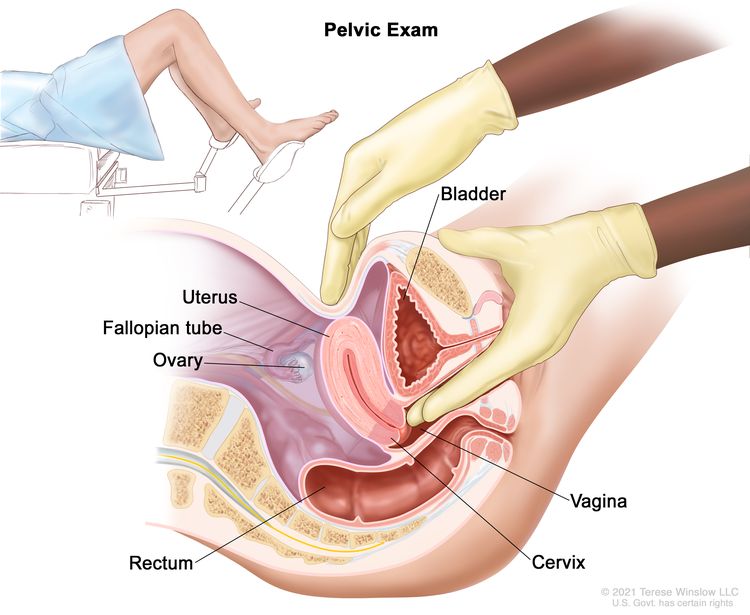
Pelvic exam: An exam of the vagina, cervix, uterus, fallopian tubes, ovaries, and rectum. A speculum is inserted into the vagina and the doctor or nurse looks at the vagina and cervix for signs of disease. A Pap test of the cervix is usually done. The doctor or nurse also inserts one or two lubricated, gloved fingers of one hand into the vagina and places the other hand over the lower abdomen to feel the size, shape, and position of the uterus and ovaries. The doctor or nurse also inserts a lubricated, gloved finger into the rectum to feel for lumps or abnormal areas.EnlargePelvic exam. A doctor or nurse inserts one or two lubricated, gloved fingers of one hand into the vagina and presses on the lower abdomen with the other hand. This is done to feel the size, shape, and position of the uterus and ovaries. The vagina, cervix, fallopian tubes, and rectum are also checked.
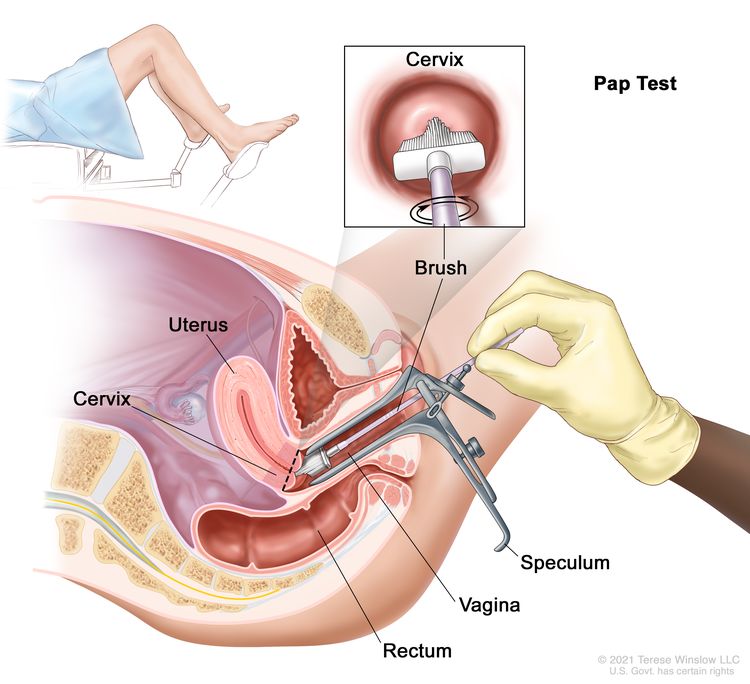
Pap test: A procedure to collect cells from the surface of the cervix and vagina. A piece of cotton, a brush, or a small wooden stick is used to gently scrape cells from the cervix and vagina. The cells are viewed under a microscope to find out if they are abnormal. This procedure is also called a Pap smear.EnlargePap test. A speculum is inserted into the vagina to widen it. Then, a brush is inserted into the vagina to collect cells from the cervix. The cells are checked under a microscope for signs of disease.
Human papillomavirus (HPV) test: A laboratory test used to check DNA or RNA for certain types of HPV infection. Cells are collected from the cervix and DNA or RNA from the cells is checked to find out if an infection is caused by a type of HPV that is linked to cervical cancer. This test may be done using the sample of cells removed during a Pap test. This test may also be done if the results of a Pap test show certain abnormal cervical cells.
Colposcopy: A procedure in which a colposcope (a lighted, magnifying instrument) is used to check the vagina and cervix for abnormal areas. Tissue samples may be taken using a curette (spoon-shaped instrument) or a brush and checked under a microscope for signs of disease.
Biopsy: The removal of cells or tissues from the vagina and cervix so they can be viewed under a microscope by a pathologist to check for signs of cancer. If a Pap test shows abnormal cells in the vagina, a biopsy may be done during a colposcopy.
Certain factors affect prognosis (chance of recovery) and treatment options.
After vaginal cancer has been diagnosed, tests are done to find out if cancer cells have spread within the vagina or to other parts of the body.
There are three ways that cancer spreads in the body.
Cancer may spread from where it began to other parts of the body.
In vaginal intraepithelial neoplasia (VaIN), abnormal cells are found in tissue lining the inside of the vagina.
The following stages are used for vaginal cancer:
Stage I
Stage II
Stage III
Stage IV
Vaginal cancer may recur (come back) after it has been treated.
After vaginal cancer has been diagnosed, tests are done to find out if cancer cells have spread within the vagina or to other parts of the body.
The process used to find out if cancer has spread within the vagina or to other
parts of the body is called staging. The information gathered from the
staging process determines the stage of the disease. It is important to know
the stage in order to plan treatment. The following procedures may be used in the staging process:
Chest x-ray: An x-ray of the organs and bones inside the chest. An x-ray is a type of energy beam that can go through the body and onto film, making a picture of areas inside the body.
CT scan (CAT scan): A procedure that makes a series of detailed pictures of areas inside the body such as the abdomen or pelvis, taken from different angles. The pictures are made by a computer linked to an x-ray machine. A dye may be injected into a vein or swallowed to help the organs or tissues show up more clearly. This procedure is also called computed tomography, computerized tomography, or computerized axial tomography.
MRI (magnetic resonance imaging): A procedure that uses a magnet, radio waves, and a computer to make a series of detailed pictures of areas inside the body. This procedure is also called nuclear magnetic resonance imaging (NMRI).
PET scan (positron emission tomography scan): A procedure to find malignanttumorcells in the body. A small amount of radioactiveglucose (sugar) is injected into a vein. The PET scanner rotates around the body and makes a picture of where glucose is being used in the body. Malignant tumor cells show up brighter in the picture because they are more active and take up more glucose than normal cells do.
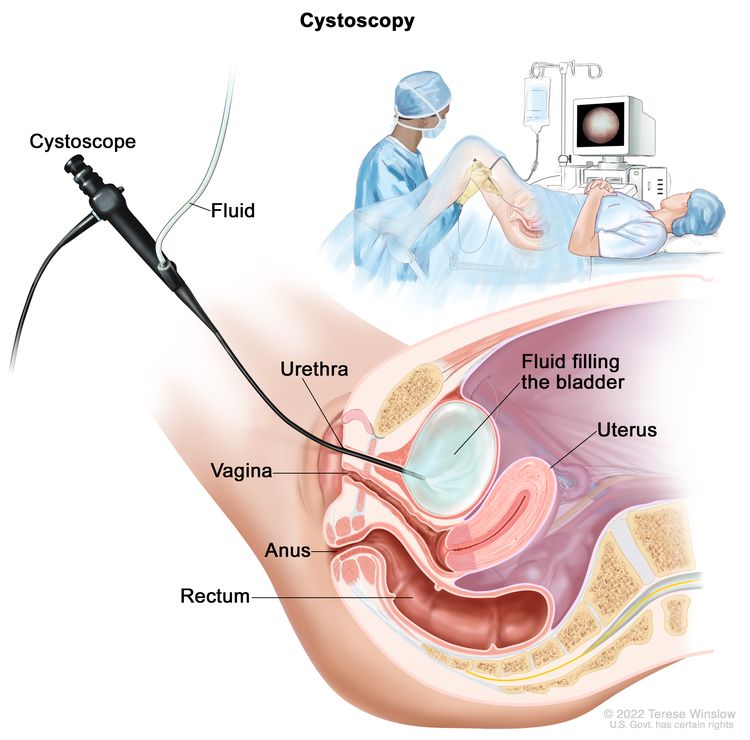
Cystoscopy: A procedure to look inside the bladder and urethra to check for abnormal areas. A cystoscope is inserted through the urethra into the bladder. A cystoscope is a thin, tube-like instrument with a light and a lens for viewing. It may also have a tool to remove tissue samples, which are checked under a microscope for signs of cancer.EnlargeCystoscopy. A cystoscope (a thin, tube-like instrument with a light and a lens for viewing) is inserted through the urethra into the bladder. Fluid is used to fill the bladder. The doctor looks at an image of the inner wall of the bladder on a computer monitor to check for abnormal areas.
Proctoscopy: A procedure to look inside the rectum and anus to check for abnormal areas, using a proctoscope. A proctoscope is a thin, tube-like instrument with a light and a lens for viewing the inside of the rectum and anus. It may also have a tool to remove tissue samples, which are checked under a microscope for signs of cancer.
Biopsy: A biopsy may be done to find out if cancer has spread to the cervix. A sample of tissue is removed from the cervix and viewed under a microscope. A biopsy that removes only a small amount of tissue is usually done in the doctor’s office. A cone biopsy (removal of a larger, cone-shaped piece of tissue from the cervix and cervical canal) is usually done in the hospital. A biopsy of the vulva may also be done to see if cancer has spread there.
There are three ways that cancer spreads in the body.
Tissue. The cancer spreads from where it began by growing into nearby areas.
Lymph system. The cancer spreads from where it began by getting into the lymph system. The cancer travels through the lymph vessels to other parts of the body.
Blood. The cancer spreads from where it began by getting into the blood. The cancer travels through the blood vessels to other parts of the body.
Cancer may spread from where it began to other parts of the body.
When cancer spreads to another part of the body, it is called metastasis. Cancer cells break away from where they began (the primary tumor) and travel through the lymph system or blood.
Lymph system. The cancer gets into the lymph system, travels through the lymph vessels, and forms a tumor (metastatic tumor) in another part of the body.
Blood. The cancer gets into the blood, travels through the blood vessels, and forms a tumor (metastatic tumor) in another part of the body.
The metastatic tumor is the same type of cancer as the primary tumor. For example, if vaginal cancer spreads to the lung, the cancer cells in the lung are actually vaginal cancer cells. The disease is metastatic vaginal cancer, not lung cancer.
Many cancer deaths are caused when cancer moves from the original tumor and spreads to other tissues and organs. This is called metastatic cancer. This animation shows how cancer cells travel from the place in the body where they first formed to other parts of the body.
In vaginal intraepithelial neoplasia (VaIN), abnormal cells are found in tissue lining the inside of the vagina.
These abnormal cells are not cancer. Vaginal intraepithelial neoplasia (VaIN) is grouped based on how deep the abnormal cells are in the tissue lining the vagina:
VaIN 1: Abnormal cells are found in the outermost one third of the tissue lining the vagina.
VaIN 2: Abnormal cells are found in the outermost two-thirds of the tissue lining the vagina.
VaIN 3: Abnormal cells are found in more than two-thirds of the tissue lining the vagina. When VaIN 3 lesions are found in the full thickness of the tissue lining the vagina, it is called carcinoma in situ.
VaIN may become cancer and spread into the vaginal wall.
Stage IVB: Cancer has spread to parts of the body that are not near the vagina, such as the lung or bone.
Vaginal cancer may recur (come back) after it has been treated.
The cancer may come back in the vagina or in other parts of the body.
Treatment Option Overview
Key Points
There are different types of treatment for patients with vaginal cancer.
The following types of treatment are used:
Surgery
Radiation therapy
Chemotherapy
New types of treatment are being tested in clinical trials.
Immunotherapy
Radiosensitizers
Treatment for vaginal cancer may cause side effects.
Patients may want to think about taking part in a clinical trial.
Patients can enter clinical trials before, during, or after starting their cancer treatment.
Follow-up tests may be needed.
There are different types of treatment for patients with vaginal cancer.
Different types of treatments are available for patients with vaginal cancer. Some treatments are standard (the currently used treatment), and some are being tested in clinical trials. A treatment clinical trial is a research study meant to help improve current treatments or obtain information on new treatments for patients with cancer. When clinical trials show that a new treatment is better than the standard treatment, the new treatment may become the standard treatment. Patients may want to think about taking part in a clinical trial. Some clinical trials are open only to patients who have not started treatment.
The following types of surgery may be used to treat VaIN:
Laser surgery: A surgical procedure that uses a laser beam (a narrow beam of intense light) as a knife to make bloodless cuts in tissue or to remove a surface lesion such as a tumor.
Wide local excision: A surgical procedure that takes out the cancer and some of the healthy tissue around it.
The following types of surgery may be used to treat vaginal cancer:
Wide local excision: A surgical procedure that takes out the cancer and some of the healthy tissue around it.
Vaginectomy: Surgery to remove all or part of the vagina. Skin grafts from other parts of the body may be needed to reconstruct the vagina.
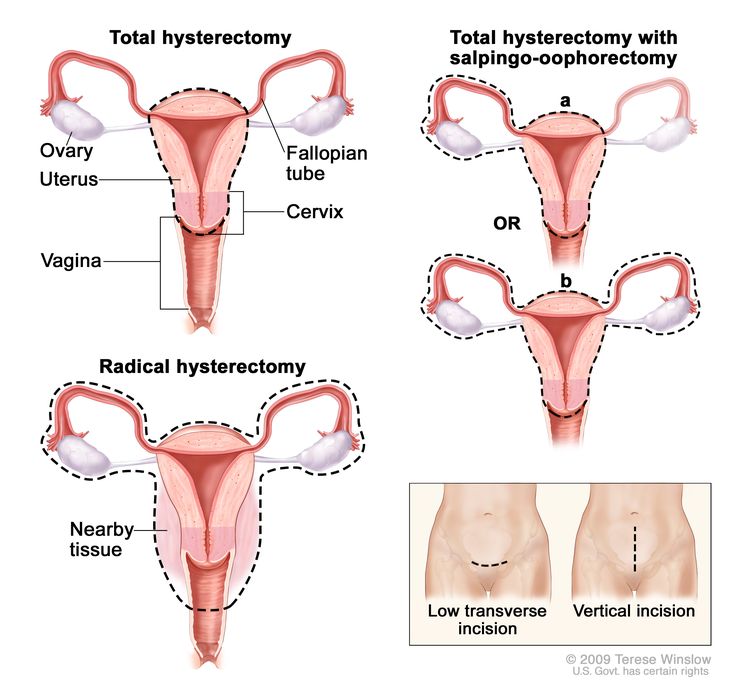
Total hysterectomy: Surgery to remove the uterus, including the cervix. If the uterus and cervix are taken out through the vagina, the operation is called a vaginalhysterectomy. If the uterus and cervix are taken out through a large incision (cut) in the abdomen, the operation is called a total abdominal hysterectomy. If the uterus and cervix are taken out through a small incision in the abdomen using a laparoscope, the operation is called a total laparoscopic hysterectomy.EnlargeHysterectomy. The uterus is surgically removed with or without other organs or tissues. In a total hysterectomy, the uterus and cervix are removed. In a total hysterectomy with salpingo-oophorectomy, (a) the uterus plus one (unilateral) ovary and fallopian tube are removed; or (b) the uterus plus both (bilateral) ovaries and fallopian tubes are removed. In a radical hysterectomy, the uterus, cervix, both ovaries, both fallopian tubes, and nearby tissue are removed. These procedures are done using a low transverse incision or a vertical incision.
Lymph node dissection: A surgical procedure in which lymph nodes are removed and a sample of tissue is checked under a microscope for signs of cancer. This procedure is also called lymphadenectomy. If the cancer is in the upper vagina, the pelvic lymph nodes may be removed. If the cancer is in the lower vagina, lymph nodes in the groin may be removed.
Pelvic exenteration: Surgery to remove the lower colon, rectum, bladder, cervix, vagina, and ovaries. Nearby lymph nodes are also removed. Artificial openings (stoma) are made for urine and stool to flow from the body into a collection bag.
After the doctor removes all the cancer that can be seen at the time of the surgery, some patients may be given radiation therapy after surgery to kill any cancer cells that are left. Treatment given after the surgery, to lower the risk that the cancer will come back, is called adjuvant therapy.
Radiation therapy
Radiation therapy is a cancer treatment that uses high-energy x-rays or other types of radiation to kill cancer cells or keep them from growing. There are two types of radiation therapy:
External radiation therapy uses a machine outside the body to send radiation toward the area of the body with cancer.
The way the radiation therapy is given depends on the type and stage of the cancer being treated. External and internal radiation therapy are used to treat vaginal cancer, and may also be used as
palliative therapy to relieve
symptoms and improve quality of life.
Chemotherapy
Chemotherapy is a cancer treatment that uses drugs to stop the growth of cancer cells, either by killing the cells or by stopping them from dividing. When chemotherapy is taken by mouth or injected into a vein or muscle, the drugs enter the bloodstream and can affect cancer cells throughout the body (systemic chemotherapy). When chemotherapy is placed directly into the cerebrospinal fluid, an organ, or a body cavity such as the abdomen, the drugs mainly affect cancer cells in those areas (regional chemotherapy). The way the chemotherapy is given depends on the type and stage of the cancer being treated.
New types of treatment are being tested in clinical trials.
This summary section describes treatments that are being studied in clinical trials. It may not mention every new treatment being studied. Information about clinical trials is available from the NCI website.
Immunotherapy
Immunotherapy is a treatment that uses the patient’s immune system to fight cancer. Substances made by the body or made in a laboratory are used to boost, direct, or restore the body’s natural defenses against cancer.
Imiquimod is an immune response modifier that is being studied to treat vaginal lesions and is applied to the skin in a cream.
Radiosensitizers
Radiosensitizers are drugs that make tumor cells more sensitive to radiation therapy. Combining radiation therapy with radiosensitizers may kill more tumor cells.
Treatment for vaginal cancer may cause side effects.
Patients may want to think about taking part in a clinical trial.
For some patients, taking part in a clinical trial may be the best treatment choice. Clinical trials are part of the cancer research process. Clinical trials are done to find out if new cancer treatments are safe and effective or better than the standard treatment.
Many of today's standard treatments for cancer are based on earlier clinical trials. Patients who take part in a clinical trial may receive the standard treatment or be among the first to receive a new treatment.
Patients who take part in clinical trials also help improve the way cancer will be treated in the future. Even when clinical trials do not lead to effective new treatments, they often answer important questions and help move research forward.
Patients can enter clinical trials before, during, or after starting their cancer treatment.
Some clinical trials only include patients who have not yet received treatment. Other trials test treatments for patients whose cancer has not gotten better. There are also clinical trials that test new ways to stop cancer from recurring (coming back) or reduce the side effects of cancer treatment.
Clinical trials are taking place in many parts of the country. Information about clinical trials supported by NCI can be found on NCI’s clinical trials search webpage. Clinical trials supported by other organizations can be found on the ClinicalTrials.gov website.
Follow-up tests may be needed.
Some of the tests that were done to diagnose the cancer or to find out the stage of the cancer may be repeated. Some tests will be repeated in order to see how well the treatment is working. Decisions about whether to continue, change, or stop treatment may be based on the results of these tests.
Treatment of Vaginal Intraepithelial Neoplasia (VaIN)
Although no anticancer drugs have been shown to help patients with stage IVB vaginal cancer live longer, they are often treated with regimens used for cervical cancer. For more information, see Cervical Cancer Treatment.
Although no anticancer drugs have been shown to help patients with recurrent vaginal cancer live longer, they are often treated with regimens used for cervical cancer. For more information, see Cervical Cancer Treatment.
Use our clinical trial search to find NCI-supported cancer clinical trials that are accepting patients. You can search for trials based on the type of cancer, the age of the patient, and where the trials are being done. General information about clinical trials is also available.
Physician Data Query (PDQ) is the National Cancer Institute's (NCI's) comprehensive cancer information database. The PDQ database contains summaries of the latest published information on cancer prevention, detection, genetics, treatment, supportive care, and complementary and alternative medicine. Most summaries come in two versions. The health professional versions have detailed information written in technical language. The patient versions are written in easy-to-understand, nontechnical language. Both versions have cancer information that is accurate and up to date and most versions are also available in Spanish.
PDQ is a service of the NCI. The NCI is part of the National Institutes of Health (NIH). NIH is the federal government’s center of biomedical research. The PDQ summaries are based on an independent review of the medical literature. They are not policy statements of the NCI or the NIH.
Purpose of This Summary
This PDQ cancer information summary has current information about the treatment of vaginal cancer. It is meant to inform and help patients, families, and caregivers. It does not give formal guidelines or recommendations for making decisions about health care.
Reviewers and Updates
Editorial Boards write the PDQ cancer information summaries and keep them up to date. These Boards are made up of experts in cancer treatment and other specialties related to cancer. The summaries are reviewed regularly and changes are made when there is new information. The date on each summary ("Updated") is the date of the most recent change.
The information in this patient summary was taken from the health professional version, which is reviewed regularly and updated as needed, by the PDQ Adult Treatment Editorial Board.
Clinical Trial Information
A clinical trial is a study to answer a scientific question, such as whether one treatment is better than another. Trials are based on past studies and what has been learned in the laboratory. Each trial answers certain scientific questions in order to find new and better ways to help cancer patients. During treatment clinical trials, information is collected about the effects of a new treatment and how well it works. If a clinical trial shows that a new treatment is better than one currently being used, the new treatment may become "standard." Patients may want to think about taking part in a clinical trial. Some clinical trials are open only to patients who have not started treatment.
Clinical trials can be found online at NCI's website. For more information, call the Cancer Information Service (CIS), NCI's contact center, at 1-800-4-CANCER (1-800-422-6237).
Permission to Use This Summary
PDQ is a registered trademark. The content of PDQ documents can be used freely as text. It cannot be identified as an NCI PDQ cancer information summary unless the whole summary is shown and it is updated regularly. However, a user would be allowed to write a sentence such as “NCI’s PDQ cancer information summary about breast cancer prevention states the risks in the following way: [include excerpt from the summary].”
Images in this summary are used with permission of the author(s), artist, and/or publisher for use in the PDQ summaries only. If you want to use an image from a PDQ summary and you are not using the whole summary, you must get permission from the owner. It cannot be given by the National Cancer Institute. Information about using the images in this summary, along with many other images related to cancer can be found in Visuals Online. Visuals Online is a collection of more than 3,000 scientific images.
Disclaimer
The information in these summaries should not be used to make decisions about insurance reimbursement. More information on insurance coverage is available on Cancer.gov on the Managing Cancer Care page.
Contact Us
More information about contacting us or receiving help with the Cancer.gov website can be found on our Contact Us for Help page. Questions can also be submitted to Cancer.gov through the website’s E-mail Us.