General Information About Hairy Cell Leukemia
Stages of Hairy Cell Leukemia
Relapsed or Refractory Hairy Cell Leukemia
Treatment Option Overview
Treatment Options for Hairy Cell Leukemia
To Learn More About Hairy Cell Leukemia
Changes to This Summary (07/15/2011)
Get More Information From NCI
About PDQ
General Information About Hairy Cell Leukemia
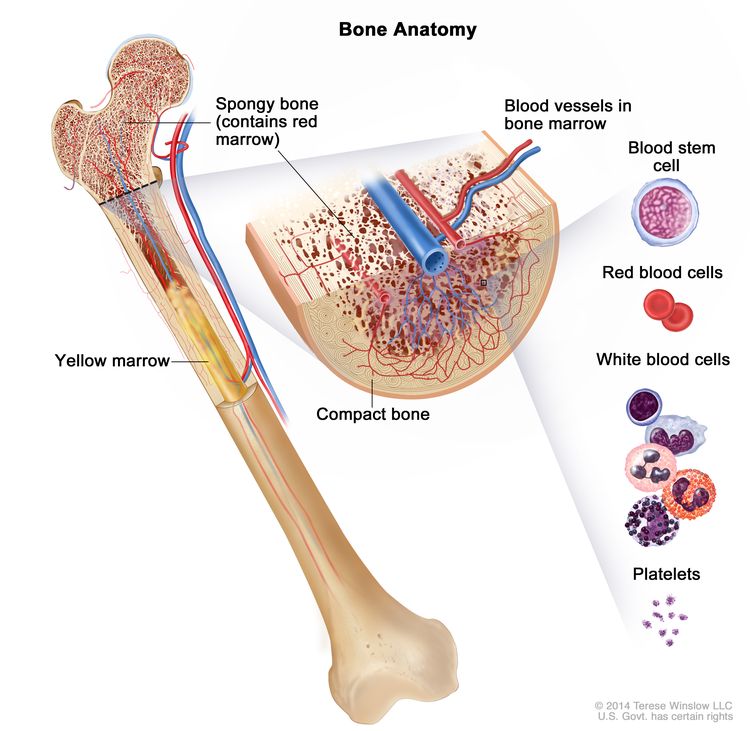
Hairy cell leukemia is a type of cancer in which the bone marrow makes too many lymphocytes (a type of white blood cell).
Hairy cell leukemia is a cancer of the blood and bone marrow. This rare type of leukemia gets worse slowly or does not get worse at all. The disease is called hairy cell leukemia because the leukemia cells look "hairy" when viewed under a microscope.
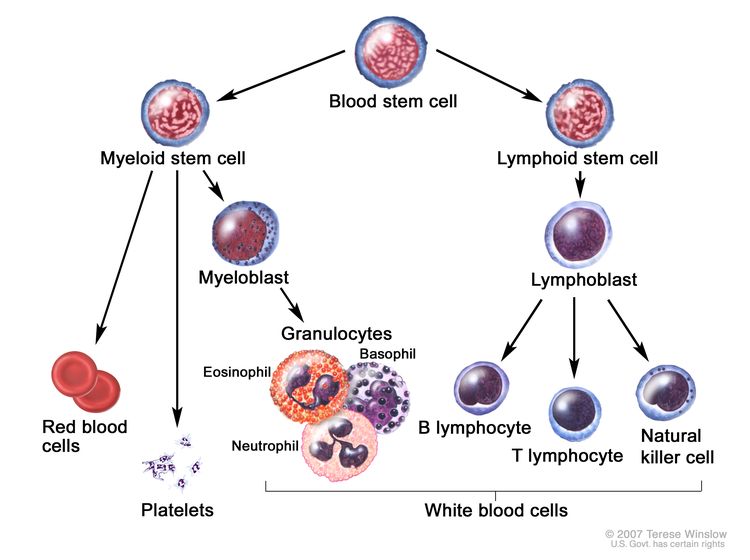
Normally, the bone marrow makes blood stem cells (immature cells) that develop into mature blood cells over time. A blood stem cell may become a myeloid stem cell or a lymphoid stem cell.
The myeloid stem cell develops into one of three types of mature blood cells:
- Red blood cells that carry oxygen and other materials to all tissues of the body.
- White blood cells that fight infection and disease.
- Platelets that help prevent bleeding by causing blood clots to form.
The lymphoid stem cell develops into a lymphoblast cell and then into one of three types of lymphocytes (white blood cells):
- B lymphocytes that make antibodies to help fight infection.
- T lymphocytes that help B lymphocytes make antibodies to help fight infection.
- Natural killer cells that attack cancer cells and viruses.
1
In hairy cell leukemia, too many blood stem cells develop into lymphocytes. These lymphocytes are abnormal and do not become healthy white blood cells. They may also be called leukemic cells. The leukemic cells can build up in the blood and bone marrow so there is less room for healthy white blood cells, red blood cells, and platelets. This may cause infection, anemia, and easy bleeding. Some of the leukemia cells may collect in the spleen and cause it to swell.
This summary is about hairy cell leukemia. See the following PDQ summaries for information about other types of leukemia:
- Adult Acute Lymphoblastic Leukemia Treatment 2.
- Childhood Acute Lymphoblastic Leukemia Treatment 3.
- Chronic Lymphocytic Leukemia Treatment 4.
- Adult Acute Myeloid Leukemia Treatment 5.
- Childhood Acute Myeloid Leukemia/Other Myeloid Malignancies Treatment 6.
- Chronic Myelogenous Leukemia Treatment 7.
Gender and age may affect the risk of developing hairy cell leukemia.
Anything that increases your chance of getting a disease is called a risk factor. Having a risk factor does not mean that you will get cancer; not having risk factors doesn’t mean that you will not get cancer. People who think they may be at risk should discuss this with their doctor. The cause of hairy cell leukemia is unknown. It occurs more often in older men.
Possible signs of hairy cell leukemia include tiredness, infections, and pain below the ribs.
These and other symptoms may be caused by hairy cell leukemia. Other conditions may cause the same symptoms. A doctor should be consulted if any of the following problems occur:
- Weakness or feeling tired.
- Fever or frequent infections.
- Easy bruising or bleeding.
- Shortness of breath.
- Weight loss for no known reason.
- Pain or a feeling of fullness below the ribs.
- Painless lumps in the neck, underarm, stomach, or groin.
Tests that examine the blood and bone marrow are used to detect (find) and diagnose hairy cell leukemia.
The following tests and procedures may be used:
- Physical exam and history: An exam of the body to check general signs of health, including checking for signs of disease, such as a swollen spleen, lumps, or anything else that seems unusual. A history of the patient’s health habits and past illnesses and treatments will also be taken.
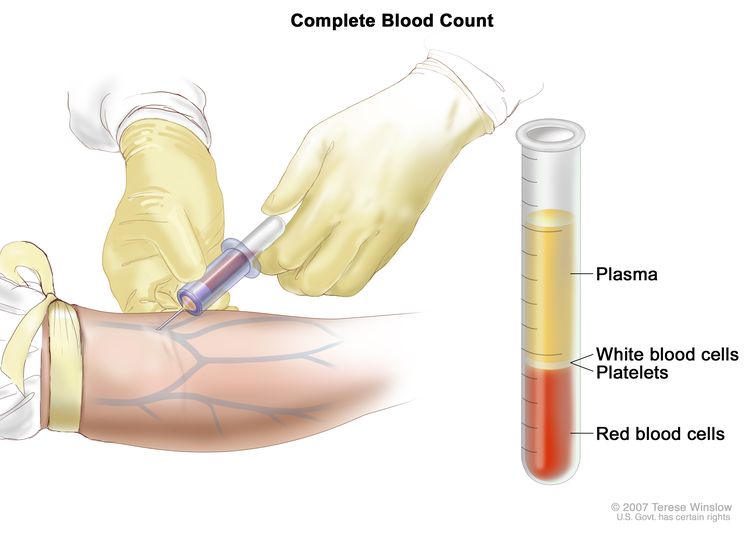
- Complete blood count (CBC): A procedure in which a sample of blood is drawn and checked for the following:
- The number of red blood cells, white blood cells, and platelets.
- The amount of hemoglobin (the protein that carries oxygen) in the red blood cells.
- The portion of the sample made up of red blood cells.
Enlarge 8
8
Complete blood count (CBC). Blood is collected by inserting a needle into a vein and allowing the blood to flow into a tube. The blood sample is sent to the laboratory and the red blood cells, white blood cells, and platelets are counted. The CBC is used to test for, diagnose, and monitor many different conditions. - Peripheral blood smear: A procedure in which a sample of blood is checked for cells that look "hairy," the number and kinds of white blood cells, the number of platelets, and changes in the shape of blood cells.
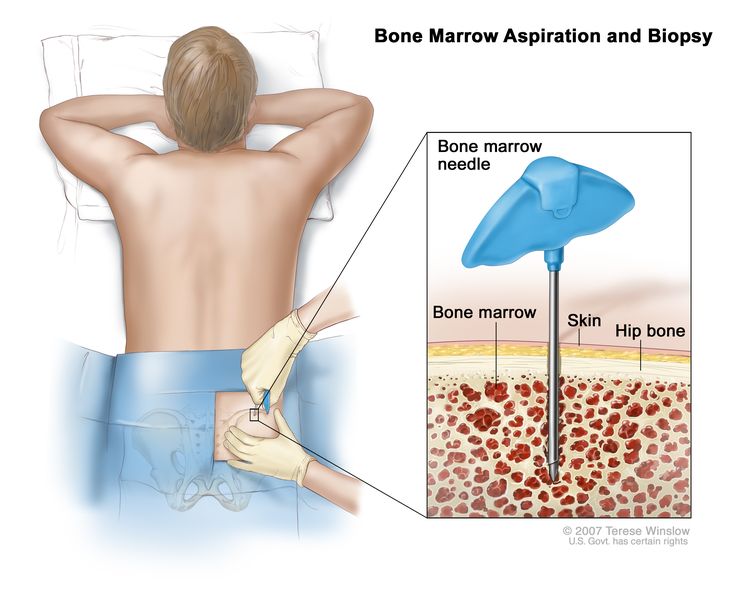
- Bone marrow aspiration and biopsy: The removal of bone marrow, blood, and a small piece of bone by inserting a hollow needle into the hipbone or breastbone. A pathologist views the bone marrow, blood, and bone under a microscope to look for signs of cancer.
- Immunophenotyping: A test in which the cells in a sample of blood or bone marrow are looked at under a microscope to check the pattern of proteins that are on the surface of the cells. Hairy cells have a certain pattern.
- CT scan (CAT scan): A procedure that makes a series of detailed pictures of areas inside the body, taken from different angles. The pictures are made by a computer linked to an x-ray machine. A dye may be injected into a vein or swallowed to help the organs or tissues show up more clearly. This procedure is also called computed tomography, computerized tomography, or computerized axial tomography. A CT scan of the abdomen may be done to check for swollen lymph nodes or a swollen spleen.
Certain factors affect treatment options and prognosis (chance of recovery).
The treatment options may depend on the following:
- The number of hairy (leukemia) cells and healthy blood cells in the blood and bone marrow.
- Whether the spleen is swollen.
- Whether there are symptoms of leukemia, such as infection.
- Whether the leukemia has recurred (come back) after previous treatment.
The prognosis (chance of recovery) depends on the following:
- Whether the hairy cell leukemia does not grow or grows so slowly it does not need treatment.
- Whether the hairy cell leukemia responds to treatment.
Treatment often results in a long-lasting remission (a period during which some or all of the signs and symptoms of the leukemia are gone). If the leukemia returns after it has been in remission, retreatment often causes another remission.
Stages of Hairy Cell Leukemia
| Key Points for This Section |
|
There is no standard staging system for hairy cell leukemia.
Staging is the process used to find out how far the cancer has spread. Groups are used in place of stages for hairy cell leukemia. The disease is grouped as untreated, progressive, or refractory.
Untreated hairy cell leukemia
The hairy cell leukemia is newly diagnosed and has not been treated except to relieve symptoms such as weight loss and infections. In untreated hairy cell leukemia, some or all of the following conditions occur:
- Hairy (leukemia) cells are found in the blood and bone marrow.
- The number of red blood cells, white blood cells, or platelets may be lower than normal.
- The spleen may be larger than normal.
Progressive hairy cell leukemia
In progressive hairy cell leukemia, the leukemia has been treated with either chemotherapy or splenectomy (removal of the spleen) and one or both of the following conditions occur:
- There is an increase in the number of hairy cells in the blood or bone marrow.
- The number of red blood cells, white blood cells, or platelets in the blood is lower than normal.
There are three ways that cancer spreads in the body.
When cancer cells spread outside the blood, a solid tumor may form. This process is called metastasis. The three ways that cancer cells spread in the body are:
- Through the blood. Cancer cells travel through the blood, invade solid tissues in the body, such as the brain or heart, and form a solid tumor.
- Through the lymph system. Cancer cells invade the lymph system, travel through the lymph vessels, and form a solid tumor in other parts of the body.
- Through solid tissue. Cancer cells that have formed a solid tumor spread to tissues in the surrounding area.
The new (metastatic) tumor is the same type of cancer as the primary cancer. For example, if leukemia cells spread to the brain, the cancer cells in the brain are actually leukemia cells. The disease is metastatic leukemia, not brain cancer.
Relapsed or Refractory Hairy Cell Leukemia
Relapsed hairy cell leukemia has come back after treatment. Refractory hairy cell leukemia has not responded to treatment.
Treatment Option Overview
There are different types of treatment for patients with hairy cell leukemia.
Different types of treatment are available for patients with hairy cell leukemia. Some treatments are standard (the currently used treatment), and some are being tested in clinical trials. A treatment clinical trial is a research study meant to help improve current treatments or obtain information on new treatments for patients with cancer. When clinical trials show that a new treatment is better than the standard treatment, the new treatment may become the standard treatment. Patients may want to think about taking part in a clinical trial. Some clinical trials are open only to patients who have not started treatment.
Five types of standard treatment are used:
Watchful waiting is closely monitoring a patient's condition, without giving any treatment until symptoms appear or change.
Chemotherapy is a cancer treatment that uses drugs to stop the growth of cancer cells, either by killing the cells or by stopping them from dividing. When chemotherapy is taken by mouth or injected into a vein or muscle, the drugs enter the bloodstream and can reach cancer cells throughout the body (systemic chemotherapy). When chemotherapy is placed directly into the cerebrospinal fluid, an organ, or a body cavity such as the abdomen, the drugs mainly affect cancer cells in those areas (regional chemotherapy). The way the chemotherapy is given depends on the type and stage of the cancer being treated. Cladribine and pentostatin are anticancer drugs commonly used to treat hairy cell leukemia. These drugs may increase the risk of developing other types of cancer, especially Hodgkin lymphoma and non-Hodgkin lymphoma. Long-term follow up for second cancers is very important.
Biologic therapy is a cancer treatment that uses the patient’s immune system to fight cancer. Substances made by the body or made in a laboratory are used to boost, direct, or restore the body’s natural defenses against cancer. This type of cancer treatment is also called biotherapy or immunotherapy. Interferon alfa is a biologic agent commonly used to treat hairy cell leukemia.
Splenectomy is a surgical procedure to remove the spleen.
Targeted therapy is a treatment that uses drugs or other substances to identify and attack specific cancer cells without harming normal cells. Monoclonal antibody therapy is a type of targeted therapy being studied in the treatment of hairy cell leukemia.
Monoclonal antibody therapy uses antibodies made in the laboratory from a single type of immune system cell. These antibodies can identify substances on cancer cells or normal substances that may help cancer cells grow. The antibodies attach to the substances and kill the cancer cells, block their growth, or keep them from spreading. Monoclonal antibodies are given by infusion. They may be used alone or to carry drugs, toxins, or radioactive material directly to cancer cells.
A monoclonal antibody called rituximab may be used for certain patients with hairy cell leukemia.
Patients may want to think about taking part in a clinical trial.
For some patients, taking part in a clinical trial may be the best treatment choice. Clinical trials are part of the cancer research process. Clinical trials are done to find out if new cancer treatments are safe and effective or better than the standard treatment.
Many of today's standard treatments for cancer are based on earlier clinical trials. Patients who take part in a clinical trial may receive the standard treatment or be among the first to receive a new treatment.
Patients who take part in clinical trials also help improve the way cancer will be treated in the future. Even when clinical trials do not lead to effective new treatments, they often answer important questions and help move research forward.
Patients can enter clinical trials before, during, or after starting their cancer treatment.
Some clinical trials only include patients who have not yet received treatment. Other trials test treatments for patients whose cancer has not gotten better. There are also clinical trials that test new ways to stop cancer from recurring (coming back) or reduce the side effects of cancer treatment.
Clinical trials are taking place in many parts of the country. See the Treatment Options section that follows for links to current treatment clinical trials. These have been retrieved from NCI's listing of clinical trials.
Follow-up tests may be needed.
Some of the tests that were done to diagnose the cancer or to find out the stage of the cancer may be repeated. Some tests will be repeated in order to see how well the treatment is working. Decisions about whether to continue, change, or stop treatment may be based on the results of these tests. This is sometimes called re-staging.
Some of the tests will continue to be done from time to time after treatment has ended. The results of these tests can show if your condition has changed or if the cancer has recurred (come back). These tests are sometimes called follow-up tests or check-ups.
Treatment Options for Hairy Cell Leukemia
A link to a list of current clinical trials is included for each treatment section. For some types or stages of cancer, there may not be any trials listed. Check with your doctor for clinical trials that are not listed here but may be right for you.
Untreated Hairy Cell LeukemiaIf the patient's blood cell counts are not too low and there are no symptoms, treatment may not be needed and the patient is carefully watched for changes in his or her condition. If blood cell counts become too low or symptoms appear, initial treatment may include the following:
Check for U.S. clinical trials from NCI's list of cancer clinical trials that are now accepting patients with untreated hairy cell leukemia 10. For more specific results, refine the search by using other search features, such as the location of the trial, the type of treatment, or the name of the drug. General information about clinical trials is available from the NCI Web site 11.
Progressive Hairy Cell LeukemiaTreatment for progressive hairy cell leukemia may include the following:
- Chemotherapy.
- Biologic therapy.
- Splenectomy.
- A clinical trial of chemotherapy and targeted therapy with a monoclonal antibody (rituximab).
Check for U.S. clinical trials from NCI's list of cancer clinical trials that are now accepting patients with progressive hairy cell leukemia, initial treatment 12. For more specific results, refine the search by using other search features, such as the location of the trial, the type of treatment, or the name of the drug. General information about clinical trials is available from the NCI Web site 11.
Relapsed or Refractory Hairy Cell LeukemiaTreatment of relapsed or refractory hairy cell leukemia may include the following:
- Chemotherapy.
- Biologic therapy.
- Targeted therapy with a monoclonal antibody (rituximab).
- High-dose chemotherapy.
- A clinical trial of a new biologic therapy.
- A clinical trial of chemotherapy and targeted therapy with a monoclonal antibody (rituximab).
Check for U.S. clinical trials from NCI's list of cancer clinical trials that are now accepting patients with refractory hairy cell leukemia 13. For more specific results, refine the search by using other search features, such as the location of the trial, the type of treatment, or the name of the drug. General information about clinical trials is available from the NCI Web site 11.
To Learn More About Hairy Cell Leukemia
For more information from the National Cancer Institute about hairy cell leukemia, see the following:
- Leukemia Home Page 14
- Biological Therapies for Cancer: Questions and Answers 15
- Understanding Cancer Series: Targeted Therapies 16 (Advances in Targeted Therapy)
- Targeted Cancer Therapies 17
For general cancer information and other resources from the National Cancer Institute, see the following:
- What You Need to Know About™ Cancer 18
- Understanding Cancer Series: Cancer 19
- Cancer Staging 20
- Chemotherapy and You: Support for People With Cancer 21
- Radiation Therapy and You: Support for People With Cancer 22
- Coping with Cancer: Supportive and Palliative Care 23
- Questions to Ask Your Doctor About Cancer 24
- Cancer Library 25
- Information For Survivors/Caregivers/Advocates 26
Changes to This Summary (07/15/2011)
The PDQ cancer information summaries are reviewed regularly and updated as new information becomes available. This section describes the latest changes made to this summary as of the date above.
Editorial changes were made to this summary.
Get More Information From NCI
Call 1-800-4-CANCER
For more information, U.S. residents may call the National Cancer Institute's (NCI's) Cancer Information Service toll-free at 1-800-4-CANCER (1-800-422-6237) Monday through Friday from 8:00 a.m. to 8:00 p.m., Eastern Time. A trained Cancer Information Specialist is available to answer your questions.
Chat online
The NCI's LiveHelp® 27 online chat service provides Internet users with the ability to chat online with an Information Specialist. The service is available from 8:00 a.m. to 11:00 p.m. Eastern time, Monday through Friday. Information Specialists can help Internet users find information on NCI Web sites and answer questions about cancer.
Write to us
For more information from the NCI, please write to this address:
- NCI Public Inquiries Office
- Suite 3036A
- 6116 Executive Boulevard, MSC8322
- Bethesda, MD 20892-8322
Search the NCI Web site
The NCI Web site 28 provides online access to information on cancer, clinical trials, and other Web sites and organizations that offer support and resources for cancer patients and their families. For a quick search, use the search box in the upper right corner of each Web page. The results for a wide range of search terms will include a list of "Best Bets," editorially chosen Web pages that are most closely related to the search term entered.
There are also many other places to get materials and information about cancer treatment and services. Hospitals in your area may have information about local and regional agencies that have information on finances, getting to and from treatment, receiving care at home, and dealing with problems related to cancer treatment.
Find Publications
The NCI has booklets and other materials for patients, health professionals, and the public. These publications discuss types of cancer, methods of cancer treatment, coping with cancer, and clinical trials. Some publications provide information on tests for cancer, cancer causes and prevention, cancer statistics, and NCI research activities. NCI materials on these and other topics may be ordered online or printed directly from the NCI Publications Locator 29. These materials can also be ordered by telephone from the Cancer Information Service toll-free at 1-800-4-CANCER (1-800-422-6237).
About PDQ
PDQ is a comprehensive cancer database available on NCI's Web site.
PDQ is the National Cancer Institute's (NCI's) comprehensive cancer information database. Most of the information contained in PDQ is available online at NCI's Web site 28. PDQ is provided as a service of the NCI. The NCI is part of the National Institutes of Health, the federal government's focal point for biomedical research.
PDQ contains cancer information summaries.
The PDQ database contains summaries of the latest published information on cancer prevention, detection, genetics, treatment, supportive care, and complementary and alternative medicine. Most summaries are available in two versions. The health professional versions provide detailed information written in technical language. The patient versions are written in easy-to-understand, nontechnical language. Both versions provide current and accurate cancer information.
The PDQ cancer information summaries are developed by cancer experts and reviewed regularly.
Editorial Boards made up of experts in oncology and related specialties are responsible for writing and maintaining the cancer information summaries. The summaries are reviewed regularly and changes are made as new information becomes available. The date on each summary ("Date Last Modified") indicates the time of the most recent change.
PDQ also contains information on clinical trials.
A clinical trial is a study to answer a scientific question, such as whether one treatment is better than another. Trials are based on past studies and what has been learned in the laboratory. Each trial answers certain scientific questions in order to find new and better ways to help cancer patients. During treatment clinical trials, information is collected about the effects of a new treatment and how well it works. If a clinical trial shows that a new treatment is better than one currently being used, the new treatment may become "standard." Patients may want to think about taking part in a clinical trial. Some clinical trials are open only to patients who have not started treatment.
Listings of clinical trials are included in PDQ and are available online at NCI's Web site 11. Descriptions of the trials are available in health professional and patient versions. Many cancer doctors who take part in clinical trials are also listed in PDQ. For more information, call the Cancer Information Service 1-800-4-CANCER (1-800-422-6237).
Glossary Termsabdomen (AB-doh-men)The area of the body that contains the pancreas, stomach, intestines, liver, gallbladder, and other organs.abnormal (ab-NOR-mul) Not normal. An abnormal lesion or growth may be cancer, premalignant (likely to become cancer), or benign (not cancer).anemia (uh-NEE-mee-uh) A condition in which the number of red blood cells is below normal.antibody (AN-tee-BAH-dee) A protein made by plasma cells (a type of white blood cell) in response to an antigen (a substance that causes the body to make a specific immune response). Each antibody can bind to only one specific antigen. The purpose of this binding is to help destroy the antigen. Some antibodies destroy antigens directly. Others make it easier for white blood cells to destroy the antigen.B lymphocyte (... LIM-foh-site) A type of immune cell that makes proteins called antibodies, which bind to microorganisms and other foreign substances, and help fight infections. A B lymphocyte is a type of white blood cell. Also called B cell.blood (blud) A tissue with red blood cells, white blood cells, platelets, and other substances suspended in fluid called plasma. Blood takes oxygen and nutrients to the tissues, and carries away wastes.blood clot (blud klot) A mass of blood that forms when blood platelets, proteins, and cells stick together. When a blood clot is attached to the wall of a blood vessel, it is called a thrombus. When it moves through the bloodstream and blocks the flow of blood in another part of the body, it is called an embolus.bone marrow (bone MAYR-oh) The soft, sponge-like tissue in the center of most bones. It produces white blood cells, red blood cells, and platelets.bone marrow aspiration (bone MAYR-oh AS-pih-RAY-shun) A procedure in which a small sample of bone marrow is removed, usually from the hip bone, breastbone, or thigh bone. A small area of skin and the surface of the bone underneath are numbed with an anesthetic. Then, a special wide needle is pushed into the bone. A sample of liquid bone marrow is removed with a syringe attached to the needle. The bone marrow is sent to a laboratory to be looked at under a microscope. This procedure may be done at the same time as a bone marrow biopsy.bone marrow biopsy (bone MAYR-oh BY-op-see) A procedure in which a small sample of bone with bone marrow inside it is removed, usually from the hip bone. A small area of skin and the surface of the bone underneath are numbed with an anesthetic. Then, a special, wide needle is pushed into the bone and rotated to remove a sample of bone with the bone marrow inside it. The sample is sent to a laboratory to be looked at under a microscope. This procedure may be done at the same time as a bone marrow aspiration.cancer (KAN-ser) A term for diseases in which abnormal cells divide without control and can invade nearby tissues. Cancer cells can also spread to other parts of the body through the blood and lymph systems. There are several main types of cancer. Carcinoma is a cancer that begins in the skin or in tissues that line or cover internal organs. Sarcoma is a cancer that begins in bone, cartilage, fat, muscle, blood vessels, or other connective or supportive tissue. Leukemia is a cancer that starts in blood-forming tissue such as the bone marrow, and causes large numbers of abnormal blood cells to be produced and enter the blood. Lymphoma and multiple myeloma are cancers that begin in the cells of the immune system. Central nervous system cancers are cancers that begin in the tissues of the brain and spinal cord. Also called malignancy.cell (sel) The individual unit that makes up the tissues of the body. All living things are made up of one or more cells.clinical trial (KLIH-nih-kul TRY-ul) A type of research study that tests how well new medical approaches work in people. These studies test new methods of screening, prevention, diagnosis, or treatment of a disease. Also called clinical study.complete blood count (kum-PLEET blud kownt) A test to check the number of red blood cells, white blood cells, and platelets in a sample of blood. Also called blood cell count and CBC.contrast material (KON-trast muh-TEER-ee-ul) A dye or other substance that helps show abnormal areas inside the body. It is given by injection into a vein, by enema, or by mouth. Contrast material may be used with x-rays, CT scans, MRI, or other imaging tests.CT scan (… skan) A series of detailed pictures of areas inside the body taken from different angles. The pictures are created by a computer linked to an x-ray machine. Also called CAT scan, computed tomography scan, computerized axial tomography scan, and computerized tomography.groin (groyn) The area where the thigh meets the abdomen.hairy cell leukemia (HAYR-ee sel loo-KEE-mee-uh) A rare type of leukemia in which abnormal B-lymphocytes (a type of white blood cell) are present in the bone marrow, spleen, and peripheral blood. When viewed under a microscope, these cells appear to be covered with tiny hair-like projections.hemoglobin (HEE-moh-GLOH-bin) The substance inside red blood cells that binds to oxygen in the lungs and carries it to the tissues.immunophenotyping (IH-myoo-noh-FEE-noh-ty-ping) A process used to identify cells, based on the types of antigens or markers on the surface of the cell. This process is used to diagnose specific types of leukemia and lymphoma by comparing the cancer cells to normal cells of the immune system.infection (in-FEK-shun) Invasion and multiplication of germs in the body. Infections can occur in any part of the body and can spread throughout the body. The germs may be bacteria, viruses, yeast, or fungi. They can cause a fever and other problems, depending on where the infection occurs. When the body’s natural defense system is strong, it can often fight the germs and prevent infection. Some cancer treatments can weaken the natural defense system.injection (in-JEK-shun) Use of a syringe and needle to push fluids or drugs into the body; often called a "shot."leukemia (loo-KEE-mee-uh) Cancer that starts in blood-forming tissue such as the bone marrow and causes large numbers of blood cells to be produced and enter the bloodstream.lymph node (limf node) A rounded mass of lymphatic tissue that is surrounded by a capsule of connective tissue. Lymph nodes filter lymph (lymphatic fluid), and they store lymphocytes (white blood cells). They are located along lymphatic vessels. Also called lymph gland.lymphoblast (LIM-foh-BLAST) A lymphocyte that has gotten larger after being stimulated by an antigen. Lymphoblast also refers to an immature cell that can develop into a mature lymphocyte.lymphocyte (LIM-foh-site) A type of immune cell that is made in the bone marrow and is found in the blood and in lymph tissue. The two main types of lymphocytes are B lymphocytes and T lymphocytes. B lymphocytes make antibodies, and T lymphocytes help kill tumor cells and help control immune responses. A lymphocyte is a type of white blood cell.lymphoid (LIM-foyd) Referring to lymphocytes, a type of white blood cell. Also refers to tissue in which lymphocytes develop.myeloid (MY-eh-loyd) Having to do with or resembling the bone marrow. May also refer to certain types of hematopoietic (blood-forming) cells found in the bone marrow. Sometimes used as a synonym for myelogenous; for example, acute myeloid leukemia and acute myelogenous leukemia are the same disease.natural killer cell (NA-chuh-rul KIH-ler sel) A type of immune cell that has granules (small particles) with enzymes that can kill tumor cells or cells infected with a virus. A natural killer cell is a type of white blood cell. Also called NK cell and NK-LGL.organ (OR-gun) A part of the body that performs a specific function. For example, the heart is an organ.oxygen (OK-sih-jen) A colorless, odorless gas. It is needed for animal and plant life. Oxygen that is breathed in enters the blood from the lungs and travels to the tissues.pathologist (puh-THAH-loh-jist) A doctor who identifies diseases by studying cells and tissues under a microscope.PDQ PDQ is an online database developed and maintained by the National Cancer Institute. Designed to make the most current, credible, and accurate cancer information available to health professionals and the public, PDQ contains peer-reviewed summaries on cancer treatment, screening, prevention, genetics, complementary and alternative medicine, and supportive care; a registry of cancer clinical trials from around the world; and directories of physicians, professionals who provide genetics services, and organizations that provide cancer care. Most of this information, and more specific information about PDQ, can be found on the NCI's Web site at http://www.cancer.gov/cancertopics/pdq. Also called Physician Data Query.peripheral blood smear (peh-RIH-feh-rul blud smeer) A procedure in which a sample of blood is viewed under a microscope to count different circulating blood cells (red blood cells, white blood cells, platelets, etc.) and see whether the cells look normal.physical examination (FIH-zih-kul eg-ZA-mih-NAY-shun) An exam of the body to check for general signs of disease.platelet (PLAYT-let) A tiny piece of a cell found in the blood that breaks off from a large cell found in the bone marrow. Platelets help wounds heal and prevent bleeding by forming blood clots. Also called thrombocyte.prognosis (prog-NO-sis) The likely outcome or course of a disease; the chance of recovery or recurrence.protein (PROH-teen) A molecule made up of amino acids that are needed for the body to function properly. Proteins are the basis of body structures such as skin and hair and of substances such as enzymes, cytokines, and antibodies.recur (ree-KER) To come back or to return.red blood cell (red blud sel) A cell that carries oxygen to all parts of the body. Also called erythrocyte and RBC.relapse (REE-laps) The return of a disease or the signs and symptoms of a disease after a period of improvement.remission (reh-MIH-shun) A decrease in or disappearance of signs and symptoms of cancer. In partial remission, some, but not all, signs and symptoms of cancer have disappeared. In complete remission, all signs and symptoms of cancer have disappeared, although cancer still may be in the body.risk factor (... FAK-ter) Something that increases the chance of developing a disease. Some examples of risk factors for cancer are age, a family history of certain cancers, use of tobacco products, being exposed to radiation or certain chemicals, infection with certain viruses or bacteria, and certain genetic changes.spleen (spleen) An organ that is part of the lymphatic system. The spleen makes lymphocytes, filters the blood, stores blood cells, and destroys old blood cells. It is located on the left side of the abdomen near the stomach.stage (stayj) The extent of a cancer in the body. Staging is usually based on the size of the tumor, whether lymph nodes contain cancer, and whether the cancer has spread from the original site to other parts of the body.stem cell (stem sel) A cell from which other types of cells develop. For example, blood cells develop from blood-forming stem cells.stomach (STUH-muk) An organ that is part of the digestive system. The stomach helps digest food by mixing it with digestive juices and churning it into a thin liquid.symptom (SIMP-tum) An indication that a person has a condition or disease. Some examples of symptoms are headache, fever, fatigue, nausea, vomiting, and pain.T lymphocyte (… LIM-foh-site) A type of immune cell that can attack foreign cells, cancer cells, and cells infected with a virus. T lymphocytes can also help control immune responses. A T lymphocyte is a type of white blood cell. Also called T cell and thymocyte.tissue (TIH-shoo) A group or layer of cells that work together to perform a specific function.vein (vayn) A blood vessel that carries blood to the heart from tissues and organs in the body.virus (VY-rus) In medicine, a very simple microorganism that infects cells and may cause disease. Because viruses can multiply only inside infected cells, they are not considered to be alive.white blood cell (hwite blud sel) A type of immune cell. Most white blood cells are made in the bone marrow and are found in the blood and lymph tissue. White blood cells help the body fight infections and other diseases. Granulocytes, monocytes, and lymphocytes are white blood cells. Also called leukocyte and WBC.x-ray (EX-ray) A type of radiation used in the diagnosis and treatment of cancer and other diseases. In low doses, x-rays are used to diagnose diseases by making pictures of the inside of the body. In high doses, x-rays are used to treat cancer. |