
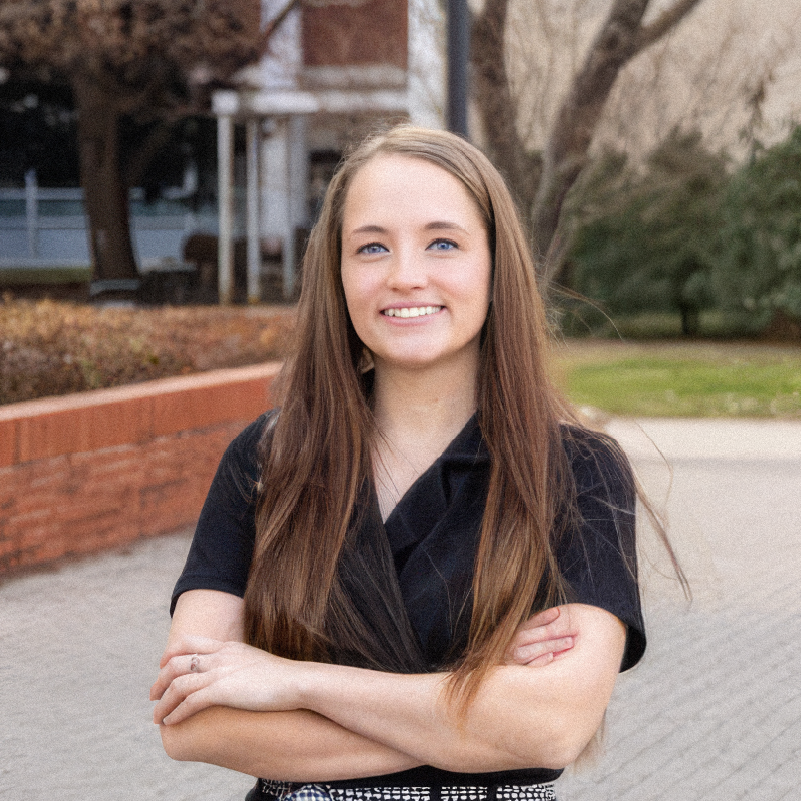
Gabrielle was in her late 20s when she was diagnosed with non-small cell lung cancer (NSCLC), a cancer common in people who smoke. Raised by her grandparents in rural Kentucky and married at the time with 2 small children, she learned in January 2023 that she had a miscarriage. Shortly after, she experienced a panic attack and went to her local hospital, St. Claire Regional Medical Center (St. Claire), for help. She was shocked when a CT scan revealed a small mass in her lung. “I never smoked, and I didn’t feel sick,” Gabrielle recalled. “I wondered, how can it be cancer?”
Over the following 8 months, she considered her options and underwent two biopsies at St. Claire. When the second biopsy revealed abnormal findings, her doctors referred her to the University of Kentucky Markey Cancer Center (Markey) for a lobectomy, and the tumor was removed. The diagnosis was stage IIA invasive mucinous adenocarcinoma, a rare form of NSCLC in which mucin proteins (major components of mucus) mask tumors from detection by the immune system.
“I believe the miscarriage and hospital admission prevented a later, more advanced diagnosis,” Gabrielle reflected. “My baby might not be here anymore, but they saved my life.”
Joining an immunotherapy trial
Gabrielle started standard-of-care chemotherapy after the surgery. Her oncology team at Markey, including Susanne Arnold, M.D., encouraged her to join NCI’s ALCHEMIST lung cancer trial, which would add immunotherapy to her treatment plan.
ALCHEMIST (Adjuvant Lung Cancer Enrichment Marker Identification and Sequencing Trial) is a group of randomized clinical trials for patients with early-stage NSCLC whose tumors have been completely removed by surgery. The trials initially focused on patients with changes in the ALK or EGFR genes that are associated with NSCLC. Over time, other arms were added to this clinical trial to enroll NSCLC patients who do not have those genetic alterations, but who might benefit from adding immunotherapy to standard-of-care chemotherapy. Immunotherapy is a type of treatment that boosts the body’s immune system to detect and destroy remaining cancer cells.
Gabrielle enrolled in the clinical trial arm for patients with no identified genetic alterations. Her treatment involved 4 doses of chemotherapy every 3 weeks, with the immunotherapy drug pembrolizumab given along with every other chemotherapy treatment, and then immunotherapy alone every 6 weeks for nearly a year. Pembrolizumab prevents deactivation of specific immune cells (T-cells), allowing the immune system to recognize and attack cancer cells.
On treatment days, she traveled 2 hours from her home in rural Kentucky to Markey in Lexington. While the immunotherapy was easier to tolerate, each week following chemotherapy was challenging because of fatigue and other side effects. Gabrielle struggled with daily household routines, such as getting out of bed, making dinner, and getting her children onto the school bus each day. She nonetheless remained positive and persevered.
“Gabrielle was diagnosed with cancer stage IIA—a young, otherwise healthy woman who had a great surgical outcome. Giving people the option to join a trial is the important thing, and she could have chosen not to participate,” Dr. Arnold stated. “She had inner strength to know and trust the medical profession—not only me, but our multi-disciplinary group. Ultimately, she made the choice to join this NCI-sponsored trial.”
Since completing treatment, Gabrielle has become a passionate advocate for clinical trial enrollment and awareness of radon gas and other environmental toxins, the latter of which the Centers for Disease Control and Prevention (CDC) indicates may be risk factors for lung cancer. Radon specifically is a naturally occurring radioactive gas that seeps into buildings from the ground; it is the second leading cause of lung cancer in the United States, and a leading cause among people with no smoking history.
Now more than 3 years out from her diagnosis and with her cancer treatment behind her, Gabrielle can often be found on outdoor trails with her children, participating in search-and-rescue canine training activities.
Helping patients living with cancer in rural America
Markey Cancer Center, the only NCI-Designated Comprehensive Cancer Center in Kentucky, has an extensive affiliate network throughout the state. Cancer patients like Gabrielle benefit from this network; St. Claire is one such affiliate, and that relationship facilitated her referral to Markey.
“Over 50 percent of the people we enroll on clinical trials at our Cancer Center are rural, Appalachian, and not wealthy individuals, but they’re willing to drive several hours to get to our Center to be on a trial,” Dr. Arnold explained. “It’s impressive how many people willingly join a clinical trial – not only for themselves, but with the hope that it will help other people. I hear that all the time from participants. That’s a generous gift to the universe when you’re in the middle of fighting cancer.”
Gabrielle shares this sentiment: “I’m thankful that I had access to an NCI-Designated, highly ranked Cancer Center, but I would have traveled longer than 2 hours if necessary. Many rural patients may not be aware of clinical trials or have access to them.” She thinks everyone should.