
Updates & Insights Blog
This blog features current topics in cancer genomics research and news and updates from OCG. Let's continue the conversation on our Personal Genomics Podcast.
At the present time, all NIH-sponsored meetings are cancelled. We apologize for any inconvenience this may cause and appreciate your understanding.

-

CCG Director Lou Staudt reflects on two pandemics—COVID-19 and racial injustice—and resolves to use the scientific method to address health care disparities.
-
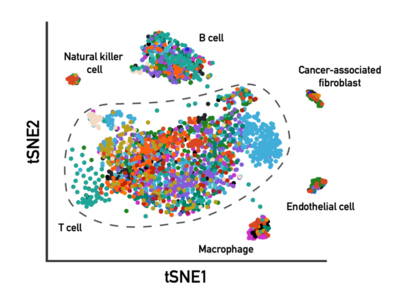
Dr. Jason Locasale discusses new insights into the metabolic programs of different cell types in the tumor microenvironment—something enabled by the single-cell RNA sequencing revolution. Looking at metabolism helps us understand the activity of specific immune cells and how a patient might respond to different treatments.
-
Personal Genomics is NCI’s premier podcast about people in cancer genomics research. On this narrative podcast, researchers will share their stories about what happens behind the scenes of research.
-
NCI’s Genomic Data Commons (GDC) has released data for 44,756 cancer cases from AACR Project GENIE. By making this massive data set available through the GDC, AACR and their partners hope to expand the reach and potential impact of the project and accelerate precision oncology research.
-
HCMI’s next-generation cancer models are associated with clinical and molecular data which are stored at NCI’s Genomic Data Commons (GDC). This article explains the types of HCMI data, generated from Cancer Model Development Centers, available at the GDC and a brief guide on how to access the data.
-
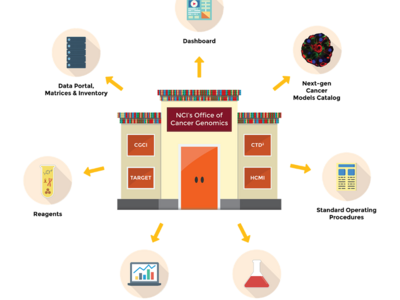
NCI’s Office of Cancer Genomics (OCG) led many initiatives to accelerate the translational research efforts towards precision oncology and provide valuable genomic resources available for the research community.
-
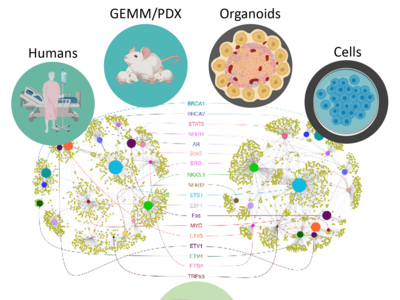
The Califano Lab employs a suite of systems biology algorithms to identify tumor master regulators on an individual patient basis, predict drugs to target those regulators, and identify an appropriate cancer model for testing those predictions. This work is performed as part of the CTD² research network.
-
Dr. Andy Mungall of the British Columbia Cancer Genome Sciences Centre, provides his perspectives on cancer genomics research. Dr. Mungall is part of the effort to molecularly characterize tumors for CGCI projects.
-
The CTD² Network in partnership with Sage Bionetworks invites the community to participate in DREAM Challenges to develop predictive bioinformatics methods. The article provides the goals and questions to address for the CTD² Pancancer Drug Activity and CTD² BeatAML DREAM Challenges.
-
Dr. Robert Scharpf and Dr. Victor Velculescu discuss using DNA fragmentation profiles to analyze cell-free DNA and detect cancer from liquid biopsies. The machine learning-based method they developed could serve as a low-cost screening tool for a wide range of cancers.