
An official website of the United States government
Español

What Is Testicular Cancer?

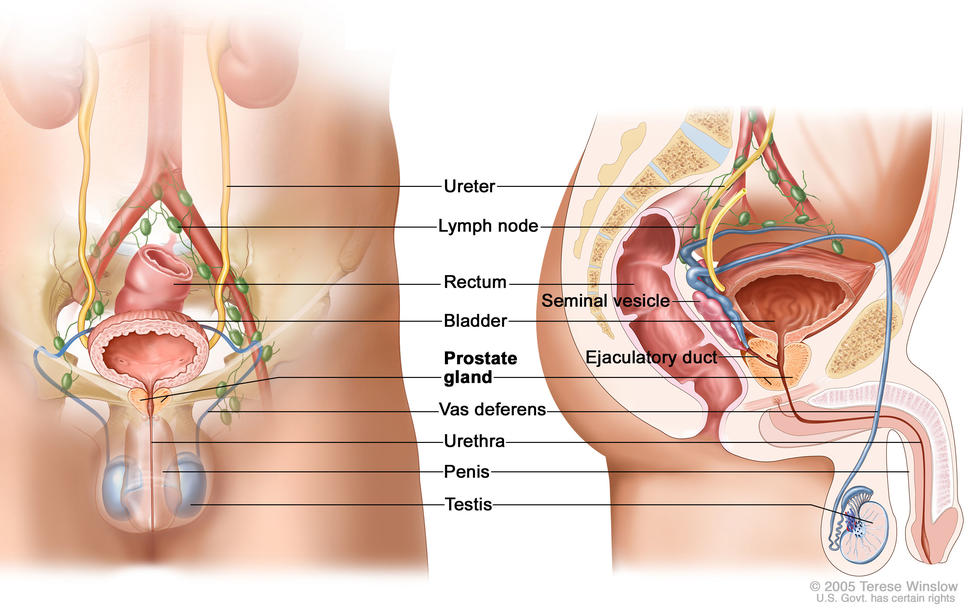
Anatomy of the male reproductive and urinary systems showing the prostate, testicles, bladder, and other organs.

Anatomy of the male reproductive and urinary systems showing the prostate, testicles, bladder, and other organs.

Testicular cancer is a disease in which malignant (cancer) cells form in the tissues of one or both testicles.

The testicles are two egg-shaped glands located inside the scrotum (a sac of loose skin that lies directly below the penis). The testicles are held within the scrotum by the spermatic cord, which also contains the vas deferens and vessels and nerves of the testicles.

The testicles are the male sex glands and produce testosterone and sperm. Germ cells within the testicles produce immature sperm that travel through a network of tubules (tiny tubes) and larger tubes into the epididymis (a long coiled tube next to the testicles) where the sperm mature and are stored.

Almost all testicular cancers start in the germ cells. The two main types of testicular germ cell tumors are seminomas and nonseminomas. These 2 types grow and spread differently and are treated differently. Nonseminomas tend to grow and spread more quickly than seminomas. Seminomas are more sensitive to radiation. A testicular tumor that contains both seminoma and nonseminoma cells is treated as a nonseminoma. 

Testicular cancer is the most commonly diagnosed cancer in men aged 20 to 34 years

Testicular cancer is the most common cancer in men between the ages of 20 to 39 years, with the highest rates between ages 25 to 34 years. The racial and ethnic groups with the highest rates of testicular cancer include non-Hispanic White men, non-Hispanic American Indian men, and Alaska Native men. 

Testicular cancer can usually be cured

Although the number of new cases of testicular cancer has doubled in the last 40 years, the number of deaths caused by testicular cancer has decreased greatly because of better treatments. Testicular cancer can usually be cured, even in late stages of the disease. 


Email