
Research Highlights - News & Announcements from the Center for Global Health
Highlighted research findings and scientific papers for the global community.
-

The NCI recently celebrated 10 years of the Affordable Cancer Technologies Program (ACTs) and its impact on advancing cancer care in LMICs. A special series in JCO Global Oncology highlights the past and ongoing work of investigators and the multisectoral partnerships that are working to develop a new generation of innovations.
-
For the first time since 2018, the International Cancer Control Partnership has conducted a global review of 156 national cancer control plans to better understand the current landscape of cancer control strategies. This review reveals progress in national cancer strategies and highlights persistent gaps in funding, equity, and the integration of evidence-based interventions.
-

The Ireland - Northern Ireland - National Cancer Institute Cancer Consortium celebrates its 25th Anniversary this year. The Consortium is a unique partnership, established in 1999, between the governments of Ireland, Northern Ireland, and the United States, as a direct result of the Good Friday Agreement.
-

NCI's Center for Global Health (CGH) has launched a survey to better understand the landscape of cancer therapeutic clinical trials in Low- and Middle-Income Countries (LMICs). CGH is seeking clinicians with experience participating as a member of a research team in at least one cancer therapeutic clinical trial with a recruitment site or facility in a LMIC (as defined by the World Bank) to better understand the landscape of cancer, to the take survey.
-
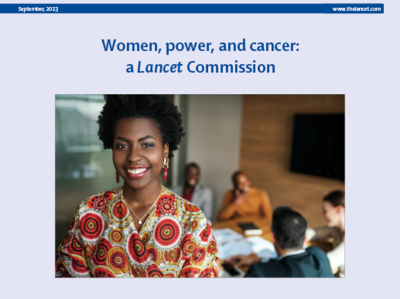
The new report, Women, power, and cancer: A Lancet Commission, brings together a multidisciplinary and diverse team from around the globe, including scholars with expertise in gender studies, human rights, law, economics, social sciences, cancer epidemiology, prevention, and treatment, as well as patient advocates, to analyze how women around the world experience cancer, and to provide recommendations to policy makers, governments, civil society, and health and social care systems. The report presents key findings and proposes a set of recommendations to inspire real-world action for transformational change.