
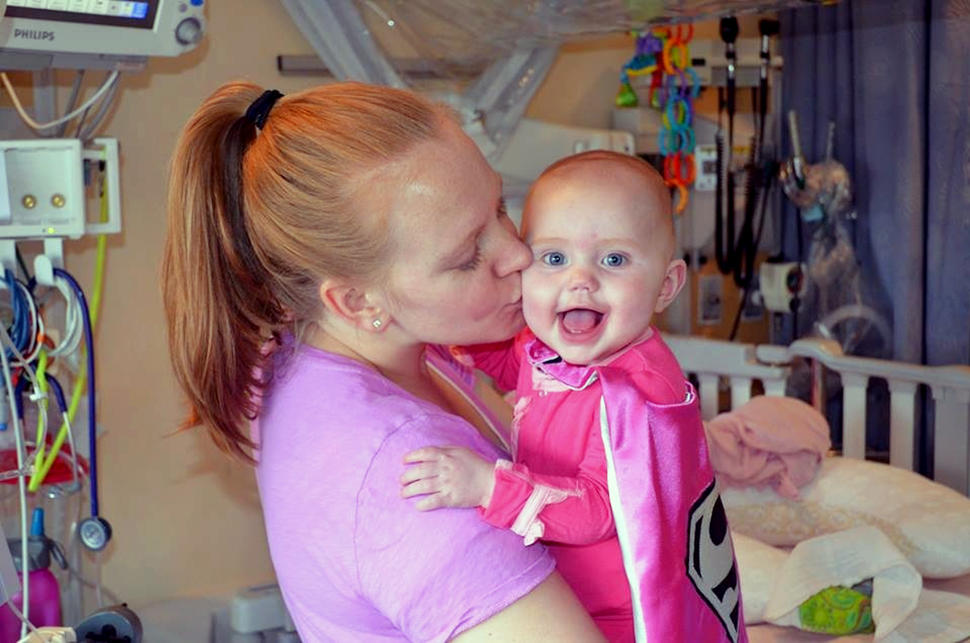
Childhood Cancer Patient
Sophie loved dancing, even while in the hospital with acute myeloid leukemia. Diagnosed with this rare cancer at three months old, Sophie endured chemotherapy and two bone marrow transplants, but ultimately passed away from the disease.
Sophie’s mother, Kallie, said grappling with a horrible diagnosis was made worse by the complicated task of managing her care. “I still have a giant storage container of binders with all Sophie’s clinical trial consents, labs, and other medical records,” she said.
CCDI is working to make the consent process more user friendly so parents like Kallie can more easily consent to sharing their child’s data. The improved process could eliminate paper consents and help researchers access and track shareable data. “I hope caregivers have access to more digital tools for tracking their child’s medical records so they have that data and can consent to share it to improve outcomes for children with cancer,” Kallie said.