Melanoma is a disease in which malignant (cancer) cells form in melanocytes (cells that color the skin).
There are different types of cancer that start in the skin.
Melanoma can occur anywhere on the skin.
Unusual moles, exposure to sunlight, and health history can
affect the risk of melanoma.
Signs of melanoma include a change in the way a mole or pigmented area looks.
Tests that examine the skin are used to diagnose melanoma.
After melanoma has been diagnosed, tests may be done to find out
if cancer cells have spread within the skin or to other parts of the body.
Some people decide to get a second opinion.
Certain factors affect prognosis (chance of recovery) and treatment options.
Melanoma is a disease in which malignant (cancer) cells form in melanocytes (cells that color the skin).
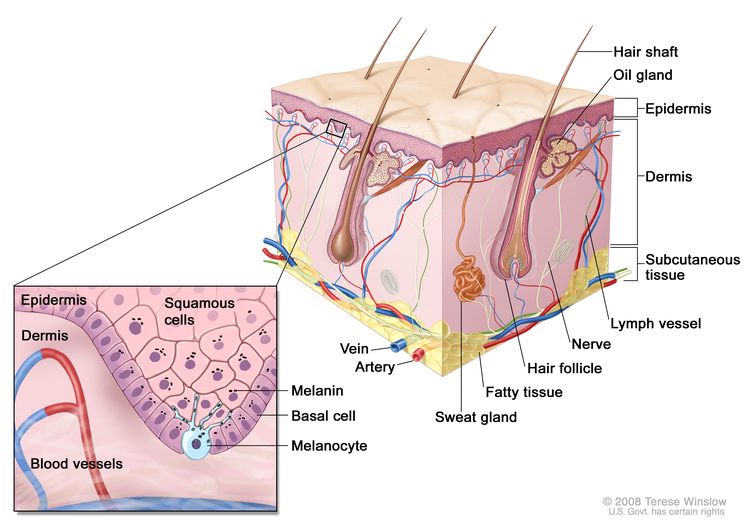
The skin is the body's largest organ. It protects against heat, sunlight, injury, and infection. Skin also helps control body temperature and stores water, fat, and vitamin D. The skin has several layers, but the two main layers are the epidermis (upper or outer layer) and the dermis (lower or inner layer). Skin cancer begins in the epidermis, which is made up of three kinds of cells:
Squamous cells: Thin, flat cells that form the top layer of the epidermis.
Basal cells: Round cells under the squamous cells.
Melanocytes: Cells that make melanin and are found in the lower part of the epidermis. Melanin is the pigment that gives skin its natural color. When skin is exposed to the sun or artificial light, melanocytes make more pigment and cause the skin to darken.
EnlargeAnatomy of the skin, showing the epidermis, dermis, and subcutaneous tissue. Melanocytes are in the layer of basal cells at the deepest part of the epidermis.
There are different types of cancer that start in the skin.
There are two main forms of skin cancer: melanoma and nonmelanoma.
Melanoma is a rare form of skin cancer. It is more likely to invade nearby tissues and spread to other parts of the body than other types of skin cancer. When melanoma starts in the skin, it is called cutaneous melanoma. Melanoma may also occur in mucous membranes (thin, moist layers of tissue that cover surfaces such as the lips). This summary is about cutaneous (skin) melanoma and melanoma that affects the mucous membranes.
Before age 50, rates of melanoma are higher in women than in men. After age 50, rates of melanoma are much higher in men. Melanoma is most common in adults, but it is sometimes found in children and
adolescents. Learn more about Childhood Melanoma Treatment.
In men,
melanoma is often found on the trunk (the area from the shoulders to the hips)
or the head and neck. In women, melanoma forms most often on the arms and legs.
Unusual moles, exposure to sunlight, and health history can
affect the risk of melanoma.
A risk factor is anything that increases the chance of getting a disease. Some risk factors for melanoma, such as tanning bed use, can be changed. However, risk factors also include things people cannot change, like their genetics and their family history. Learning about risk factors for melanoma can help you make changes that might lower your risk of getting it.
Risk factors for melanoma include:
having a fair complexion, which includes:
fair skin that freckles and burns easily, does not tan, or tans poorly
blue or green or other light-colored eyes
red or blond hair
being exposed to natural sunlight or artificial sunlight (such as from tanning beds)
being exposed to certain factors, such as radiation, solvents, vinyl chloride, and PCBs, in the environment (the air, your home or workplace, and your food and water)
having a history of many blistering sunburns, especially as a child or teenager
Tests that examine the skin are used to diagnose melanoma.
Melanoma is usually diagnosed with tests that examine the skin. The process used
to find out if cancer cells have spread beyond the skin is
called staging. To plan treatment, it is important to know the stage of
the disease.
In addition to asking about your personal and family health history and doing a physical exam, your doctor may perform the following tests and procedures to find and diagnose melanoma:
Skin exam is an exam where a doctor or nurse checks the skin for moles, birthmarks, or other pigmented areas that look abnormal in color,
size, shape, or texture.
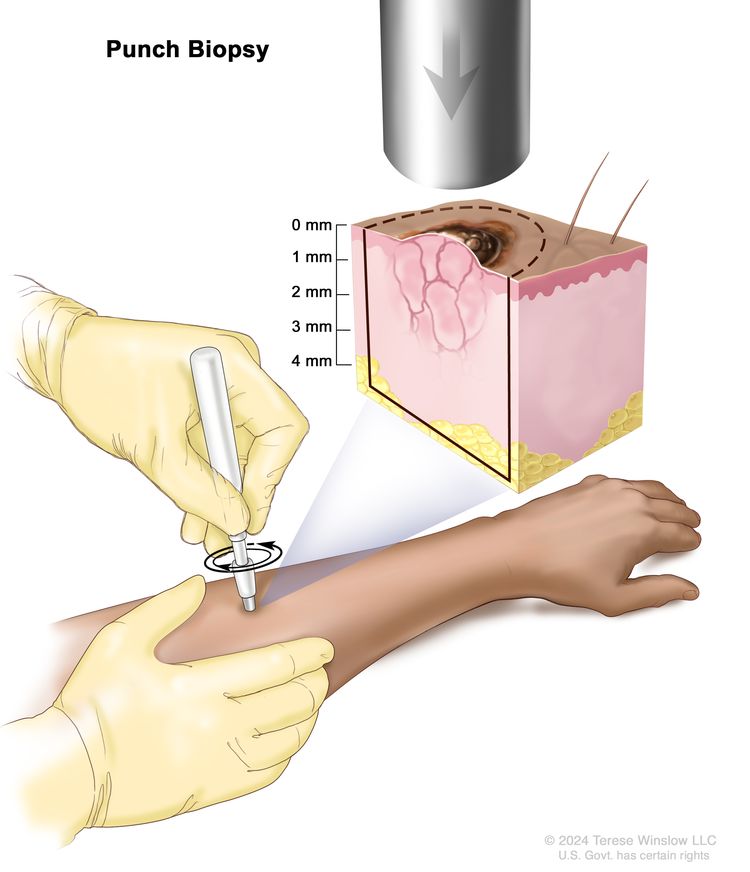
Biopsy is the removal of cells or tissues so they can be viewed under a microscope to check for signs of cancer. It can be hard to tell the difference between a colored mole and an early melanoma lesion. Patients may want to have the sample of tissue checked by a second pathologist. If the abnormal mole or lesion is cancer, the sample of tissue may also be tested for certain gene changes. This may help to plan treatment. Learn about the type of information that can be found in a pathologist's report about the cells or tissue removed during a biopsy at Pathology Reports.
There are four main types of skin biopsies. The type of biopsy done depends on where the abnormal area formed and the size of the area.
Punch biopsy uses a special instrument called a punch or a trephine to remove a circle of tissue from the growth.EnlargePunch biopsy. A sharp, hollow, circular instrument is used to remove a small, round piece of tissue from a lesion on the skin. The instrument is turned clockwise and counterclockwise to cut about 4 millimeters (mm) down to the layer of fatty tissue below the skin and remove the sample of tissue. Skin thickness is different on different parts of the body.
After melanoma has been diagnosed, tests may be done to find out
if cancer cells have spread within the skin or to other parts of the body.
The process used to find out whether cancer has spread within the skin or to other parts
of the body is called staging. The
information gathered from the staging process determines the stage of the
disease. It is important to know the stage in order to plan treatment.
For melanoma that is not likely to spread to other parts of the body or recur, more tests may not be needed. For melanoma that is likely to spread to other parts of the body or recur, the following tests and procedures may be done after surgery to remove the melanoma:
Lymph node
mapping and sentinel lymph node
biopsy includes the removal of the sentinel lymph node during surgery. The sentinel lymph node is the first lymph node in a group of lymph nodes to receive lymphatic drainage from the primary tumor. It is the first lymph node the cancer is likely to spread to from the primary tumor. A radioactive substance or blue dye is injected near the tumor. The substance or dye flows through the lymphducts to the lymph nodes. The first lymph node to receive the substance or dye is removed. A pathologist views the tissue under a microscope to look for cancer cells. If cancer cells are not found, it may not be necessary to remove more lymph nodes. Sometimes, a sentinel lymph node is found in more than one group of nodes.
CT scan (CAT
scan) is a procedure that makes a series of detailed pictures of areas inside the body taken from different angles. The pictures are made by a computer linked to an x-ray machine. A dye may be injected into a vein or swallowed to help the organs or tissues show up more clearly. This procedure is also called computed tomography, computerized tomography, or computerized axial tomography. For melanoma,
pictures may be taken of the neck, chest, abdomen, and pelvis.
PET scan (positron
emission tomography scan) is a procedure to find malignant tumor cells in the body. A small amount of radioactive glucose (sugar) is injected into a vein. The PET scanner rotates around the body and makes a picture of where glucose is being used in the body. Malignant tumor cells show up brighter in the picture because they are more active and take up more glucose than normal cells do.
MRI (magnetic resonance imaging) with gadolinium is a procedure that uses a magnet, radio waves, and a computer to make a series of detailed pictures of areas inside the body, such as the brain. A substance called gadolinium is injected into a vein. The gadolinium collects around the cancer cells so they show up brighter in the picture. This procedure is also called nuclear magnetic resonance imaging (NMRI).
Ultrasound exam is a procedure in which high-energy sound waves (ultrasound) are bounced off internal tissues, such as lymph nodes, or organs and make echoes. The echoes form a picture of body tissues called a sonogram. The picture can be printed to be looked at later.
Blood chemistry studies is a procedure in which a blood sample is checked to measure the amounts of certain substances released into the blood by organs and tissues in the body. For melanoma, the blood is checked for an enzyme called lactate dehydrogenase (LDH). High LDH levels may predict a poor response to treatment in people with metastatic disease.
The results of these tests are viewed together with the results of
the tumor biopsy to find out the stage of the melanoma.
Some people decide to get a second opinion.
You may want to get a second opinion to confirm your melanoma diagnosis and treatment plan. If you seek a second opinion, you will need to get medical test results and reports from the first doctor to share with the second doctor. The second doctor will review the pathology report, slides, and scans. They may agree with the first doctor, suggest changes or another treatment approach, or provide more information about your cancer.
To learn more about choosing a doctor and getting a second opinion, see Finding Cancer Care. You can contact NCI's Cancer Information Service via chat, email, or phone (both in English and Spanish) for help finding a doctor, hospital, or getting a second opinion. For questions you might want to ask at your appointments, see Questions to Ask Your Doctor about Cancer.
Certain factors affect prognosis (chance of recovery) and treatment options.
whether the cancer has certain mutations (changes) in a gene called BRAF
your age and
general health
Stages of Melanoma
Key Points
The stage of melanoma depends on the thickness of the tumor, whether cancer has spread to lymph nodes or other parts of the body, and other factors.
The following stages are used for melanoma:
Stage 0 (melanoma in situ)
Stage I (also called stage 1) melanoma
Stage II (also called stage 2) melanoma
Stage III (also called stage 3) melanoma
Stage IV (also called stage 4) melanoma
Melanoma can recur
(come back) after it has been treated.
Cancer stage describes the extent of cancer in the body, such as the size of the tumor, whether it has spread, and how far it has spread from where it first formed. It is important to know the melanoma stage to plan treatment.
There are several staging systems for cancer that describe the extent of the cancer. Melanoma staging usually uses the TNM staging system. The cancer may be described by this staging system in your pathology report. Based on the TNM results, a stage (I, II, III, or IV, also written as 1, 2, 3, or 4) is assigned to your cancer. When talking to you about your diagnosis, your doctor may describe the cancer as one of these stages.
The stage of melanoma depends on the thickness of the tumor, whether cancer has spread to lymph nodes or other parts of the body, and other factors.
To find out the stage of melanoma, the tumor is completely removed and nearby lymph nodes are checked for signs of cancer. The stage of the cancer is used to determine which treatment is best. Check with your doctor to find out which stage of cancer you have.
The stage of melanoma depends on:
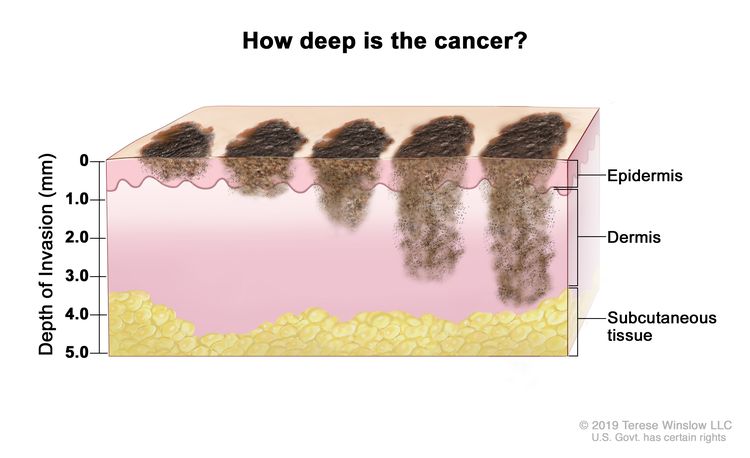
The tumor's thickness, which is measured from the surface of the skin to the deepest part of the tumor.Enlarge
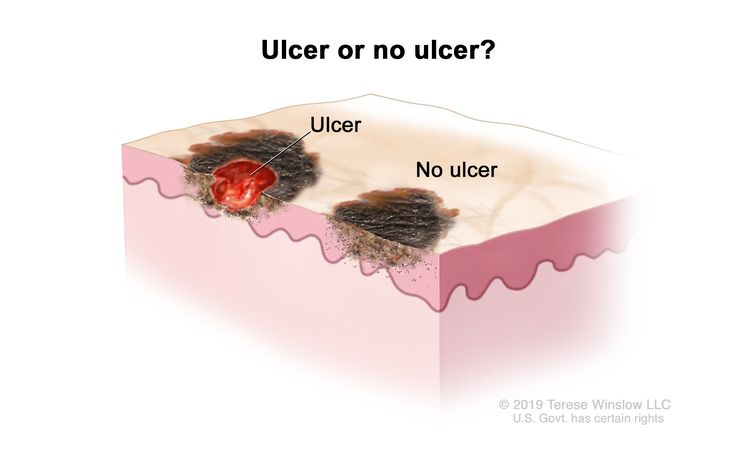
Whether the tumor is ulcerated (has broken through the skin). Enlarge
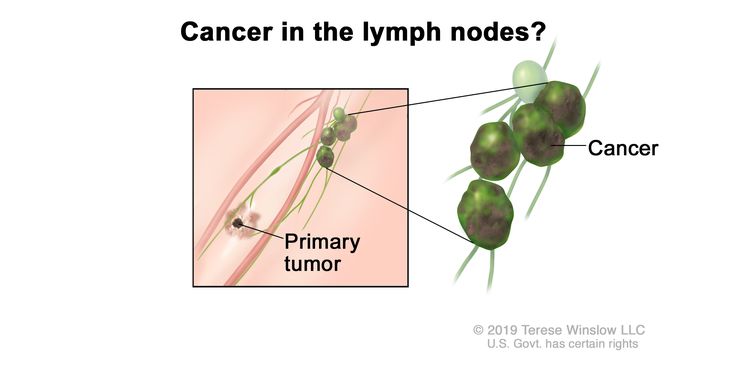
Whether cancer is found in lymph nodes by a physical exam, imaging tests, or a sentinel lymph node biopsy.Enlarge
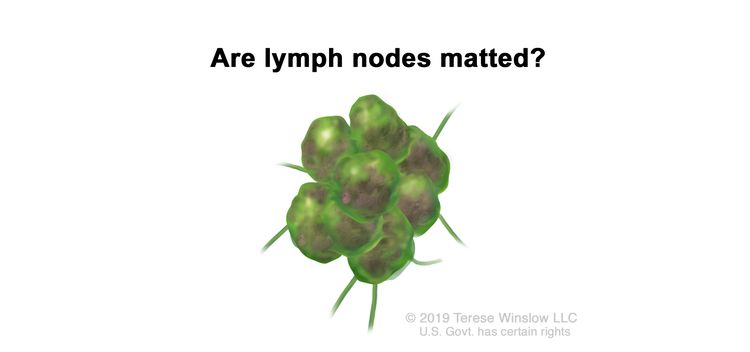
Whether the lymph nodes are matted (joined together). Enlarge
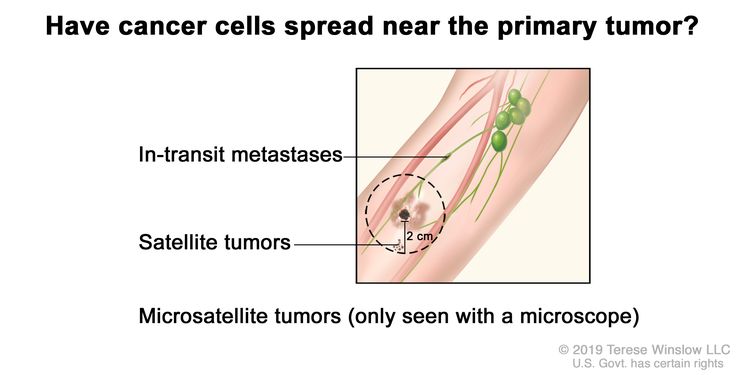
Microsatellite tumors: Small groups of tumor cells that have spread to an area right beside or below the primary tumor.
In-transit metastases: Tumors that have spread to lymph vessels in the skin more than 2 centimeters away from the primary tumor, but not to the lymph nodes.
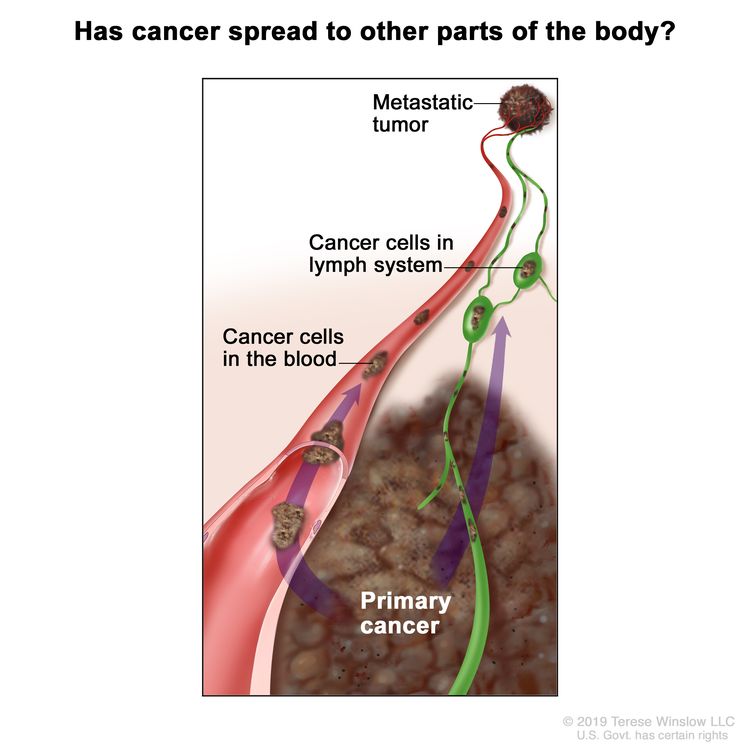
Whether the cancer has spread to other parts of the body, such as the lung, liver, brain, soft tissue (including muscle), digestive tract, and/or distant lymph nodes. Enlarge
The following stages are used for melanoma:
Stage 0 (melanoma in situ)
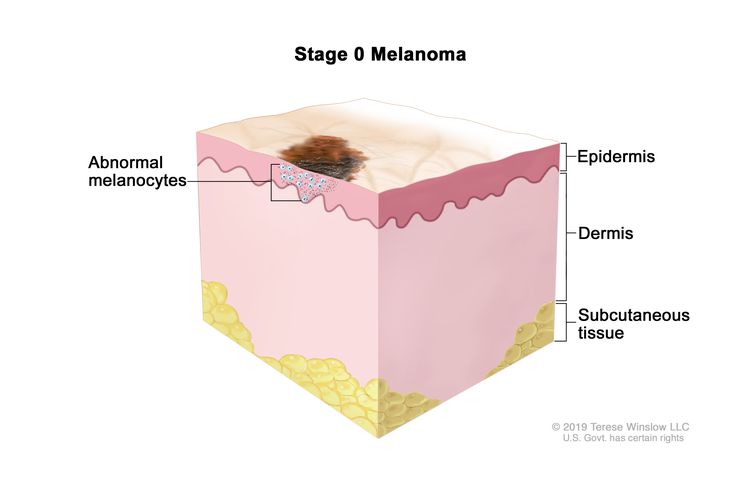
In stage 0, abnormal melanocytes are found in the
epidermis.
These abnormal melanocytes may become cancer and spread into nearby normal tissue. Stage 0 is also called melanoma in situ.EnlargeStage 0 melanoma. Abnormal melanocytes are found in the epidermis (outer layer of the skin). These abnormal melanocytes may become cancer and spread into nearby normal tissue.
Stage I (also called stage 1) melanoma
In stage I, cancer has formed. Stage I is divided into stages IA and IB.
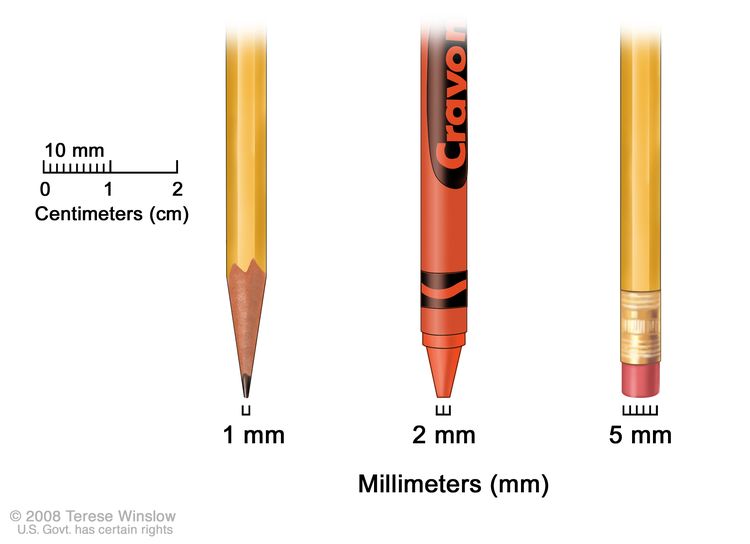
EnlargeMillimeters (mm). A sharp pencil point is about 1 mm, a new crayon point is about 2 mm, and a new pencil eraser is about 5 mm.
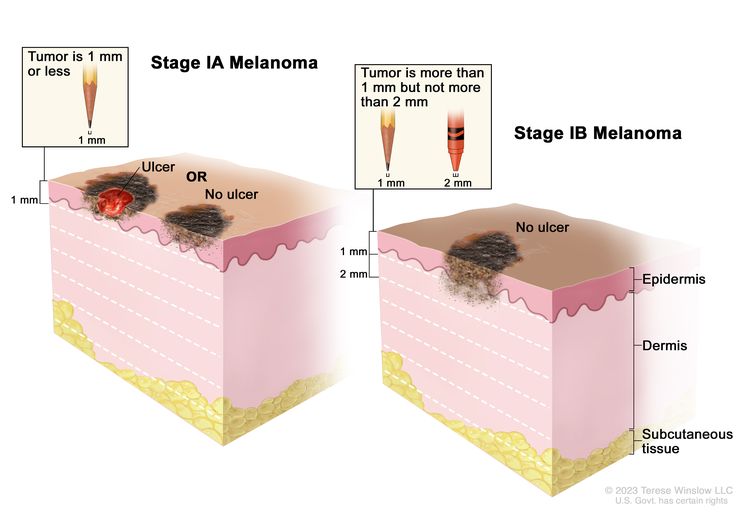
Stage IA: The tumor is not more than 1
millimeter thick, with or without ulceration.
Stage IB: The tumor is more than 1 but not more than 2 millimeters thick, without ulceration.EnlargeStage I melanoma. In stage IA, the tumor is not more than 1 millimeter thick, with or without ulceration (a break in the skin). In stage IB, the tumor is more than 1 but not more than 2 millimeters thick, without ulceration. Skin thickness is different on different parts of the body.
Stage II (also called stage 2) melanoma
Stage II is divided
into stages IIA, IIB, and IIC.
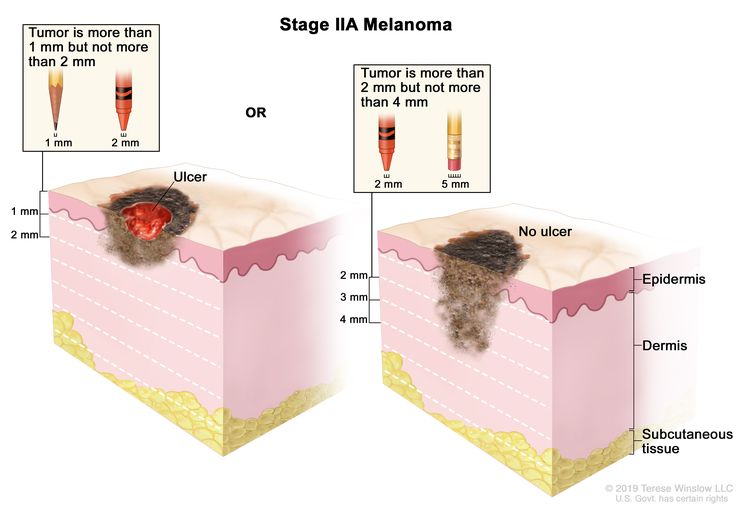
more than 2 but not more than 4 millimeters thick, without ulceration.EnlargeStage IIA melanoma. The tumor is more than 1 but not more than 2 millimeters thick, with ulceration (a break in the skin); OR it is more than 2 but not more than 4 millimeters thick, without ulceration. Skin thickness is different on different parts of the body.
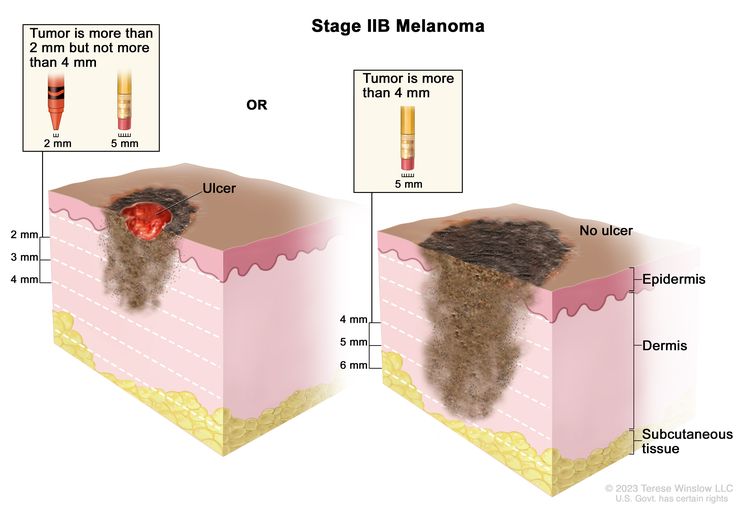
more than 4 millimeters thick, without
ulceration.EnlargeStage IIB melanoma. The tumor is more than 2 but not more than 4 millimeters thick, with ulceration (a break in the skin); OR it is more than 4 millimeters thick, without ulceration. Skin thickness is different on different parts of the body.
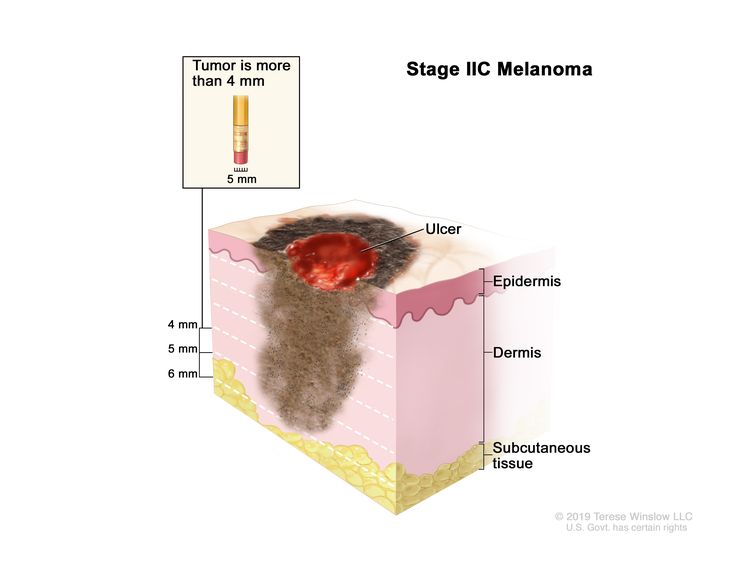
Stage IIC: The tumor is more than 4 millimeters
thick, with ulceration.EnlargeStage IIC melanoma. The tumor is more than 4 millimeters thick, with ulceration (a break in the skin). Skin thickness is different on different parts of the body.
Stage III (also called stage 3) melanoma
Stage III is divided into stages IIIA, IIIB, IIIC, and IIID.
(2) The tumor is not more than 1 millimeter thick, with ulceration, or not more than 2 millimeters thick, without ulceration, and one of the following is true:
cancer is found in 1 to 3 lymph nodes by physical exam or imaging tests; or
there are microsatellite tumors, satellite tumors, and/or in-transit metastases on or under the skin.
or
(3) The tumor is more than 1 but not more than 2 millimeters thick, with ulceration, or more than 2 but not more than 4 millimeters thick, without ulceration, and one of the following is true:
cancer is found in 1 to 3 lymph nodes; or
there are microsatellite tumors, satellite tumors, and/or in-transit metastases on or under the skin.
Stage IIIC:
(1) It is not known where the cancer began, or the primary tumor can no longer be seen. Cancer is found:
in 4 or more lymph nodes, or in any lymph nodes that are matted together; or
in 2 or more lymph nodes and/or in any lymph nodes that are matted together. There are microsatellite tumors, satellite tumors, and/or in-transit metastases on or under the skin.
or
(2) The tumor is not more than 2 millimeters thick, with or without ulceration, or not more than 4 millimeters thick, without ulceration. Cancer is found:
in 1 lymph node and there are microsatellite tumors, satellite tumors, and/or in-transit metastases on or under the skin; or
in 4 or more lymph nodes, or in any lymph nodes that are matted together; or
in 2 or more lymph nodes and/or in any lymph nodes that are matted together. There are microsatellite tumors, satellite tumors, and/or in-transit metastases on or under the skin.
or
(3) The tumor is more than 2 but not more than 4 millimeters thick, with ulceration, or more than 4 millimeters thick, without ulceration. Cancer is found in 1 or more lymph nodes and/or in any lymph nodes that are matted together. There may be microsatellite tumors, satellite tumors, and/or in-transit metastases on or under the skin.
or
(4) The tumor is more than 4 millimeters thick, with ulceration. Cancer is found in 1 or more lymph nodes and/or there are microsatellite tumors, satellite tumors, and/or in-transit metastases on or under the skin.
Stage IIID: The tumor is more than 4 millimeters thick, with ulceration. Cancer is found:
in 4 or more lymph nodes, or in any lymph nodes that are matted together; or
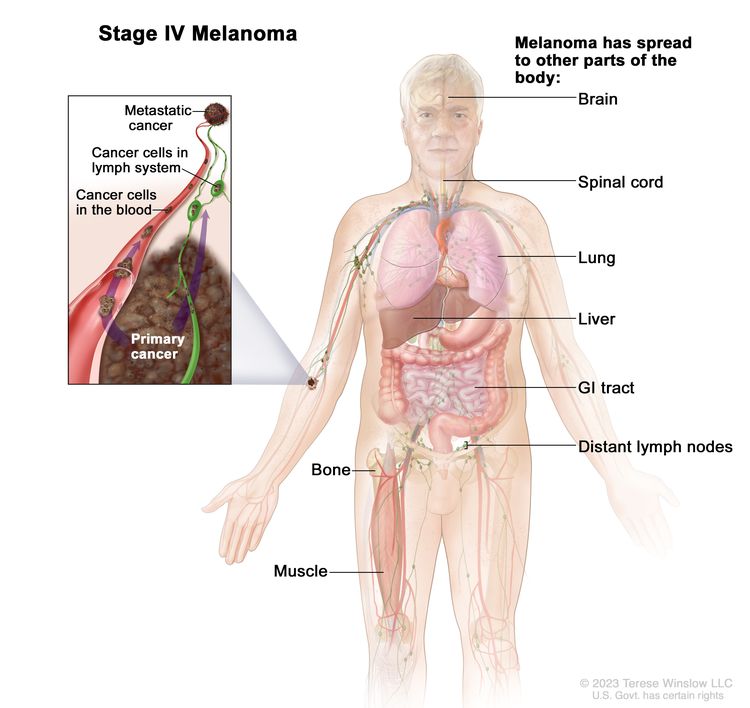
In stage IV, the cancer has spread to other parts of the body, such as the lung, liver, brain, spinal cord, bone, soft tissue (including muscle), digestive tract, and/or distant lymph nodes. Cancer may have spread to places in the skin far away from where it first started.
Stage IV melanoma is also called metastatic melanoma. Metastatic cancer happens when cancer cells travel through the lymphatic system or blood and form tumors in other parts of the body. The metastatic tumor is the same type of cancer as the primary tumor. For example, if melanoma spreads to the lung, the cancer cells in the lung are actually melanoma cells. The disease is called metastatic melanoma, not lung cancer. Learn more in Metastatic Cancer: When Cancer Spreads.
EnlargeStage IV melanoma. Cancer has spread to other parts of the body, such as the brain, spinal cord, lung, liver, gastrointestinal (GI) tract, bone, muscle, and/or distant lymph nodes. Cancer may have spread to places in the skin far away from where it first started.
Melanoma can recur
(come back) after it has been treated.
Recurrent melanoma is melanoma that has come back after it has been treated. If melanoma comes back, it may come back in the area where it first started or in other parts of the body, such as the lungs or liver. Tests will help determine where in the body the cancer has returned. The type of treatment that you have for recurrent melanoma will depend on where it has come back.
There are different types of treatment for people with
melanoma.
The following types of treatment are used:
Surgery
Chemotherapy
Radiation therapy
Immunotherapy
Targeted therapy
New types of treatment are being tested in clinical trials.
Vaccine therapy
Treatment for melanoma may cause side effects.
Follow-up care may be needed.
There are different types of treatment for people with
melanoma.
Different types of treatment are available for people with
melanoma. Some treatments are
standard (the currently used treatment), and some are being tested in
clinical trials. A
treatment clinical trial is a research study meant to help improve current
treatments or obtain information on new treatments for people with cancer.
When clinical trials show that a new treatment is better than the
standard treatment, the new
treatment may become the standard treatment. People may want to think about taking part in a clinical trial. Some clinical trials are open only to people who have not started treatment.
The following types of treatment are used:
Surgery
Surgery to remove the
tumor is the primary treatment for
all stages of melanoma. A wide local excision is used to remove the melanoma and some of the normal tissue around it. Skin grafting (taking skin from another part of the body to replace the skin that is removed) may be done to cover the wound caused by surgery.
If only a small amount of cancer cells are found during a sentinel lymph node biopsy, active surveillance with ultrasound may be recommended instead of more surgery.
After the doctor removes all the melanoma that can be seen at
the time of the surgery, some people may be given chemotherapy after surgery to kill
any cancer cells that are left. Chemotherapy given after the surgery to lower the risk that the cancer will come back is called adjuvant therapy.
Chemotherapy (also called chemo) uses drugs to stop the growth of cancer cells, either by killing the cells or by stopping them from dividing. When chemotherapy is taken by mouth or injected into a vein or muscle, the drugs enter the bloodstream and can reach cancer cells throughout the body (systemic chemotherapy). When chemotherapy is placed directly into the cerebrospinal fluid, an organ, or a body cavity such as the abdomen, the drugs mainly affect cancer cells in those areas (regional chemotherapy).
One type of regional chemotherapy is hyperthermicisolated limb perfusion. With this method, anticancer drugs go directly to the arm or leg the cancer is in. The flow of blood to and from the limb is temporarily stopped with a tourniquet. A warm solution with the anticancer drug is put directly into the blood of the limb. This gives a high dose of drugs to the area where the cancer is.
The way the chemotherapy is given depends on the type and stage of the cancer being treated.
Radiation therapy uses high-energy x-rays or other types of radiation to kill cancer cells or keep them from growing. External radiation therapy uses a machine outside the body to send radiation toward the area of the body with cancer. External radiation therapy is used to treat melanoma and may also be used as palliative therapy to relieve symptoms and improve quality of life.
Immunotherapy helps a person's immune system fight cancer. Your doctor may suggest biomarker tests to help predict your response to certain immunotherapy drugs. Learn more about Biomarker Testing for Cancer Treatment.
Immunotherapy drugs used to treat melanoma include:
Targeted therapy uses drugs or other substances to identify and attack specific cancer cells. Your doctor may suggest biomarker tests to help predict your response to certain targeted therapy drugs. Learn more about Biomarker Testing for Cancer Treatment.
Targeted therapies used to treat melanoma include:
New types of treatment are being tested in clinical trials.
Vaccine therapy
Vaccine therapy is a cancer treatment that uses a substance or group of substances to stimulate the immune system to find the tumor and kill it. Vaccine therapy is being studied in the treatment of stage III melanoma that can be removed by surgery.
As you go through treatment, you will have follow-up tests or check-ups. Some tests that were done to diagnose or stage the cancer may be repeated to see how well the treatment is working. Decisions about whether to continue, change, or stop treatment may be based on the results of these tests.
Some of the tests will continue to be done from time to time after treatment has ended. The results of these tests can show if your condition has changed or if the cancer has recurred (come back).
Treatment of Stage 0 (Melanoma in Situ)
Treatment of stage 0 is usually surgery to remove the area of abnormal cells and a small amount of normal tissue around it.
Use our clinical trial search to find NCI-supported cancer clinical trials that are accepting patients. You can search for trials based on the type of cancer, the age of the patient, and where the trials are being done. General information about clinical trials is also available.
Treatment of Stage I Melanoma
Treatment of stage I melanoma is usually surgery to remove the tumor and some of the normal tissue around it, with or without lymph node mapping and sentinel lymph node biopsy.
Use our clinical trial search to find NCI-supported cancer clinical trials that are accepting patients. You can search for trials based on the type of cancer, the age of the patient, and where the trials are being done. General information about clinical trials is also available.
Use our clinical trial search to find NCI-supported cancer clinical trials that are accepting patients. You can search for trials based on the type of cancer, the age of the patient, and where the trials are being done. General information about clinical trials is also available.
Treatment of Stage III Melanoma That Can Be Removed By Surgery
Treatment of stage III melanoma that can be removed by surgery may include:
surgery to remove the tumor and some of the normal tissue around it, with or without skin grafting to cover the wound caused by
surgery. Sometimes lymph node mapping and sentinel
lymph node biopsy are done to check for cancer in the lymph nodes at the same time as the surgery to remove the tumor. If cancer is found in the sentinel lymph node, more lymph nodes may be removed.
surgery followed by immunotherapy with nivolumab, pembrolizumab, or ipilimumab if there is a high risk that the cancer will come back
Use our clinical trial search to find NCI-supported cancer clinical trials that are accepting patients. You can search for trials based on the type of cancer, the age of the patient, and where the trials are being done. General information about clinical trials is also available.
Treatment of Stage III Melanoma That Cannot Be Removed By Surgery, Stage IV Melanoma, and Recurrent Melanoma
Treatment of stage III melanoma that cannot be removed by surgery, stage IV melanoma, and recurrent melanoma may include:
Use our clinical trial search to find NCI-supported cancer clinical trials that are accepting patients. You can search for trials based on the type of cancer, the age of the patient, and where the trials are being done. General information about clinical trials is also available.
Physician Data Query (PDQ) is the National Cancer Institute's (NCI's) comprehensive cancer information database. The PDQ database contains summaries of the latest published information on cancer prevention, detection, genetics, treatment, supportive care, and complementary and alternative medicine. Most summaries come in two versions. The health professional versions have detailed information written in technical language. The patient versions are written in easy-to-understand, nontechnical language. Both versions have cancer information that is accurate and up to date and most versions are also available in Spanish.
PDQ is a service of the NCI. The NCI is part of the National Institutes of Health (NIH). NIH is the federal government’s center of biomedical research. The PDQ summaries are based on an independent review of the medical literature. They are not policy statements of the NCI or the NIH.
Purpose of This Summary
This PDQ cancer information summary has current information about the treatment of melanoma. It is meant to inform and help patients, families, and caregivers. It does not give formal guidelines or recommendations for making decisions about health care.
Reviewers and Updates
Editorial Boards write the PDQ cancer information summaries and keep them up to date. These Boards are made up of experts in cancer treatment and other specialties related to cancer. The summaries are reviewed regularly and changes are made when there is new information. The date on each summary ("Updated") is the date of the most recent change.
The information in this patient summary was taken from the health professional version, which is reviewed regularly and updated as needed, by the PDQ Adult Treatment Editorial Board.
Clinical Trial Information
A clinical trial is a study to answer a scientific question, such as whether one treatment is better than another. Trials are based on past studies and what has been learned in the laboratory. Each trial answers certain scientific questions in order to find new and better ways to help cancer patients. During treatment clinical trials, information is collected about the effects of a new treatment and how well it works. If a clinical trial shows that a new treatment is better than one currently being used, the new treatment may become "standard." Patients may want to think about taking part in a clinical trial. Some clinical trials are open only to patients who have not started treatment.
Clinical trials can be found online at NCI's website. For more information, call the Cancer Information Service (CIS), NCI's contact center, at 1-800-4-CANCER (1-800-422-6237).
Permission to Use This Summary
PDQ is a registered trademark. The content of PDQ documents can be used freely as text. It cannot be identified as an NCI PDQ cancer information summary unless the whole summary is shown and it is updated regularly. However, a user would be allowed to write a sentence such as “NCI’s PDQ cancer information summary about breast cancer prevention states the risks in the following way: [include excerpt from the summary].”
Images in this summary are used with permission of the author(s), artist, and/or publisher for use in the PDQ summaries only. If you want to use an image from a PDQ summary and you are not using the whole summary, you must get permission from the owner. It cannot be given by the National Cancer Institute. Information about using the images in this summary, along with many other images related to cancer can be found in Visuals Online. Visuals Online is a collection of more than 3,000 scientific images.
Disclaimer
The information in these summaries should not be used to make decisions about insurance reimbursement. More information on insurance coverage is available on Cancer.gov on the Managing Cancer Care page.
Contact Us
More information about contacting us or receiving help with the Cancer.gov website can be found on our Contact Us for Help page. Questions can also be submitted to Cancer.gov through the website’s E-mail Us.