
CBIIT News
Keep up with the latest news from CBIIT and the data science communities.
-

See when and how you can access NCI’s data science sessions at the 2025 American Association for Cancer Research Annual Meeting.
-

Explore a new protein language model (pLM) that NCI-funded researchers trained on fusion oncoproteins to advance discoveries in fusion-driven cancers.
-

Use the Medical Image De-Identification Benchmark (MIDI-B) to assess the effectiveness of your DICOM image de-identification tool or algorithm.
-

NCI’s Division of Cancer Control and Population Sciences is using artificial intelligence (AI) to improve cancer screening methods and enhance patient outcomes. To learn more, listen to this GovCIO-hosted podcast.
-

Help advance the NIH mission by promoting data sharing and developing a metric to reward outstanding data sharers.
-

Thanks to a new AI model called “SCORPIO,” you may someday be able to use a simple blood test and routine clinical information to decide which patients will benefit from immunotherapy.
-

Discover the outputs of different-sized gene and protein networks (“interactomes”) and use an NCI-funded evaluation pipeline tool for assessing and integrating the best interactomes for your work.
-

Screening for the best medication for your patient could be more efficient thanks to a new model called “BATCHIE.” See how machine learning is helping boost precision medicine for cancer.
-

Would you use AI to help make decisions about cancer treatment? Check out this recent study on the complex AI-human interaction that’s at play when making decisions about treatment.
-

Explore this web application for downstream analysis and visualization of FragPipe-processed proteomic data sets.
-
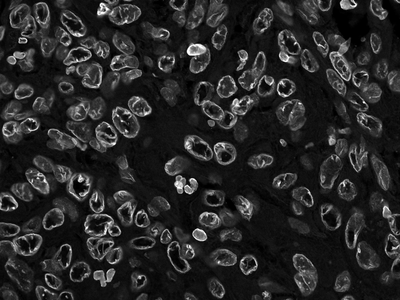
NCI-funded researchers are applying AI to digital pathology images to better understand cellular features, such as “nuclear wrinkling.” Such extreme wrinkling and folding is a hallmark of cancer.
-

A new computational model reveals how local tumor conditions impact therapy effectiveness.
-
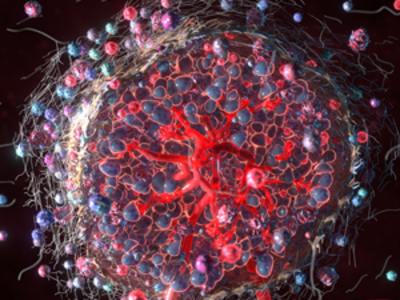
NCI researchers debuted a new deep learning model that could help you decipher the cancer tumor’s microenvironment.
-

Two of our leaders comment on the ways we’re making data ready for use with artificial intelligence (AI), more valuable to the cancer research community, and more.
-
See how NCI’s CCDI is helping transform the infrastructure and resources you need to find, use, and share high-quality data, as outlined in a recent report.
-

See how NCI researchers are working to find new ways of interpreting biopsies and managing prostate cancer. This recent model could lead to a more precise approach, reducing the need for additional and often unnecessary biopsies.
-
In a new study, NCI researchers found that AI may work best as an adjunct to the radiologist rather than a standalone solution, allowing radiologists to focus on cases that need more critical assessment.
-

The NCI Cancer Research Data Commons (CRDC) is a great resource for accessing cancer research data.
-

An NCI-funded study shows that KBP models can automate radiation therapy, thereby producing high-quality plans to improve cancer treatment efficiency and reduce human workload.
-
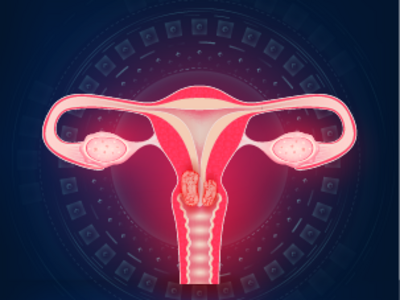
What influences the performance of an AI model more: where the researcher collected the data, or how? NCI-funded researchers set out to investigate some of the factors that could influence the performance of an AI-based image model screening for cervical cancer.