
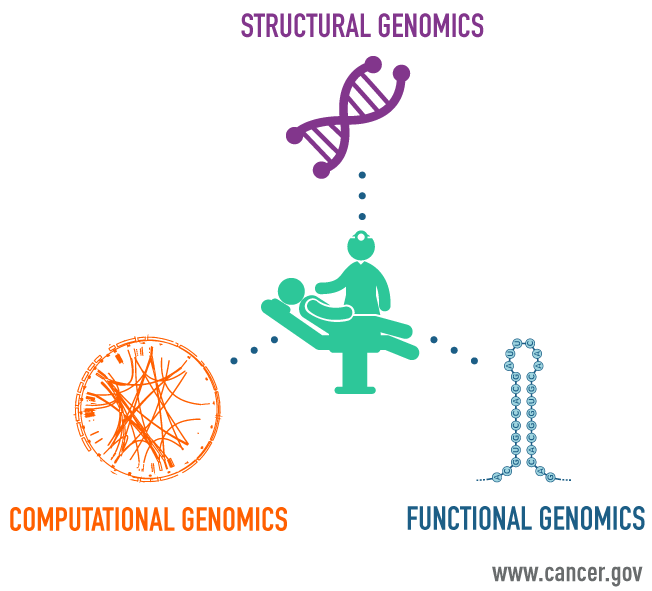
Genome Sequencing
Research in cancer genome sequencing aims to assemble the "parts list" of cancer (where "parts" are genetic structures that are altered in cancer) to identify oncogenic alterations that drive tumor development and new therapeutic targets.
Key research areas include:
- Identification of genes responsible for tumor growth, metastasis, and drug resistance
- Characterization of molecular attributes that contribute to differences in cancer aggressiveness
- Analysis of genomic and molecular features that can improve cancer diagnosis and classification
- Cataloging DNA and RNA alterations across adult and pediatric cancers
- Characterization of the molecular basis of response and resistance to cancer therapies
- Comprehensive genomic profiling to identify potential therapeutic targets and inform precision medicine approaches
Emerging areas in cancer genome sequencing include comprehensive molecular characterization of refractory and hard-to-treat cancers, defining the genomic basis of exceptional responses and resistance to therapy, characterizing cancers of unknown primary to improve diagnosis and treatment selection, investigating the molecular features of early-onset malignancies, and integrating comprehensive genomic profiling with clinical trials to identify therapeutic targets and advance precision cancer medicine.
Functional Genomics
By testing hypotheses derived from structural genomics research, or by generating new ideas from experiments in cancer cells, functional genomics research reveals patterns in cancer biology that can sometimes be directly translated to precision cancer care.
Key research areas include:
- Identification of genomic vulnerabilities and molecular pathways affected by genetic abnormalities that can be targeted with existing drugs or new therapeutic compounds
- Development, characterization, and use of patient-derived tumor models to understand mechanisms of therapeutic efficacy and resistance in cancer
- High-throughput drug screens and gene perturbation experiments
Emerging areas in functional genomics include the development and application of next-generation cancer models that more accurately represent human tumors, genome-scale CRISPR and other gene perturbation approaches to uncover cancer dependencies, integration of functional genomic data with molecular characterization to identify therapeutic vulnerabilities, and the translation of functional genomic findings into precision treatment strategies.
Computational Genomics
Computational genomics in cancer research is the application of algorithms, statistical models, and bioinformatics tools to analyze large-scale genomic and clinical datasets to understand the genetic basis of cancer and inform the development of new cancer therapies.
Key research areas include:
- Analysis of large cancer genomic datasets to increase the power to discover new cancer driver mutations
- Development of approaches to explore, display, and visualize large, complex cancer genomic datasets
- Integration of data from multiple modes of genomic analysis into unified views of oncogenic pathways
- Development and application of analysis methods to large-scale genomic and clinical datasets
Emerging areas in computational genomics include integration of increasingly large and different cancer genomic datasets, development of advanced algorithms and statistical approaches for multidimensional data analysis, the visualization and interpretation of complex genomic information, and standardization of genomic data and bioinformatics pipelines to enable robust comparisons across cancer studies and accelerate discovery.