
CBIIT Cancer Data Science Pulse Blog
A data science blog featuring news and updates from CBIIT.
-
What role does cyber security play in cancer research, and how is that changing in the age of artificial intelligence? Craig Hayn, NCI’s Chief Information Security Officer, answered these and other commonly searched questions about cyber security in this blog.
-
How can we apply real-world data (RWD) in cancer research? NCI CBIIT’s Dr. Shannon Silkensen answers this and other trending questions about the relationship between RWD, electronic health records, and cancer research.
-

Learn from NCI CBIIT's Dr. Tanja Davidsen as she answers commonly asked questions about data commons in cancer research.
-
How are researchers using artificial intelligence (AI) in bioinformatics? NCI CBIIT’s Dr. Daoud Meerzaman answers this and other trending questions about AI and its usage with research literature, sensitive data, and muti-omics data integration.
-
How are cancer researchers using federated learning? NCI CBIIT’s Dr. Umit Topaloglu answers this and other frequently asked questions about this topic.
-
How do informatics and IT enable NCI research? Acting NCI CBIIT director, Dr. Juli Klemm, answers this and other frequently asked questions about technology in cancer research.
-

Learn how AI-assisted whole-body imaging may someday help not only in detecting cancer, but also in planning, tracking, and managing more precise treatments.
-

A multidisciplinary team consists of many different responsibilities. Where do you fit in?
-
NCI’s Project MATCH initiative helped pioneer the concept that people in clinical trials could be matched (based on their genetic makeup) to medications specifically tailored to their needs and situations.
-
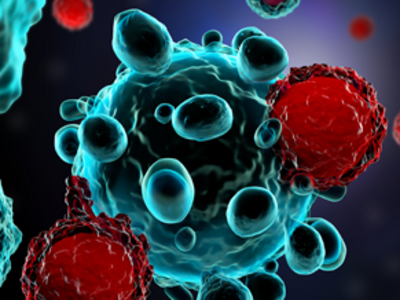
ML models feed on large amounts of quality data, which can be scarce. Meet IMMUNOtron, a ML-robotic platform that’s helping NCI researchers generate and process high-quality data to better understand the immune system’s response to cancer.
-

Learn tips for overcoming obstacles using the cloud, along with an example of how you can make the cloud work for you.
-

The Office of Data Sharing discusses data ownership and data sharing resources for supporting research.
-
Creating a digital twin for cancer is a daunting task, but NCI’s Dr. Eric Stahlberg says we already have many elements in place to serve as a digital twin foundation. All that’s needed now is a shift in thinking and a team science approach to bring a true cancer digital twin to life.
-

Discover how to make your bioinformatics tools more broadly usable with no-code solutions!
-

Common Data Elements (CDEs) enrich and standardize data through consistent and accurate metadata, helping to make data ready for use in training artificial intelligence (AI) models. In this blog, Ms. Denise Warzel discusses the role of CDEs and AI in CBIIT’s Semantic Infrastructure.
-

In this blog, NCI’s Center for Cancer Health Equity, Dr. Laritza Rodriguez, looks at one technique to help counter a lack of diversity in your data set. See how Synthetic Minority Oversampling Techniques (SMOTE) can help bring your biomedical research data into better balance.
-

Whether you are in the data science field, interested in developing computational solutions for clinical oncology, or a clinical researcher, we’ve curated a list of data sets, tools, and learning resources to showcase how these disciplines can and are working together to empower cancer research.
-

Did you know that the same technology that makes your video games more realistic is helping to power important advances in cancer research? This latest blog by Dr. Eric Stahlberg looks at edge computing and how it’s helping to transform cancer research and care.
-
Common Data Elements (CDEs) are a key component of NCI’s semantics infrastructure. CDEs allow us to assign meaning to data in a way that’s predictable, consistent, and persistent across time. CBIIT’s Ms. Denise Warzel and Dr. Gilberto Fragoso show how CDEs help researchers define, map, and use data more efficiently.
-
Dr. Vivian Ota Wang shares her perspectives on data bias and outlines ideas for making data more equitable, fair, and useful to the greatest number of people, all of which would benefit cancer research.