
Cancer Research Training in Low- and Middle-Income Countries (LMICs): Translation to U.S. Populations
Global Cancer Research and Control Seminar Series
July 16, 2026 | 10:00 AM – 11:00 AM
Virtual Webinar
Continuing Medical Education (CME) credits now available – This activity has been approved for AMA PRA Category 1 Credits™.
In this seminar, Dr. Amr Soliman will explore how cancer research training experiences in low- and middle-income countries (LMICs) can inform and strengthen cancer prevention, control, and care delivery in the United States. Drawing on decades of global cancer epidemiology and training leadership, Dr. Soliman will discuss lessons learned from international research partnerships and their translation to underserved and special populations in U.S. settings.
Over the past 25 years, Dr. Amr Soliman has collaborated with faculty members in various global settings and special populations in the United States to develop a program in cancer epidemiology and translation to cancer prevention and control. This collaboration has led to the development and maintenance of strong research infrastructure in global settings and with several medical centers in Africa, Asia, Latin America, and Eastern Europe to investigate the epidemiology of cancers relevant to the local sites. Dr. Soliman co-led the largest global research study on inflammatory breast cancer in North Africa, along with Dr. Catherine Schairer (retired) from the National Cancer Institute (NCI). He also co-led a project in Tanzania on HIV-related malignancies. His two global research studies have provided significant training opportunities to students and trainees from the United States and in global settings.
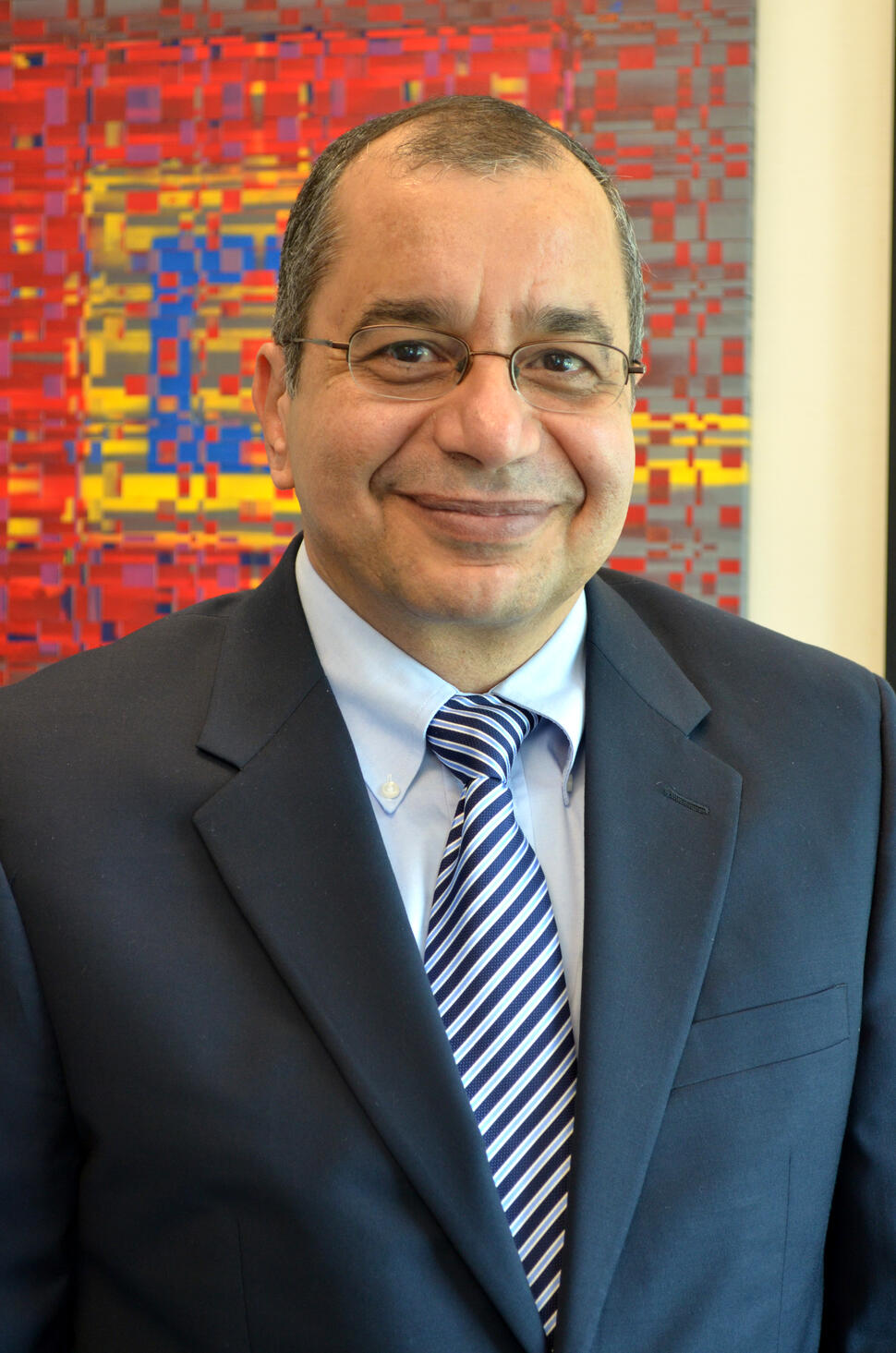
Dr. Amr Soliman
Over the past 20 years, Dr. Soliman has served as the principal investigator of the NCI-R25-supported Cancer Epidemiology Education in Special Populations (CEESP) program at the University of Michigan, the University of Nebraska, and City University of New York. The CEESP program has trained more than 250 public health and medical students in special populations. More than 98 percent of the CEESP alumni practice and conduct research in the United States after their global training.
Dr. Soliman has also conducted collaborative research with the minority-focused SEER registry in Detroit, MI; the Michigan Cancer Consortium; the State Cancer Registry of Michigan; and the Arab American Center for Social and Economic Services. He also conducted several research studies focused on underserved populations in Michigan, rural populations in Nebraska, and unique populations in New York. Dr. Soliman’s domestic research in the United States focuses on access to cancer care, screening, and early detection in underserved populations.
Dr. Soliman is the past president of the American Association for Cancer Education and the current editor-in-chief of the Journal of Cancer Education.