
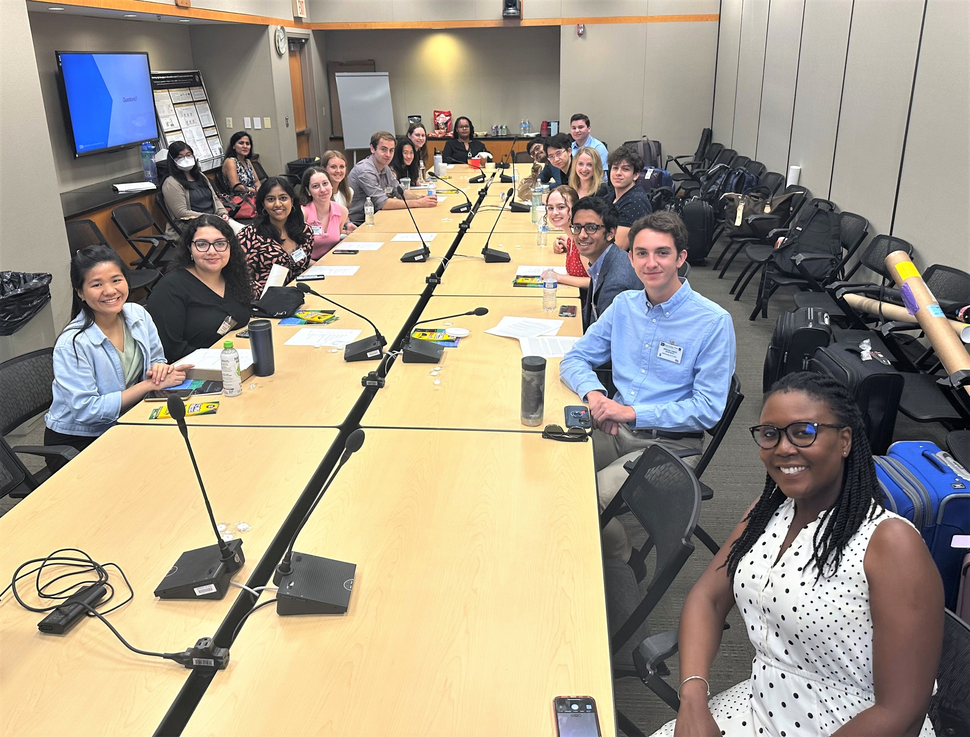
General Information and Overview about the DCB SURP
The DCB SURP is aimed towards undergraduate students interested in solving complex problems in cancer through interdisciplinary research.
Program Details
- Open to Rising Junior and Senior Undergraduates
- Must be eligible to work in the United States
- $6000 Stipend + Free Housing
- Support for Travel to/from Research Institution
- Two-day Research Conference at the NIH in Bethesda, MD
Overview
The DCB SURP offers rising Junior and Senior undergraduates with outstanding research potential the opportunity to work closely with faculty mentors from NCI-supported institutions.
The program is designed specifically for students who wish to gain experience in interdisciplinary cancer biology research but have limited prior research experience (0-1 years). Students who do not otherwise have the opportunity to perform research at their home Institution, but are especially interested in cancer research careers, are encouraged to apply.
SURP research opportunities are available at laboratories supported by DCB Research Programs.
Each student participant will work with a faculty mentor whose lab is pursuing a multi-disciplinary approach to cancer research. Projects include experimental and computational studies of the mechanisms underlying cancer processes. Multi- and interdisciplinary approaches to cancer research often bring together disparate fields, such as cancer biology, biochemistry, and genetics, with engineering, physics, mathematics, and computer science.
Students will either assist the faculty member’s lab in an ongoing research project or work collaboratively with the mentor and/or lab members on a new project of mutual interest.
Documents from the DCB SURP Conference
Poster Session at the Conference
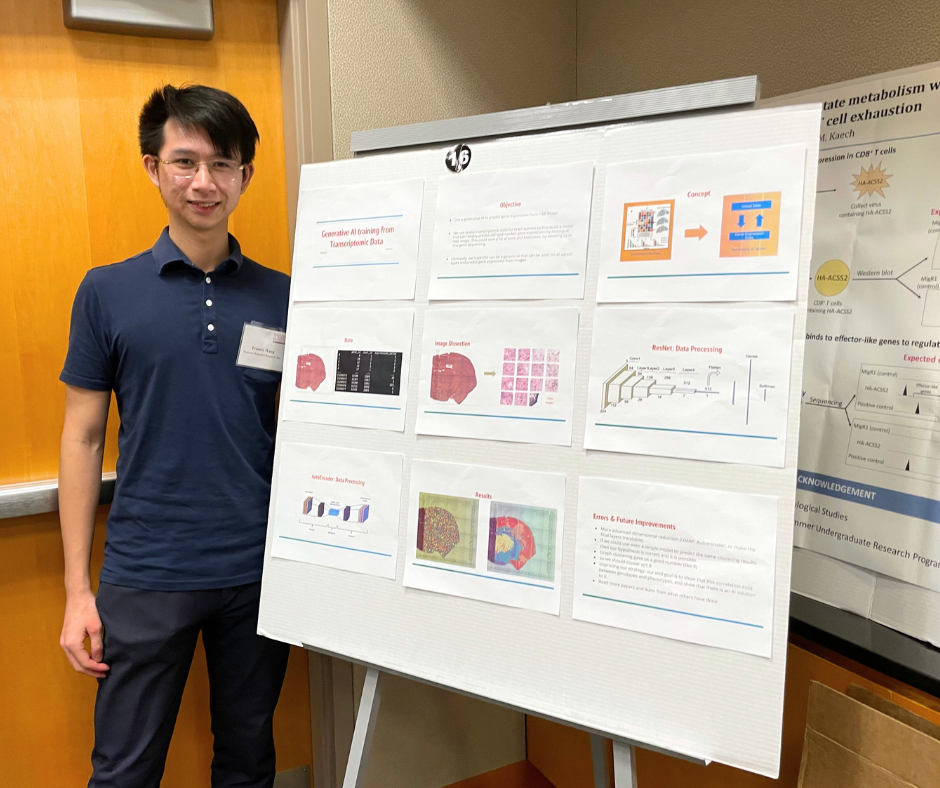
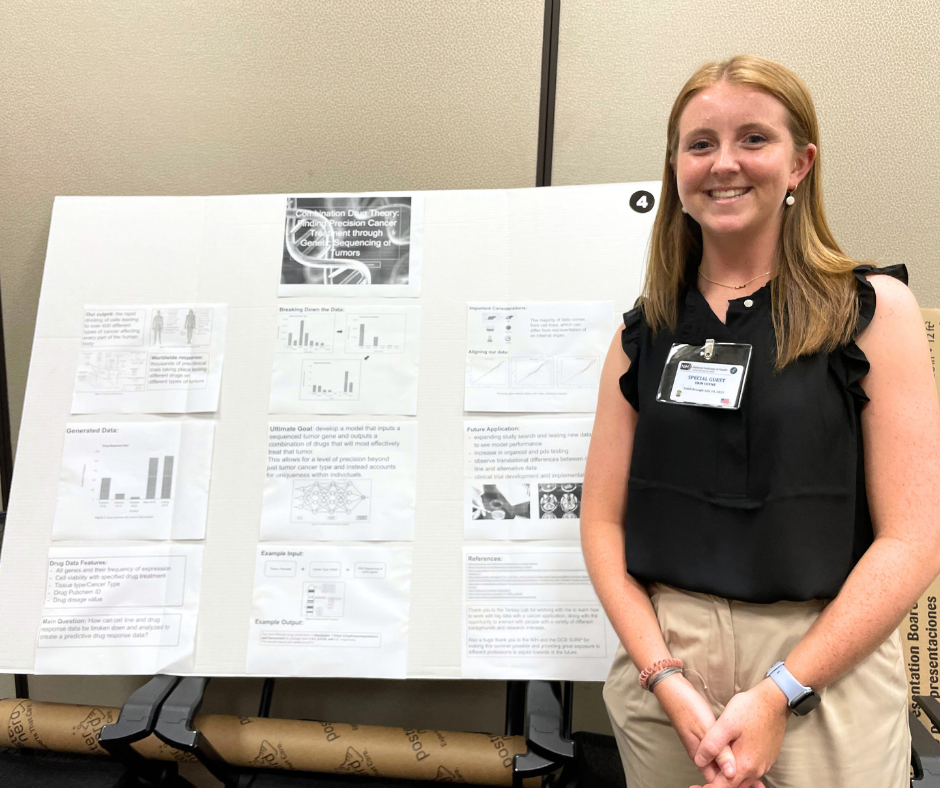
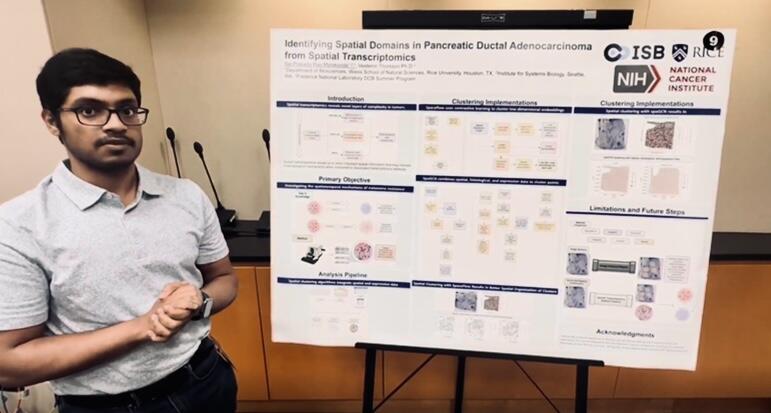
During the poster session at the SURP conference, summer undergraduate researchers presented their cancer biology research. Here are a few examples of the presentations:
Fengyuan Wang shared the spatiotemporal profiling of the tumor microenvironment for the identification of crosstalk targets in brain metastasis.
Erin Coyne showed how she is developing a computational model using genetic sequencing data from tumors to discover effective combination therapies for cancer.
Sai Manikonda presented the identification of spatial domains in pancreatic cancer from spatial transcriptomics.
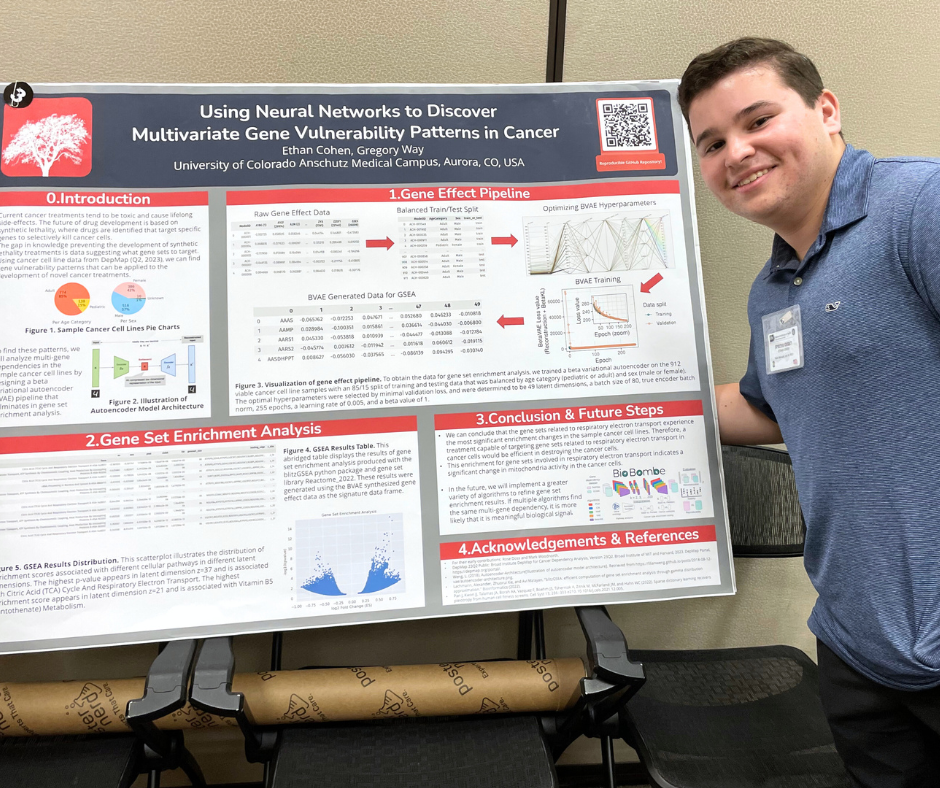
Ethan Cohen showed how he is using neural networks to discover gene vulberability patterns in childhood cancer.
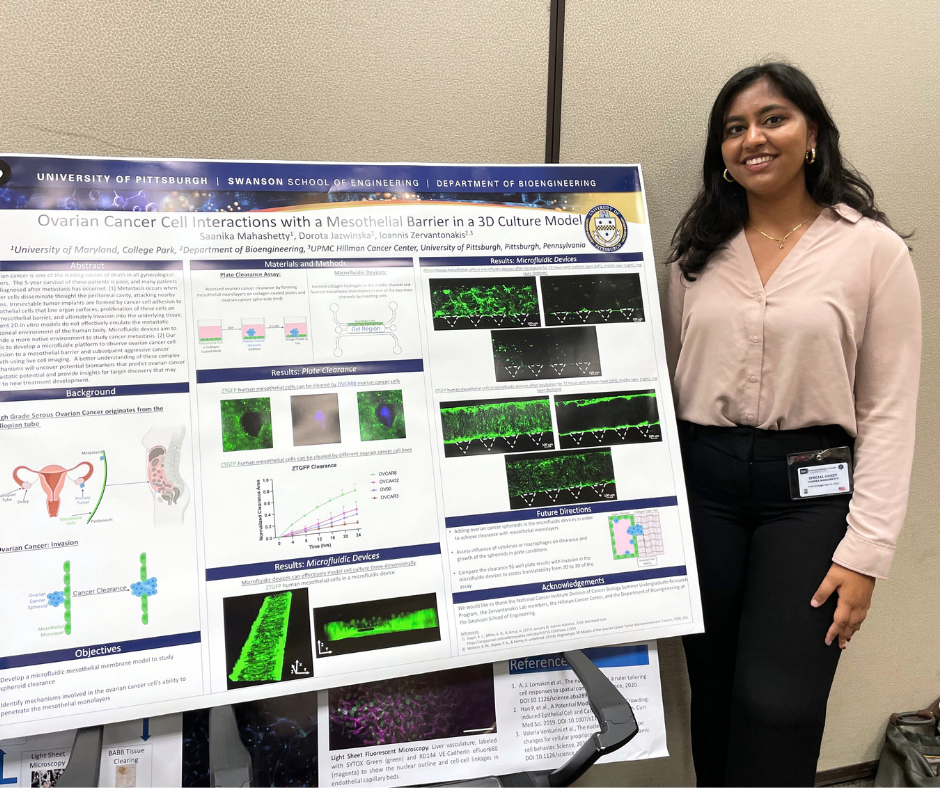
Saanika Mahashetty presented ovarian cancer cell interactions with a mesothelial barrier in a 3D culture model.
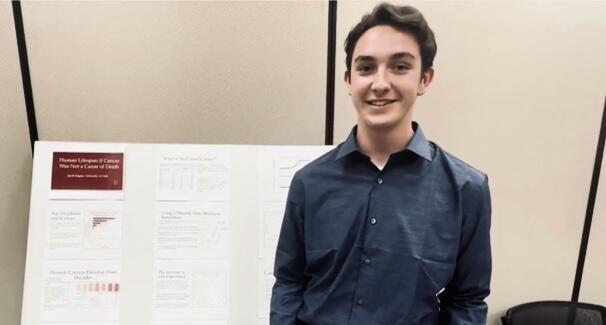
Jacob Hogan shared his work, which is combining the roles of genetics, environment, and cell ecology in mathematical models to help us understand the age at which people get cancer.
Social Media Related to 2023 DCB SURP
Social media posts related to the 2023 DCB SURP can be found using #DCBSURP23.