
Cancer Currents: An NCI Cancer Research Blog
A blog featuring news and research updates from the National Cancer Institute.

-

In the Veterans Affairs health care system—where all patients have equal access to care—African American men did not appear to have more-aggressive prostate cancer when diagnosed or a higher death rate from the disease than non-Hispanic white men.
-
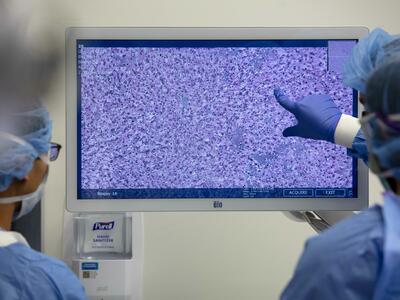
A method that combines artificial intelligence with an advanced imaging technology can accurately diagnose brain tumors in fewer than 3 minutes during surgery, a new study shows. The approach can also accurately distinguish tumor from healthy tissue.
-
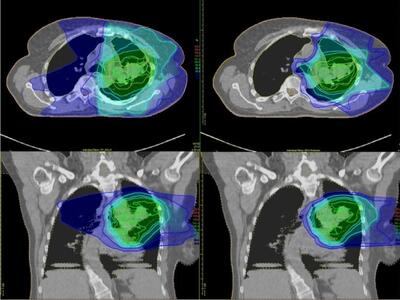
Some experts believe that proton therapy is safer than traditional radiation, but research has been limited. A new observational study compared the safety and effectiveness of proton therapy and traditional radiation in adults with advanced cancer.
-
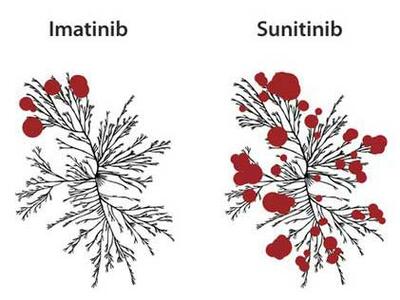
Avapritinib (Ayvakit) has been approved for adults with gastrointestinal stromal tumors (GIST) whose tumors have an alteration in a portion of the PDGFRA gene called exon 18. The approval applies to those whose tumors cannot be removed with surgery or have spread.
-
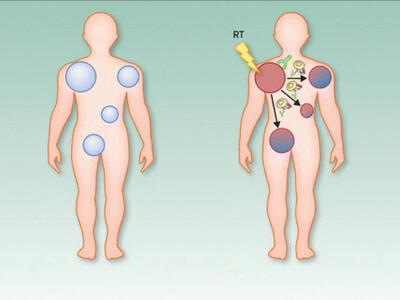
In people with cancer, the abscopal effect occurs when radiation—or another type of localized therapy—shrinks a targeted tumor but also causes untreated tumors in the body to shrink. Researchers are trying to better understand this phenomenon and take advantage of it to improve cancer therapy.
-
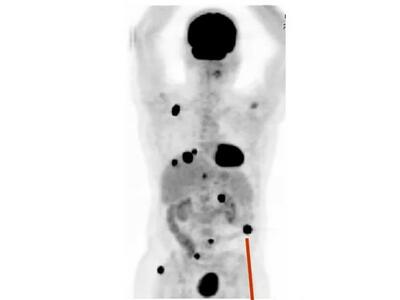
Melanoma cells that metastasize to other parts of the body produce high levels of a protein called MCT1, a new study in mice has found. Blocking MCT1 with an investigational drug, AZD3965, led to fewer and smaller metastatic tumors.
-
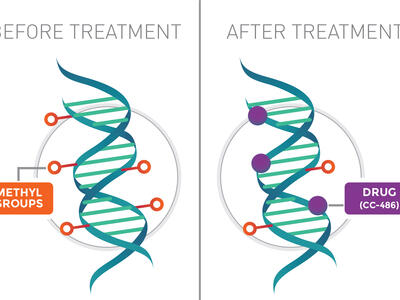
Maintenance therapy with CC-486 extended overall survival of adults with the blood cancer acute myeloid leukemia (AML) in a large clinical trial. CC-486 is a pill form of another cancer therapy called azacitidine (Vidaza).
-
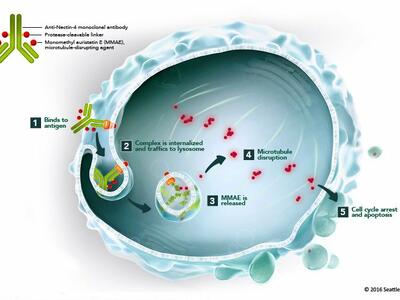
Enfortumab vedotin-ejfv (Padcev) has been approved for people with advanced bladder cancer. FDA granted the drug accelerated approval for cancers that have progressed despite previous treatments.
-
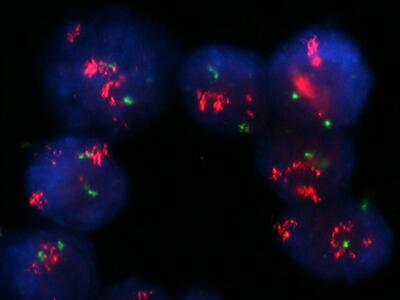
Tucatinib improved survival for women in the HER2CLIMB trial, including some whose cancer had spread to the brain. Trastuzumab deruxtecan improved survival and shrank many tumors in the DESTINY-Breast01 trial, which led to its accelerated approval.
-
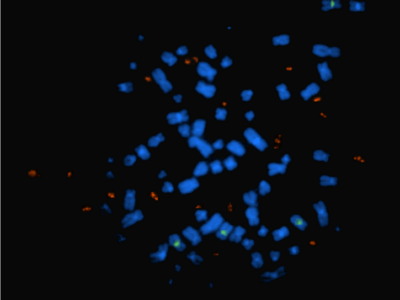
Glioblastoma cells sneak many copies of a key oncogene into circular pieces of DNA. In a new NCI-funded study, scientists found that the cells also slip several different genetic “on switches” into these DNA circles, helping to fuel the cancer’s growth.