
The Development of Immune Checkpoint Inhibitors
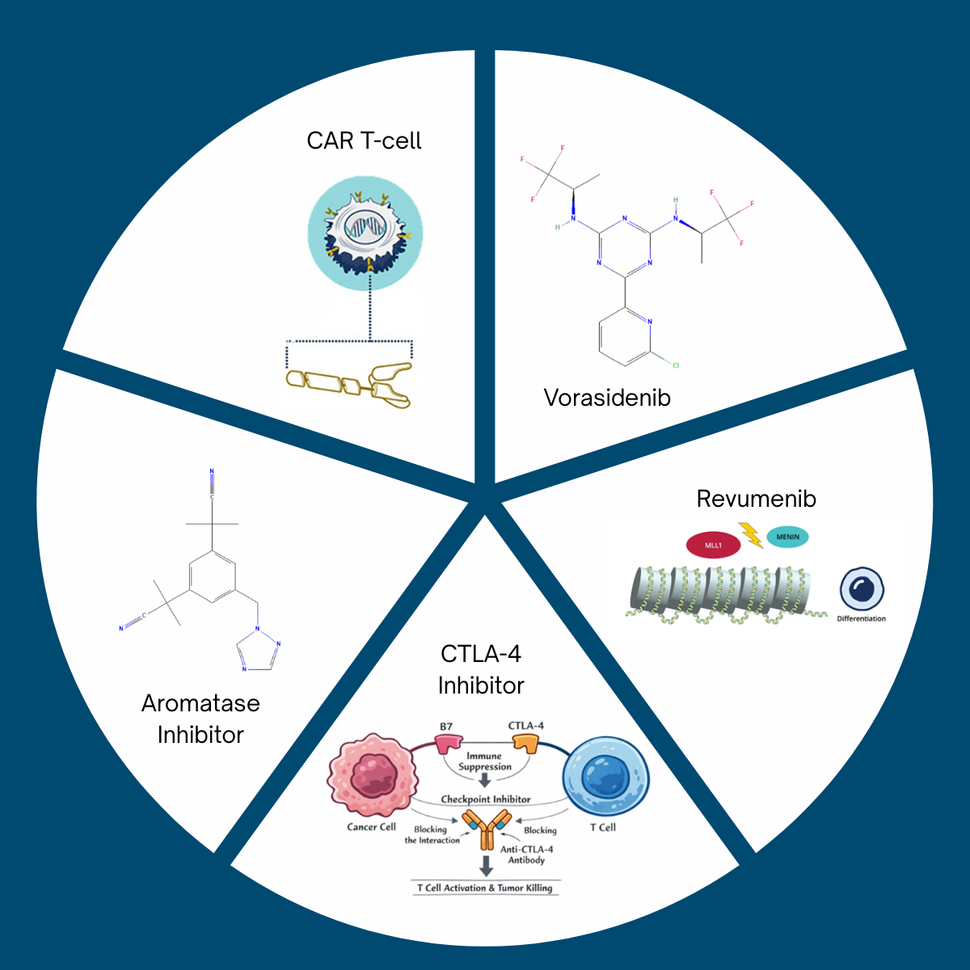
Years of NCI-funded basic research investigated the hypothesis that the immune system could be harnessed to stop cancer from growing and spreading. This work revealed insights into the biology of immune checkpoints, which act as act brakes on the immune system and suppress antitumor immunity. Ultimately, mechanistic findings led to the development of immune checkpoint inhibitors (a type of immunotherapy), which have turned previously fatal cancer diagnoses into manageable chronic diseases for some patients. The FDA approved the first immune checkpoint inhibitor, ipilimumab, for the treatment of advanced melanoma in 2011. Today, this drug is approved to treat more than a dozen different cancer types.
A New Drug for Acute Leukemia
The FDA recently approved revumenib, a type of drug called a menin inhibitor, for relapsed or refractory acute leukemia with a certain type of genetic alteration (known as a KMT2A translocation). This new treatment is based on years of NCI funded research investigating the biology of a protein called menin in blood cancers and the effects of menin inhibitors in preclinical models. Additionally, other small-molecule inhibitors of menin are currently being tested in clinical trials for other types of leukemia.
CAR-T Cell Therapy for Pediatric Brain Tumors
In November 2024, an NCI-funded Phase I clinical study showed promising results that CAR T-cell therapy may be effective against rare pediatric brain tumors. Basic research supported by NCI informed the development of this cell-based immunotherapy for pediatric patients, including mechanistic studies of immune cells that fight cancer, brain cancer cells, and childhood cancers. Taking a closer look, the fundamental discovery that diffuse midline glioma cells make high levels of a molecule called GD2 (which is produced at very low levels in normal brain cells), as well as the preclinical development and testing of GD2-targeting CAR T-cells laid the groundwork for a potential new pediatric immunotherapy.
A Breast Cancer Treatment That Saves Lives
Fundamental studies supported by NCI led to the development of the first selective aromatase inhibitor (which blocks the production of estrogen) as a treatment for breast cancer. Cancer biology studies revealed the effects of aromatase inhibitors (like 4-hydroxyandrostenedione) in preclinical breast cancer models, and these findings were translated into the clinic. These types of drugs have now saved the lives of hundreds of thousands of patients with breast cancer and are now the standard of care for older patients with breast tumors.
A New Treatment for IDH-Mutant Low-Grade Gliomas