
Cancer Currents: An NCI Cancer Research Blog
A blog featuring news and research updates from the National Cancer Institute.

-

Results from a French clinical trial have identified what experts say should now be the recommended initial treatment of advanced leiomyosarcoma. In the trial, the combination of trabectedin (Yondelis) and doxorubicin improved survival by a median of 9 months.
-
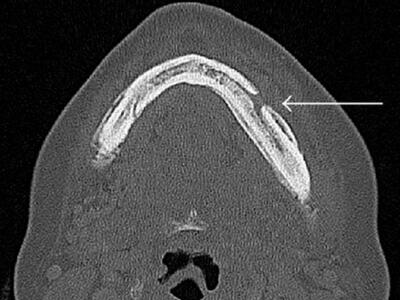
Osteonecrosis of the jaw was thought to be a rare side effect of drugs like denosumab (Xgeva) that lessen bone problems when cancer has spread to the bone. But a new study has found that the painful side effect is more common than once thought.
-
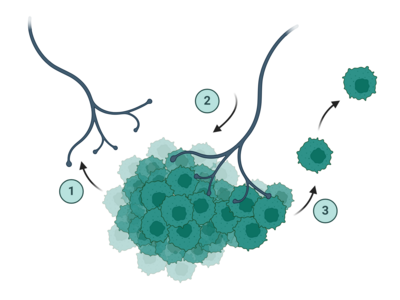
A new study may provide important new insights into breast cancer metastasis. Blood vessels within tumors release a molecule that draws sensory nerves closer to the tumors, the study shows. This close proximity turns on genes in the cancer cells that drive metastasis.
-
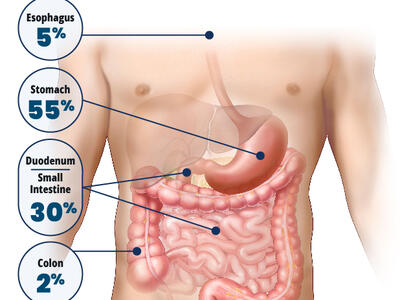
Trial participants who stopped imatinib had a more rapid worsening of disease, a shorter time until resistance, and did not live as long as participants who continued the therapy uninterrupted.
-
Researchers have identified hundreds of promising targets for existing drugs or potential new cancer drugs. The findings relied heavily on proteogenomic data from more than 1,000 tumors representing 10 types of cancer released last year by NCI's CPTAC program.
-
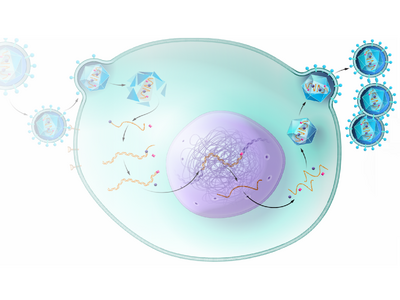
DNA fragments from retroviruses that are millions of years old appear to be active in a variety of cancers, a new study found. One virus-derived DNA fragment in particular, known as LTR10, turns on cancer-related genes in multiple types of cancer.
-

NCI Director Dr. Kimryn Rathmell and Division of Cancer Biology Director Dr. Dan Gallahan explain how the R15 grant program supports researchers at smaller institutions and encourages students to pursue careers in cancer research.
-
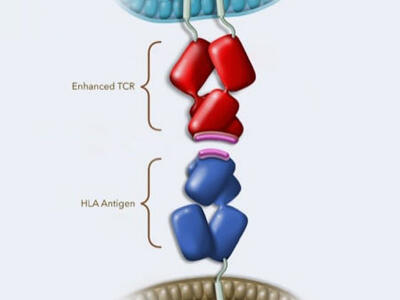
FDA approved afami-cel (Tecelra) to treat metastatic synovial sarcoma, a type of soft tissue sarcoma. The approval is for patients who have already received chemo and whose tumors are positive for MAGE-A4. Afami-cel is the first T-cell receptor therapy approved for cancer.
-
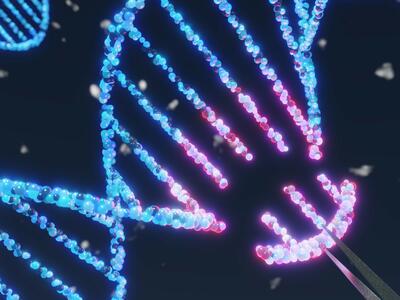
Scientists have developed a strategy for treating cancer that takes advantage of tumors’ ability to rapidly evolve and turns it against them. It involves intentionally making some tumor cells resistant to a specific treatment from the get-go.
-
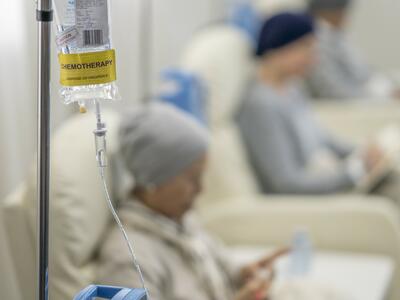
Two new studies in mice show that adding chemotherapy to the experimental KRAS inhibitor MRTX1133 greatly reduced tumor growth and spread compared with either treatment alone.