
Cancer Currents: An NCI Cancer Research Blog
A blog featuring news and research updates from the National Cancer Institute.

-
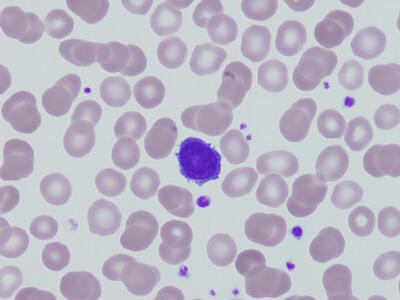
People diagnosed with hairy cell leukemia (HCL) may have an effective new treatment option, a type of drug called an immunotoxin. Read more about how this treatment, moxetumomab pasudotox, fared in a phase 3 clinical trial in patients with advanced HCL.
-

Do cancer study participants want to receive their genetic test results? A recent study involving women with a history of breast cancer tested an approach for returning genetic research results and evaluated the impact those results had on the women.
-

Flushing the bladder with the chemotherapy drug gemcitabine after tumors have been removed surgically may reduce the risk of low-grade bladder cancer returning, according to the results of a large clinical trial.
-

Researchers have struggled to develop therapies to treat tumors that have spread to other parts of the body. In a new study, researchers tested whether the experimental drug metarrestin can selectively shrink metastases in mouse models of aggressive pancreatic cancer.
-

FDA recently approved the targeted-drug combination to treat patients with advanced melanoma and a subset of patients with a rare and aggressive form of thyroid cancer whose tumors have a specific mutation in the BRAF gene.
-
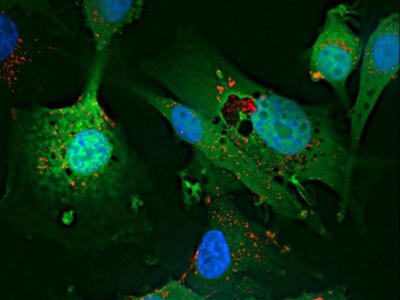
Despite continued efforts to develop new therapies for glioblastoma, none have been able to improve how long patients live appreciably. Despite some setbacks, researchers are hopeful that immunotherapy might be able to succeed where other therapies have not.
-

Results from an NCI-sponsored clinical trial may point to an important change in how some children with advanced Wilms tumor, a form of kidney cancer, are treated.
-
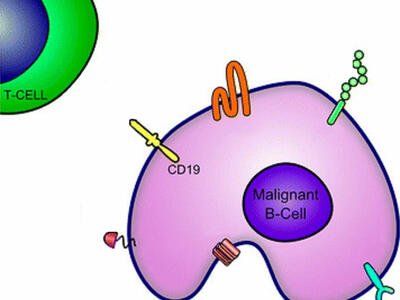
FDA has approved tisagenlecleucel (Kymriah) for certain kinds of non-Hodgkin lymphoma. Read about the trial that led to the approval and what the approval means for people with lymphoma.
-
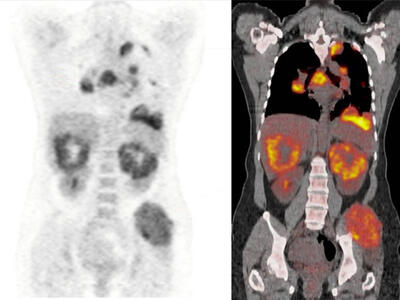
FDA has approved the combination of two immunotherapy drugs, nivolumab (Opdivo) and ipilimumab (Yervoy), as an initial treatment for some patients with advanced kidney cancer. Learn how this approval will affect patient care.
-
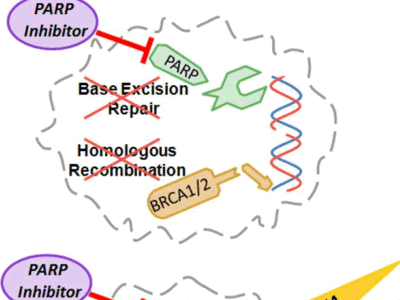
FDA has expanded its approval of rucaparib (Rubraca) as a maintenance therapy for women with recurrent ovarian, fallopian tube, or primary peritoneal cancer whose tumors shrank after subsequent treatment with a platinum-based chemotherapy.