
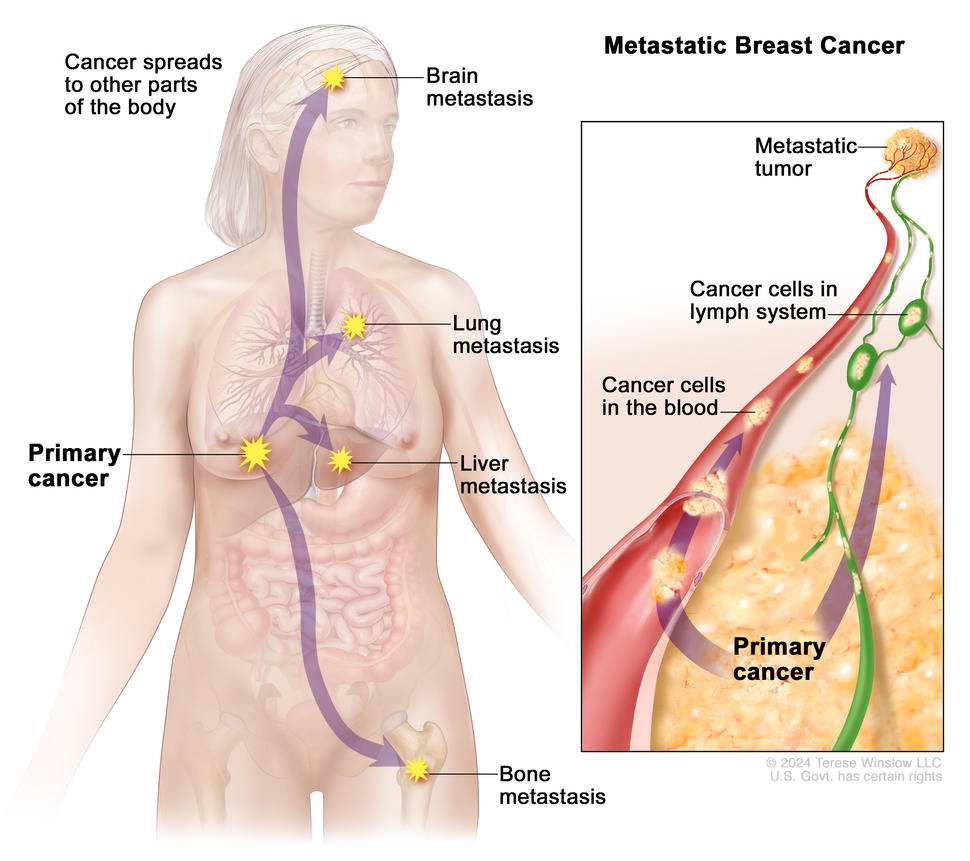
What is metastatic breast cancer?
In metastatic breast cancer, cancer cells have broken away from where they began and traveled through the lymph system or blood to form a tumor in another part of the body.
A metastatic tumor is the same type of cancer as the original tumor. For example, if breast cancer spreads to the bone, the cancer cells in the bone are breast cancer cells. The tumor in the bone is treated as metastatic breast cancer, not bone cancer. Metastatic breast tumors most commonly develop in the bones, lungs, brain, or liver.
Doctors may use the term “advanced breast cancer” to refer to metastatic breast cancer. This term is not the same as “locally advanced breast cancer,” which is breast cancer that has spread to nearby tissues or lymph nodes but not to other parts of the body.
To learn more about cancer that has spread to other parts of the body, visit Metastatic Cancer: When Cancer Spreads.
What are the symptoms of metastatic breast cancer?
The symptoms of metastatic breast cancer depend on where and the extent to which the cancer has spread.
Symptoms of metastatic breast cancer may include:
- headache, seizures, or dizziness, if cancer has spread to the brain
- jaundice or swelling in the belly, if cancer has spread to the liver
- pain and fractures, if cancer has spread to the bone
- shortness of breath, if cancer has spread to the lung
- speech or vision changes, if cancer has spread to the brain
- unusual fatigue
Sometimes, people with metastatic breast cancer do not have any symptoms, or they may be different from those that are described above. If you have been treated for breast cancer in the past and develop any unusual symptoms, it is important to contact your health care provider right away. Your doctor may recommend one or more tests to see if the cancer has returned. These symptoms may also be signs of other diseases or conditions, such as an infection or injury.
How is metastatic breast cancer diagnosed?
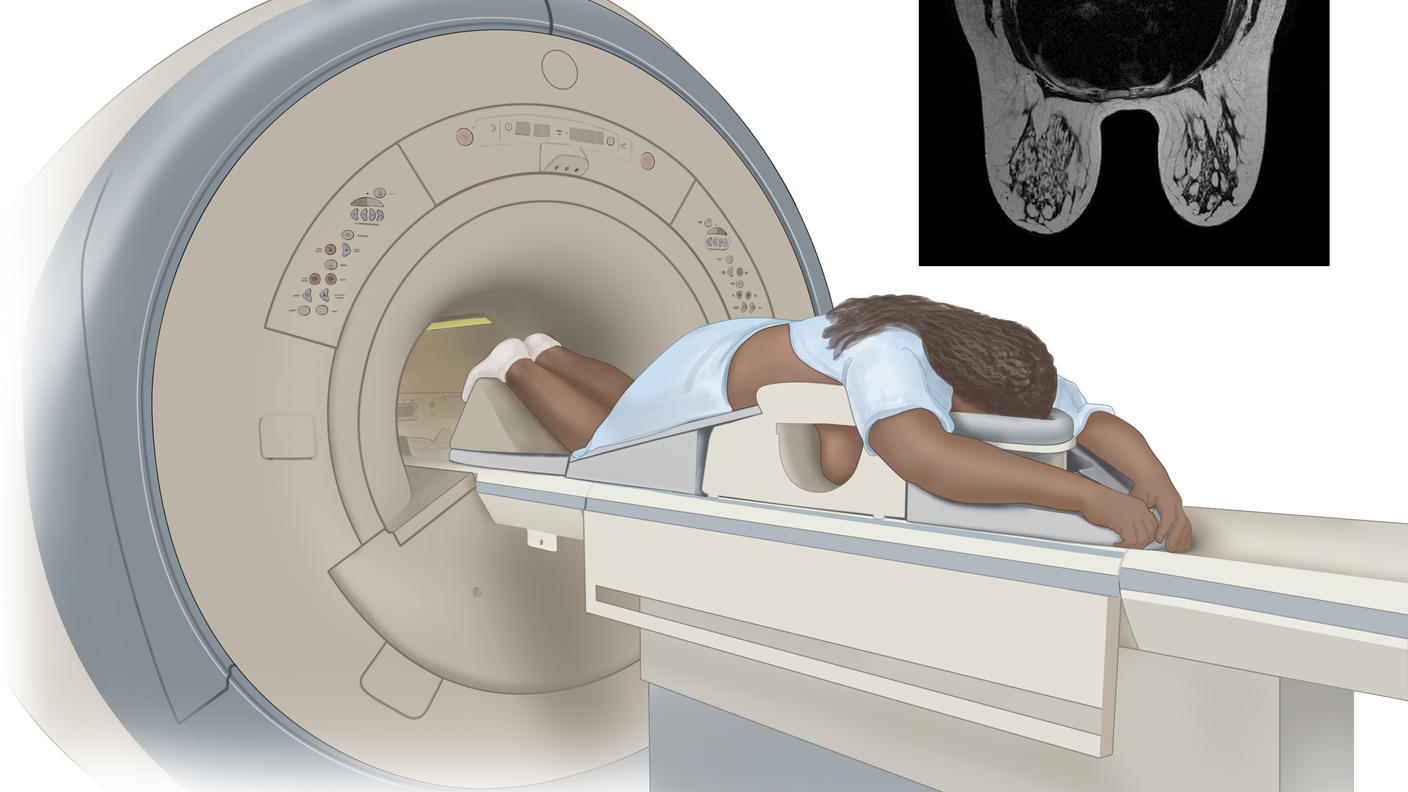
About 20% to 30% of women diagnosed with early-stage breast cancer eventually develop metastatic disease. This is sometimes called metastatic recurrence or distant recurrence. Metastatic breast cancer may develop months, years, or even decades after a person has completed treatment for early or locally advanced breast cancer.
In the United States, 5% to 6% of women with newly diagnosed breast cancer have de novo metastatic breast cancer (called stage IV breast cancer). This means that when breast cancer is detected for the first time, it has already spread to another part of the body.
The following tests may be used to diagnose metastatic breast cancer:
- biopsy of the tumor to confirm metastatic breast cancer and determine whether it has certain biomarkers such as ER, PR, and HER2, which may be different from those in the original tumor
- blood tests to see if the liver and other organs in the body are functioning properly
- CT scan, bone scan, or other imaging tests to see where cancer may have spread in the body
What is the prognosis for people with metastatic breast cancer?
Doctors estimate metastatic breast cancer prognosis, or the likely outcome of disease, by using statistics collected over many years from people with metastatic breast cancer. One statistic that is commonly used in making a prognosis is the 5-year relative survival rate. The 5-year relative survival rate tells you what percent of people with the same type and stage of breast cancer are alive 5 years after their cancer was diagnosed, compared with people in the overall population.
The 5-year relative survival rate for women with metastatic breast cancer in the United States is 31%. Find more statistics for specific stages of breast cancer at Breast Cancer Prognosis & Survival Rates.
Because survival statistics are based on large groups of people, they cannot be used to predict exactly what will happen to you. Your doctor is in the best position to discuss these statistics and talk with you about your prognosis and treatment options.
To learn more about survival statistics and to see videos of patients and their doctors exploring their feelings about prognosis, visit Understanding Cancer Prognosis.
How is metastatic breast cancer treated?
There are many treatment options for metastatic breast cancer. Often, the goal of treating metastatic cancer is to control it by stopping or slowing its growth. Some people can live for years with metastatic breast cancer that is well controlled. The goal of other treatments is to improve the quality of life by relieving symptoms. This type of care is called palliative care.
The treatment that you may have depends on the type of breast cancer you were originally diagnosed with, where it has spread, treatments you have had in the past, and your general health. Metastatic breast cancer may stop responding to drugs over time, so you may need to change treatments when this happens.
Treatments for metastatic breast cancer include:
- chemotherapy to damage or destroy the cancer cells
- chemotherapy and immunotherapy for metastatic triple-negative breast cancer
- hormone therapy to help shrink or slow the growth of metastatic hormone receptor–positive breast cancer
- radiation therapy to shrink a tumor to relieve pain or other symptoms
- surgery to remove cancer that has spread, to repair bones, or to remove excess fluid from your body
- targeted therapy to target cancer cells if they have certain biomarkers such as ER or HER2
Learn more about these breast cancer treatments.
Clinical trials
Joining a clinical trial may be an option. There are different types of clinical trials for people with metastatic breast cancer. For example, a treatment trial tests new treatments or new ways of using existing treatments. Supportive care and palliative care trials look at ways to improve quality of life, especially for those who have side effects from cancer and its treatment.
You can use the clinical trial search to find NCI-supported cancer clinical trials that are accepting participants. This search allows you to filter trials based on the type of cancer, your age, and where the trials are being done. You can also review a list of all current Breast Cancer Clinical Trials.
Learn more about clinical trials at Cancer Clinical Trial Information for Patients and Caregivers.