
central venous access catheter
(SEN-trul VEE-nus AK-ses KA-theh-ter)
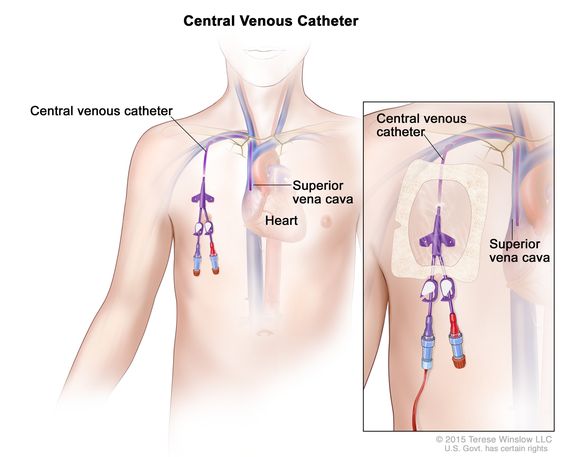
A device used to draw blood and give treatments, including intravenous fluids, drugs, or blood transfusions. A thin, flexible tube is inserted into a vein, usually below the collarbone. It is guided (threaded) into a large vein above the right side of the heart called the superior vena cava. A needle is inserted into a port outside of the body to draw blood or give fluids. A central venous access catheter may stay in place for weeks or months and helps avoid the need for repeated needle sticks. There are several types of central venous access catheters.
 Enlarge this image in new window
Central venous catheter. A central venous catheter is a thin, flexible tube that is inserted into a vein, usually below the right collarbone, and guided (threaded) into a large vein above the right side of the heart called the superior vena cava. It is used to give intravenous fluids, blood transfusions, chemotherapy, and other drugs. The catheter is also used for taking blood samples. It may stay in place for weeks or months and helps avoid the need for repeated needle sticks.