
Cancer Currents: An NCI Cancer Research Blog
A blog featuring news and research updates from the National Cancer Institute.

-

In a clinical trial, people being treated for cancer who participated in virtual mind–body fitness classes were less likely to be hospitalized, and had shorter stays when they were hospitalized, than people who did not take the classes.
-

Antibodies currently used in many cancer treatments have only been able to reach proteins outside of cancer cells. In a new study in mice, scientists found a way to target cancer-fueling KRAS and IDH1 proteins buried inside cancer cells.
-

NCI’s James H. Doroshow, M.D., reflects on the accomplishments of NCI-MATCH, a first-of-its-kind precision medicine cancer trial, and gives an overview of three new successor trials: ComboMATCH, MyeloMATCH, and iMATCH.
-
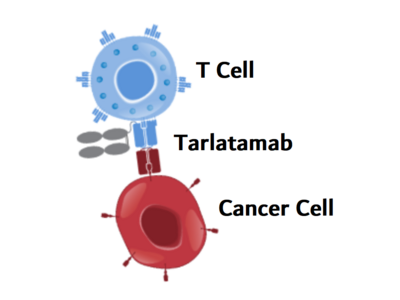
Tarlatamab, a new type of targeted immunotherapy, shrank small cell lung cancer (SCLC) tumors in more than 30% of participants in an early-stage clinical trial. Participants had SCLC that had progressed after previous treatments with other drugs.
-

For the first time in decades, people with advanced bladder cancer have more effective treatment options. New clinical trial results mark a pivotal moment following years of little progress, bladder cancer experts believe.
-

A new study shows that, in some tumors, a subset of cancer cells can drain mitochondria, the tiny structures within cells that produce energy, from T cells and use them for their own energy needs.
-

FDA has changed its 2021 approval of pembrolizumab (Keytruda) along with trastuzumab (Herceptin) and chemotherapy for treating HER2-positive stomach or GEJ cancer. The agency also announced a new approval of pembrolizumab for HER2-negative forms of these same cancers.
-
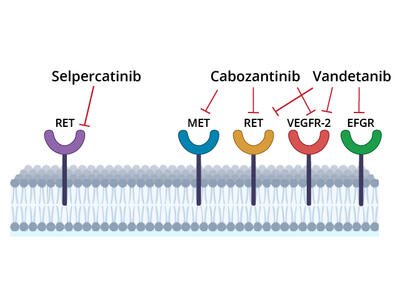
For people with lung cancer and medullary thyroid cancer whose tumors have changes in the RET gene, selpercatinib improved progression-free survival compared with other common treatments, according to new clinical trial results.
-

A new study, conducted largely in mice, may help explain why a currently used molecular marker—called mismatch repair deficiency—doesn’t always work to predict which patients will respond to immunotherapies called immune checkpoint inhibitors.
-

The Food and Drug Administration (FDA) for the first time has granted marketing authorization for a blood test, the Invitae Common Hereditary Cancers Panel. The test detects inherited genetic changes that increase the risk of developing certain cancers.