
Treatment - Cancer Currents Blog
Cancer treatment related news, with context from leading experts. Includes articles on new therapies, treatment side effects, and important trends in treatment-related research.
-
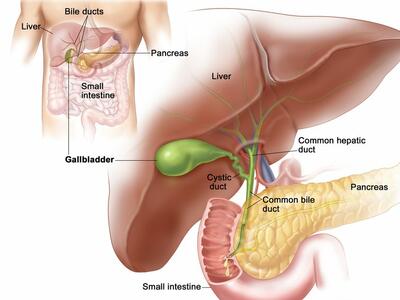
In an early-phase trial, dabrafenib plus trametinib shrank tumors in patients with biliary tract cancer and adenocarcinoma of the small intestine whose tumors had a specific mutation in the BRAF gene.
-
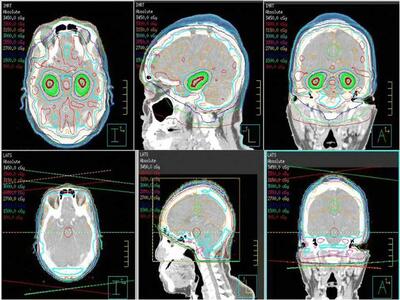
Results from a clinical trial suggest that, in patients with brain metastases, an advanced radiotherapy technique limits harm to patients’ cognitive function without affecting the treatment’s effect on tumors.
-
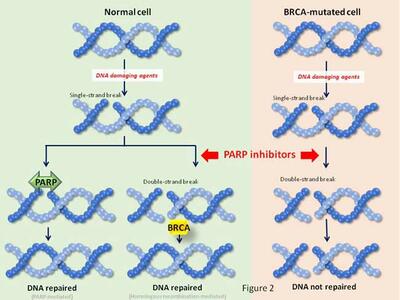
In a recent trial, the PARP inhibitor olaparib substantially delayed ovarian cancer from coming back after the first line of chemotherapy. Could the findings change the standard of care for newly diagnosed ovarian cancer with a BRCA mutation?
-
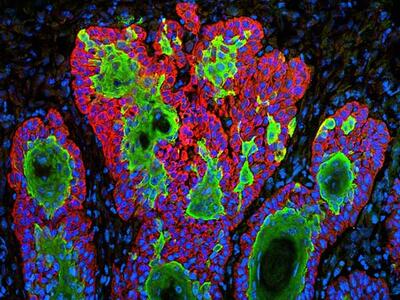
The Food and Drug Administration approved the immunotherapy drug cemiplimab (Libtayo) for an advanced form of cutaneous squamous cell carcinoma (SCC), a common type of skin cancer. It is the first agent to be approved specifically for advanced SCC.
-
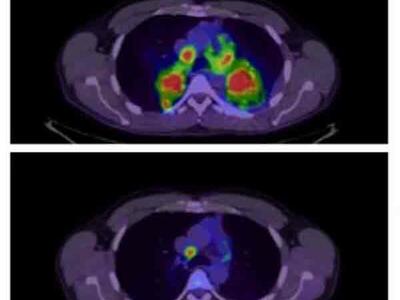
Results from two large clinical trials should cement the value of the drugs brigatinib (Alunbrig) and durvalumab (Imfinzi) in treating non-small cell lung cancer (NSCLC). The trial results, several experts said, confirm that the drugs can improve the outcomes of patients with advanced NSCLC.
-
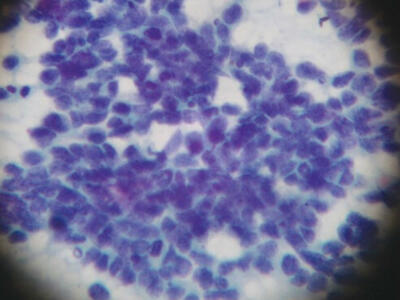
In a large clinical trial, the immunotherapy drug atezolizumab (Tecentriq), combined with a standard chemotherapy regimen, modestly increased survival in patients with advanced small cell lung cancer (SCLC). The trial is the first in more than 20 years to show a survival improvement in this cancer.
-

In a small trial involving patients with slow-growing B-cell lymphoma, injecting the compound SD-101 directly into tumors (in situ vaccination) and giving low-dose radiation shrank the injected tumors and, frequently, tumors elsewhere in the body.
-
Certain cancer treatments can damage the heart and the cardiovascular system, a problem known as cardiotoxicity. Cardiologists and oncologists met recently to discuss strategies and future research directions for addressing these side effects.
-
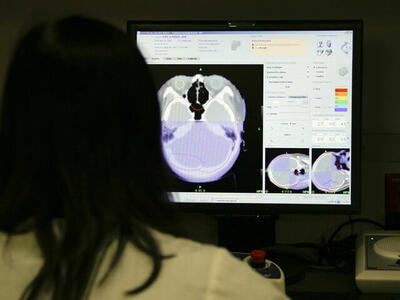
Results from a clinical trial show that the combination of nivolumab (Opdivo) and ipilimumab (Yervoy) halted the growth of or shrank metastatic brain tumors in more than half of participants with melanoma that had spread to the brain.
-
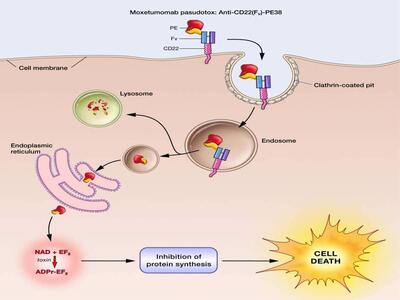
The FDA has approved moxetumomab pasudotox (Lumoxiti), a bacterial toxin–based drug, for the treatment of some patients with hairy cell leukemia (HCL). Moxetumomab is approved to treat patients with HCL who have already undergone at least two lines of standard treatments.