
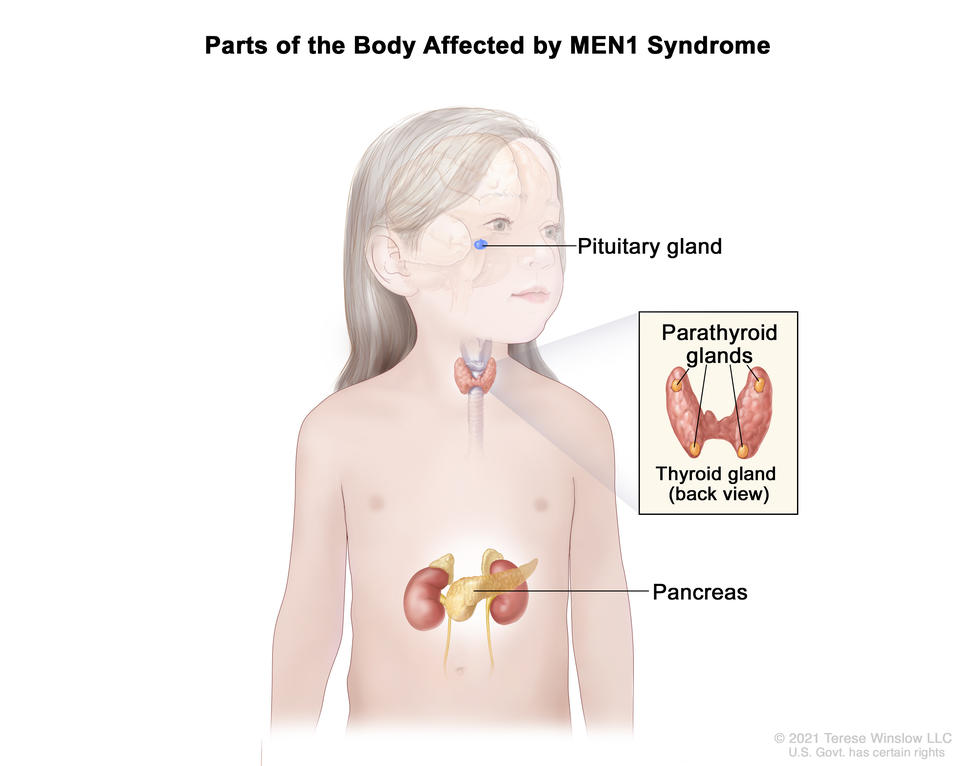
Causes of childhood MEN1 syndrome
MEN1 syndrome is an inherited disorder, meaning it is caused by an inherited, harmful genetic change (also called pathogenic variant or mutation) in the MEN1 gene. In most families, this mutation is inherited from a parent. In some cases, the mutation in the MEN1 gene appears for the first time in the child. Most cases of MEN1 syndrome are caused by a mutation in the MEN1 gene. Learn more about how cancer develops at What Is Cancer?
Genetic counseling for children who may have MEN1 syndrome
It may not be clear from the family medical history whether your child has MEN1 syndrome. Genetic counseling before genetic testing can help assess your child's risk of having a gene change that caused your child's tumor and whether genetic testing is needed. Genetic counselors and other specially trained health professionals can discuss your child's diagnosis and your family's medical history to understand:
- the options for testing for the MEN1 gene or for other genes that may increase the risk of endocrine tumors
- the risk of endocrine tumors for your child and their siblings
- the risks and benefits of learning genetic information
Genetic counselors can also help you cope with your child's genetic test results, including how to discuss the results with family members. They can advise you about whether other members of your family should receive genetic testing.
Learn more about genetic testing at Genetic Testing for Inherited Cancer Risk.
Symptoms of tumors caused by childhood MEN1 syndrome
Tumors in the parathyroid gland, pituitary gland, or islet cells in the pancreas may make extra hormones. The signs and symptoms of disease depend on the type of hormone made by the tumor. It's important to check with your child's doctor if your child has any of the symptoms below.
The most common condition associated with MEN1 syndrome is hyperparathyroidism (a condition in which the parathyroid gland makes too much parathyroid hormone). Symptoms of hyperparathyroidism include:
- bone pain
- kidney stone
- weakness or tiredness
- weight loss
- nausea and vomiting
- increased thirst
- increased urination
- constipation
There are other conditions associated with MEN1 syndrome. The conditions and symptoms include:
- Pituitary adenoma. Signs and symptoms may include headache, vision problems, and weight changes. In females, symptoms may also include absence of menses during or after puberty and making breast milk for no known reason.
- Pancreatic neuroendocrine (islet cell) tumors. Signs and symptoms may include low blood sugar (weakness, loss of consciousness, or coma), abdominal pain, vomiting, diarrhea, or weight changes.
- Malignant tumors of the adrenal glands, bronchi, thymus, fibrous tissue, or fat cells may also occur.
Sometimes children with MEN1 syndrome do not have any symptoms. If your child has symptoms, they may be caused by problems other than MEN1 syndrome. The only way to know is to see your child's doctor.
Tests to diagnose tumors caused by MEN1 syndrome
If your child has symptoms that suggest MEN1 syndrome, their doctor will need to find out if these are due to this syndrome or to another problem. The doctor will ask when the symptoms started and how often your child has been having them. They will also ask about your child's personal and family medical history and do a physical exam. Depending on these results, they may recommend other tests. If your child is diagnosed with MEN1 syndrome, the results of these tests will help you and your child's doctor plan treatment.
A diagnosis is made when a MEN1 mutation is found or when tumors are found in two of the following glands or organs: parathyroid gland, pituitary gland, or islet cells in the pancreas.
The tests used to diagnose a mutation in the MEN1 gene or tumors caused by MEN1 syndrome may include:
Lab tests
- Blood chemistry study measures the amounts of certain substances released into the blood by organs and tissues in the body. An unusual amount of a substance can be a sign of disease.
- Blood hormone study measures the amounts of certain hormones released into the blood by organs and tissues in the body. An unusual amount of a substance can be a sign of disease in the organ or tissue that makes it. The blood may also be checked for high levels of the hormone calcitonin or parathyroid hormone (PTH).
- 24-hour urine test is used to diagnose neuroendocrine tumors, such as pheochromocytoma. Urine is collected for 24 hours to measure the amounts of a group of hormones called catecholamines in the urine. Substances caused by the breakdown of catecholamines are also measured. An unusual amount of a substance can be a sign of disease in the organ or tissue that makes it. Higher-than-normal amounts may be a sign of pheochromocytoma.
- Venous sampling for an overactive parathyroid gland is a procedure in which a sample of blood is taken from veins near the parathyroid glands. The sample is checked to measure the amount of parathyroid hormone released into the blood by each gland. Venous sampling may be done if blood tests show there is an overactive parathyroid gland but imaging tests don't show which one it is.
- Genetic testing analyzes cells or tissue to look for changes in genes or chromosomes. These changes may be a sign that a person has or is at risk of having a specific disease or condition. To diagnose MEN1 syndrome, a sample of blood or saliva is checked for the MEN1 gene.
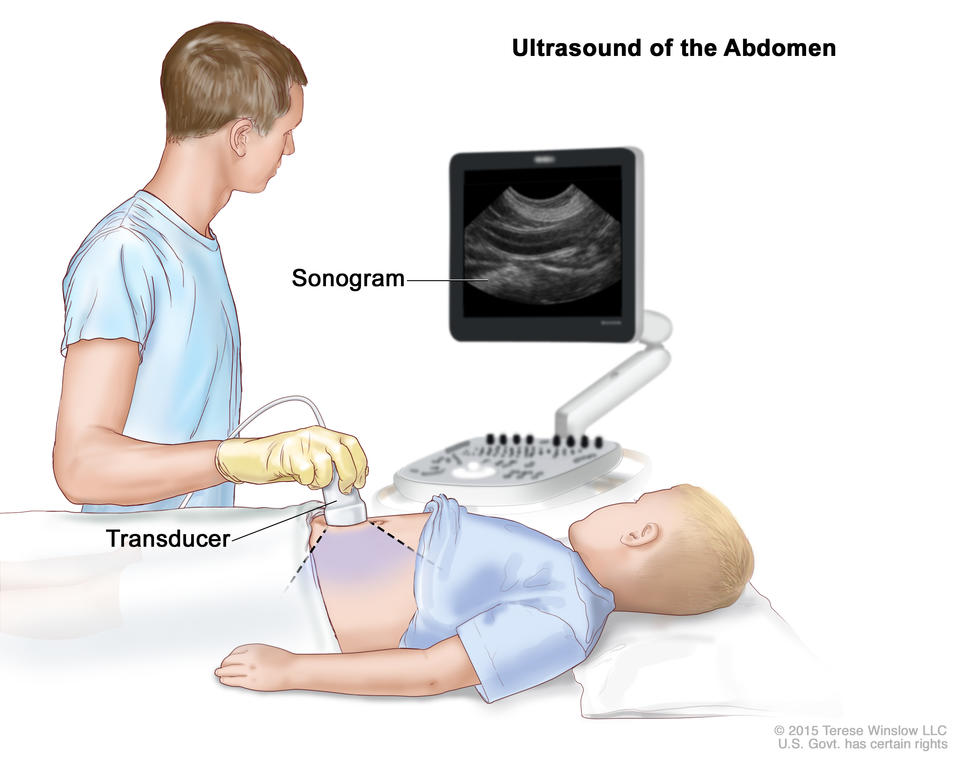
Abdominal ultrasound. An ultrasound transducer connected to a computer is pressed against the skin of the abdomen. The transducer bounces sound waves off internal organs and tissues to make echoes that form a sonogram (computer picture).
Credit: © Terese Winslow
Imaging tests
- Ultrasound exam uses high-energy sound waves (ultrasound) that bounce off internal tissues or organs and make echoes. The echoes form a picture of body tissues called a sonogram.
- MRI uses a magnet, radio waves, and a computer to make a series of detailed pictures of areas inside the body. This procedure is also called nuclear magnetic resonance imaging (NMRI).
- CT scan (CAT scan) uses a computer linked to an x-ray machine to make a series of detailed pictures of areas inside the body. The pictures are taken from different angles and are used to create 3-D views of tissues and organs. A dye may be injected into a vein or swallowed to help the organs or tissues show up more clearly. This procedure is also called computed tomography, computerized tomography, or computerized axial tomography. Learn more about Computed Tomography (CT) Scans and Cancer.
- Sestamibi scan is a type of radionuclide scan used to find an overactive parathyroid gland. A very small amount of a radioactive substance called technetium 99 is injected into a vein and travels through the bloodstream to the parathyroid gland. The radioactive substance will collect in the overactive gland and show up brightly on the special camera that detects radioactivity.
- PET scan (positron emission tomography scan) uses a small amount of radioactive sugar that is injected into a vein. Then the PET scanner rotates around the body to make detailed, computerized pictures of areas inside the body where the glucose is taken up. Because cancer cells often take up more glucose than normal cells, the pictures can be used to find cancer cells in the body.
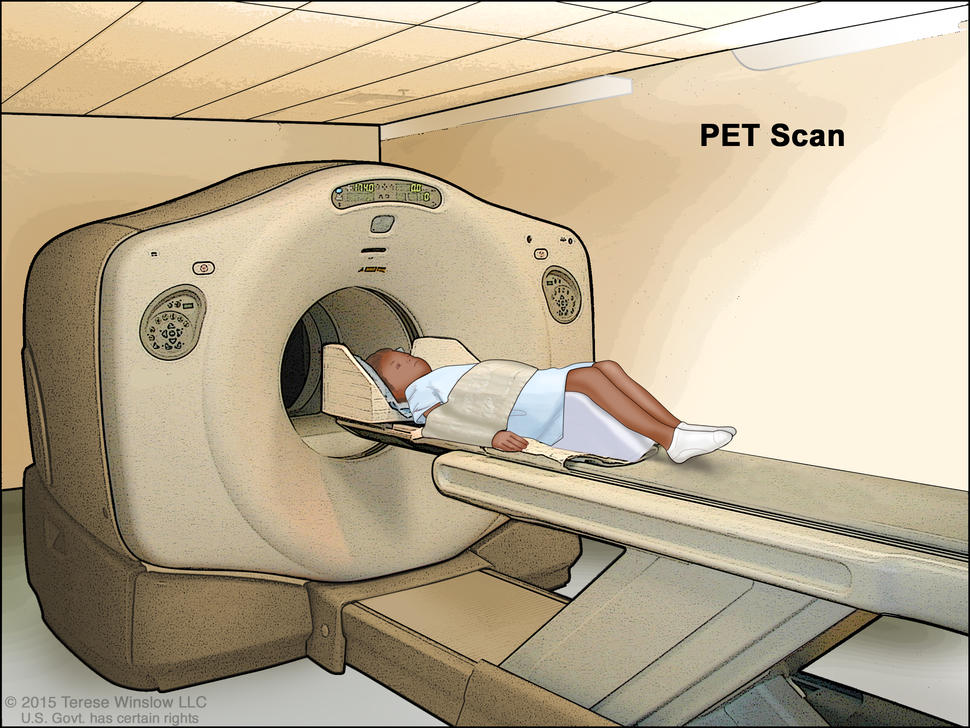
Positron emission tomography (PET) scan. The child lies on a table that slides through the PET scanner. The head rest and white strap help the child lie still. A small amount of radioactive glucose (sugar) is injected into the child's vein, and a scanner makes a picture of where the glucose is being used in the body. Cancer cells show up brighter in the picture because they take up more glucose than normal cells do.
Credit: © Terese Winslow
- Somatostatin receptor scintigraphy is a type of radionuclide scan that may be used to find tumors. A very small amount of radioactive octreotide (a hormone that attaches to tumors) is injected into a vein and travels through the blood. The radioactive octreotide attaches to the tumor and a special camera that detects radioactivity is used to show whether there are islet cell tumors in the pancreas. This procedure is also called octreotide scan and SRS.
- MIBG scan is used to find neuroendocrine tumors, such as pheochromocytoma. A very small amount of a substance called radioactive MIBG is injected into a vein and travels through the bloodstream. Neuroendocrine tumor cells take up the radioactive MIBG and are detected by a scanner. Scans may be taken over 1–3 days. An iodine solution may be given before or during the test to keep the thyroid gland from absorbing too much of the MIBG.
Biopsy
A biopsy is a procedure in which a sample of tissue is removed from the tumor so that a pathologist can view it under a microscope to check for signs of cancer. The following biopsies are used:
- Fine-needle aspiration biopsy is a procedure in which tissue is removed using a thin needle.
- Surgical biopsy is the removal of tissue during surgery.
Getting a second opinion
You may want to get a second opinion to confirm your child's MEN1 diagnosis and treatment plan. If you seek a second opinion, you will need to get medical test results and reports from the first doctor to share with the second doctor. The second doctor will review the genetic test report, pathology report, slides, and scans. They may agree with the first doctor, suggest changes to the treatment plan, or provide more information about your child’s condition.
To learn more about choosing a doctor and getting a second opinion, visit Finding Cancer Care. You can contact NCI's Cancer Information Service via chat, email, or phone (both in English and Spanish) for help finding a doctor or hospital that can provide a second opinion. For questions you might want to ask at your child's appointments, visit Questions to Ask Your Doctor About Cancer.
Cancer surveillance for children with MEN1 syndrome
Surveillance is closely following a child's condition without giving any treatment unless there are changes in test results. Children diagnosed with MEN1 syndrome will be checked for signs of cancer starting at age 5 years and will continue to be checked throughout life. Talk with your child's doctor about the tests and procedures needed to check for signs of cancer and how often they should be done.
Who treats children with tumors caused by MEN1 syndrome?
A pediatric oncologist, a doctor who specializes in treating children with cancer, oversees treatment for children with tumors caused by MEN1 syndrome. The pediatric oncologist works with other health care providers who are experts in treating children with cancer and who specialize in certain areas of medicine. Other specialists may include:
Treatment of children with tumors caused by MEN1 syndrome
There are different types of treatment for children and adolescents with tumors caused by MEN1 syndrome. You and your child's cancer care team will work together to decide treatment. Many factors will be considered, such as your child's overall health and whether the cancer is newly diagnosed or has come back.
Your child's treatment plan will include information about the tumor, the goals of treatment, treatment options, and the possible side effects. It will be helpful to talk with your child's cancer care team before treatment begins about what to expect. For help every step of the way, see our booklet, Children with Cancer: A Guide for Parents.
Surgery may be used to treat hyperparathyroidism, which is the most common sign of MEN1 syndrome. Children with MEN1 syndrome and primary hyperthyroidism may have surgery to remove at least three parathyroid glands and the thymus. Treatment is also given for pancreatic islet cell and pituitary tumors, and other conditions linked to MEN1 syndrome as needed.
If the cancer comes back after treatment, your child's doctor will talk with you about what to expect and possible next steps. There might be treatment options that may shrink the cancer or control its growth. If there are no treatments, your child can receive care to control symptoms from cancer so they can be as comfortable as possible.
Clinical trials
For some children, joining a clinical trial may be an option. There are different types of clinical trials for childhood cancer. For example, a treatment trial tests new treatments or new ways of using current treatments. Supportive care and palliative care trials look at ways to improve quality of life, especially for those who have side effects from cancer and its treatment.
You can use the clinical trial search to find NCI-supported cancer clinical trials accepting participants. The search allows you to filter trials based on the type of cancer, your child's age, and where the trials are being done. Clinical trials supported by other organizations can be found on the ClinicalTrials.gov website.
Learn more about clinical trials, including how to find and join one, at Cancer Clinical Trial Information for Patients and Caregivers.
Prognosis for children with tumors caused by MEN1 syndrome
If your child has been diagnosed with tumors caused by MEN1 syndrome, you likely have questions about how serious the cancer is and your child's chances of survival. The likely outcome or course of a disease is called prognosis. The prognosis for MEN1 syndrome is usually good. However, your child's cancer care team is in the best position to talk with you about your child's prognosis.
Follow-up care
As your child goes through treatment, they will have follow-up tests or check-ups. Some of the tests that were done to diagnose the cancer may be repeated to see how well the treatment is working. Decisions about whether to continue, change, or stop treatment may be based on the results of these tests.
Some of the tests will continue to be done from time to time after treatment has ended. The results of these tests can show if your child's condition has changed or if the cancer has recurred (come back).
Coping with your child's cancer
When your child has a tumor, every member of the family needs support. Taking care of yourself during this difficult time is important. Reach out to your child's treatment team and to people in your family and community for support. Learn more at Support for Families: Childhood Cancer.