
Taking on the RAS Challenge
, by Linda Wang
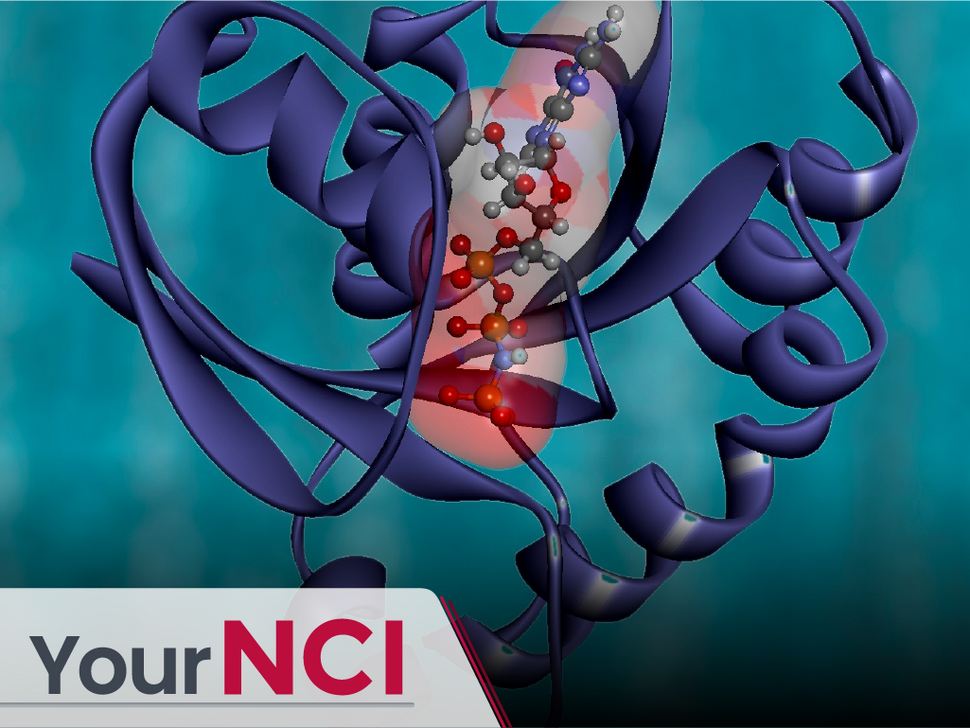
Mutations in KRAS are involved in nearly a third of all cancers.
Credit: National Cancer Institute
The U.S. National Cancer Institute is the largest funder of cancer research in the world. Federal taxpayer dollars support cancer research conducted in NCI laboratories and at cancer centers, hospitals, community clinics, and universities across the United States and around the world. This is part of a series of Your NCI blog posts and videos highlighting NCI’s role in supporting the fundamental research that has led to major advances against cancer.
Mutations in a family of genes called RAS, and the rogue proteins they produce, help drive roughly a third of all cancers, including more than 90% of pancreatic cancers. Yet RAS has long been one of the most elusive drug targets in cancer research. Unlike other proteins targeted by cancer drugs, RAS proteins have relatively smooth surfaces, with no obvious place for a drug molecule to bind. That made RAS notoriously “undruggable.”
Despite the long odds, federally funded research continued to push the field forward. Researchers eventually revealed the structure of RAS proteins and how they function, and those insights led to new approaches for blocking mutant RAS, particularly KRAS, which is involved in the vast majority of RAS-driven cancers.
Today, three RAS inhibitors—sotorasib (Lumakras), adagrasib (Krazati), and, most recently, daraxonrasib (Rasonque)—are helping patients live longer, and many additional molecules that block mutant RAS are moving through the research pipeline.
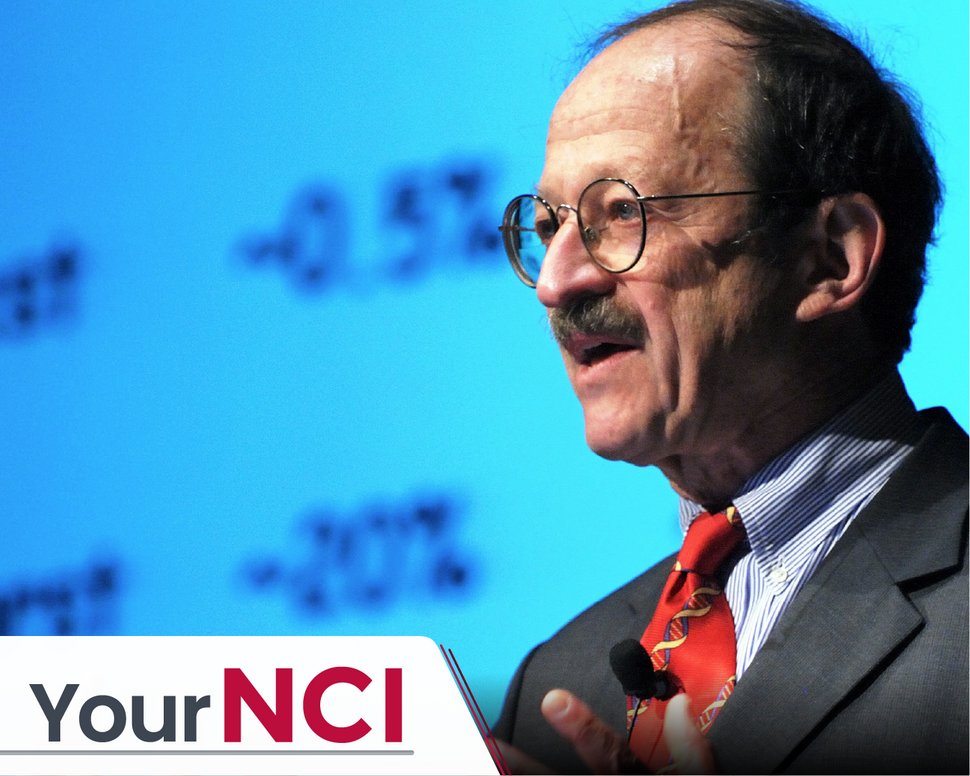
Harold Varmus
Credit: National Cancer Institute
These life-changing drugs would not have been possible without the sustained public investments that laid the groundwork for the field, said Harold E. Varmus, M.D., former Director of the National Cancer Institute (NCI) and the National Institutes of Health, who launched NCI’s RAS Initiative.
“This is not a Johnny-come-lately enterprise,” he pointed out. “This work dates back a very long time and required huge resources and a lot of determination and intellect of people who were supported by NCI.”
Revealing the Biology of RAS
RAS proteins normally act like molecular switches, turning signals for cell growth on and off. Some mutant forms of RAS become stuck in the “on” position, sending continuous growth signals that can help turn a normal cell cancerous.
Although there are three major forms of RAS—KRAS, NRAS, and HRAS—most research has focused on KRAS, which is involved in up to 95% of pancreatic cancer cases, up to 45% of colorectal cancer cases, and up to 30% of lung cancer cases.
Before researchers could figure out how to stop mutant RAS, they first had to understand how these proteins worked. That foundation was built through decades of basic research.
Your National Cancer Institute. Taking on the RAS Challenge.
“Any discussion about the role of RAS and human cancer has to be traced back many years to the National Cancer Act in 1971, to the contingent of people who were gathered and supported by the National Cancer Institute to study the viruses that cause cancers in animals and the ability to determine that those viruses use genes that they have acquired from normal cells to cause cancer,” Varmus said.
In the late 1970s and early 1980s, Edward Scolnick, M.D., and his colleagues at NCI helped establish that RAS genes carried by cancer-causing viruses originated from normal cellular genes. They also helped identify and characterize the RAS proteins, showing that the proteins bind to molecules called GDP and GTP and attach to the cell membrane. Those discoveries laid the groundwork for understanding how RAS functions as a molecular switch.
“That was a brilliant decade of research, all funded by the NCI,” said Frank McCormick, Ph.D., of the University of California, San Francisco, who was tapped by Varmus to lead the RAS Initiative.
Understanding how RAS worked, however, was only half the battle. Researchers were still stumped by how to block mutant RAS.
“We had to do some serious head-scratching to figure out how to find drugs that hit that protein,” McCormick said.
A major breakthrough came in 2013, when Kevan Shokat, Ph.D., of the University of California, San Francisco, and colleagues reported in Nature the discovery of a hidden pocket in mutant KRAS proteins. They developed a molecule that could fit inside this pocket and showed that it was effective against a mutant-KRAS cancer cell line.
That same year, coinciding with a groundswell of support from the patient advocacy community, NCI launched the RAS Initiative at Frederick National Laboratory for Cancer Research, bringing together academic government, and industry around the shared goal of developing RAS therapies.
Built as a hub connecting researchers in government, academia, and industry, the RAS Initiative has generated structural and biochemical information about RAS, developed assays and other research tools, and broadly shared reagents and resources with the scientific community. The initiative also led to the co-discovery of three investigational compounds now being tested in clinical trials: BBO-8520, BBO-11818, and BBO-10203.
“The government and the National Cancer Institute really had the resources to put the whole team together,” McCormick said. “We knew it would be a big team effort right from the start.”
Improving Patient Lives
Several RAS inhibitors have already reached patients.
In May 2021, FDA approved the first KRAS inhibitor, sotorasib, to treat people with non-small cell lung cancer that has a KRAS G12C mutation. In December 2022, FDA granted accelerated approval to adagrasib for people with locally advanced or metastatic non-small cell lung cancer with the same mutation.
Newer RAS inhibitors, such as daraxonrasib, target multiple RAS mutations. These broader-acting drugs have shown effectiveness against metastatic pancreatic cancer, a disease that historically has had few treatment options.
On August 26, 2026, FDA approved daraxonrasib for metastatic pancreatic cancer. The approval was based on results of RASolute 302, a phase 3 trial involving 500 people. Median overall survival was 13.2 months with daraxonrasib, compared with 6.7 months with standard chemotherapy.
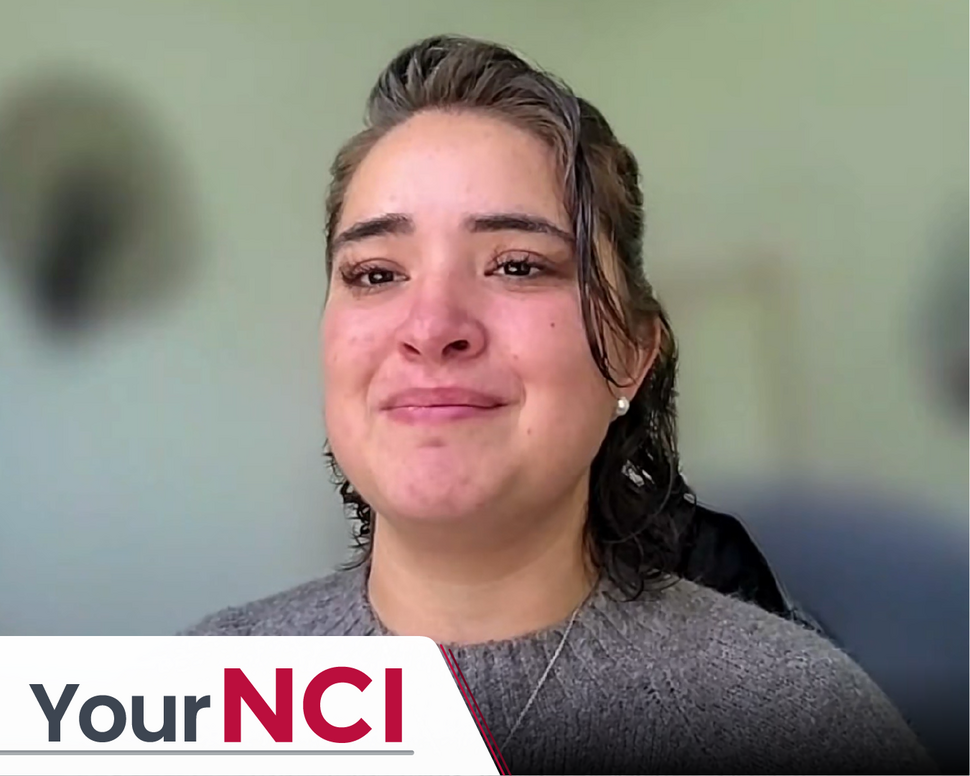
Paula participated in a clinical trial of daraxonrasib.
Credit: National Cancer Institute
For new mom Paula, daraxonrasib has been “life-changing.” Diagnosed with stage 4 pancreatic cancer six months after giving birth, she initially received intensive chemotherapy.
“That was really rough,” she said. “I would stay in bed for a week, and it was really difficult to get up and be mobile. I would walk maybe two, three steps, and I would be out of breath completely.”
About nine months later, her oncologist told her about a clinical trial of daraxonrasib. Paula enrolled in the trial and was randomly assigned to receive the experimental drug. Her hair grew back and she started feeling like herself again.
“When you're given essentially a death sentence, you're holding on by strings, and you're holding on to that last bit of faith,” she said. “What this drug allowed me to do was be able to be present every day, even with side effects here and there. It brings hope.”
Continuing the Investments
Paula’s experience shows how decades of research on RAS are beginning to change what is possible for patients. But researchers say there is still much more work to do.
“The development of daraxonrasib has had a huge impact on the community,” McCormick said. “The next generation of drugs will be even better and have fewer side effects.”
What was once a moving target, RAS is now squarely in the research community’s crosshairs. As additional RAS inhibitors advance through clinical trials, NCI is continuing to support the fundamental research needed to develop more effective drugs, overcome resistance, and benefit more patients.
For Paula, that progress has been a gift: “There are days where I don’t remember that I even have cancer.”