
Clinical Trial Results - Cancer Currents Blog
Reports on findings from cancer clinical trials, with commentary from leading researchers on how the trial results will affect patient care.
-
 FDA Approval Likely to Change Initial Treatment for Some People with Advanced Colorectal Cancer
FDA has approved the combination of the immunotherapy drugs ipilimumab (Yervoy) and nivolumab (Opdivo) for the initial treatment of people with advanced colorectal cancer whose tumors are classified as MSI-H or dMMR.
-
 Are New Immune-Based Treatments for Kidney and Pancreatic Cancer on the Horizon?
In small trials, personalized treatment vaccines appeared to prevent cancer from returning in patients who had successful surgery to remove their tumors. The treatments, which were created based on intensive analyses of patients’ tumors, appeared to be safe.
-
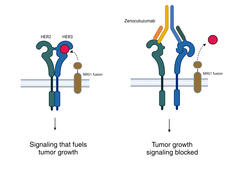 Zenocutuzumab Approved to Treat Lung and Pancreatic Cancers with Rare Genetic Change
FDA has approved zenocutuzumab (Bizengri) to treat people with pancreatic or non-small cell lung cancer whose tumors have a rare genetic alteration called an NRG1 fusion. The approval is based on a clinical trial in which the drug shrank tumors in a third of patients.
-
 Intensive Program Helps People Being Screened for Lung Cancer Quit Smoking
Results from a large NCI-funded clinical trial show that a comprehensive program that integrates intensive counseling and cessation medications may be a particularly effective way to help smokers being screened for lung cancer quit.
-
 Combination Therapy for Metastatic Prostate Cancer Helps Some Men Live Longer
For men with metastatic castration-resistant prostate cancer, initial treatment with enzalutamide (Xtandi) combined with talazoparib (Talzenna) may help them live longer than getting enzalutamide alone, according to updated results from a large clinical trial.
-
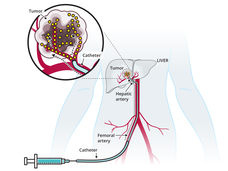 TACE-Based Treatment Combinations Effective Against Intermediate-Stage Liver Cancer
Results from two clinical trials show that combining a procedure called TACE with an immunotherapy drug and angiogenesis inhibitor improves how long people with intermediate-stage liver cancer live without their disease returning or getting worse.
-
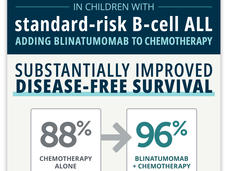 Blinatumomab Boosts Chemotherapy as Initial Treatment for Some Kids with ALL
Following positive results from a clinical trial, the immunotherapy drug blinatumomab (Blincyto) is expected to become part of the standard initial treatment for many kids with B-cell acute lymphoblastic leukemia, the most common form of childhood cancer.
-
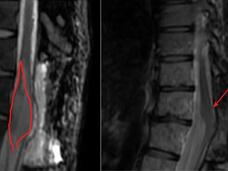 Experimental CAR T-Cell Therapy Shrinks Tumors in Children with Deadly Brain Cancer
In a small clinical trial, an experimental CAR T-cell therapy that targets the protein GD2 on cancer cells shrank tumors—for 2 years or more in several cases—in children and young adults with diffuse midline glioma, an aggressive brain and spinal cord cancer.
-
 Cetuximab Outperforms Durvalumab for Head and Neck Cancer When Cisplatin Isn’t an Option
The findings from a recent NCI-supported clinical trial are helpful because previous studies for people with locally advanced head and neck cancer have yielded conflicting data for and against several alternatives to cisplatin combined with radiation.
-
 Helping Kids with Cancer Speak for the Supportive Care They Need
Younger cancer patients who filled out surveys about their symptoms experienced fewer cancer-related symptoms than those who did not complete the surveys, results from two clinical trials have shown. The findings show patient-reported outcome (PRO) surveys for children can give an accurate picture of how a child is feeling during the stress of treatment.
-
 Trial Results Support SBRT as a Standard Option for Some Prostate Cancers
In a trial, men who received stereotactic body radiotherapy (SBRT) didn’t have a higher risk of cancer recurrence than men treated with other common radiation therapy regimens that are given over longer periods.
-
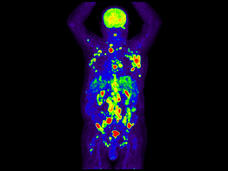 Nivolumab Appears to Boost Cure Rate in Advanced Hodgkin Lymphoma
In a nearly 1,000-patient trial, treatment with nivolumab (Opdivo) and the chemotherapy regimen AVD was better at eliminating cancer and keeping it at bay than the current standard initial treatment for the disease, AVD and brentuximab (Adcetris). The nivolumab combination also had fewer side effects.
-
 Bladder Cancer Trial Finds Extended Lymph Node Surgery Doesn’t Improve Survival
A randomized clinical trial comparing two types of surgery in people with localized muscle-invasive bladder cancer found that more extensive surgery removing a larger group of lymph nodes did not improve survival, compared with standard lymph node surgery.
-
 Delivering Palliative Care by Telehealth Meets the Needs of People with Cancer
In a study of people with advanced lung cancer, palliative care delivered via telehealth was just as effective at improving patients’ quality of life and other measures of well-being as care delivered in person.
-
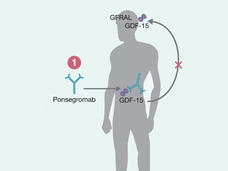 Will Ponsegromab Be a Game Changer for Cancer Cachexia?
In a clinical trial, people with advanced cancer and cachexia treated with the experimental drug ponsegromab gained an average of 2 to 6 pounds over 12 weeks, depending on the dose they received. Participants treated with the placebo lost an average of 1 pound over the same time period.
-
 Combination Chemo Helps People with Leiomyosarcoma Live Longer
Results from a French clinical trial have identified what experts say should now be the recommended initial treatment of advanced leiomyosarcoma. In the trial, the combination of trabectedin (Yondelis) and doxorubicin improved survival by a median of 9 months.
-
 Clinical Trial Results Support Uninterrupted Use of Imatinib for Some Gastrointestinal Stromal Tumors
Trial participants who stopped imatinib had a more rapid worsening of disease, a shorter time until resistance, and did not live as long as participants who continued the therapy uninterrupted.
-
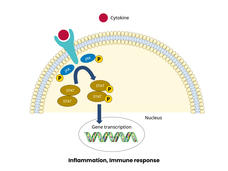 Drug Combo JAKs Up Immunotherapy in Two Clinical Trials
Scientists have been searching for ways to make immune checkpoint inhibitors work for more patients. In two trials, researchers explored a possible role for JAK inhibitors, which dampen chronic inflammation.
-
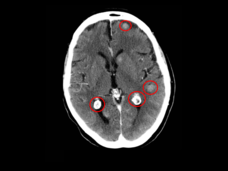 Lorlatinib Slows Growth of ALK-Positive Lung Cancers, May Prevent Brain Metastases
Lorlatinib (Lorbrena) is superior to crizotinib (Xalkori) as an initial treatment for people with ALK-positive advanced non-small cell lung cancer, according to new clinical trial results. Treatment with lorlatinib also helped prevent new brain metastases.
-
 Trial Establishes Preferred Treatment for Some People with Esophageal Cancer
For people with locally advanced esophageal cancer, a chemotherapy regimen called FLOT is the preferred treatment, according to results from a large clinical trial. People treated with FLOT lived much longer than those treated with the CROSS regimen.