
Cancer Currents: An NCI Cancer Research Blog
A blog featuring news and research updates from the National Cancer Institute.

-
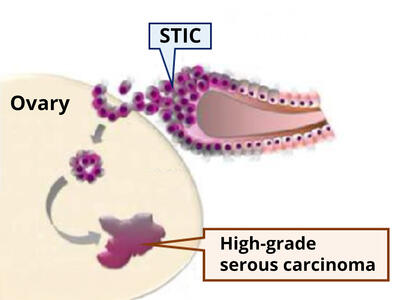
A subgroup of mesenchymal stem cells, called high-risk MSCs, appears to fuel the formation of cancerous lesions in the fallopian tubes and the lesions’ transition to ovarian cancer, a study has found.
-
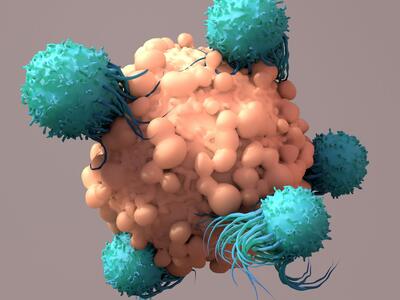
In small trials, personalized treatment vaccines appeared to prevent cancer from returning in patients who had successful surgery to remove their tumors. The treatments, which were created based on intensive analyses of patients’ tumors, appeared to be safe.
-

Documented conversations on goals of care are uncommon in AYA patients with advanced cancer. Researchers found that many patients did not have these discussions until the last month of life, and many asked about palliative care.
-
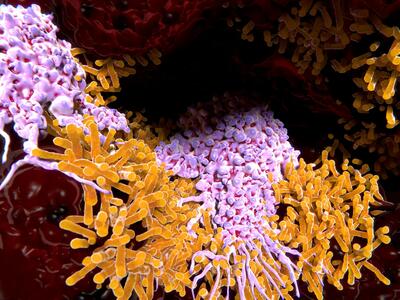
Some cancers come back many years after successful treatment, often as metastatic disease. Researchers believe if and how this happens is heavily influenced by dormant cancer cells and their interaction with the immune system.
-
Researchers have developed a form of cancer treatment that uses fat cells engineered to aggressively consume nutrients like glucose. When implanted in mice, the engineered cells appeared to outcompete tumors for nutrients, shrinking tumors.
-
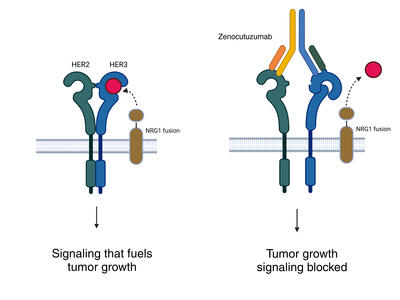
FDA has approved zenocutuzumab (Bizengri) to treat people with pancreatic or non-small cell lung cancer whose tumors have a rare genetic alteration called an NRG1 fusion. The approval is based on a clinical trial in which the drug shrank tumors in a third of patients.
-

Results from a large NCI-funded clinical trial show that a comprehensive program that integrates intensive counseling and cessation medications may be a particularly effective way to help smokers being screened for lung cancer quit.
-

For men with metastatic castration-resistant prostate cancer, initial treatment with enzalutamide (Xtandi) combined with talazoparib (Talzenna) may help them live longer than getting enzalutamide alone, according to updated results from a large clinical trial.
-
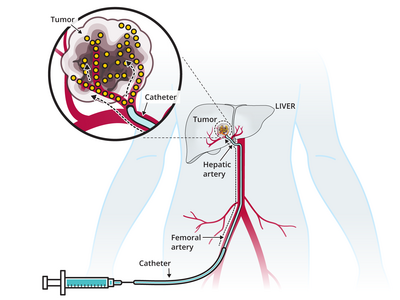
Results from two clinical trials show that combining a procedure called TACE with an immunotherapy drug and angiogenesis inhibitor improves how long people with intermediate-stage liver cancer live without their disease returning or getting worse.
-
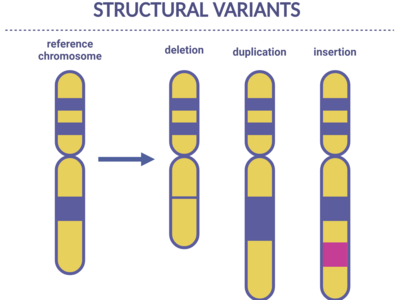
Certain inherited genetic changes are likely involved in the development of some cancers in children, a new study shows. The changes, called structural variants, were linked with a small percentage of children with neuroblastoma, Ewing sarcoma, and osteosarcoma.