
Cancer Currents: An NCI Cancer Research Blog
A blog featuring news and research updates from the National Cancer Institute.

-

Studies continue to show disparities in cancer outcomes for people who live in rural parts of the United States. NCI’s Dr. Robert Croyle explains how the institute is working with multiple partners to better understand and address these disparities.
-

Researchers who study exceptional responders—patients who have dramatic and long-lasting responses to treatments for cancer that were not effective for most similar patients—met recently to discuss the state of the science in this emerging field.
-

A conservative approach to lymph node removal surgery may be best for people with melanoma that has spread from the skin to one or a small number of nearby lymph nodes, new results from a large international clinical trial suggest.
-

NCI has released an online, open-access cancer research resource for the Genomic Data Commons called the Data Analysis, Visualization, and Exploration Tools, or DAVE.
-
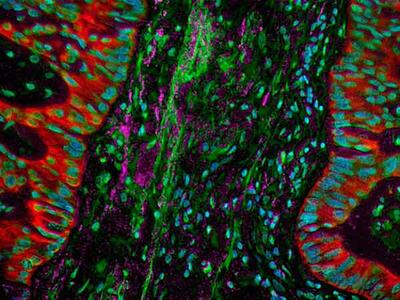
The FDA has approved the targeted therapy ceritinib as an initial treatment for patients with lung cancer that has a mutation in the ALK gene.
-

FDA approved pembrolizumab for patients with solid tumors that have specific genetic features, called mismatch repair deficiency and high microsatellite instability. This is the first approval based on a genetic feature, rather than cancer type.
-

In two large clinical trials, adding the hormone-blocking drug abiraterone to androgen-deprivation therapy (ADT) allowed men with metastatic hormone-sensitive prostate cancer to live longer than men who were treated with ADT alone.
-
 Trastuzumab Emtansine Improves Survival in Previously Treated Metastatic HER2-Positive Breast Cancer
Two clinical trials show that trastuzumab emtansine (T-DM1) improves survival compared with other standard treatments for patients with HER2-positive metastatic breast cancer that has progressed after treatment with other HER2-targeted drugs.
-
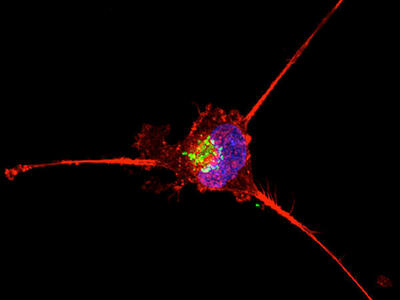
Using one of the largest collections of tumor samples from African Americans with breast cancer, researchers tried to assess the extent to which the molecular characteristics on these tumors might help to explain breast cancer disparities.
-
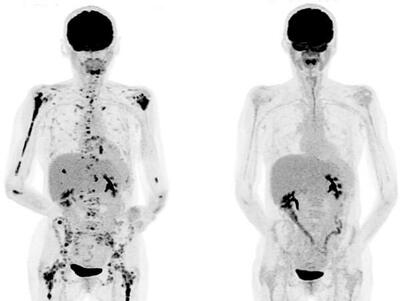
Results from two early-phase trials presented at the American Society of Clinical Oncology annual meeting suggest that an immunotherapy using genetically engineered immune cells may be effective in patients with advanced multiple myeloma.