
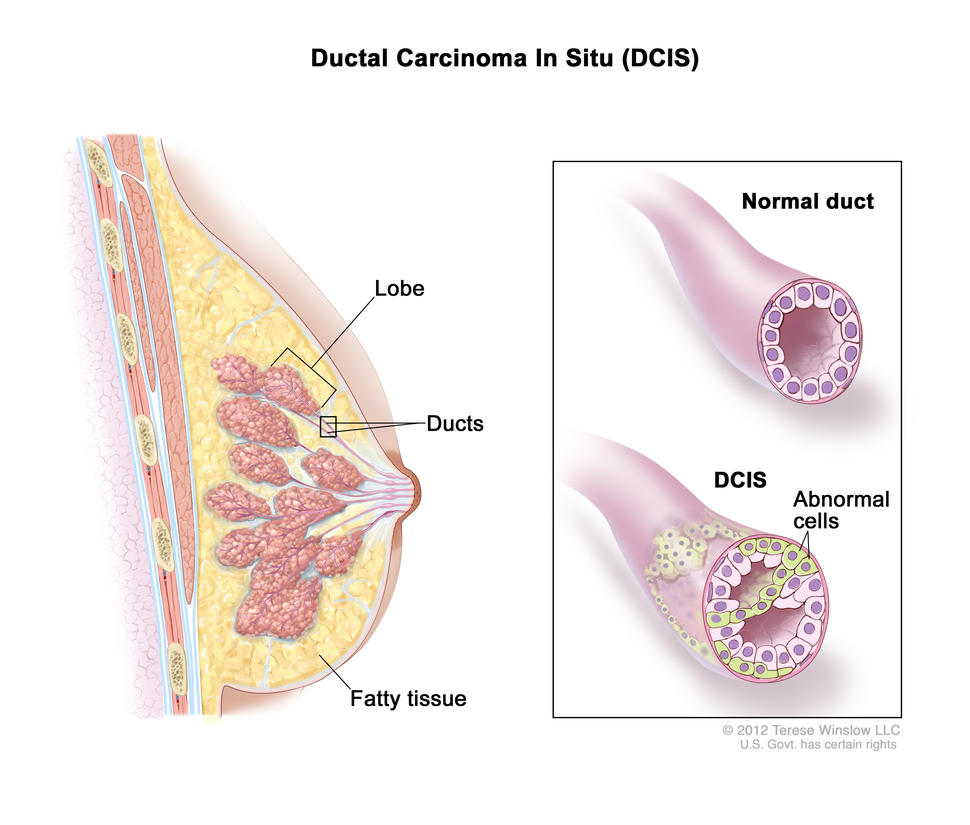
What is DCIS?
Ductal carcinoma in situ (DCIS) is a condition in which abnormal cells form in the lining of the milk ducts but have not broken out of the milk ducts and spread to other breast tissue. DCIS is not cancer, but it may be called precancer because it may spread beyond the milk ducts to other parts of the breast or body, becoming invasive cancer. About 20%–25% of new breast cancer cases in the United States each year are DCIS. DCIS may also be called noninvasive breast cancer, intraductal carcinoma, or stage 0 breast cancer.
What are symptoms of DCIS?
How is DCIS diagnosed?
If you have symptoms or screening test results that suggest DCIS, your doctor will need to find out if they are due to DCIS or another condition. Mammograms, which are x-ray images of breast tissue, can reveal signs of DCIS called breast calcifications that appear as white specks on the image. Additional tests may include:
- Biopsy. In a biopsy, a surgeon removes cells or tissue so a pathologist can study them under a microscope. This will show whether the abnormal area is DCIS or whether the abnormal cells have spread to nearby tissue and become invasive breast cancer. The biopsy results will also reveal the tumor grade. Learn more about biopsies and biopsy results at How Breast Cancer Is Diagnosed.
- Biomarker tests. These will check the abnormal cells for hormone receptors and help plan treatment. Although the amount of HER2 protein in breast cancer cells is a biomarker for invasive breast cancer, DCIS cells usually are not tested for HER2. Learn more about biomarker tests at Tests for Breast Cancer Biomarkers.
How is DCIS treated?
Although DCIS is not technically cancer because it has not spread beyond where it formed, it is treated like cancer because doctors don’t know which cases of DCIS will become invasive and spread to other parts of the body. Treatment for people with DCIS may include:
- Surgery. DCIS is almost always treated with surgery. Lumpectomy (breast-conserving surgery) is often used, but mastectomy may be recommended if the DCIS is large or found in multiple areas of the breast. The surgeon may also remove the underarm lymph node closest to the DCIS in a procedure called sentinel lymph node biopsy. Learn more about Sentinel Lymph Node Biopsy and Breast Cancer Surgery.
- Radiation therapy. If you have a lumpectomy, you will probably receive radiation therapy to the remaining breast tissue. However, you may not need radiation therapy if you have a mastectomy. Learn more about Radiation for Breast Cancer.
- Hormone therapy. You may receive hormone therapy if you were diagnosed with DCIS that has hormone receptors. Learn more about Hormone Therapy for Breast Cancer.
What is the survival rate and prognosis for people with DCIS?
People with DCIS have an excellent prognosis, and most can be cured with treatment.
Doctors estimate DCIS prognosis by using statistics collected over many years from people with DCIS. One statistic that is commonly used in making a prognosis is the 5-year relative survival rate. The 5-year relative survival rate tells you what percent of people with the same type and stage of breast cancer are alive 5 years after their cancer was diagnosed, compared with people in the overall population.
More than 98% of people diagnosed with DCIS are alive 5 years after their diagnosis. DCIS is also less likely to recur than invasive forms of breast cancer.
Learn more about Breast Cancer Prognosis and Survival Rates.