
Types of radiation therapy for breast cancer
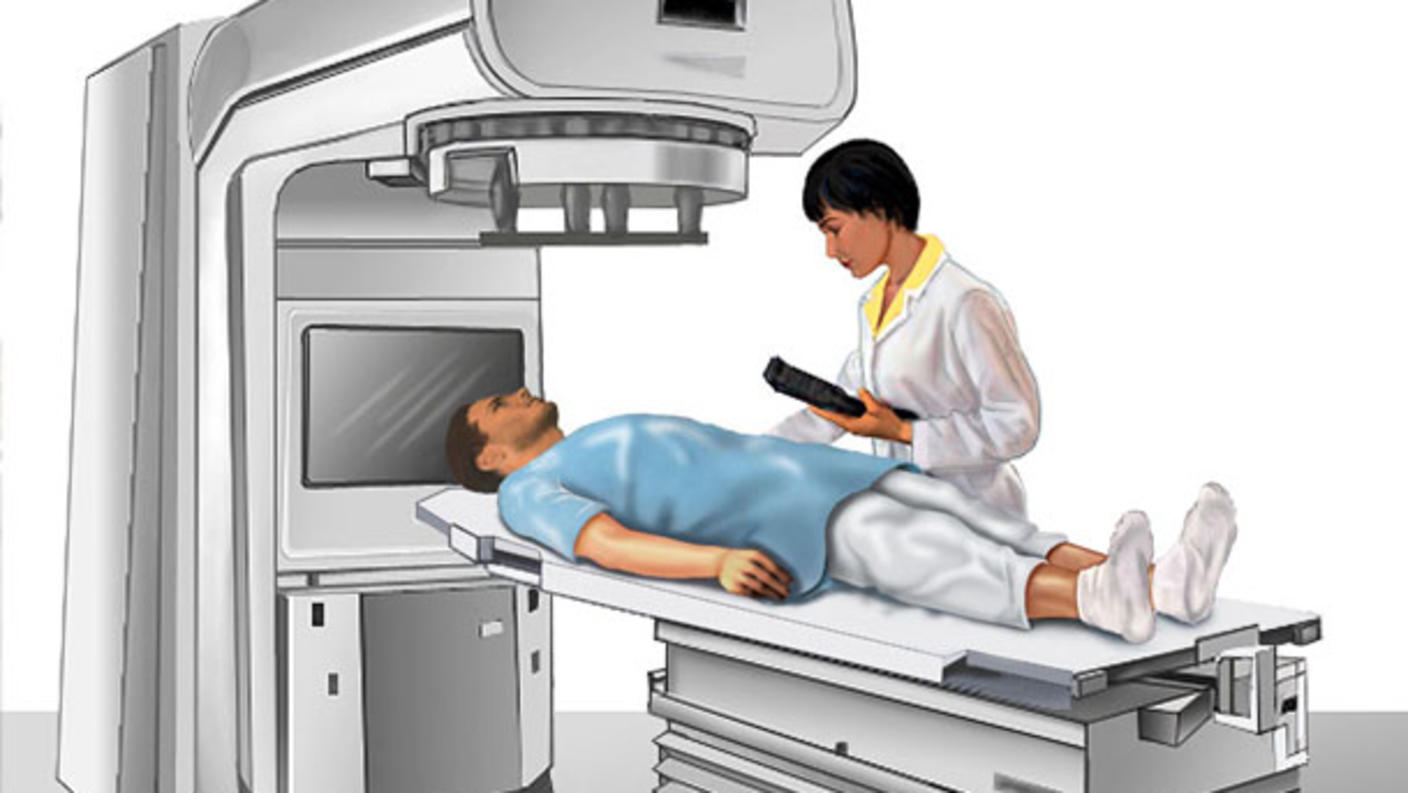
External beam radiation therapy and brachytherapy (internal radiation therapy) are the main types of radiation therapy used for breast cancer. External beam radiation therapy comes from a machine that aims radiation at the cancer. For internal radiation therapy, the radiation source is placed inside the body near the cancer.
External beam radiation therapy for breast cancer
External beam radiation therapy is a local treatment, which means it treats a specific part of your body. It may be given to the whole breast or chest, or to the part of the breast where the cancer is or where it was located before it was removed by surgery. Most of the time, you will get external beam radiation therapy as an outpatient.
Radiation therapy for breast cancer usually begins about a month or two after surgery. That is because radiation therapy can slow wound healing. If you are also receiving chemotherapy, radiation therapy usually starts about a month after you have finished chemotherapy. You can have radiation at the same time as you are receiving some other treatments, such as hormone therapy or targeted therapy.
Whole breast radiation therapy
With this type of radiation therapy, an x-ray machine delivers radiation to either the whole breast, or, if done after mastectomy, to the entire chest wall. Sometimes, radiation will also target the lymph nodes in the armpit or neck area or under the breastbone. Most people have treatment once a day, Monday through Friday, for about 5 to 6 weeks. In some cases, it may be done in 4 weeks or less. Your doctor will recommend the treatment regimen that is right for you.
Partial breast external beam radiation therapy
Two techniques are commonly used to give external beam radiation treatment to the area where the cancer is or where it was located before it was removed by surgery:
- Three-dimensional conformal external beam radiation (3DCRT) shapes the radiation beams to match the tumor’s shape, delivering a fixed dose of radiation from many directions.
- Intensity-modulated radiation therapy (IMRT) also aims the radiation beams at the tumor from many directions. But IMRT also varies the intensity of radiation across the treatment area to allow higher doses of radiation to be given in areas needing more treatment and lower doses to be given in areas near sensitive organs or tissues.
Most people have treatment once a day, Monday through Friday, for 2 to 4 weeks.
Researchers are looking at other ways to adjust the radiation dose or schedule to reach the total dose of radiation more quickly or to limit damage to healthy cells.
- Accelerated fractionation is treatment given in larger daily or weekly doses to reduce the number of weeks of treatment.
- Hyperfractionation is a smaller dose than the usual daily dose of radiation given more than once a day.
- Hypofractionation is larger doses given once a day or less often to reduce the number of treatments.
Intraoperative radiation therapy
Intraoperative radiation therapy is a type of external beam radiation therapy in which a single dose of radiation therapy is delivered to the tumor site during surgery.
Brachytherapy for breast cancer
Brachytherapy (also called internal radiation therapy) is sometimes used after breast-conserving surgery. It involves placing radioactive material using seeds, pellets, or needles in the area where the cancer was removed. The radiation only reaches a small area around the surgical site, where the risk of recurrence is highest.
Intracavitary brachytherapy
Intracavitary brachytherapy is the most common type of brachytherapy for breast cancer. In this form of brachytherapy, a balloon, applicator, or similar device is inserted into the space where the cancer was, either during or a few days after breast-conserving surgery. A radioactive pellet is placed into the device during each treatment session and then removed after each treatment.
Treatments usually last about 5 to 10 minutes and are given 2 times a day for 5 days. After about 2 weeks, the device is removed. You may need stitches to close the hole when treatment is complete.
Interstitial brachytherapy
In interstitial brachytherapy, several small tubes, called catheters, are inserted into the tissue where the breast cancer was and stitched in place. This is most often done 1 to 2 weeks after surgery. A radiation source, such as radioactive pellets or seeds, is temporarily placed into the catheters during each treatment session. Treatments usually last about 20 minutes. Two kinds of sources, high-dose implants and low-dose implants, can be used:
- High-dose implants: If you receive high-dose implants, the radiation is delivered once or twice a day for about 5 days. You will be able to leave the hospital after each treatment, and you will not remain radioactive after. It is safe to be around others, including babies and children.
- Low-dose implants: If you receive low-dose implants, treatment can be delivered over several hours to days. The radiation source stays in place and is slowly delivered to the tissue around the catheters. You will stay in the hospital throughout treatment to avoid exposing others to radiation. The radiation source and catheters are removed when treatment is complete. Then you can go home.
Permanent breast seed implant (PBSI)
PBSI involves placing permanent radioactive seeds into the breast tissue around the area where the cancer was removed. The seeds emit radiation at a low dose. Although the seeds remain in the body, they lose their radioactivity over time and do not need to be removed. This is a one-time procedure that usually does not require a hospital stay.
Intravenous radiation
Intravenous radiation with strontium-89 (a radionuclide) is given as palliative therapy to relieve bone pain caused by breast cancer that has spread to the bones. Strontium-89 is injected into a vein and travels to the surface of the bones. Radiation is released and kills cancer cells in the bones.
Learn more about Brachytherapy to Treat Cancer.
Side effects of radiation therapy for breast cancer
Radiation kills or slows the growth of cancer cells and can also affect nearby healthy cells. Damage to healthy cells can cause side effects. Your experience may be different from someone else who is getting the same amount of radiation therapy to the same part of the body. Sometimes, people may have side effects that do not improve.
Possible early side effects of radiation therapy for breast cancer include:
- fatigue (feeling exhausted and worn out)
- hair loss in the area exposed to radiation
- skin changes, such as redness and dryness, in the area exposed to radiation
- breast tenderness or hardening
Problems from cancer treatment that begin 6 months or later after treatment and continue for months or years are called late effects.
Possible late effects of radiation therapy for breast cancer include:
- skin changes, such as redness and dryness, in the area exposed to radiation
- breast pain, tenderness, or hardening
- heart and lung problems
- bone weakness
- lymphedema
- second cancers, rarely
Learn more about Late Effects of Cancer Treatment.
Discuss potential side effects with your doctor or nurse so you know what to expect during and after treatment. Regular follow-up care and supportive care can help manage side effects that do occur.
Learn more about Living with Breast Cancer and Survivorship.