
Treating stages I–III triple-negative breast cancer
If the cancer is small enough to be removed by surgery, the first treatment for stages I–III (also called stages 1 through 3) TNBC will usually be lumpectomy or mastectomy.
- Lumpectomy removes the cancer and a small margin of healthy breast tissue around it but not the breast itself. Lumpectomy is sometimes called breast-conserving surgery.
- Mastectomy removes the whole breast that has cancer. Some of the lymph nodes under the arm may also be removed.
Learn more about Breast Cancer Surgery.
For larger tumors, chemotherapy may be given before surgery to shrink the cancer enough to make surgery possible and lessen the amount of breast tissue that needs to be removed during surgery. Additional drugs, such as the immunotherapy drug pembrolizumab, may be given with chemotherapy. Receiving treatment before surgery, called neoadjuvant therapy, may also improve long-term outcomes.
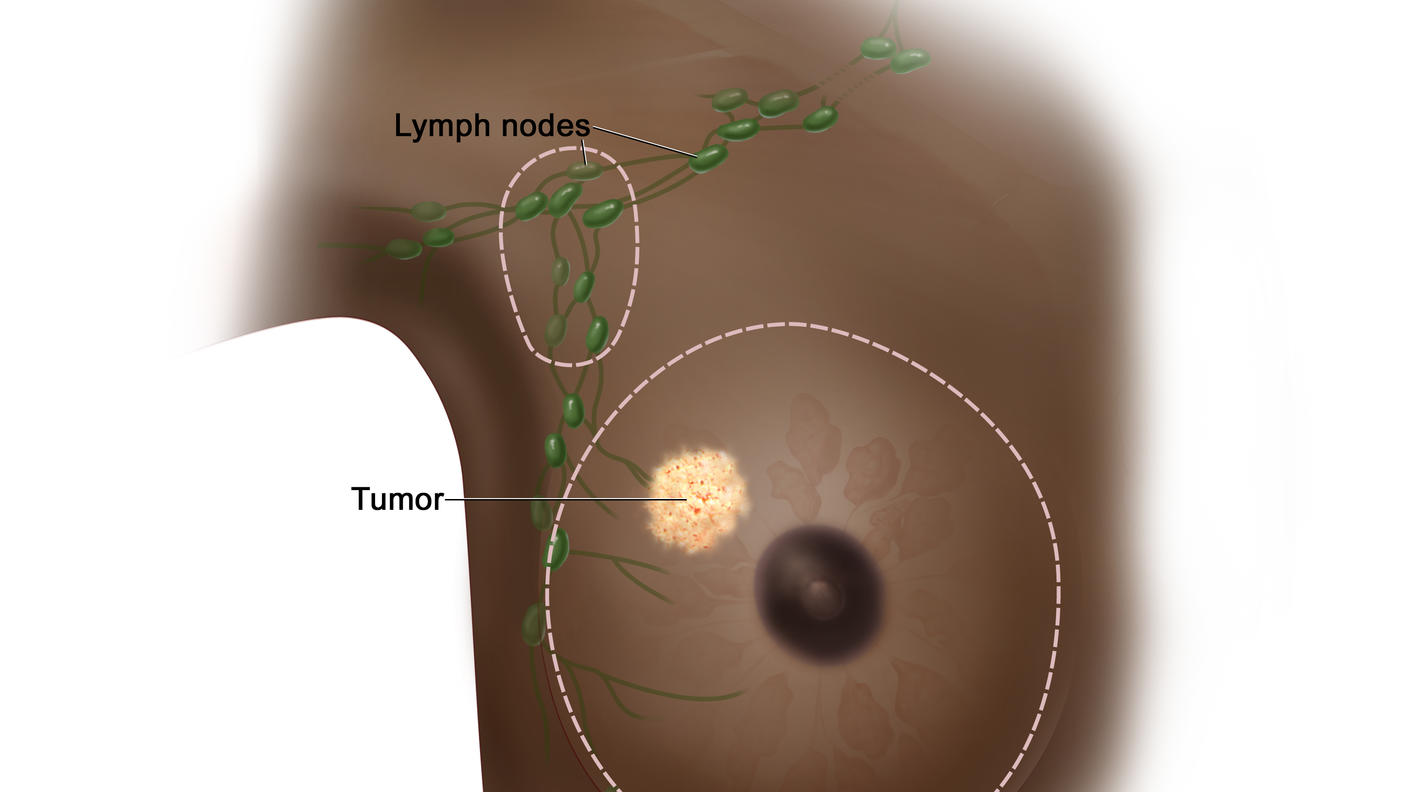
After surgery for TNBC, other treatments may be given to destroy any remaining cancer cells. These include:
- more chemotherapy
- more of the immunotherapy drug pembrolizumab
- the targeted therapy drug olaparib, for those with a BRCA1 or BRCA2 gene mutation and who received chemotherapy both before and after surgery
- radiation therapy, if cancer was found in or near lymph nodes or the tumor margin
Treating metastatic or stage IV (also called stage 4) triple-negative breast cancer
In metastatic (stage IV or stage 4) TNBC, the cancer has spread beyond the breast and nearby lymph nodes to distant parts of the body. Treatment for stage IV TNBC is focused on managing the disease and improving quality of life. Treatment options may include:
- chemotherapy, which is usually the first treatment
- targeted therapy, such as olaparib (for those with a BRCA1 or BRCA2 gene mutation) or sacituzumab govitecan
- immunotherapy with pembrolizumab
- surgery, such as a mastectomy, to improve symptoms caused by a painful breast tumor or skin lesions
- radiation therapy with strontium-89 to relieve pain from cancer that has spread to bones throughout the body
- radiation to the bones, brain, spinal cord, breast, or chest wall, or areas causing pain or discomfort
Treatment for recurrent triple-negative breast cancer
Treatment for TNBC that has recurred (come back) in distant parts of the body may be similar to treatment for stage IV breast cancer. When the cancer recurs locally, such as in the breast or nearby lymph nodes, surgery and radiation therapy may be an option to remove or shrink the tumor.
Learn more about treatments for breast cancer and breast cancer recurrence.
Clinical trials

Joining a clinical trial may be an option. There are different types of clinical trials for people with breast cancer. For example, a treatment trial tests new treatments or new ways of using existing treatments. Supportive care and palliative care trials look at ways to improve quality of life, especially for those who have side effects from cancer and its treatment.
You can use the clinical trial search to find NCI-supported cancer clinical trials that are accepting participants. This search allows you to filter trials based on the type of cancer, your age, and where the trials are being done. You can also review a list of NCI-supported Breast Cancer Clinical Trials. Clinical trials supported by other organizations can be found at ClinicalTrials.gov.
Learn more about clinical trials at Cancer Clinical Trial Information for Patients and Caregivers.