
Treatment of stage 0 breast cancer (ductal carcinoma in situ)
Ductal carcinoma in situ (DCIS) is a condition where abnormal cells form in the lining of the milk ducts but have not spread. It's not cancer, but it may develop into invasive cancer.
Treatment of ductal carcinoma in situ may include lumpectomy with radiation therapy, mastectomy with or without radiation, and hormone therapy if biomarker testing suggests it may be helpful.
To learn more about DCIS and how it is treated, visit Ductal Carcinoma in Situ.
Treatment of stages I to III breast cancer
Treatment of early-stage breast cancer, which includes stages I, IIA, and some stage IIB breast cancers, usually begins with surgery to remove the cancer. Surgery is often followed by additional therapy. If the tumor is large, chemotherapy or targeted therapy may be given before surgery to make the tumor smaller and easier to remove.
Treatment of locally advanced breast cancer, which includes some stage IIB breast cancers and stages IIIA, IIIB, and IIIC, often begins with chemotherapy, followed by surgery and radiation.
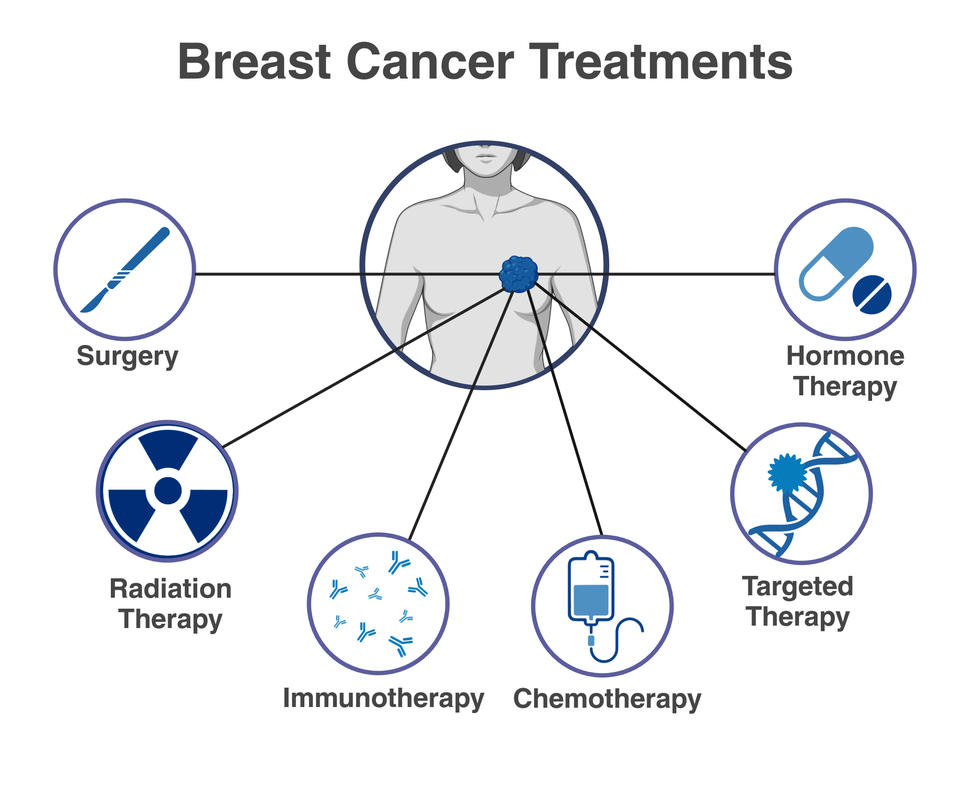
Treatment of stages I to III breast cancer may include:
- Surgery. Lumpectomy (breast-conserving surgery) is often used, but mastectomy may be recommended if the tumor is large or cancer is found in multiple areas of the breast or chest. The surgeon may also remove the underarm lymph node closest to the tumor in a procedure called sentinel lymph node biopsy. Learn more about Breast Cancer Surgery and Sentinel Lymph Node Biopsy.
- Radiation therapy. After surgery, you will likely have radiation therapy to the breast or the chest wall where the breast was removed to reduce the chance of breast cancer returning in the breast or the chest wall. However, you may not need radiation therapy if you have a mastectomy. Learn more about Radiation Therapy for Breast Cancer.
- Chemotherapy. You are more likely to receive chemotherapy if the tumor is high grade, in the lymph nodes, HER2-positive, or triple-negative. Whether chemotherapy is given before or after surgery depends on the size and location of the tumor and other factors. Learn more about Chemotherapy for Breast Cancer.
- Hormone therapy. If the cancer tests positive for estrogen receptor and/or progesterone receptor, or when the hormone receptor status of the cancer is unknown, you may receive hormone therapy as part of your treatment. Hormone therapy for breast cancer may begin before or after surgery. If you are premenopausal, you might also have treatment to stop the ovaries from making hormones. Learn more about Hormone Therapy for Breast Cancer.
- Immunotherapy. This cancer treatment is only used to treat triple-negative breast cancer. Learn about this type of cancer and how it is treated at Triple-Negative Breast Cancer and Immunotherapy for Breast Cancer.
- Targeted therapy. If biomarker tests suggest that the cancer is HER2-positive, hormone-receptor positive, or has a BRCA1 or BRCA2 mutation, you may receive targeted therapy. Targeted therapy for breast cancer may be given at different times in your treatment. It might be started before or after surgery. It can also be given even if surgery is not recommended for you. Learn more about Targeted Therapy for Breast Cancer.
Treatment of locoregional recurrent breast cancer
Sometimes breast cancer comes back after treatment. Locoregional recurrent breast cancer is cancer that has come back in the breast, the chest wall, or nearby lymph nodes after treatment. Learn more about Breast Cancer Recurrence and how it is treated.
Treatment of stage IV (metastatic) breast cancer
Breast cancer that has spread beyond the breast, chest wall, or nearby lymph nodes is called metastatic breast cancer. Treatment of metastatic breast cancer focuses on slowing the spread of the cancer and controlling the symptoms. Some of the treatments used for stages I to III breast cancer may also be used for metastatic breast cancer. The choice of treatments will partly depend on how the cancer responded to the treatments you have already received and what you want from treatment. Learn more about Metastatic Breast Cancer and how it is treated.