
Who gets targeted therapy for breast cancer?
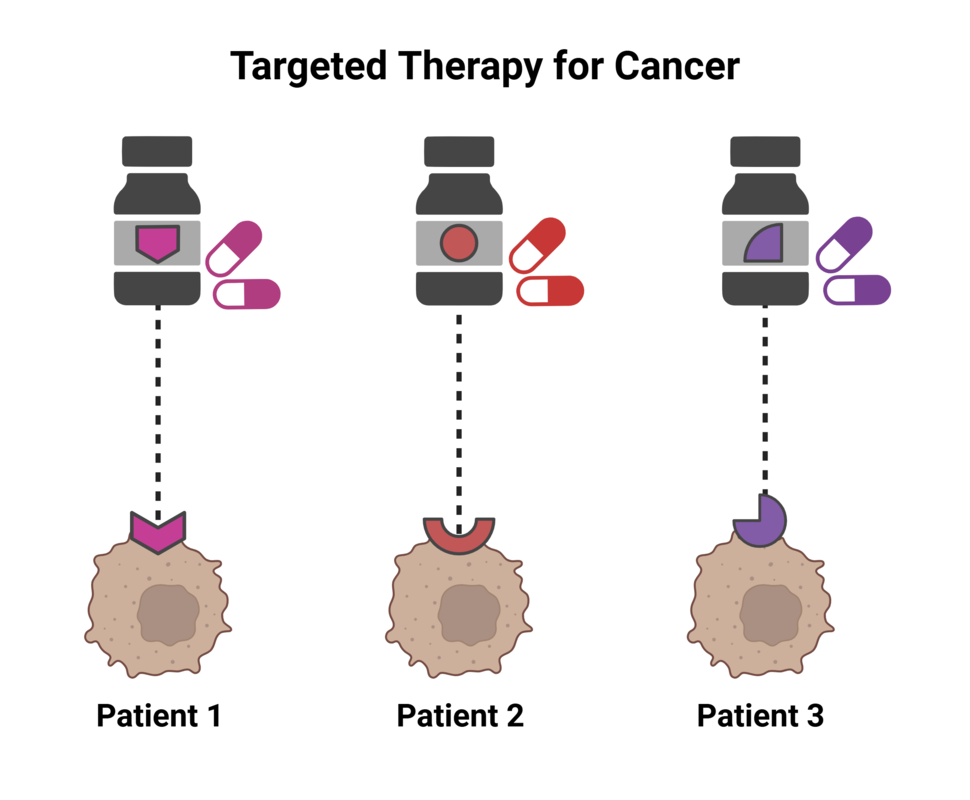
Many people with breast cancer get targeted therapy but not everyone. For example, targeted therapy may be an option for some people with:
- HER2-positive breast cancer
- hormone receptor–positive breast cancer
- triple-negative breast cancer
- breast cancer that has a BRCA1 or BRCA2 mutation
Once breast cancer is diagnosed, breast cancer cells are routinely tested for the presence of certain biomarkers or tumor features. These tests can help determine if you are likely to benefit from targeted cancer therapy. To learn more, visit Tests for Breast Cancer Biomarkers.
When is targeted therapy for breast cancer given?
Targeted therapy for breast cancer may be given at different times in your treatment. It might be started before or after surgery. It can also be given even if surgery is not recommended for you.
Targeted therapy for HER2-positive breast cancer
HER2 is a protein that helps control breast cell growth. Some breast cancers have too much HER2, which causes the breast cells to grow and divide faster than normal. This is called HER2-positive breast cancer.
Several targeted therapy drugs may be used alone or with other kinds of drugs for HER2-positive breast cancer:
- ado-trastuzumab
- lapatinib
- margetuximab
- neratinib
- pertuzumab
- pertuzumab, trastuzumab, and hyaluronidase
- tucatinib
- trastuzumab
- trastuzumab and hyaluronidase
- trastuzumab
Some of these targeted therapy drugs, such as trastuzumab and trastuzumab deruxtecan, may also be used for HER-low breast cancer. HER2-low breast cancers have a small amount of HER2 protein on their surface.
Targeted therapy for HER2-negative breast cancer
HER2 is a protein that helps control breast cell growth. Some breast cancers do not have higher-than-normal levels of HER2, so therapies that target HER2 do not work to kill these cancer cells. This is called HER2-negative breast cancer.
The following targeted therapy drugs may be used alone or with other kinds of drugs for HER2-negative breast cancer:
Targeted therapy for hormone receptor–positive breast cancer
In hormone receptor–positive (HR positive) breast cancer, the breast cancer cells have estrogen or progesterone receptors, or both.
The following targeted therapy drugs may be used alone or with other treatments, particularly hormone therapy:
- abemaciclib
- alpelisib
- capivasertib
- camizestrant
- datopotamab
- everolimus
- gedatolisib
- inavolisib
- palbociclib
- ribociclib
- sacituzumab
These drugs may be given with hormone therapy, such as an aromatase inhibitor (such as anastrozole, letrozole, or exemestane) or fulvestrant or letrozole, to treat hormone receptor–positive, HER2-negative breast cancer. Learn more about Hormone Therapy for Breast Cancer.
Targeted therapy for triple-negative breast cancer
Triple-negative breast cancer is estrogen receptor (ER) negative, progesterone receptor (PR) negative, and HER2 negative.
The targeted therapy drugs datopotamab, pembrolizumab, and sacituzumab may be used to treat triple-negative breast cancer.
Learn more about Triple-Negative Breast Cancer Treatment.
Targeted therapy for BRCA-positive breast cancer
BRCA1 and BRCA2 are genes that produce proteins that help fix damaged DNA. Certain changes, called mutations or pathogenic variants, in these genes can disrupt DNA repair and cause cancer to develop.
The following targeted therapy drugs may be used to treat BRCA1- or BRCA2-positive breast cancer:
Side effects of targeted therapy
The most common side effects of targeted therapy are diarrhea and liver problems. Other side effects may include mouth sores and hair and nail changes. Learn more about the side effects of cancer treatment and steps you can take to manage or prevent them.