
How Decades of NCI Support Led to Groundbreaking Discoveries: The Story of Immune Checkpoint Inhibitors
, by Linda Wang
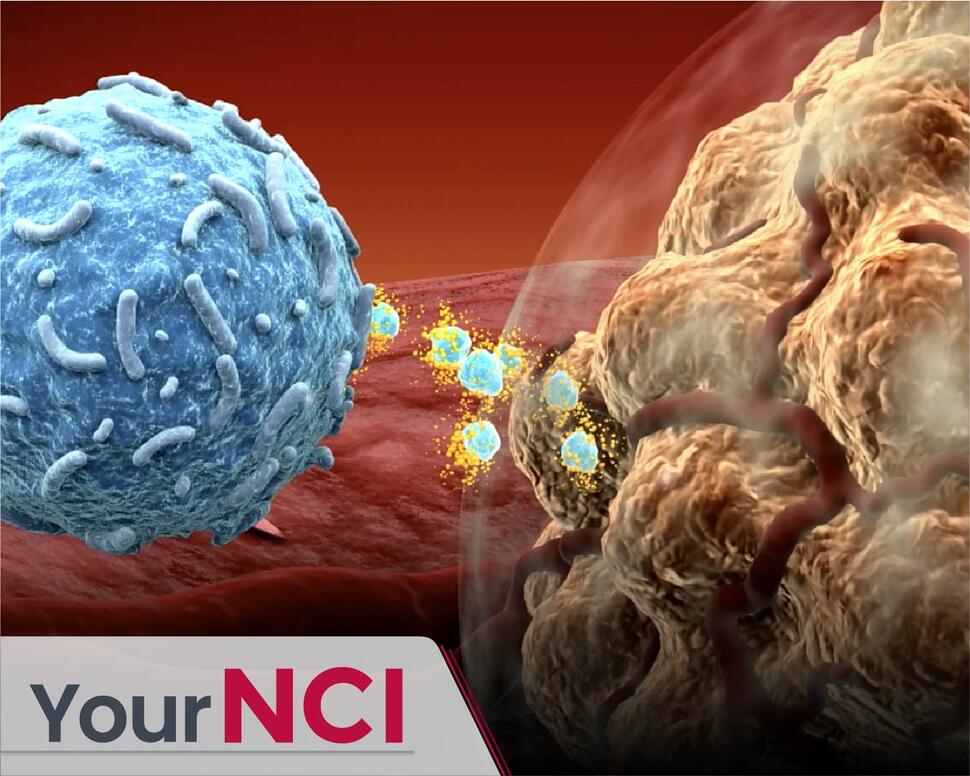
Pembrolizumab targets a protein called PD-1 that is expressed by immune cells. The protein puts the immune system’s brakes on, keeping its T cells from recognizing and attacking cancer cells. Pembrolizumab disables these brakes, allowing immune cells (blue) to shrink cancer tumors (right).
Credit: UCLA Jonsson Comprehensive Cancer Center
The U.S. National Cancer Institute is the largest funder of cancer research in the world. Federal taxpayer-supported funds sustain cancer research performed in NCI labs and at cancer centers, hospitals, community clinics, and universities across the United States and around the world. This is the first in a series of Your NCI blog posts and videos highlighting NCI’s role in funding the fundamental cancer research that has led to major cancer breakthroughs.
The development of immune checkpoint inhibitors has revolutionized cancer treatment. People with advanced melanoma, lung cancer, bladder cancer, and many other cancers are now living normal lives, and others are living longer, thanks to federally funded research that helped bring these immunotherapy drugs to patients.
Since the late 1970s, when the National Cancer Institute (NCI), part of the National Institutes of Health (NIH), started funding the basic research that advanced our understanding of how the immune system can fight cancer, the development of checkpoint inhibitor drugs and other immunotherapies ushered in a new era in cancer treatment.
“Decades of NIH-funded cancer research laid the foundation for immune checkpoint inhibitors by helping scientists understand the fundamentals of immunotherapy,” said NCI Clinical Director James Gulley, M.D., Ph.D..
Today, checkpoint inhibitor drugs such as pembrolizumab, marketed as Keytruda, are approved for more than 40 treatment indications in a wide variety of cancers.
Discovering the Immune System's Brakes
Immune checkpoint inhibitors work by helping the immune system recognize and attack cancer. The immune system relies on specialized cells called T cells to identify and destroy abnormal cells, including cancer cells. To prevent these powerful defenses from harming healthy tissue, the body uses molecular "checkpoints" that act like brakes, helping keep immune responses under control.
Cancer cells can exploit these checkpoints to evade the immune system. By activating checkpoint pathways, tumors can switch off nearby T cells and avoid destruction. Checkpoint inhibitors block these signals, releasing the brakes on the immune system and allowing T cells to recognize and destroy cancer cells.
Your National Cancer Institute - Driving Cancer Breakthroughs
Through critical funding and hands-on science across the cancer continuum, NCI plays an essential role in advancing research. In this video, we use the development of pembrolizumab to demonstrate how sustained, strategic, federal support turned curiosity into discovery and discovery into better outcomes for patients.
Years before the first checkpoint inhibitor entered clinical trials, NCI was supporting basic research to better understand how the immune system recognizes and responds to cancer. That work helped reveal the molecular pathways that tumors use to suppress immune responses.
“One of the initial proof of principles that the immune system could obliterate cancer came with research done right here at NCI,” and validated through clinical trials at cancer centers across the country, Gulley noted.
In the 1980s, Steven Rosenberg, M.D., Ph.D., chief of surgery at NCI's Center for Cancer Research, showed that taking cancer cells out of patients, or using a protein that could stimulate cancer cells, could lead to cancers shrinking away.
“This really laid the foundational work for what immunotherapy could become if we could find ways to get it involved more frequently,” Dr. Gulley said.
Around the same time, NCI was supporting academic researchers, such as James P. Allison, Ph.D., at the University of California, Berkeley, who were revealing additional insights into how cancer evades the immune system. Allison received his first NIH grant in 1979.
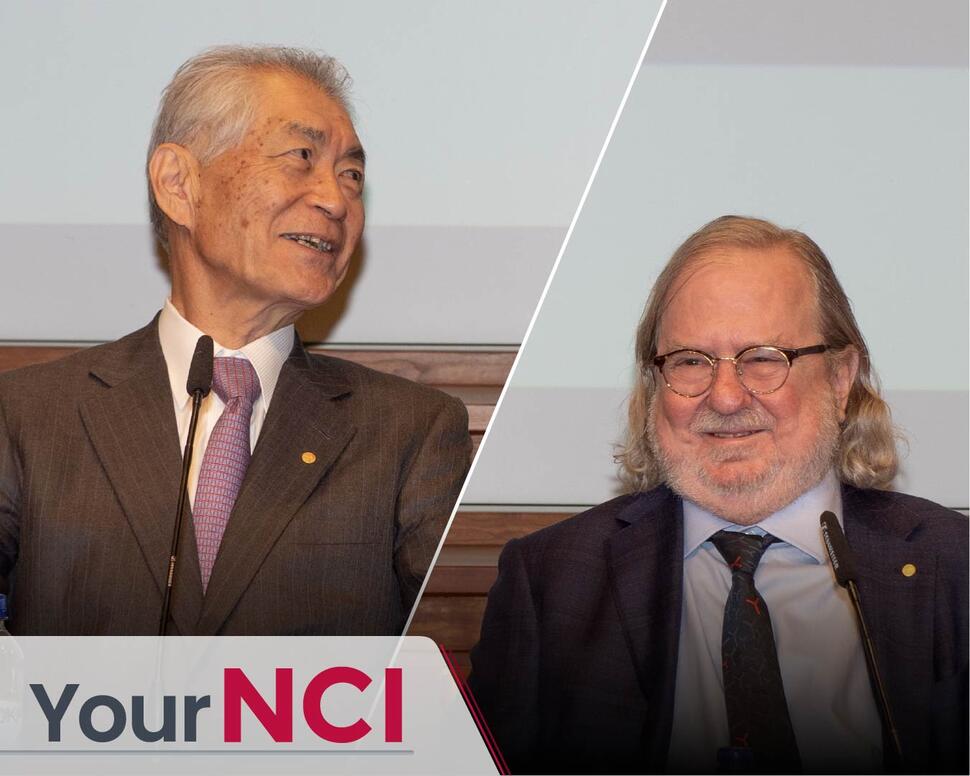
Drs. Honjo (left) and Allison at a press conference after receiving the 2018 Nobel Prize in Medicine.
Credit: By Bengt Nyman from Vaxholm, Sweden - Tasuku Honjo & James P. Allison EM1B5540, CC BY 2.0
In the 1990s, Allison and his colleagues showed that a protein called CTLA-4 acts as a brake on the immune system. Around the same time, Tasuku Honjo, M.D., Ph.D., and colleagues at Kyoto University in Japan discovered another immune checkpoint protein, called PD-1, that also operates as a brake, but through a different mechanism.
Additional studies by Drs. Allison, Honjo, and others showed that blocking these checkpoint pathways could restore the immune system’s ability to attack and eliminate cancer cells.
“This work was built on decades of fundamental science backed by NCI and led to discoveries that made modern immunotherapy possible,” Dr. Gulley said.
In 2018, Drs. Allison and Honjo received the Nobel Prize in Physiology or Medicine for their groundbreaking discoveries.
From the Lab to Patients
Starting in 2000, several promising immunotherapy drugs, such as ipilimumab, now marketed as Yervoy, which targets the CTLA-4 pathway, were making their way from the lab to clinical trials.
In 2011, a drug called pembrolizumab, which targets the PD-1 pathway, was first given to patients with advanced melanoma.
“Pembrolizumab is a prime example of how consistent, federally-funded research offers hope to many patients with advanced cancer,” Dr. Gulley said.
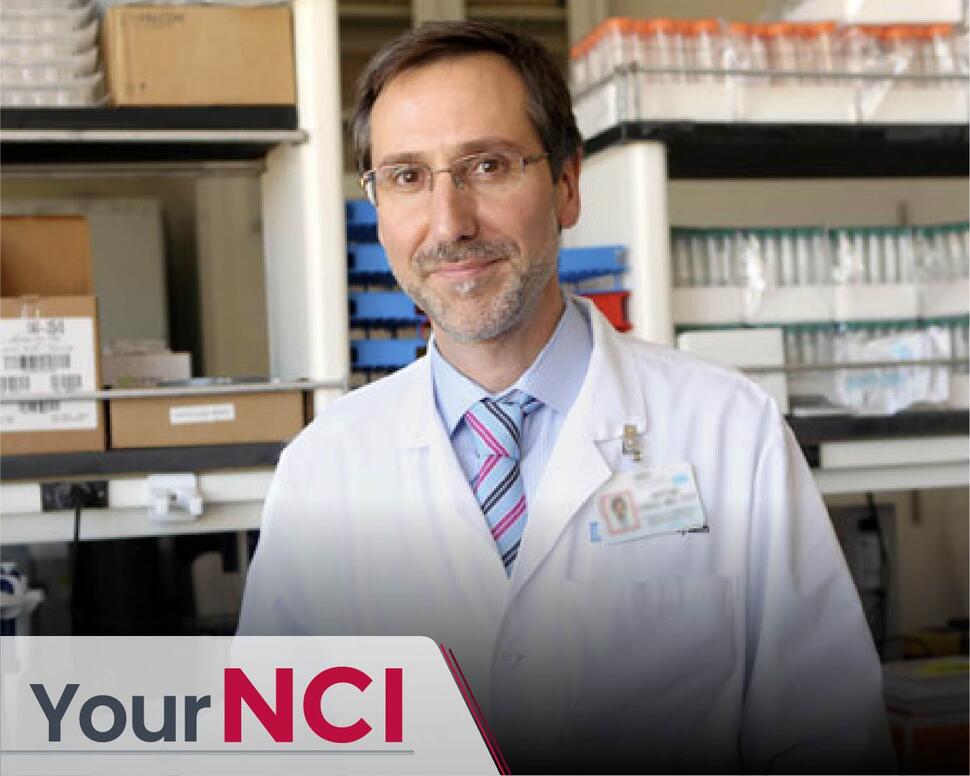
Dr. Antoni Ribas
Credit: UCLA Jonsson Comprehensive Cancer Center
In the landmark Keynote-001 trial, NCI-supported researchers, including Antoni Ribas, M.D., Ph.D., of the University of California Los Angeles, showed that pembrolizumab dramatically shrank tumors in patients with advanced melanoma. Those results led to rapid FDA approval of pembrolizumab for advanced melanoma in 2014.
The early success of checkpoint inhibitors also opened the door to a new approach to cancer treatment. NCI-supported researchers explored how checkpoint inhibitors could be used as precision immunotherapies, treatments guided by a tumor's genetic characteristics rather than where it originated in the body.
Supported by an NCI Cancer Center Support Grant and a Specialized Program of Research Excellence award, Dung Thi Le, M.D., and colleagues at Johns Hopkins University showed that pembrolizumab could be effective against tumors with a genetic feature known as mismatch repair deficiency (dMMR).
Their findings led to the 2017 approval of pembrolizumab for the treatment of tumors based on their genetic characteristics, regardless of where in the body the cancer originated. It was the first drug ever approved for a disease agnostic indication.
“This changed the paradigm,” Dr. Gulley said. “Before then, drugs were approved for a specific cancer. This led to the expansion of the use of pembrolizumab and many other immunotherapy drugs in multiple different tumor types.”
Today, pembrolizumab is approved for more than 43 cancer settings. Many of those approvals were based on results of studies conducted at NCI-designated cancer centers around the country and involved thousands of patients who volunteered to participate in clinical trials to advance our knowledge of cancer and how to treat it.
NCI-supported research continues to expand the reach of checkpoint inhibitors. In early 2024, for example, results from the large NCI-funded AMBASSADOR trial showed that pembrolizumab nearly doubled disease-free survival among people with high-risk muscle-invasive bladder cancer.
“This and many other studies helped expand pembrolizumab into one of the most important cancer drugs we have,” Dr. Gulley said.
Michael is one of countless patients who have benefited from NCI-funded research on pembrolizumab and other immune checkpoint inhibitors.

Michael was treated with pembrolizumab as part of an NCI clinical trial.
Credit: National Cancer Institute
“Back in 2021, 2022, somewhere there, I actually had started coughing up blood. And so that was pretty much a telltale sign” of cancer, he said.
After being diagnosed with stage IIIB non-small cell lung cancer and exhausting previous treatment options, he enrolled in a clinical trial at the NIH Clinical Center in Bethesda, MD evaluating pembrolizumab.
After about six months of treatment, his tumors had disappeared.
“It was a great relief,” he said. “I can get out and do some yard work and not run out of breath.”
Numerous checkpoint inhibitors, blocking CTLA-4, PD-1, and PD-L1, as well as newer targets, such as LAG-3, are now commercially available, dramatically improving outcomes and quality of life for many cancer patients around the world.
Overcoming Resistance
For all their success, however, immune checkpoint inhibitors have their limitations. While some patients experience dramatic, long-lasting responses, many do not respond to treatment, and others eventually develop resistance. Understanding why, and how to overcome it, has become one of the most important challenges in cancer immunotherapy.
“[Single] agents are wonderful if they can cure everybody,” Dr. Gulley said. “The next step is what can we combine this with to make it work better?”
NCI-funded researchers are testing combinations of checkpoint inhibitors with other therapies, including targeted drugs, cancer vaccines, radiation, chemotherapy, and cell-based therapies. They're also studying ways to overcome resistance by understanding the biology of T-cell exhaustion and the tumor microenvironment.
NCI's investments extend beyond checkpoint blockade. Dr. Rosenberg pioneered tumor-infiltrating lymphocyte (TIL) therapy, helping establish another approach that harnesses the immune system to fight cancer. NCI-supported researchers are also advancing CAR T-cell therapy and cancer treatment vaccines.
For patients like Michael, these treatments demonstrate the life-saving impacts of sustained federal funding.
“Behind every treatment breakthrough, there is a long history of support for research from the NCI,” Dr. Gulley said. “This is what public investment in science makes possible.”