
Treatment - Cancer Currents Blog
Cancer treatment related news, with context from leading experts. Includes articles on new therapies, treatment side effects, and important trends in treatment-related research.
-
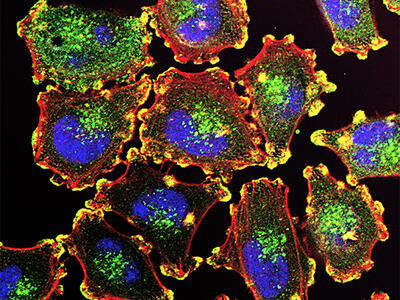
Results of an early-phase trial showed that a treatment vaccine personalized to a specific patient’s cancer generated a robust immune response against the cancer and may have helped to prevent it from returning.
-

Progress against the brain cancer glioblastoma has been slow. Drs. Mark Gilbert and Terri Armstrong of NCI’s Neuro-Oncology Branch discuss why and what’s being done to change that.
-

Researchers who study exceptional responders—patients who have dramatic and long-lasting responses to treatments for cancer that were not effective for most similar patients—met recently to discuss the state of the science in this emerging field.
-

A conservative approach to lymph node removal surgery may be best for people with melanoma that has spread from the skin to one or a small number of nearby lymph nodes, new results from a large international clinical trial suggest.
-
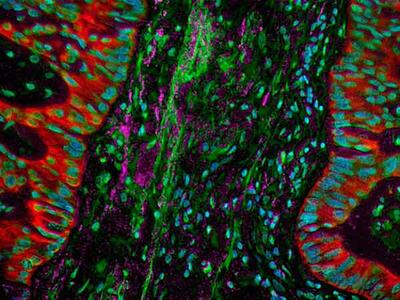
The FDA has approved the targeted therapy ceritinib as an initial treatment for patients with lung cancer that has a mutation in the ALK gene.
-

FDA approved pembrolizumab for patients with solid tumors that have specific genetic features, called mismatch repair deficiency and high microsatellite instability. This is the first approval based on a genetic feature, rather than cancer type.
-

In two large clinical trials, adding the hormone-blocking drug abiraterone to androgen-deprivation therapy (ADT) allowed men with metastatic hormone-sensitive prostate cancer to live longer than men who were treated with ADT alone.
-
 Trastuzumab Emtansine Improves Survival in Previously Treated Metastatic HER2-Positive Breast Cancer
Two clinical trials show that trastuzumab emtansine (T-DM1) improves survival compared with other standard treatments for patients with HER2-positive metastatic breast cancer that has progressed after treatment with other HER2-targeted drugs.
-
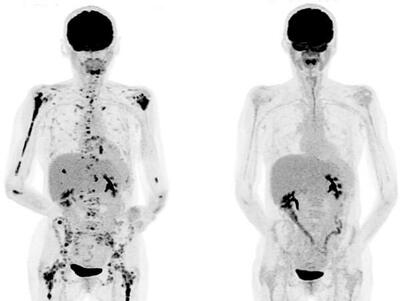
Results from two early-phase trials presented at the American Society of Clinical Oncology annual meeting suggest that an immunotherapy using genetically engineered immune cells may be effective in patients with advanced multiple myeloma.
-

A shorter course of chemotherapy following surgery may be preferred to longer treatment for some patients with colon cancer, results of an international collaborative study suggest.