
Advancing Childhood Cancer Research: A Conversation with Dr. Brigitte Widemann
, by Linda Wang
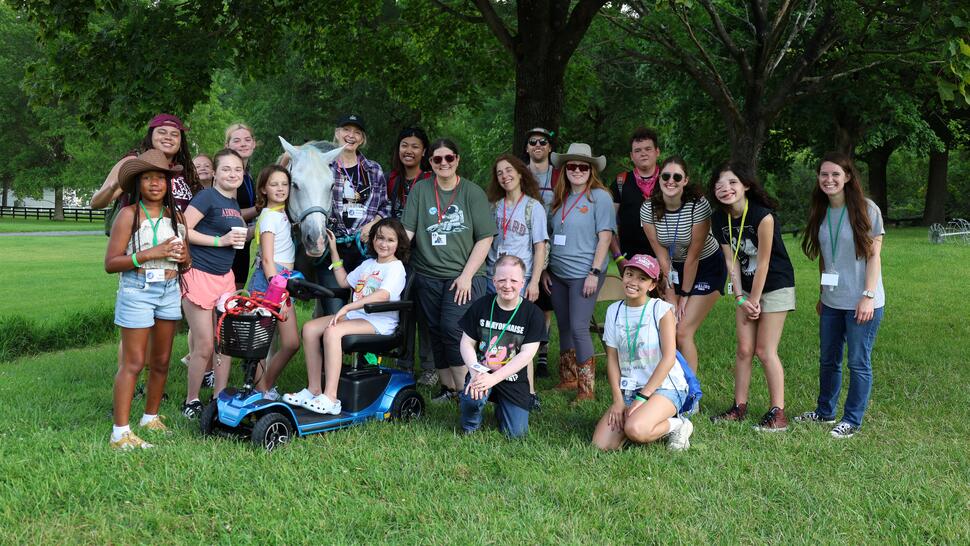
Camp Fantastic is a week-long camp for children and teenagers with cancer. This year's participants gathered outdoors for a photo.
Credit: Special Love/Camp Fantastic
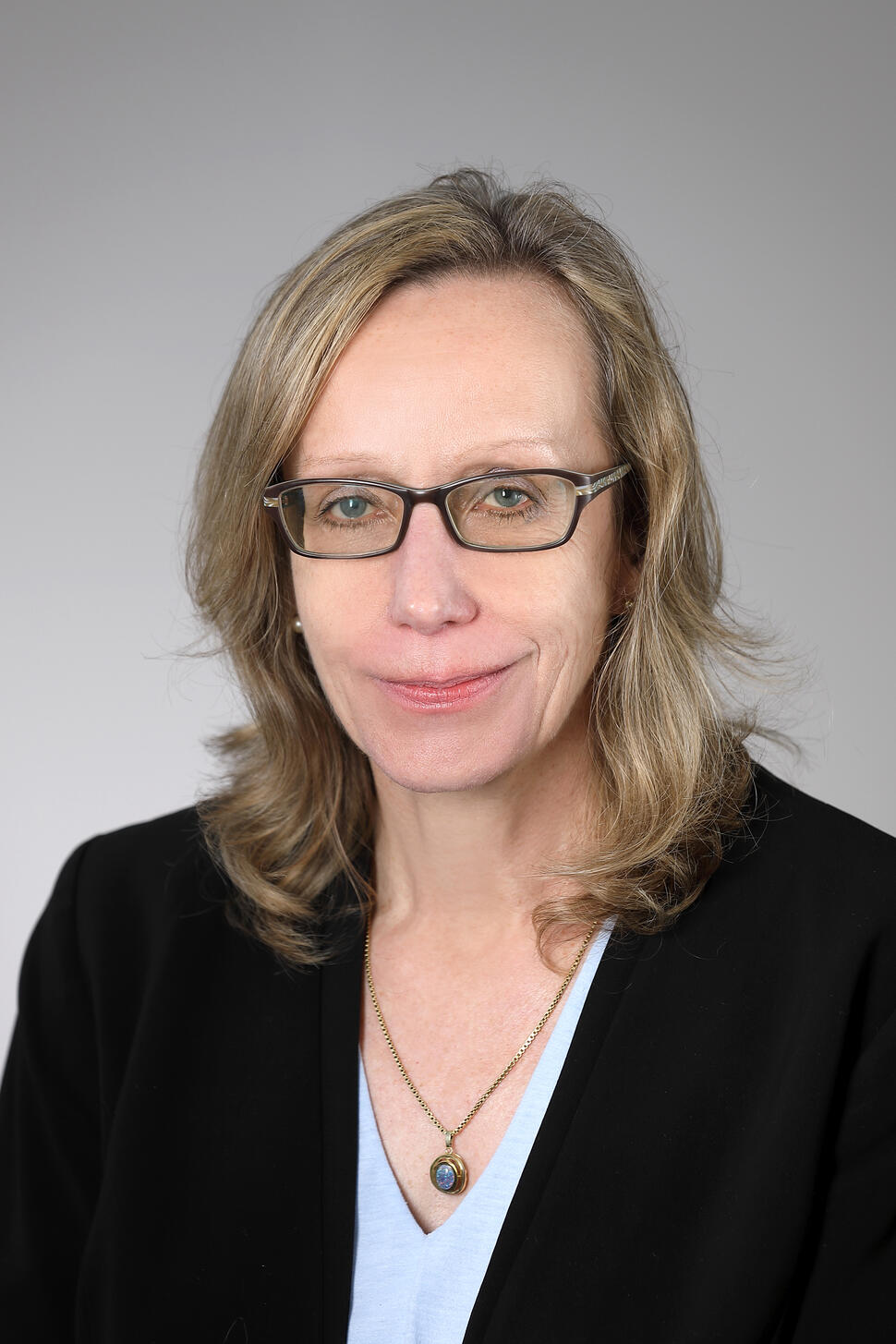
September is Childhood Cancer Awareness Month, a time to recognize children and adolescents with cancer, their families, and those working to improve their lives. Brigitte C. Widemann, M.D., is chief of the Pediatric Oncology Branch in NCI’s Center for Cancer Research and special advisor to the NCI director for childhood cancer. A pediatric oncologist and physician-scientist who cares for patients at the NIH Clinical Center, she has devoted her career to developing better treatments, particularly for young people with rare tumors and genetic cancer predisposition syndromes. In this Q&A, Dr. Widemann discusses recent advances, the importance of sustained federal investment, and the promise of shared data and artificial intelligence.
September is Childhood Cancer Awareness Month. What does this observance mean to you?
For me, every month is Childhood Cancer Awareness Month. Our patients and their families are with us no matter what month it is, and I feel incredibly fortunate to have devoted my career to this work at NIH.
September is an important opportunity to raise awareness and pair it with action. It is also a time to thank patients and families. Through observational studies and clinical trials, they contribute enormously to what we learn, even when experimental treatment may not benefit them directly. I increasingly view them as partners in research. We would not have made the progress we have without them, patient advocates, and the rest of the childhood cancer community.
What recent advances in childhood cancer research are you most excited about?
NCI supports childhood cancer research across the continuum, from understanding why cancers develop to studying survivors’ long-term health. This work involves large clinical trials networks, such as the Children’s Oncology Group, the Pediatric Early Phase Clinical Trials Network (PEP-CTN), the Pediatric Immunotherapy Network (PIN), and the My Pediatric and Adult Rare Tumor (myPART) network, which focuses on rare pediatric and young adult tumors.
One recent advance comes from an NCI-supported Children’s Oncology Group phase 3 trial for children newly diagnosed with B-cell acute lymphoblastic leukemia. Adding the immunotherapy blinatumomab to chemotherapy substantially improved disease-free survival, largely by reducing relapses, and is changing initial treatment for many children with this disease.
Another example is atezolizumab for alveolar soft part sarcoma, an extremely rare cancer for which there had been no approved treatment. An NCI-led trial enrolled about 50 patients, including children treated through NCI’s intramural program, and led FDA to approve the drug for adults and children ages 2 and older with advanced disease. These advances show the complementary roles of large cooperative-group trials and NIH Clinical Center studies of cancers that are too rare to investigate easily elsewhere.
Why is sustained federal investment so important?
All childhood cancers are rare, and some diagnoses occur in only 40 or 50 children in the United States each year. That makes it difficult to build expertise, understand the biology, identify patients, and conduct clinical trials. Commercial incentives to develop treatments are also smaller than they are for common adult cancers. NCI therefore has a unique role in supporting the research needed to identify promising therapeutic targets and translate discoveries into new treatments for children. This work requires sustained investment and multidisciplinary expertise. Initiatives, such as the Fusion Oncoproteins in Childhood Cancers Consortium and the global Cancer Grand Challenges effort show how researchers can come together across institutions and countries to tackle particularly difficult problems.
Childhood cancers are often biologically different from most adult cancers, so we cannot assume that a drug that works in adults will work in children. Progress from basic discovery to clinical application can take years, and survivorship questions require decades of follow-up. Studies such as the NCI-supported Childhood Cancer Survivor Study are possible only with strong, sustained public support.
What is the Childhood Cancer Data Initiative, and what is it making possible?
NCI launched the Childhood Cancer Data Initiative (CCDI) in 2019 to build a data ecosystem that can accelerate how we understand and treat childhood cancers. Because these cancers are rare, we need to collaborate and share data if we hope to learn from every child and ultimately benefit every child. If successful, the model could provide a blueprint not only for childhood cancer, but also for cancer research and treatment more broadly.
One major effort is the CCDI Molecular Characterization Initiative (MCI), developed with the Children’s Oncology Group. The initiative is strengthened by complementary efforts supported through the implementation of the Childhood Cancer Survivorship, Treatment, Access, and Research (STAR) Act, and its reauthorization, reflecting how different federal investments work together to accelerate research. MCI provides eligible children, adolescents, and young adults treated at COG-affiliated hospitals with no-cost, state-of-the-art tumor characterization at diagnosis, returning clinically relevant results to participants and their clinicians within 2-3 weeks while making deidentified data available for future research in near real time. We have learned from thousands of participants that this testing can refine, and sometimes change, a diagnosis, inform precision treatment, and help identify eligibility for clinical trials.
The genomic, clinical, and pathology data also become a resource for future research. CCDI is additionally supporting a study that follows young people with very rare pediatric cancers so researchers can learn from their treatment experiences over time.
The 2026 CCDI Symposium is taking place on September 18. What do you hope will come out of this conference?
CCDI engages patients, families, advocates, clinicians, researchers, data scientists, industry, and federal partners. The symposium is an opportunity to assess what has been accomplished, identify remaining challenges, and build new collaborations.
I am looking forward to it producing additional practical ideas for using CCDI’s data and resources, including AI approaches to important questions in pediatric cancer. Face-to-face interactions are incredibly valuable. They can produce connections and ideas that accelerate both science and clinical care.
Where could artificial intelligence make the greatest difference?
AI can create important opportunities to accelerate target identification, drug discovery, and development, as well as improve survivorship and quality of life, CCDI is creating the high-quality, connected data that can make AI useful. The Molecular Characterization Initiative, for example, includes digitized pathology slides. By learning from thousands of images derived from childhood cancer patients, AI may eventually help pathologists make more precise diagnoses or predict molecular features from a routinely stained slide. That could be especially valuable in places where comprehensive molecular testing is not readily available.
Building on CCDI, the Bio Genesis Mission has a challenge pillar, focused on childhood cancer, that will leverage AI to integrate multimodal data, accelerate biomarker and therapeutic target discovery, improve precision medicine and clinical trial design, and ultimately speed the development of new treatments while improving outcomes and survivorship across the spectrum of childhood cancers.
AI could also help analyze imaging data to detect tumors earlier, particularly in children with an inherited predisposition to cancer, and match patients with appropriate clinical trials. Physicians and families frequently ask whether there is a clinical trial for a particular patient, and AI could help identify meaningful options more efficiently.
Partnerships are essential to these efforts. NCI brings scientific and clinical expertise, research networks, and pediatric cancer data, while the Department of Energy brings advanced AI and computing expertise. Neither organization could accomplish this alone.
How can more children and young adults participate in research, regardless of where they live?
The pediatric cancer community is highly connected, in large part through the Children’s Oncology Group and its network of more than 200 institutions. These institutions work closely with primary care providers across the country to ensure that children and their families are connected to pediatric oncologists either as close to home as possible and/or where there is the most appropriate expertise. NCI is also supporting pediatric sites within the NCI Community Oncology Research Network (NCORP) to help expand the reach and awareness of clinical trials.
But gaps remain, particularly for adolescents and young adults. Insurance transitions and the divide between pediatric and adult care can make specialized care and trial participation harder to access for this group.
Telehealth, virtual molecular tumor boards that connect experts across the country, and decentralized clinical trials can help. A patient with a rare cancer might come to NIH for an initial visit but complete later evaluations at a local institution. We need to keep reducing the practical and geographic burdens of participation so that patients can benefit from research regardless of where they live.
What do we still need to learn about the long-term health and quality of life of childhood cancer survivors?
As treatments improve, more children will live for decades after cancer. We want them all to live normal, healthy lives. To ensure that, we must continue to understand not only physical toxicities from treatment, but also address the impact of childhood cancer on mental health, fertility, employment, relationships, and access to appropriate follow-up care in adulthood.
We also need to study the long-term effects of newer treatments, including immunotherapies. Their side effects may be very different from those associated with treatments used in the past, and there is still much we do not know.
Through the STAR Act and STAR Reauthorization Act, NCI is supporting projects to further study the development of chronic health conditions among childhood and AYA cancer survivors, as well as the development of subsequent (new) cancers. The results of the Childhood Cancer Survivor Study continuously inform COG’s Long-Term Follow-Up Guidelines for Survivors of Childhood, Adolescent and Young Adult Cancers, which is a resource for clinicians who provide ongoing healthcare to survivors of pediatric malignancies.
Our goal cannot be limited to eliminating the tumor. We want children not only to survive cancer, but to live long, healthy, and fulfilling lives. This means considering quality of life, providing psychosocial support, and ensuring that survivors continue to receive the care they need throughout their lives.
What gives you the most hope for the future?
I am hopeful that we will diagnose cancers earlier and develop treatments that are more precise, less toxic, and better tailored to each child’s tumor. I am also excited about the possibility of cancer prevention and earlier detection.
We are learning that a meaningful proportion of children with cancer have an inherited predisposition. Identifying that risk may help us monitor patients and their families more carefully, discover new prevention strategies for families at risk, and find tumors when they are smaller and easier to treat.
Liquid biomarkers are another promising area. A blood sample may eventually tell us whether a tumor is present, shrinking, or growing. That could reduce the need for invasive tumor biopsies and allow us to follow a patient’s disease more precisely.
You recently visited Camp Fantastic. What stays with you from that experience?
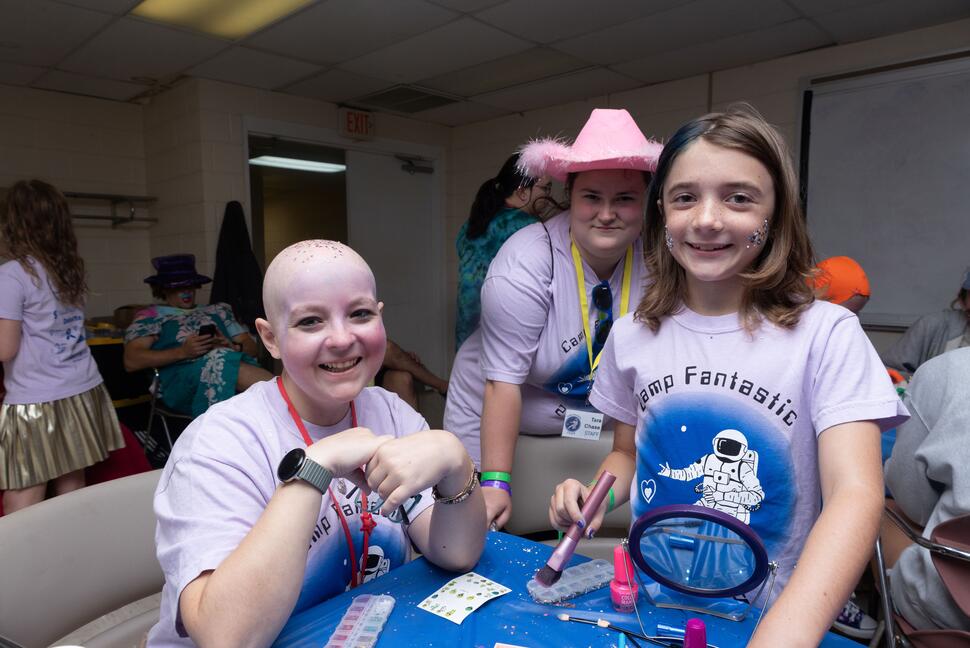
Camp Fantastic participants have fun with glitter.
Credit: Special Love/Camp Fantastic
Camp Fantastic is an annual, week-long camp where children and teenagers with cancer, including some who are still receiving treatment, can spend time together and take part in activities with support from counselors, nurses, and physicians.
Seeing a child arrive unsure about attending and leave saying it was the best week of the year is incredibly moving. The children build friendships and simply have fun. For those of us who visit or volunteer, the experience fills up our tanks when we feel depleted.
It is a gift, and it reaffirms why we do this work.