
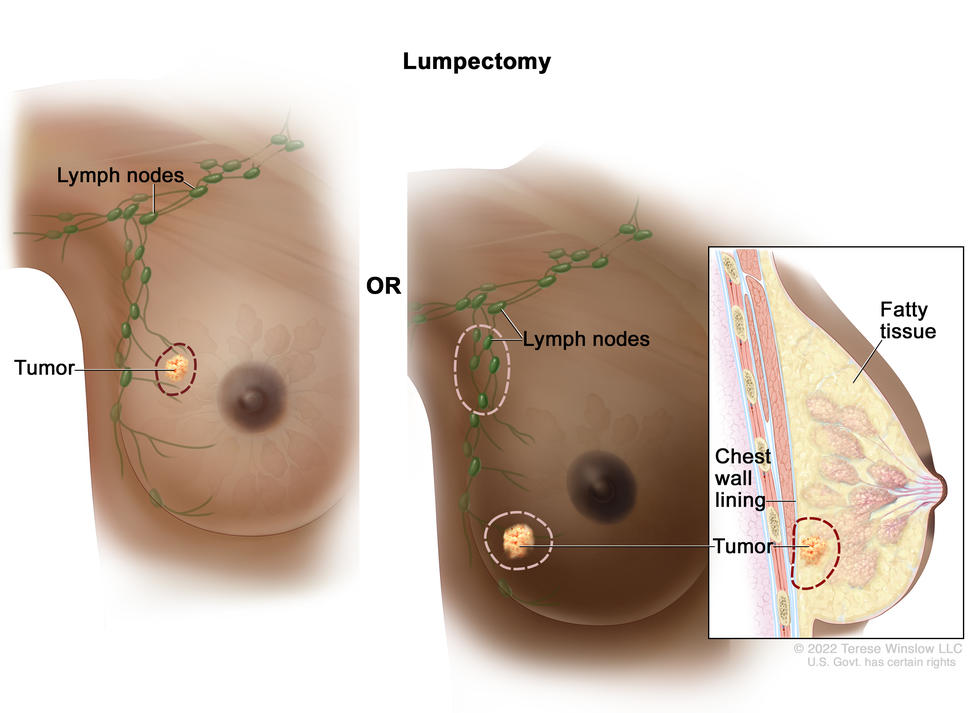
Treatment before or after lumpectomy
Most people who have a lumpectomy receive radiation therapy after they heal from surgery. The goal of this treatment is to keep cancer from coming back in the same breast. Learn more about Radiation for Breast Cancer.
You might also need chemotherapy, hormone therapy, or targeted therapy, before or after surgery. Learn more about Breast Cancer Treatment.
The type of treatment you receive will depend on many factors, such as how different the tumor cells look from normal breast cells, how likely the tumor cells are to grow and spread, and the results of biomarker tests. Learn more at How Breast Cancer Is Diagnosed and Tests for Breast Cancer Biomarkers.
Recovering from lumpectomy
Most people can go home the day of their lumpectomy and go about their daily activities with few restrictions. But you may need help with some tasks, depending on the extent of your surgery. Within two weeks, you should be able to return to your normal activities.
Reconstruction after lumpectomy
After a lumpectomy, your breast will usually look and feel much like it did before surgery. You will have a scar at the site of surgery. And there may be a dent where the tumor and tissue were removed.
Talk to your surgical team about how your surgery might change how your breast looks. If you think you will not be happy with the look or feel of your breast after surgery, you may think about reconstruction. Reconstruction can take place during or any time after the lumpectomy.
There are two types of breast reconstruction for people who have a lumpectomy:
- Oncoplastic surgery combines lumpectomy with plastic surgery that can help make the breasts look more even if large amounts of tissue are removed from one breast. It can also reduce scarring and dents. A plastic surgeon will often do this reconstruction during the same surgery as the lumpectomy.
- Revision reconstruction usually happens after you have healed from a lumpectomy. A plastic surgeon may be able to improve scarring and hardening of tissue at the surgical site. And they may be able to restore the shape of the breast with fat grafting, tissue flaps, or implants.
Lumpectomy risks
As with any surgery, lumpectomy has risks, including:
- bleeding and pain at the site of surgery
- infection
- fluid buildup near the site of surgery
- lymphedema, if lymph nodes are removed