
Are you facing a decision about lumpectomy vs. mastectomy?
Do you have ductal carcinoma in situ (DCIS) or breast cancer that can be removed with surgery? If so, you may be able to choose which type of breast surgery you have. Often, your choice is between a lumpectomy or other breast-conserving surgery (surgery that takes out the cancer and leaves most of the breast) and a mastectomy (surgery that removes the whole breast).
Learn more about these surgeries at Breast Cancer Surgery.
Once you are diagnosed, treatment will usually not begin right away. Use the time to:
- talk with your doctor
- get a second opinion
- check with your insurance company
- learn the facts about your surgery choices
- think about what is important to you
Surgery Choices: Cindy, Theresa, Paula
Three women describe the type of surgery that they chose to treat their breast cancer.
Compare lumpectomy and mastectomy
If your surgeon gives you a choice about which surgery to have, it can be hard to decide which one is best for you. This section can help you compare the different surgeries. Learn how the surgeries are alike and how they are different by clicking on each question to learn more.
- Which type of breast cancer surgery is best for my cancer?
- Will the type of surgery I have affect how long I live?
- What are the chances that my breast cancer will return in the same area?
- Will I have pain?
- How long before I can return to normal activities?
- What other problems might I have from the surgery?
- What other types of treatment might I need?
- Will I need more surgery?
- What will my breast look like after surgery?
- Will my breast have feeling after surgery?
- Will the type of surgery I choose affect my quality of life?
Questions about the effectiveness of breast cancer surgery
Which type of breast cancer surgery is best for my cancer?
| Lumpectomy or other breast-conserving surgery | Most women with DCIS or breast cancer can choose to have a lumpectomy (breast-conserving surgery), usually followed by radiation therapy. |
|---|---|
| Mastectomy | Most women with DCIS or breast cancer can choose to have a mastectomy. A mastectomy may be a better choice for you if:
|
| Mastectomy with reconstruction | If you have a mastectomy, you might also want breast reconstruction surgery. You can choose to have reconstruction surgery at the same time as your mastectomy or wait and have it later. Your surgeon can talk with you about how much skin, including the nipple and areola, might be preserved for reconstruction. |
Will the type of breast cancer surgery I have affect how long I live?
No. Research shows that women who have breast-conserving surgery live as long as women who have a mastectomy. This does not change if you also have reconstruction.
What are the chances that my breast cancer will return in the same area?
| Lumpectomy or other breast-conserving surgery | There is a chance that your cancer will come back in the same breast if you have a lumpectomy. But if it does, it is not likely to affect how long you live. About 5% to 10% of women (1 out of every 10 to 20) who have a lumpectomy followed by radiation therapy get cancer in the same breast within 12 years. If this happens, you can be effectively treated with a mastectomy. |
|---|---|
| Mastectomy | There is a chance that your cancer will return in the same breast that was removed. This is called a local recurrence. It can happen after a mastectomy because surgeons cannot remove every bit of breast tissue. Also, the cancer can come back in the chest muscle or chest wall. Local recurrence is slightly less likely after mastectomy than after lumpectomy. About 1 out of every 20 women who have a mastectomy will get cancer on the same side of their chest within 12 years. |
| Mastectomy with reconstruction | Your chances are the same as mastectomy because breast reconstruction surgery does not affect the chances of the cancer returning. |
Questions about recovering from breast cancer surgery
Will I have pain?
Most people have some pain after surgery. Talk with your doctor or nurse before surgery about ways to control pain after surgery. Also, tell them if your pain control is not working.
How long before I can return to normal activities?
| Lumpectomy or other breast-conserving surgery | Most women are ready to return to most of their usual activities within 2 weeks. |
|---|---|
| Mastectomy | It may take 3 to 4 weeks to feel mostly normal after a mastectomy. |
| Mastectomy with reconstruction | Your recovery will depend on the type of reconstruction you have. It can take 6 to 8 weeks or longer to fully recover from a mastectomy that is followed by breast reconstruction. |
What other problems might I have from breast cancer surgery?
| Lumpectomy or other breast-conserving surgery | You may feel very tired and have skin changes from radiation therapy. |
|---|---|
| Mastectomy | You may feel out of balance if you had large breasts and do not have reconstruction surgery. This may also lead to neck and shoulder pain. |
| Mastectomy with reconstruction |
|
If lymph nodes are removed from under your arm, you may develop lymphedema. Learn more about Lymphedema.
Questions about treatment after breast surgery
What other types of treatment might I need after breast cancer surgery?
If you choose to have a lumpectomy or other breast-conserving surgery, you will usually need radiation therapy. Radiation treatments are often given 5 days a week for up to 6 weeks.
If you have a mastectomy, you may still need radiation therapy.
No matter which surgery you choose, you might need:
Will I need more surgery?
| Lumpectomy or other breast-conserving surgery | After surgery, if there are cancer cells at the edge of the removed breast tissue, then you may need more surgery to make sure that all the cancer is removed. |
|---|---|
| Mastectomy | If you have problems after your mastectomy, you may need more surgery. |
| Mastectomy with reconstruction | You will most likely need more than one surgery to build a new breast-like shape. The number of surgeries you need will depend on the type of reconstruction you have and if you choose to have a nipple or areola added. Some women may also decide to have surgery on the opposite breast to help it better match the reconstructed breast. If you have an implant, you are likely to need surgery many years later to remove or replace it. |
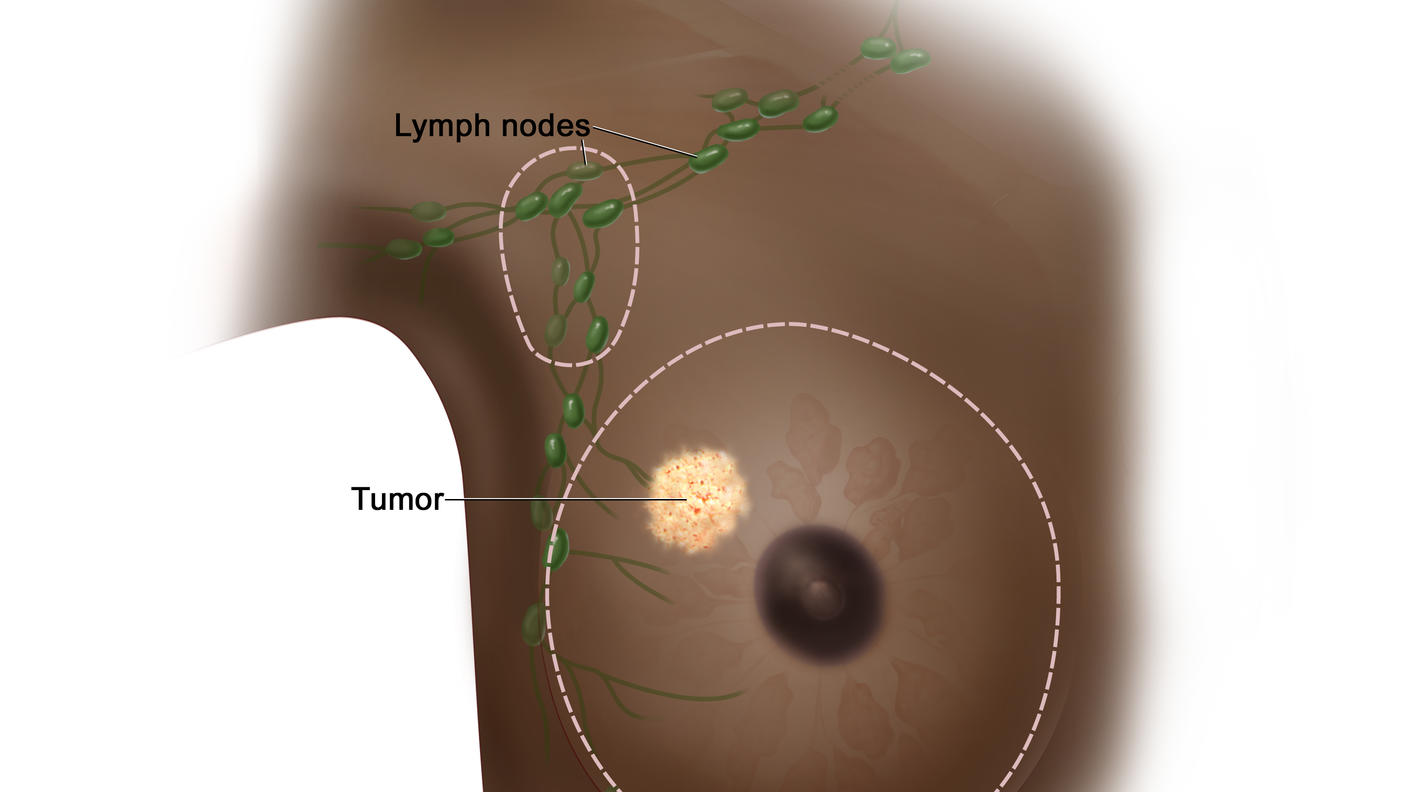
With all three surgeries, you may need more surgery to remove lymph nodes from under your arm to see how far the cancer has spread.
Questions about body image and quality of life after breast cancer surgery
What will my breast look like after breast cancer surgery?
| Lumpectomy or other breast-conserving surgery | Your breast should look a lot like it did before surgery. But if your tumor is large, your breast may look different or smaller after breast-conserving surgery. You will have a small scar where the surgeon cut to remove the DCIS or cancer. The length of the scar will depend on how large the incision was. |
|---|---|
| Mastectomy | If you have a mastectomy without reconstruction, your breast and nipple will be removed. You will have a flat chest on the side of your body where the breast was removed. You will have a scar over the place where your breast was removed. The length of the scar will depend on the size of your breast. The scar is usually shorter for smaller breasts and longer for larger breasts. |
| Mastectomy with reconstruction | If you have a skin- or nipple-sparing mastectomy, your skin and nipple will remain after surgery. You will not have the sensation of temperature or touch, but your nipple will still react to these. Even if you have reconstruction, your breast shape will not look or feel like it did before surgery. And it will not look or feel like your other breast. You will have scars where the surgeon stitched skin together to make the new breast-like shape. If you have tissue flap reconstruction, you will have scars around the new breast, as well as in the area where the surgeon removed the muscle, fat, and skin to make the new breast-like shape. |
With all three surgeries, the scars left from where the surgeon cut the skin and stitched it back together tend to fade over time.
To get a better idea of what to expect from surgery, ask your surgeon if you can see before and after pictures of other people who have had different types of surgery.
Will my breast have feeling after breast cancer surgery?
| Lumpectomy or other breast-conserving surgery | Yes. You should still have feeling in your breast, nipple, and areola. |
|---|---|
| Mastectomy | Maybe. After surgery, the skin around where the surgeon cut and maybe the area under your arm will be numb. This numb feeling may improve over 1 to 2 years, but it will never feel like it once did. Also, the skin where your breast was may feel tight. |
| Mastectomy with reconstruction | No. Most of the area around your breast will not have feeling. |
Some surgeons are trying new techniques to preserve or restore breast feeling after a mastectomy. Find clinical trials studying this issue using our NCI-supported clinical trials search or ClinicalTrials.gov.
Will the type of breast surgery I choose affect my quality of life?
Research suggests that women who have breast-conserving surgery have a better long-term quality of life than those who have a mastectomy.
Think about what is important to you
After you have talked with a breast surgeon and learned the facts, you may also want to talk with your spouse or partner, family, friends, or other women who have had breast cancer surgery.
Then, think about what is important to you. Thinking about the following questions and talking them over with others might help:
- If I have a lumpectomy or other breast-conserving surgery, am I willing and able to have radiation therapy 5 days a week for up to 6 weeks?
- If I have a lumpectomy and the cancer comes back later in the same breast, how would I feel about needing a mastectomy?
- If I have a mastectomy, do I also want breast reconstruction surgery?
- If I have breast reconstruction surgery, do I want it at the same time as the mastectomy?
- What treatment does my insurance cover? What do I have to pay for?
- How important is it to me how my breast looks after cancer surgery?
- How important is it to me how my breast feels after cancer surgery?
- If I have a mastectomy and do not have reconstruction, will my insurance cover prostheses and special bras?
- Where can I find breast prostheses and special bras?
- Do I want a second opinion?
- Is there someone else I should talk with about my surgery choices?
- What else do I want to learn or do before I decide about breast cancer surgery?