
May 2020 - Cancer Currents Blog
-
 More Evidence that Ruxolitinib Benefits Some Patients with Graft-Versus-Host Disease
Patients with acute graft-versus-host disease (GVHD) that does not respond to steroid therapy are more likely to respond to the drug ruxolitinib (Jakafi) than other available treatments, results from a large clinical trial show.
-
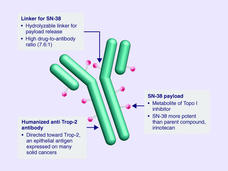 Sacituzumab Govitecan Approved for Metastatic Triple-Negative Breast Cancer
FDA has approved sacituzumab govitecan (Trodelvy) for the treatment of triple-negative breast cancer that has spread to other parts of the body. Under the approval, patients must have already undergone at least two prior treatment regimens.
-
 How Does COVID-19 Affect People with Cancer? NCCAPS Will Help Find Out
NCI has launched the COVID-19 in Cancer Patients Study (NCCAPS), which will help answer questions about COVID-19’s impact on cancer patients. The study is now open to adults and will later be expanded to include children.
-
 Updated Nutrition Facts Label Reflects Science on Diet and Health, including Cancer
On January 1, 2020, the Food and Drug Administration (FDA) began requiring food manufacturers to display updated nutrition facts labels on their product packaging. Experts from FDA and NCI discuss the update and the research that underpins the changes.
-
 For Women with Breast Cancer, Regular Exercise May Improve Survival
Women with high-risk breast cancer who engaged in regular exercise before their cancer diagnosis and after treatment were less likely to have their cancer return or to die compared with women who were inactive, a recent study found.
-
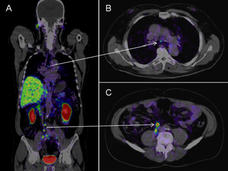 PSMA PET-CT Accurately Detects Prostate Cancer Spread, Trial Shows
For some men with prostate cancer at high risk of spreading, a large clinical trial shows an imaging method called PSMA PET-CT is more likely to detect metastatic tumors than the standard imaging approach used in many countries.
-
 Encorafenib, Cetuximab Combination Approved for Metastatic Colorectal Cancer
The Food and Drug Administration has approved encorafenib (Braftovi) in combination with cetuximab (Erbitux) to treat adults with metastatic colorectal cancer whose tumors have a specific mutation in the BRAF gene, called V600E.
-
 NCI Part of Federal Effort to Evaluate Antibody Tests for Novel Coronavirus
NCI scientists, along with experts from other government agencies and academic medical centers, have launched a joint effort to help FDA evaluate commercially available antibody tests for SARS-CoV-2, the coronavirus that causes COVID-19.