An official website of the United States government
Español
Email

Technology - Cancer Currents Blog

News and commentaries on technology used to conduct cancer research, deliver cancer treatment, improve patient care, and screen for cancer, as well as other topics.

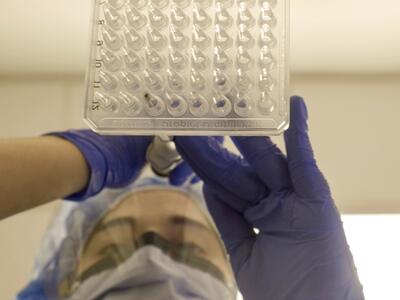
  • A picture from below of a lab tech wearing a mask, safety glasses, and blue gloves dropping materials from a pipette into a 64-well plate.
    • By Edward Winstead

    Scientists have developed a test for use during brain cancer surgery that rapidly measures the levels of certain genetic mutations in patients’ tumor samples. The test uses droplet digital polymerase chain reaction technology and produces results within 15 minutes.

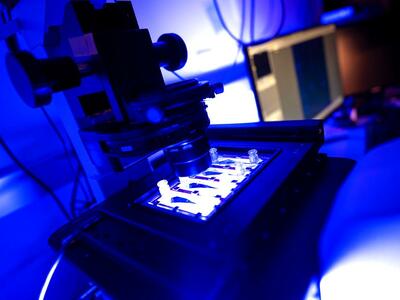
  • A photograph of a square-shaped device with small channels, illuminated in white light with a large microscope hanging over top, that can measure the stickiness of tumor cells.
    • By Melissa Madden

    A device that measures the “stickiness” of cancer cells in tumor samples may help predict the likelihood of a patient’s cancer metastasizing. Researchers believe the device could eventually help doctors make more informed treatment choices.

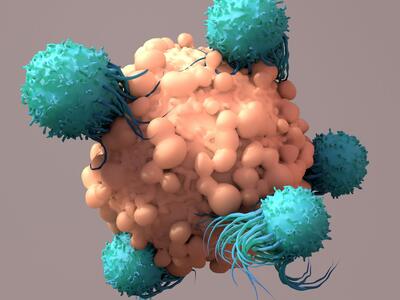
  • Illustration of multiple T cells, round and blue colored, attacking a tumor (orange-pink, round, and larger than the T cells)
    • By Carmen Phillips

    In small trials, personalized treatment vaccines appeared to prevent cancer from returning in patients who had successful surgery to remove their tumors. The treatments, which were created based on intensive analyses of patients’ tumors, appeared to be safe.

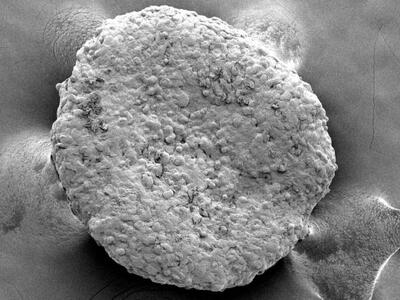
  • An electron microscope image showing a round, pocked clump of engineered beige fat cells.
    • By Edward Winstead

    Researchers have developed a form of cancer treatment that uses fat cells engineered to aggressively consume nutrients like glucose. When implanted in mice, the engineered cells appeared to outcompete tumors for nutrients, shrinking tumors.

  • A gloved hand holds a test tube half-filled with blood vertically between the index finger and thumb.
    • By Sharon Reynolds

    An AI-based tool called SCORPIO more accurately predicted whether cancer patients’ tumors would respond to checkpoint inhibitors than currently available tests, a new study found. It also predicted how long patients would live after treatment.

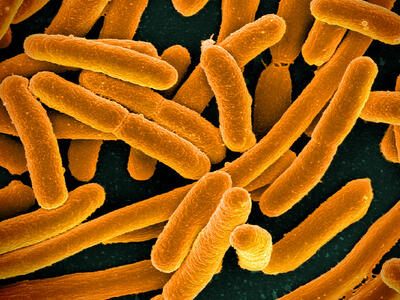
  • A scanning electron micrograph of E. coli, with the rod-shaped bacteria colored a mustard yellow.
    • By Nadia Jaber

    In a pair of studies, researchers engineered a probiotic strain of E. coli called Nissle 1917 so it can help the immune system attack tumors. Although the E. coli were altered in different ways, resulting in two different immune-based treatment strategies, both were effective in mice.

  • A conceptual cartoon meant to represent the translation of proteogenomic data to drug targets.
    • By Linda Wang

    Researchers have identified hundreds of promising targets for existing drugs or potential new cancer drugs. The findings relied heavily on proteogenomic data from more than 1,000 tumors representing 10 types of cancer released last year by NCI's CPTAC program.

  • A conceptual image with a small segment of a DNA double helix being removed with tweezers.
    • By Carmen Phillips

    Scientists have developed a strategy for treating cancer that takes advantage of tumors’ ability to rapidly evolve and turns it against them. It involves intentionally making some tumor cells resistant to a specific treatment from the get-go.

  • Young woman speaking with a physician.
    • By Sharon Reynolds

    Drs. Ruth Pfeiffer and Peter Kraft of NCI’s Division of Cancer Epidemiology and Genetics discuss how breast cancer risk assessment tools are created and how people can use them to understand and manage their risk.

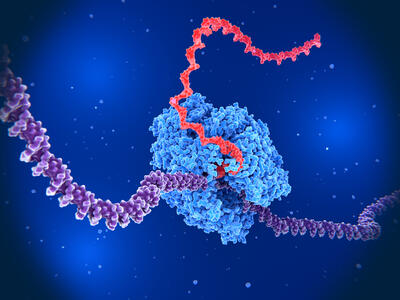
  • An illustration of an enzyme unwinding a DNA strand to produce an RNA strand.
    • By Carmen Phillips

    Recent results from several small clinical trials have suggested it may be possible to develop an effective immunotherapy for glioblastoma. Among them are findings from a four-patient trial testing a unique type of mRNA cancer vaccine.

  • Three different colored circles with squiggles inside and an icon of a letter sticking out of the top. The circles are labeled "exosome" and the squiggles are labeled "microRNA"
    • By Nadia Jaber

    In a new study involving nearly 1,000 people, a liquid biopsy accurately detected early- and late-stage pancreatic cancer. When paired with a test for the protein CA19-9, the combination accurately identified 97% of people with early-stage disease.

  • Tumor-infiltrating lymphocyte therapy or TIL
    • By Carmen Phillips

    In an event more than three decades in the making, FDA has approved lifileucel (Amtagvi), the first cancer treatment that uses immune cells called tumor-infiltrating lymphocytes, or TILs.

  • Illustration of a blood vessel emerging from a tumor. The vessel contains floating fragments of DNA from healthy cells and tumors.
    • By Sharon Reynolds

    Results from a new study suggest that the presence of circulating tumor DNA (ctDNA) in blood samples can predict which patients with colorectal cancer should and shouldn’t get chemotherapy after surgery to remove their tumors.

  • Graphic showing effects of priming agent on concentration of ctDNA and cell-free DNA on liquid biopsy.
    • By Carmen Phillips

    Using two different techniques, researchers showed they could temporarily boost ctDNA levels in the blood of mice with tumors. With more ctDNA in collected blood draws, a liquid biopsy could better detect cancer, the research team found.

  • Test tubes with shiny stretches of DNA inside
    • By Edward Winstead

    The Food and Drug Administration (FDA) for the first time has granted marketing authorization for a blood test, the Invitae Common Hereditary Cancers Panel. The test detects inherited genetic changes that increase the risk of developing certain cancers.

  • Illustration depicting the interaction between a modified oncolytic virus, tumor cells, and cancer-fighting T cells. The virus causes tumor cell rupture and releases TGFβ blockers, which inhibit Treg cells, thereby enhancing the efficacy of T cells in fighting cancer.
    • By Shana Spindler

    A cancer-infecting virus engineered to tamp down a tumor’s ability to suppress the immune system shrank tumors in mice, a new study shows. The modified oncolytic virus worked even better when used along with an immune checkpoint inhibitor.

  • A partial image of a doctor holding a colonoscope near a patient in the endoscopy suite.
    • By Sharon Reynolds

    Using computer-aided detection (CAD) during a colonoscopy doesn’t help doctors find the growths most likely to become colorectal cancer, two studies find. Researchers agreed that CAD, which is aided by artificial intelligence technology, needs further refinement.

  • A cartoon of a robot-like character with a nursing cross on its chest and helmet
    • By Edward Winstead

    Can AI chatbots give people accurate information about cancer and its treatment? The answer appears to be: Not yet. Results from two studies have found that, although AI chatbots can gather cancer information from reputable sources, their responses to questions about treatment and other topics can include errors and omissions.

  • An illustration depicting the process by which the biosensor bacteria grab and take up tumor DNA
    • By Elia Ben-Ari

    Engineered bacteria can detect tumor DNA that has been shed into the gut by colorectal tumors, a new study in mice shows. The bacteria are programmed to seek and capture DNA containing a specific genetic change found in cancer.

  • A red bean shape on DNA labeled "cell death gene" with the words ON and an arrow pointing to a dividing cell. Below, Red and green bean shapes with a squiggly line connecting them and labeled "TCIP1". The word ON and an arrow pointing to a dead cell.
    • By Nadia Jaber

    Researchers have created a molecule that, in cancer cells, hooks onto the protein BCL6 at one end and another protein that turns genes on at the other end. The result: self-destruct genes are turned up, causing the cancer cells to die.

< Older Posts
Email